
What transformer parameters are required before purchasing a transformer test bench?
What transformer parameters are required before purchasing a transformer test bench?
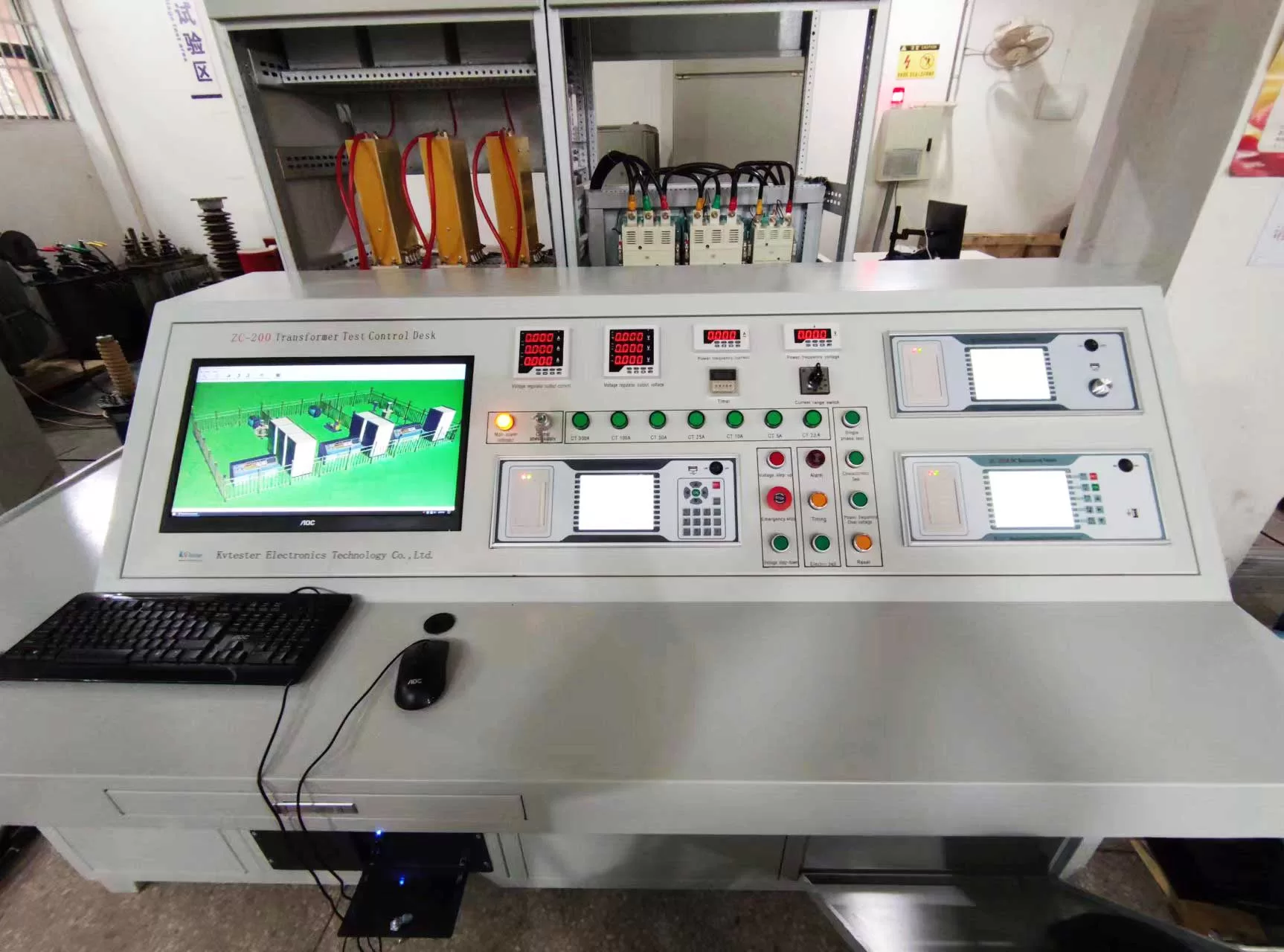
Before purchasing a comprehensive transformer test bench, the manufacturer needs to configure the equipment based on the capacity, voltage, current, and specific test requirements of the transformer under test. The more complete the provided parameters, the more accurate the model selection and price quotation will be.
Typically, the following information is required:
1. Basic transformer type
First, specify the type of transformer to be tested, such as:
① Oil-immersed or dry-type transformer;
② Single-phase or three-phase transformer;
③ Distribution transformer, power transformer, or special-purpose transformer;
④ Standard transformer or transformer with an on-load tap changer (OLTC).
Different transformer types may require different test items, wiring configurations, and equipment setups.
2. Rated capacity
Provide the range of transformer capacities manufactured or tested by the company, particularly the maximum rated capacity. For example:
① Minimum capacity;
② Commonly used capacities;
③ Maximum capacity;
④ Capacity range planned for future production.
The maximum capacity directly influences the configuration of the voltage regulator, current booster, compensation devices, and measurement circuits.
3. Rated voltage (high and low voltage sides)
Provide the rated voltages for both the high-voltage (HV) and low-voltage (LV) sides, as well as the highest voltage level. If the transformer has multiple tap positions, also provide:
① Rated tap voltage;
② Tap range;
③ Number of tap steps;
④ Voltage adjustment ratio per step.
These parameters are primarily used to determine the test voltage range, instrument measurement ranges, and the configuration of withstand voltage testing equipment.
4. Rated current (high and low voltage sides)
Rated current is a critical parameter for determining the requirements for load tests, short-circuit tests, and the capacity of current-boosting equipment. Typically, the following should be provided:
① HV side rated current;
② LV side rated current;
③ Maximum test current;
④ Whether long-duration, high-current testing is required.
For low-voltage, high-current transformers, special attention must also be paid to the current-carrying capacity of test cables, terminals, and the current-boosting system. 5. Rated Frequency and Number of Phases
Specify the transformer’s rated frequency (e.g., 50 Hz or 60 Hz) and configuration (single-phase or three-phase).
If the product is intended for export or is a special-frequency transformer, indicate whether multi-frequency compatibility is required.
6. Vector Group and Winding Configuration
Provide the transformer’s vector group and number of windings (e.g., Dyn11, Yyn0). For multi-winding, autotransformer, rectifier, or other special-configuration transformers, specify:
① Number of windings;
② Rated parameters for each winding;
③ Presence of a stabilizing (tertiary) winding;
④ Requirement for testing multiple voltage output terminals.
This information affects the design of the transformation ratio, vector group, and test circuit.
7. Short-Circuit Impedance and Loss Parameters
Provide design values or permissible ranges, including:
① No-load loss;
② No-load current;
③ Load loss;
④ Short-circuit impedance;
⑤ Impedance voltage;
⑥ Permissible tolerances.
These parameters help the manufacturer estimate the required test power supply capacity and set acceptance criteria for the automated test system.
8. Insulation Level and Withstand Voltage Requirements
If the test bench must perform withstand voltage tests, specify:
① Power-frequency withstand voltage;
② Induced withstand voltage;
③ Test frequency;
④ Duration;
⑤ Requirement for partial discharge testing;
⑥ Other special insulation test requirements.
Withstand voltage parameters directly determine the specifications for the test transformer and variable-frequency power supply.
9. Required Test Items
Clearly define the required functions of the test bench before procurement, such as:
① DC resistance;
② Transformation ratio and vector group;
③ No-load loss;
④ Load loss;
⑤ Short-circuit impedance;
⑥ Insulation resistance;
⑦ Power-frequency withstand voltage;
⑧ Induced withstand voltage;
⑨ Partial discharge;
⑩ Temperature rise or noise testing.
Different test items require specific instruments, power supplies, and software modules. 10. Production Cycle and Automation Requirements
It is also necessary to specify the approximate number of transformers to be tested daily, as well as the desired level of automation (manual, semi-automatic, or fully automatic). Specific requirements regarding automatic data logging, report generation, or integration with an MES (Manufacturing Execution System) should also be provided in advance.
11. On-site Power Supply and Facility Conditions
In addition to transformer specifications, basic information regarding the testing site must be provided, including:
① Power supply voltage and number of phases;
② Available power supply capacity;
③ Dimensions of the testing area;
④ Grounding conditions;
⑤ Distance between the transformer under test and the control console;
⑥ Requirements for safety fencing and interlocking systems.
These factors influence equipment layout and the overall system design.
Conclusion
Before purchasing a comprehensive transformer test bench, it is essential to provide at least the following details: transformer type, maximum capacity, high and low voltage/current ratings, rated frequency, vector group, required test items, and withstand voltage specifications. The more complete the parameters provided, the more accurately the manufacturer can determine the test bench’s capacity, thereby avoiding issues such as insufficient equipment range, unreasonable functional configuration, or operational problems at the installation site.
Related Products
Latest News
-
 2026-09-20CT PT Analyzer for Commissioning: Substation Testing Guide
 -
 2026-09-20ANSI Standard CT Tester: Specs, Tests & Buying Guide
 -
 2026-09-18Why does the required capacity of series resonant test equipment usually increase with cable length?
 -
 2026-09-18How should 35kV cable series resonant withstand voltage test equipment be configured?
 -
 2026-09-18How to Select AC Withstand Voltage Test Equipment for 10kV Cables?