Home » News » Company News
Intelligent Transformer Testing Equipment Supplier
An intelligent transformer testing equipment supplier should provide more than individual testing instruments. For transformer manufacturers, power utilities, and testing laboratories, the right supplier needs to offer suitable equipment for different electrical tests, efficient data processing, and reliable testing solutions. Understanding equipment capabilities, automation levels, and application requirements helps buyers identify a supplier that can support both routine inspections and comprehensive transformer testing.
What Is Intelligent Transformer Testing Equipment?
Intelligent transformer testing equipment uses digital measurement, computer control, and automated data processing to improve transformer testing procedures. It helps operators reduce manual calculations, manage test records, and perform multiple electrical tests more efficiently.
Depending on the equipment configuration, intelligent functions may include:
- Automatic test control: Controls selected testing procedures through a computer or microprocessor.
- Digital measurement: Measures voltage, current, resistance, power, and other electrical parameters.
- Automatic data processing: Calculates test results and applies relevant corrections.
- Test record management: Stores measurement results for review, comparison, and reporting.
- Integrated testing: Connects multiple testing units to perform different procedures within one system.
Not every transformer tester provides all these functions. A portable resistance tester, for example, may focus on accurate measurement and data storage, while a comprehensive transformer test bench can integrate several testing procedures under centralized control.
What Tests Should Intelligent Transformer Testing Equipment Cover?
Transformer testing requirements depend on transformer type, voltage level, rated capacity, and the purpose of inspection. A suitable equipment supplier should understand these differences and provide instruments for the required test items.
Transformer Electrical Performance Tests
These tests evaluate the electrical characteristics and operating performance of transformers.
- Winding resistance test: Checks winding resistance and helps identify winding or connection abnormalities.
- Turns ratio and vector group test: Verifies the transformation ratio and winding connection relationship.
- No-load test: Measures no-load current and no-load loss.
- Load loss test: Evaluates load loss and short-circuit impedance under specified test conditions.
- Capacity test: Determines transformer capacity and related operating parameters.
Insulation and Withstand Voltage Tests
Insulation testing is essential for evaluating transformer dielectric performance and verifying insulation strength.
Common procedures include insulation resistance testing, power frequency withstand voltage testing, induced voltage withstand testing, and partial discharge measurement.
These tests require different instruments and test configurations. Buyers should confirm the required voltage levels, test capacity, and applicable standards before selecting equipment.
How Intelligent Testing Improves Transformer Testing Efficiency
Digital measurement and automated control can improve the consistency and efficiency of transformer testing, especially in manufacturing environments where similar procedures are repeated frequently.
Reducing Manual Operations
Traditional testing may require operators to read several meters, record values, and calculate results manually. Integrated systems can collect measurement data and perform calculations automatically.
For example, the measurement system in our ZC-200 transformer comprehensive test bench uses microcontroller-based digital measurement and synchronous sampling. This reduces errors associated with separate meter readings and manual calculations.
Improving Test Data Management
Automatic data recording makes it easier to review historical results and maintain testing records. This is particularly useful for manufacturers that need to manage factory inspection data for different transformer models.
Supporting Multiple Test Procedures
An integrated test bench can bring several test functions together, reducing repeated equipment setup and improving workflow organization.
However, automation does not replace proper test planning or qualified operation. The equipment must still be configured according to the transformer specifications and relevant testing standards.

What Types of Transformer Testing Equipment Should a Supplier Offer?
A professional transformer testing equipment supplier should offer both integrated testing systems and specialized instruments. This allows customers to select equipment according to their production processes, maintenance requirements, and testing budgets.
Comprehensive Transformer Test Systems
A comprehensive test system is suitable for transformer manufacturers and maintenance departments that need to perform multiple routine tests.
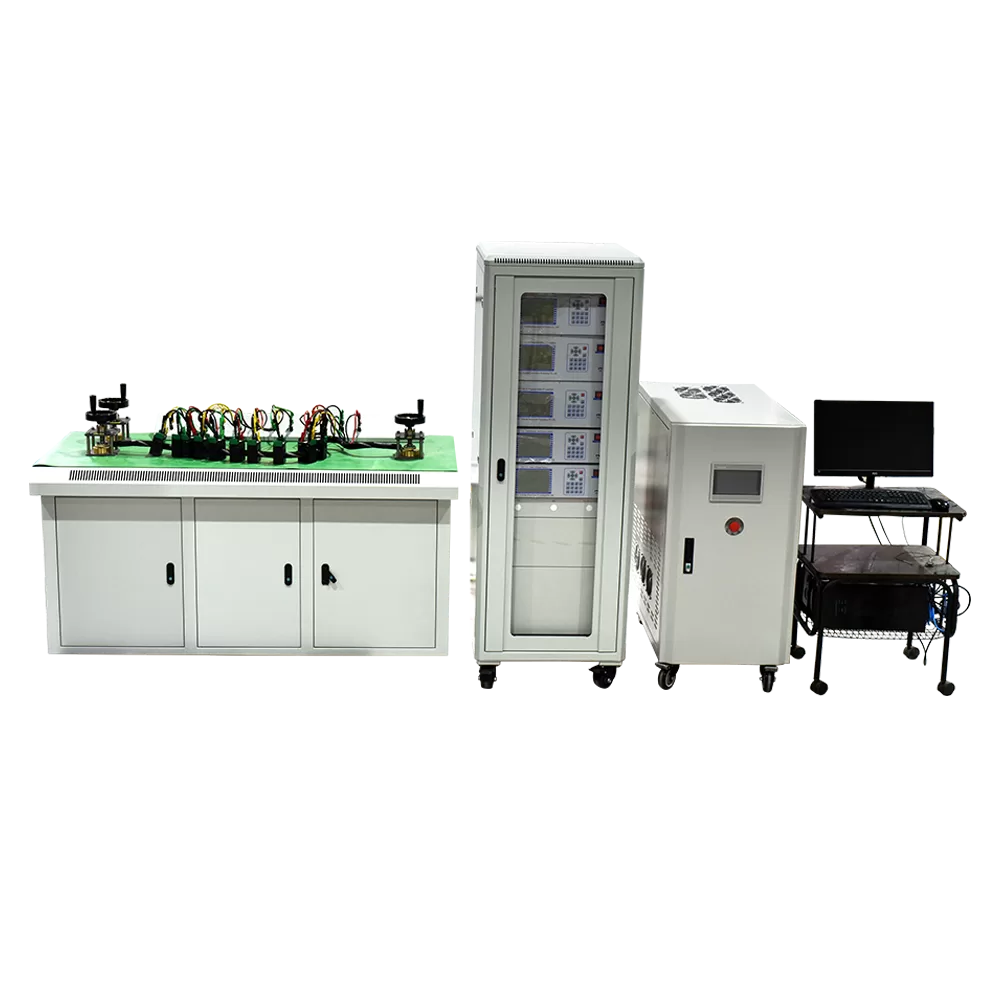
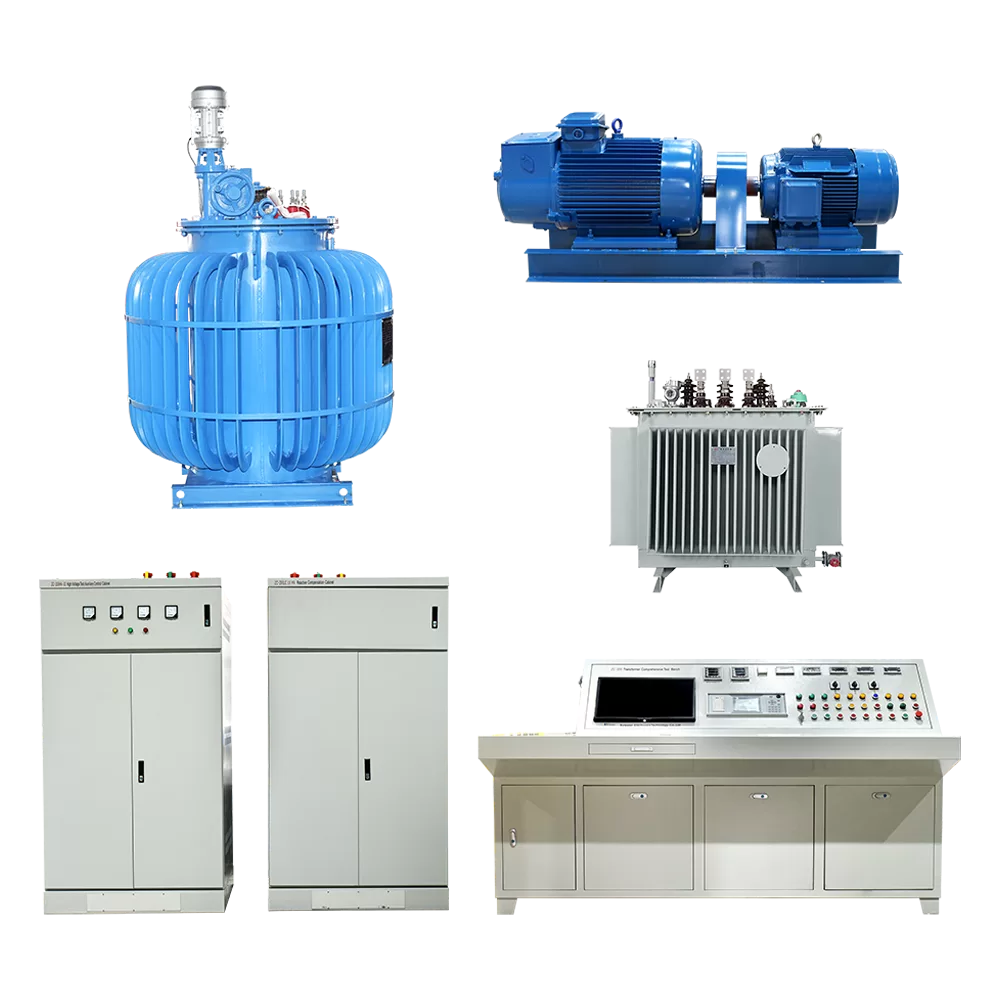
Our ZC-200 Transformer Comprehensive Test System is designed for no-load and load characteristic testing, winding resistance measurement, voltage ratio and connection group testing, and withstand voltage tests.
The system supports three-phase transformer testing up to 5,000 kVA in its 5 MVA configuration. Its digital measurement and synchronous data sampling help simplify factory and routine testing procedures.
Transformer Capacity and Load Testers
Capacity and load testers are useful when customers need to measure transformer capacity, no-load characteristics, load loss, and impedance voltage without purchasing a complete testing bench.
The ZC-202B Transformer Capacity and Load Tester combines transformer capacity testing with characteristic parameter measurement.
Its capacity measurement ranges include:
- 10 kV oil-immersed transformers: 30–3,150 kVA.
- 10 kV dry-type transformers: 30–3,150 kVA.
- 35 kV oil-immersed transformers: 50–31,500 kVA.
- 20 kV dry-type transformers: 50–2,500 kVA.
- 35 kV dry-type transformers: 50–2,000 kVA.
The instrument weighs approximately 8 kg excluding accessories, making it suitable for testing tasks that require a portable solution.
Transformer Winding Resistance Testers
Winding resistance measurement is an important part of transformer factory inspection and maintenance. A dedicated tester can provide more convenient measurement and data management than traditional manual methods.
Our ZC-205A Transformer DC Resistance Tester supports output currents of 10 A, 5 A, 1 A, 200 mA, 20 mA, and 2 mA. It has a minimum resolution of 0.1 μΩ and a measurement accuracy of ±(0.2% of reading + 2 digits).
The instrument can automatically calculate the three-phase winding unbalance rate and store up to 1,000 test records.
High-Voltage Transformer Test Systems
Some transformer testing projects require high-voltage AC withstand testing, particularly for large-capacity transformers and high-voltage electrical equipment.
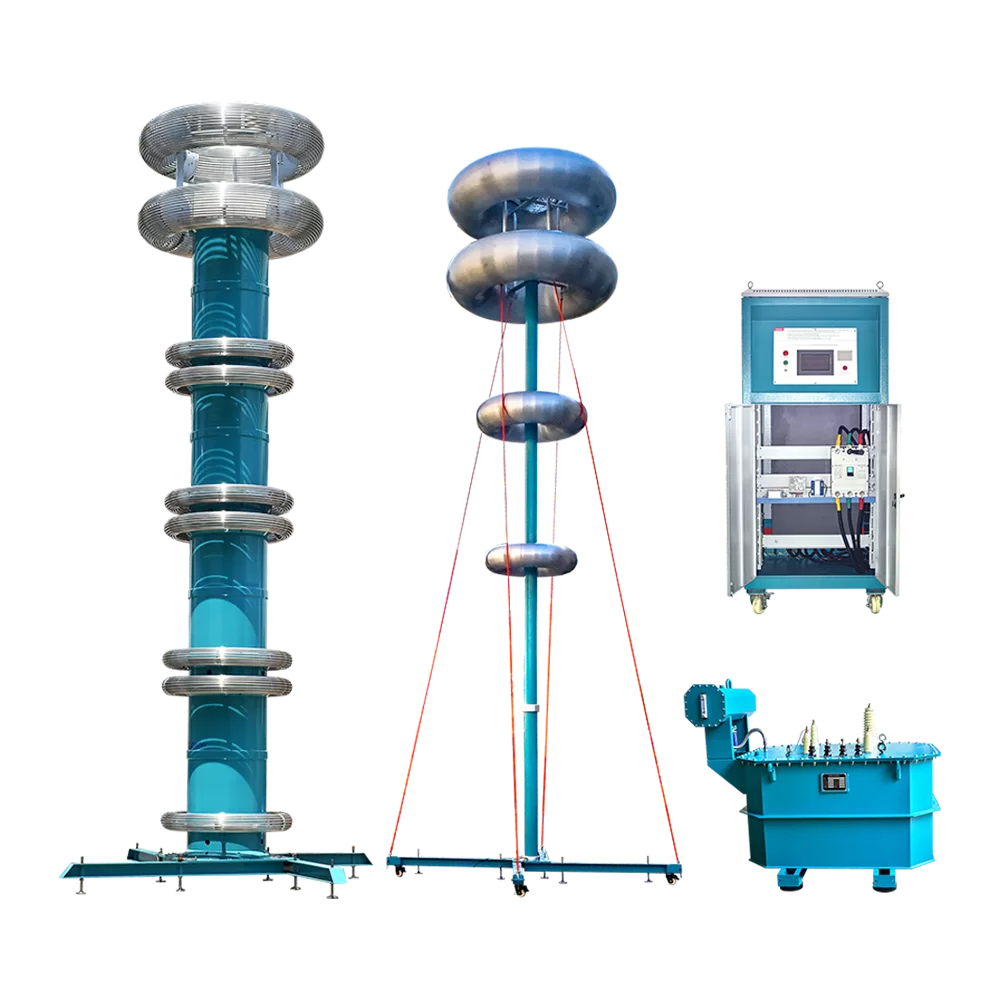
Our ZCVF-6000kVA/1000kV Variable Frequency Resonant Test System is designed for AC withstand voltage testing of transformers and other high-voltage electrical equipment.
It has a rated capacity of 6,000 kVA, a rated voltage of 1,000 kV, and an adjustable frequency range of 30–300 Hz. Its control system supports automatic, semi-automatic, and manual operating modes, as well as test data storage and multiple protection functions.
Its configuration should be selected according to the test object’s capacitance, required test voltage, and applicable testing procedures.

How to Choose the Right Transformer Testing Equipment Supplier
Selecting a supplier requires more than comparing product prices. Buyers should evaluate whether the manufacturer can provide equipment that matches their actual testing requirements.
Check Product Coverage
First, identify the transformer tests required for your project. A supplier should be able to provide suitable instruments for winding resistance, ratio, no-load and load characteristics, insulation, and withstand voltage testing.
A broad product range also makes it easier to build an integrated testing solution when requirements change.
Evaluate Technical and Manufacturing Capabilities
It is also important to confirm whether the supplier can provide technical documentation, equipment commissioning guidance, and support for different operating environments.
Confirm Automation and Data Functions
If testing efficiency is a priority, check whether the equipment supports automatic control, digital measurement, data storage, report generation, and communication with external computers.
These functions vary between models, so buyers should compare actual specifications rather than assume that every instrument offers the same level of automation.
Consider Customization and After-Sales Support
Transformer manufacturers and testing laboratories may have different requirements for rated capacity, voltage levels, test procedures, and equipment layouts.
A capable supplier should be able to recommend an appropriate configuration and provide technical assistance during installation, operation, and maintenance.
Why Choose Kvtester as Your Transformer Testing Equipment Supplier?
At Kvtester, we focus on power testing equipment and measurement instruments for the electrical industry. Our transformer testing product range covers comprehensive test benches, capacity and load testers, winding resistance testers, and high-voltage test systems.
Our solutions serve different requirements across transformer manufacturing, power system maintenance, and electrical testing applications.
We also provide customized equipment configurations according to transformer specifications, required test items, and project conditions. From individual testing instruments to integrated test systems, our goal is to help customers establish efficient and reliable testing processes.
With R&D, manufacturing, and technical support capabilities, we work with customers to identify suitable equipment configurations rather than simply recommending instruments based on product categories.
Conclusion
Choosing an intelligent transformer testing equipment supplier requires careful consideration of testing coverage, measurement accuracy, automation, data management, and technical support. The most suitable solution depends on the transformer type, testing environment, and inspection requirements.
At Kvtester, we provide transformer testing equipment and customized solutions for different power industry applications. Contact our team to discuss your testing requirements and find the right equipment configuration for your project.
Related Products
Latest News
-
 2026-11-11Digital CT PT Analyzer for Smarter Transformer Testing
-
 2026-11-11CT PT Analyzer Polarity Test for Accurate CT and PT Verification
-
 2026-11-11Resonant Test System Commissioning for Reliable High-Voltage Testing
-
 2026-11-10Analysis and Troubleshooting of Common Faults in High-Voltage Switch Mechanical Characteristic Testers
-
 2026-11-10Why do loop resistance testers use high-current testing? What is the difference between 100A and 200A?