
What power supply capacity is required for a transformer test bench?
What power supply capacity is required for a transformer test bench?
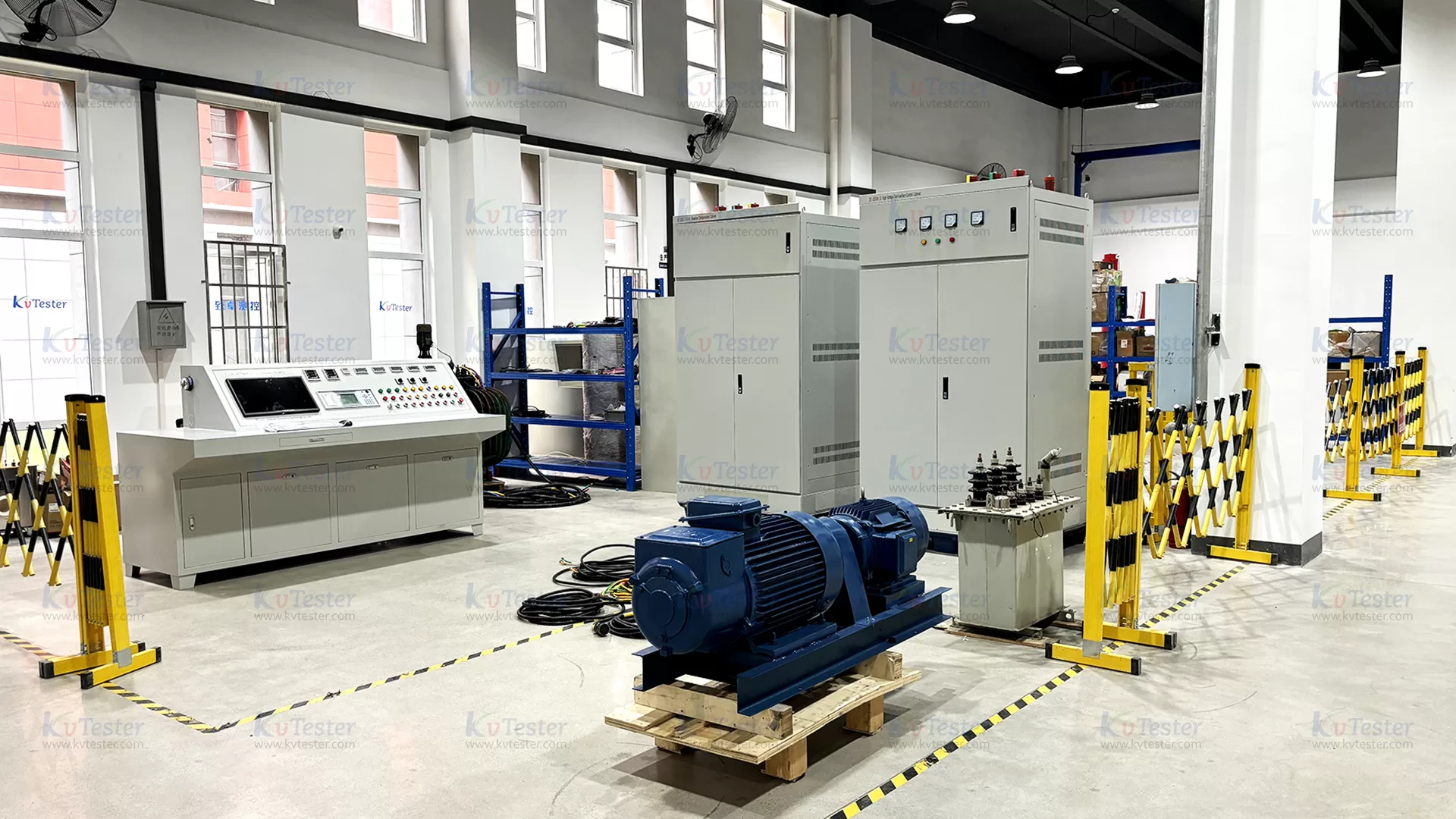
There is no single, fixed value for the power supply capacity required by a transformer test bench; it must be determined based on a combination of factors, including the capacity and voltage class of the transformer under test, the specific test items, and the testing methods employed. Generally, tests such as DC resistance and turns ratio measurements require relatively little power, whereas no-load, load, withstand voltage, and temperature rise tests place higher demands on power supply capacity.
1. Capacity of the transformer under test
The larger the capacity of the transformer under test, the higher the voltage, current, and test power typically required during the testing process.
For example, when performing a load test, the requirements for current-boosting equipment, voltage regulators, and the on-site power supply differ significantly between a 100 kVA transformer and a 2500 kVA transformer.
Therefore, when purchasing a test bench, the following should be specified:
① Minimum test capacity;
② Commonly used test capacity;
③ Maximum test capacity;
④ Potential future capacity expansion range.
Test benches should generally be configured according to the maximum product specifications, with an appropriate margin reserved.
2. Capacity requirements vary by test item
Different tests impose widely varying requirements on power supply capacity.
① DC resistance and turns ratio tests
These tests are primarily powered by specialized instruments, so the requirements for the main on-site power supply capacity are usually low.
② No-load test
The no-load test requires applying a specified frequency and voltage to the transformer. Although the no-load current is typically small, the test power supply must meet the rated voltage requirements of the transformer’s low-voltage side and provide good waveform quality and voltage regulation capabilities.
③ Load test
The load test requires driving a specified current through the windings; this is usually one of the tests that places the highest demand on the test bench’s power supply capacity. The required capacity depends on the short-circuit impedance, rated current, and test wiring configuration of the transformer under test; it cannot be determined simply by the transformer’s rated capacity.
④ Power-frequency withstand voltage test
The capacity required for the power-frequency withstand voltage test depends primarily on the test voltage and the capacitance of the test object. Generally, the higher the voltage class and capacity of the transformer, the greater the capacity required for the withstand voltage testing equipment.
⑤ Induced withstand voltage and temperature rise tests
Induced withstand voltage tests require a variable-frequency power supply, while temperature rise tests require the delivery of high current over an extended period; both place higher demands on power supply capacity, continuous operation capability, and heat dissipation performance.
3. Short-circuit impedance affects load test capacity requirements
During a load test, one side of the transformer is short-circuited, and only a fraction of the rated voltage needs to be applied to the other side to drive the windings to their rated current.
Consequently, the capacity required for the load test depends on both the transformer’s rated capacity and its short-circuit impedance.
For instance, with a high-rated-capacity transformer, low short-circuit impedance means the required test voltage may be low while the current is high; conversely, high short-circuit impedance necessitates a higher test voltage.
Equipment manufacturers must calculate the capacities of the voltage regulator, current booster, and measurement circuits based on these specific parameters.
4. On-site power supply capacity differs from the test bench’s nominal capacity
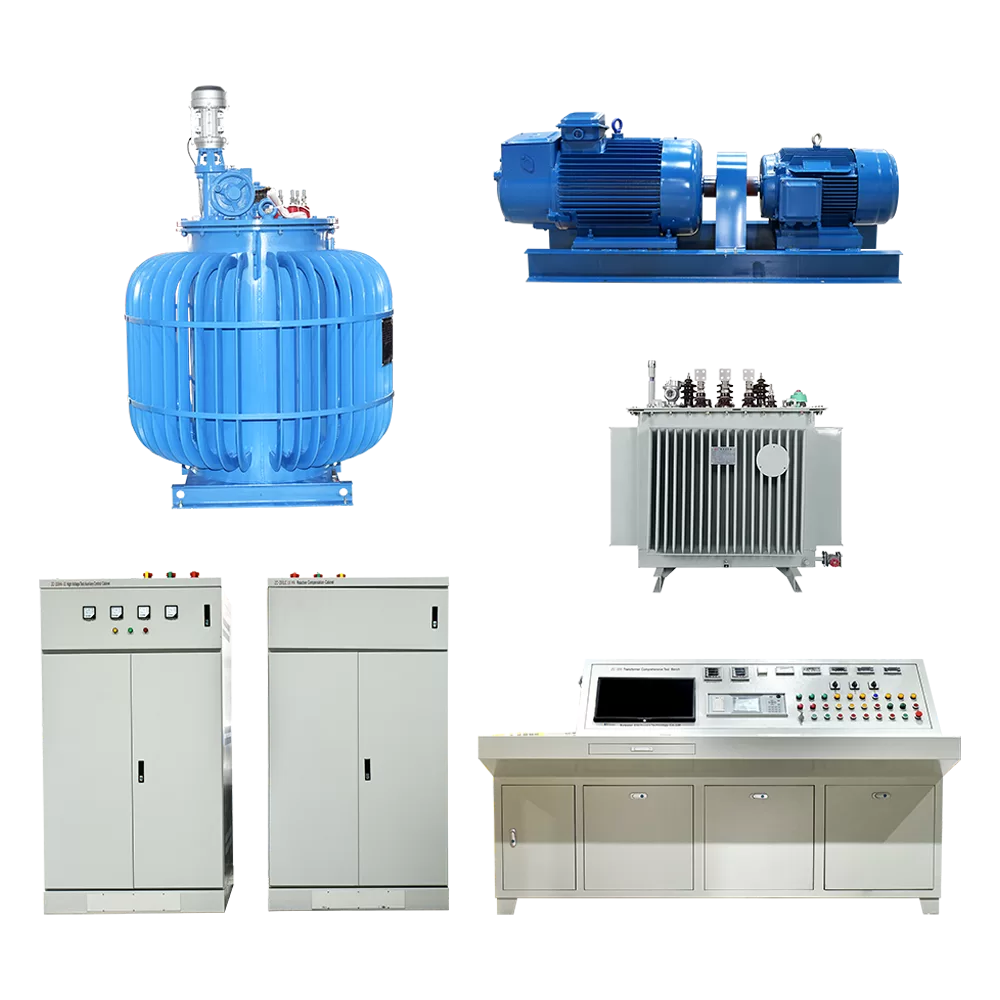
A test bench may contain internal components such as voltage regulators, intermediate transformers, current boosters, test transformers, and compensation devices; its nominal capacity is not identical to the power supply capacity required on-site.
On-site considerations also include:
① Equipment efficiency;
② Starting inrush current;
③ Power factor;
④ Line voltage drop;
⑤ Simultaneous operation of other equipment;
⑥ Safety margins.
Insufficient on-site power capacity can lead to issues such as voltage drops, circuit breaker tripping, fluctuating test data, or the inability to ramp up the current.
5. Is reactive power compensation necessary?
Tests such as no-load, load, induced withstand voltage, and temperature rise tests may involve significant reactive power demands.
Proper configuration of compensation capacitor cabinets can reduce the current drawn from the grid and alleviate the load on the on-site power supply.
However, compensation capacity must not be selected arbitrarily; it requires calculation based on the transformer’s parameters, the testing method, and the actual power factor. Improper compensation can result in over-compensation, voltage spikes, or system instability.
6. How much margin should be allowed for power supply capacity?
Test benches are generally not intended for continuous full-load operation. When configuring the system, an appropriate margin should be added to the calculated capacity to accommodate:
① Future expansion of product specifications;
② Power supply voltage fluctuations;
③ Equipment losses;
④ Short-term overloads;
⑤ Future addition of test items. If the capacity margin is too small, the equipment is prone to operating under high loads for extended periods; if the margin is too large, procurement costs and the required footprint increase. Therefore, the capacity should be reasonably determined based on actual requirements.
7. What information is required before procurement?
To accurately calculate the required power supply capacity, the following information usually needs to be provided to the test bench manufacturer:
① Maximum rated capacity of the transformer;
② Rated voltages on the high- and low-voltage sides;
③ Rated currents on the high- and low-voltage sides;
④ Short-circuit impedance;
⑤ No-load current;
⑥ Test items to be performed;
⑦ Withstand voltage test levels;
⑧ Daily testing volume;
⑨ On-site power supply voltage, number of phases, and available capacity;
⑩ Whether temperature rise, induced withstand voltage, or partial discharge tests are required.
Conclusion
The power supply capacity required for a transformer test bench cannot be determined solely based on the rated capacity of the transformer under test; instead, it must be calculated by considering specific tests such as no-load, load, withstand voltage, and temperature rise tests. Specifically, load tests focus on rated current and short-circuit impedance; withstand voltage tests focus on test voltage and the capacitance of the test object; and temperature rise tests focus on continuous power supply capability. Providing complete transformer parameters and on-site power supply conditions prior to procurement—allowing the manufacturer to perform targeted calculations—helps avoid issues such as insufficient test bench capacity or over-configuration.
Related Products
Lasted News
-
 2026-08-13What factory tests are required for dry-type transformers?
 -
 2026-08-12Pick the Right Transformer Testing Equipment Manufacturer
 -
 2026-08-12CT Analyzer Test Kit Buying Guide: Data-Backed Choices
 -
 2026-08-12CT Analyzer Burden Test: Turning Data Into the Right Design Direction
 -
 2026-08-07ANSI Standard PT Tester: Working Principles and Key Test Parameters