
Home » News » Company News
How to Select a High Precision High Voltage Generator for High Voltage Insulation Tests?
What voltage level does your insulation test require? Do you need AC, DC, or VLF output? How much current does the test load require? And which accuracy, stability, and protection functions should you consider before choosing a high precision high voltage generator?
The right choice depends on how the test will be performed and what the test object requires. By looking at voltage, current, output type, measurement accuracy, stability, protection, and operating conditions together, you can choose equipment that fits the actual test rather than focusing on a single specification.
1.High Voltage Insulation Testing Requirements
Before looking at individual specifications, it is important to define the actual insulation testing requirement. The test object and test method determine the voltage range, output type, and current capacity you need.
Test Objects and Applications
High voltage insulation testing may involve high-voltage electrical instruments, electrical components, insulation materials, power cables, generators, transformers, switches, and lightning arresters.
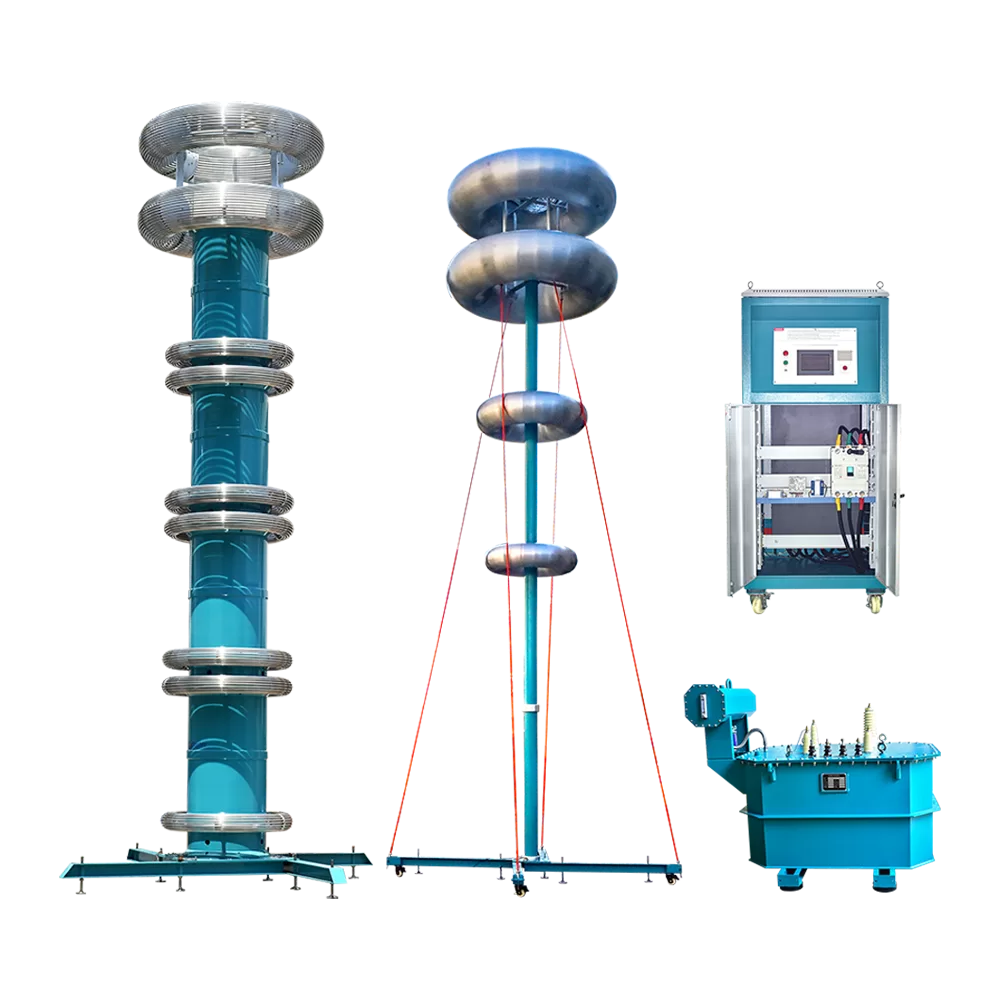
For power-frequency insulation strength testing, Kvtester ZC-501C is designed for high-voltage electrical instruments, electrical components, and insulation materials. ZC-540A is designed for DC withstand voltage testing of equipment such as lightning arresters, power cables, generators, transformers, and switches.
Required Test Voltage
Once the test object is clear, determine the required test voltage and output type.
ZC-501C provides 0–50kV AC high voltage and 0–70kV DC high voltage. Its high-voltage transformer is rated at 5kVA, with AC output current up to 100mA and DC output current up to 71.4mA.
The voltage rating therefore needs to be considered together with output current and test capacity.
2.AC, DC, and VLF High Voltage Testing Options
With the test requirement defined, the next decision is the type of high voltage output. Different insulation testing applications call for different output methods, so choosing the right one helps avoid an unsuitable configuration.
AC High Voltage Testing
For power-frequency insulation strength testing, AC high voltage output is an important consideration.
ZC-501C uses a dry-type single-phase high-voltage transformer and is designed for power-frequency insulation strength testing. Its high-voltage transformer provides up to 50kV AC output.
DC High Voltage Testing
For DC withstand voltage testing, output stability and measurement resolution become more important.
ZC-540A uses an intermediate-frequency voltage-doubling circuit, PWM technology, and voltage-current double closed-loop feedback. It provides 0.1kV voltage resolution and 1µA current resolution, while the output voltage and current accuracy are both ±(1.0%R±2d).
VLF High Voltage Testing
Some insulation tests require very-low-frequency AC output rather than conventional power-frequency testing.
ZC-524C supports 0.1Hz, 0.05Hz, and 0.02Hz test frequencies. Its available models range from 30kV to 90kV peak value, with the permissible capacitive load depending on the selected model and frequency.
3.High Voltage Accuracy and Output Stability
After selecting the output method, accuracy and stability become important selection points. For a high precision high voltage generator, the output needs to remain controlled while the test values remain easy to monitor.
Clear Voltage and Current Measurement
Accurate measurement is easier to manage when the key test values are displayed directly.
ZC-501C uses digital processing and a built-in precision mathematical model. Its digital LCD displays high voltage, instrument voltage, low-voltage current, and high-voltage current test values.
This gives the operator a direct view of the main electrical values during the test.
Stable High Voltage Output
For DC testing, voltage stability is closely related to the control system and load regulation.
ZC-540A uses PWM pulse-width modulation and voltage-current double closed-loop feedback. It provides an output voltage resolution of 0.1kV, current resolution of 1µA, and ripple coefficient of no more than 0.5%.
These specifications are useful when the test requires controlled high-voltage output and precise observation of current changes.
4.Output Current and Test Load
The required voltage is only part of the selection process. The output current must also match the test load, particularly when the insulation test places a higher load on the high voltage source.
ZC-501C has a 5kVA high-voltage transformer. Its AC output is 0–50kV with an output current of up to 100mA, while its DC output is 0–70kV with an output current of up to 71.4mA.
For ZC-540A, the available configurations include 60kV/2mA, 60kV/3mA, 60kV/5mA, 120kV/2mA, 120kV/3mA, and 120kV/5mA.
This makes it important to match both the required test voltage and the expected current load before selecting the generator.

5.High Voltage Protection and Safe Operation
Once the electrical requirements are confirmed, protection functions should be considered as part of the overall test setup. A suitable high voltage generator needs to provide the necessary protection while allowing the operator to control the test conditions clearly.
Overvoltage and Overcurrent Protection
ZC-501C allows overvoltage and overcurrent protection values to be set digitally. It also provides automatic timing according to the set voltage value.
ZC-540A provides zero-position, overcurrent, overvoltage, and breakdown protection. Its protection circuit uses special sensors for fast response.
Grounding Protection
Grounding is also integrated into the ZC-501C protection design. The control box provides an audible and visual alarm when the control box or high-voltage transformer is not connected to ground.
This makes the grounding status easier to check before high voltage is applied.
6.Measurement and Control During High Voltage Testing
Once the main electrical specifications and protection functions are clear, it is worth considering how the equipment supports the actual test process. Clear readings, timing, and control functions can make repeated insulation tests easier to operate and monitor.
ZC-501C provides digital measurement, digital protection settings, and automatic timing. Its timing range is 0–999s, while the LCD displays the relevant voltage and current values during testing.
For VLF testing, ZC-524C uses digital frequency conversion and microcomputer control for voltage rise, voltage reduction, measurement, and protection. The test process is fully automated, with automatic storage and printing functions.
The required control functions should therefore be matched to the test workflow rather than treated as separate features.
7.Portable High Voltage Testing and Working Conditions
For testing outside a fixed laboratory, equipment size, weight, and environmental requirements can affect how easily the system can be transported and operated.
ZC-540A uses an integrated design that places the host and cylinder in one box. Its listed weight is 9kg for the smaller configuration and 10kg for the larger configuration.
ZC-524C uses a controller and booster configuration. The controller weighs 6kg, while the booster weighs 20kg for the 30kV and 40kV models. Higher-voltage configurations have different booster weights.
Environmental Conditions
The operating environment should also match the equipment requirements.
ZC-501C specifies an ambient temperature of -10°C to 40°C and relative humidity of no more than 80%. ZC-540A specifies -10°C to 40°C, relative humidity of no more than 85% at 25°C without condensation, and an altitude below 1500m.
8.Key Specifications for High Voltage Generator Selection
By this point, the main selection factors can be narrowed down to the parameters that directly affect the insulation test.
- Test method: AC, DC, or VLF
- Rated voltage: Required test voltage and equipment range
- Output current: Current required by the test load
- Accuracy: Voltage and current measurement or output accuracy
- Stability: Voltage regulation, load regulation, and ripple
- Protection: Overvoltage, overcurrent, grounding, and breakdown protection
- Control: Manual or automated test functions
- Timing: Required test duration
- Portability: Equipment weight and configuration
- Environment: Temperature, humidity, and altitude requirements
Looking at these specifications together helps prevent a common selection problem: choosing a generator based only on its maximum voltage while overlooking current capacity, load requirements, accuracy, stability, or protection.
9.Kvtester High Voltage Test Equipment for Different Applications
With the test requirements defined, selecting the right equipment becomes much more straightforward. Kvtester provides different high voltage testing solutions for AC, DC, VLF, and other high-voltage test requirements.
Our high voltage test equipment range includes AC/DC Hipot Testers, DC high voltage generators, VLF Hipot Testers, and variable-frequency resonant test systems.
For AC/DC power-frequency insulation testing, ZC-501C provides up to 50kV AC and 70kV DC output. For DC withstand voltage testing, ZC-540A provides configurations up to 120kV, with rated current options from 2mA to 5mA. Its output voltage and current accuracy are both ±(1.0%R±2d), with a ripple coefficient of no more than 0.5%.
For VLF testing, ZC-524C provides 0.1Hz, 0.05Hz, and 0.02Hz test frequencies, with rated voltage models from 30kV to 90kV peak value.
The most suitable configuration depends on the test method, voltage, current, load, and operating conditions.
10.Choosing the Right High Precision High Voltage Generator
The right high precision high voltage generator should match the complete insulation testing requirement, not just one specification.
Consider the test object first, then confirm the required test method, voltage, output current, accuracy, stability, protection functions, control requirements, and working environment. This approach makes it easier to identify the right equipment for laboratory testing, manufacturing inspection, and field high voltage testing.
Kvtester provides high voltage test equipment for different testing requirements and voltage ranges. If you are selecting equipment for power cables, transformers, generators, switches, lightning arresters, insulation materials, or other high-voltage applications, you can contact Kvtester with the test voltage, test object, test method, and required load.
We can then help you determine a suitable high voltage testing configuration for your application.
Related Products
Latest News
-
 2026-09-302026 Top 3 Chinese Insulation Resistance Transformer Testing Equipment Manufacturers
 -
 2026-09-30Industrial CT Tester: How Is It Used for Current Transformer Factory Testing?
 -
 2026-09-30How Can a CT PT Analyzer Improve CT and PT Quality Testing in the Laboratory?
 -
 2026-09-30How to Perform Current Transformer Testing Step by Step?
 -
 2026-09-30How to Perform CT Analyzer Testing and Evaluate the Test Results?