Home » News » Company News
How to Read a DC Resistance Tester Specification for Transformer Testing?
When you compare a DC resistance tester for transformer testing, which specifications should you check first? How do test current, measurement range, accuracy, and resolution affect the test? And how can you tell whether a tester is suitable for your transformer before making a purchase?
Understanding the specification table is the first step. More importantly, the specifications need to be considered together with the transformer capacity, voltage level, winding resistance, and actual testing conditions.
DC Resistance Tester Specifications That Matter for Transformer Testing
We recommend looking at the specifications in a practical order rather than focusing on a single number. Start with the transformer being tested, then match the required current, resistance range, accuracy, and functions.
Our DC resistance tester selection guide explains the same selection logic: the transformer type, capacity, voltage level, test environment, current specification, measurement range, accuracy, and protection functions all need to be considered together.
Test Current and Transformer Requirements
Test current is one of the most important specifications because different transformers require different current levels.
As a general reference, Kvtester recommends:
- 3–5A for transformers at the 10kV voltage level
- 10A for transformers at the 35kV voltage level
- 20A for transformers at the 110kV voltage level
- 40A for transformers at the 220kV voltage level
These values are reference selections rather than fixed rules. Transformer capacity and the actual winding resistance should also be considered.
Too little current may reduce measurement accuracy, while excessive current can increase transformer temperature and affect the resistance measurement.
Measurement Range and Resolution
Once the current requirement is clear, the next step is to check whether the tester covers the expected winding resistance.
For example, our ZC-205A provides six output current settings from 2mA to 10A. The corresponding measurement ranges extend from 0–250mΩ at 10A to 100–30kΩ at 2mA, with a minimum resolution of 0.1μΩ.
This current-to-range relationship is important. A tester should not only provide a high current; that current must also work within a suitable resistance range for the winding under test.
Understanding Accuracy in a DC Resistance Tester Specification
Accuracy tells you how close the measured value is to the actual resistance value. Resolution, on the other hand, tells you how small a resistance change the instrument can display.
These two specifications should therefore be read together. A small resolution alone does not mean that the overall measurement accuracy is equally high.
For the ZC-205A, the measuring accuracy is ±(0.2% reading + 2 words), with a minimum resolution of 0.1μΩ.
When comparing specifications, we recommend checking the accuracy for the specific current and measurement range you will actually use.
DC Resistance Tester Functions for More Efficient Transformer Testing
The basic measurement specifications tell you what the instrument can measure. The functional specifications tell you how efficiently and safely you can complete the test.
For transformer testing, several functions deserve particular attention.
Automatic Discharge and Protection
A transformer winding stores energy during a DC resistance test, so discharge control is an important part of the testing process.
Our ZC-205A uses a DC power supply with an opening voltage of up to 24V to charge and discharge the winding. It also provides overcurrent protection, wiring inspection, and audible and LCD discharge indications.
These functions help make the testing process easier to monitor, especially when working with transformer windings.
Temperature Conversion
Winding resistance changes with temperature, so temperature conversion can be useful when resistance values need to be compared at a reference temperature.
The ZC-205A can display and print resistance converted to the rated temperature. For applications requiring more flexible temperature conversion, our ZC-205AC supports copper and aluminum temperature conversion and allows the winding temperature and conversion temperature to be entered directly.
Data Storage and Communication for Transformer Testing
For repeated testing, the ability to save and manage results can be just as useful as the measurement specifications.
The ZC-205A can store 1,000 groups of test results and supports power-down storage and data browsing. It can also display and print three-phase winding test data and automatically calculate the three-phase unbalance rate.
For applications that require additional data management, our ZC-205AC provides 1,000-group data storage together with Bluetooth, RS232, and USB communication. It also includes a built-in micro-printer for test results.
Choosing the Right DC Resistance Tester for Your Transformer
The right specification depends on the transformer and the way you plan to test it. Instead of choosing a tester only by its maximum current, we recommend checking the complete specification together.
Consider these points:
- Transformer voltage level and capacity
- Required test current
- Expected winding resistance
- Measurement range at the selected current
- Accuracy and resolution
- Discharge and protection functions
- Temperature conversion requirements
- Data storage and communication
- Testing environment and power supply
For example, our ZC-205A-40A provides seven current settings from less than 5mA to 40A, with measurement ranges from 50μΩ to 100kΩ. It also provides 0.1μΩ resolution, 500 test-record storage, RS485 communication, USB data transfer, and automatic discharge.
This gives us different configuration options for transformer manufacturers and power system testing teams with different resistance measurement requirements.
DC Resistance Tester Selection for Different Testing Conditions
The testing environment also affects the specification you need.
For factory testing, repeated measurements, data storage, printing, and communication can be particularly useful. For field testing, operating temperature, interference resistance, protection functions, and ease of operation deserve more attention.
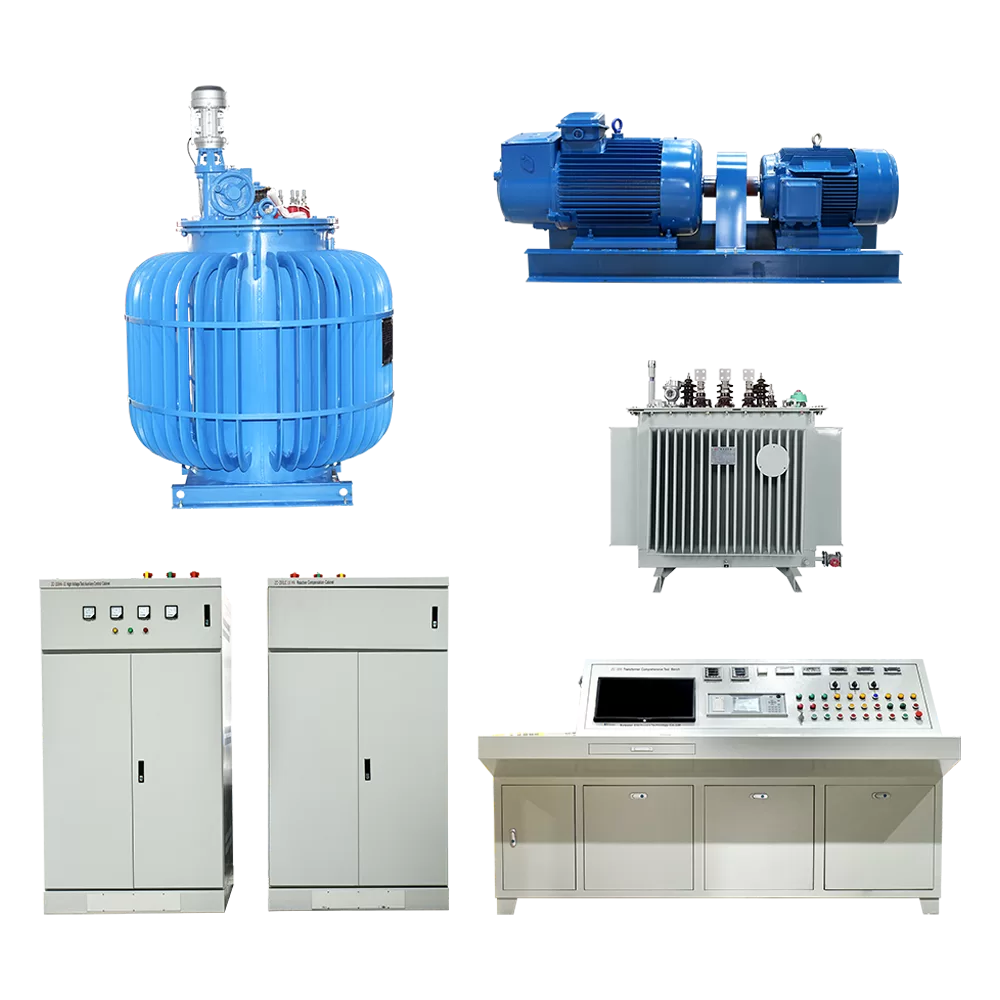
Our transformer test equipment range includes DC resistance testing equipment alongside other transformer testing solutions, allowing the test configuration to be matched to different transformer testing requirements.
Check the DC Resistance Tester Specification Before Purchase
A DC resistance tester specification should be read as a complete set of technical parameters, not as a single accuracy or current figure.
At Kvtester, we can help you match the tester to the transformer voltage level, capacity, winding resistance, and testing conditions. If you are unsure which current or measurement range is appropriate, you can contact Kvtester for transformer testing requirements and provide the transformer specifications and your intended test application.
For a broader view of our testing solutions, you can also explore Kvtester transformer test equipment and compare the available configurations.
Related Products
Latest News
-
 2026-09-24How Does a Variable Frequency Relay Tester Test Over/Underfrequency Relays?
 -
 2026-09-23How Can You Choose the Right Multi-Function Variable Frequency PT Tester Supplier?
 -
 2026-09-23What Features Should a Resistance Tester for Transformer Factory Have?
 -
 2026-09-22Smart ANSI Standard PT Tester For Grid Applications
 -
 2026-09-22Digital CT Tester Supplier for Substation Commissioning