Home » News » Company News
CT Test Bench for Automated Current Transformer Testing
Testing current transformers in a manufacturing facility or metering laboratory often involves more than checking one or two electrical parameters. Each CT may need to undergo accuracy verification under specified secondary loads and power factors, followed by additional checks before it can be accepted.
When testing volumes increase, performing these operations individually can take considerable time and require repeated manual adjustments. A CT test bench integrates measurement instruments, load equipment, power supplies, and control software into one testing platform. It helps testing teams organize the process and handle multiple CTs under controlled conditions.
In this article, we explain how a CT test bench works, what its main components do, and which factors to consider when selecting a system for CT manufacturing or laboratory testing.
What Is a CT Test Bench?
A CT test bench is an integrated testing platform designed for current transformer verification and calibration. Unlike a portable CT analyzer, which is generally used to test individual transformers in the field or laboratory, a test bench combines several pieces of equipment to support a more structured testing workflow.
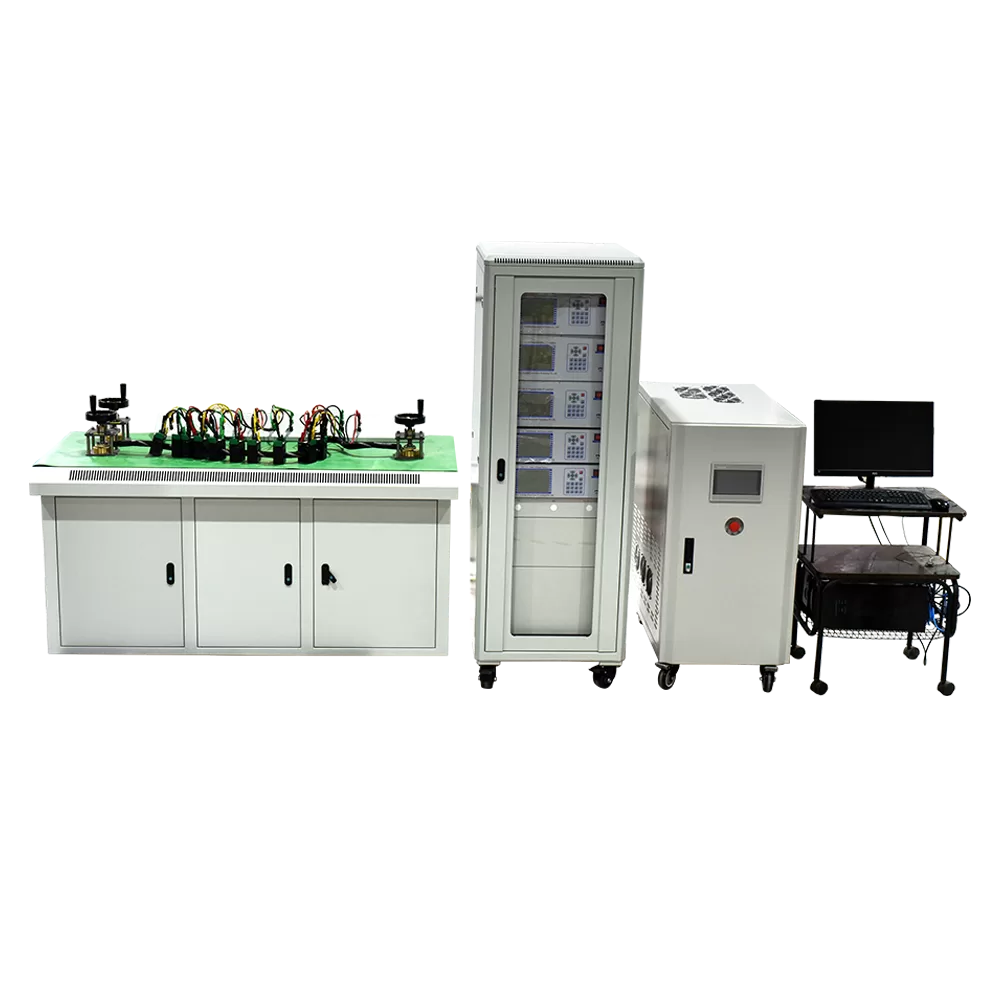
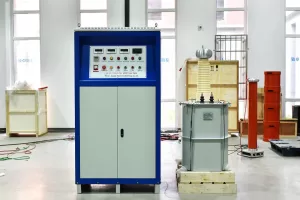
A typical system may include a CT verification meter, programmable load box, test power supply, control cabinet, computer, and dedicated testing stations.
The operator enters the CT specifications and required test conditions through the control software. The system then coordinates the measurement equipment and load settings to perform the selected tests.
CT test benches are particularly useful in:
- CT manufacturing facilities conducting routine production inspection.
- Metering laboratories performing accuracy verification and calibration.
- Quality control departments checking CT performance before delivery.
- Testing centers handling multiple transformers with similar specifications.
For manufacturers, the main value is not simply having more measurement functions. It is the ability to organize repeated tests through an integrated platform. This makes a CT factory testing process easier to standardize and manage.
What Are the Main Components of a CT Test Bench?
The performance of a CT test bench depends on how its components work together. Each part has a specific role in establishing test conditions, measuring electrical characteristics, or managing results.
CT Measurement and Verification Unit
The verification unit measures the electrical characteristics of the current transformer under test. In an accuracy verification system, it works with a standard CT to determine the measurement error of the tested transformer.
Depending on the system configuration, the measurement process can cover parameters such as ratio error and phase displacement under specified test conditions.
The measurement range and accuracy class are important selection factors. They should match the CT specifications and the verification requirements of the laboratory.
Programmable CT Load Box
A CT load box provides the secondary burden required for accuracy testing. Different CT applications may involve different rated burdens and power factors, so the load box needs to support the conditions required by the test procedure.
A programmable load box allows the operator to select the required load settings through the control system. This reduces the need for repeated manual adjustments during testing.
For manufacturers testing CTs with different specifications, the available load range and adjustment steps should be checked before selecting the system.
Test Power Supply and Control Cabinet
The power supply provides the electrical conditions required by the testing process, while the control cabinet coordinates the relevant equipment.
In an automated CT test bench, the control system can manage load switching, measurement sequences, and communication between the instruments and computer.
This integration is important because the operator does not need to manage every adjustment independently. The system can carry out predefined operations according to the entered test parameters.
Testing Stations and Connection Structure
The test bench provides the physical positions for installing and connecting the CTs.
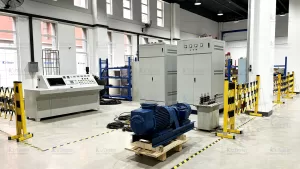
A multi-position design allows several transformers to be prepared for testing within the same platform. Depending on the system, the operator can select individual stations or conduct tests on multiple compatible CTs.
The number of stations should be considered alongside the actual production workload. More stations are useful only when the testing system can support the required electrical conditions and switching sequence.

How Does an Automated CT Test Bench Work?
An automated CT test bench combines parameter configuration, electrical switching, measurement, and data processing into a coordinated workflow.
A typical process includes the following steps.
- Connect the CTs: Install the transformers at the designated testing stations and connect their primary and secondary terminals according to the system wiring diagram.
- Enter transformer information: Input the CT type, rated current, accuracy class, secondary burden, power factor, and other required parameters through the control software.
- Select the test conditions: Choose the required testing procedure and corresponding load settings.
- Start automatic testing: The control system coordinates the power supply, measurement unit, and programmable load box according to the selected procedure.
- Measure and calculate errors: The verification unit collects measurement data and calculates the relevant accuracy results.
- Review and save records: The software displays the results and stores the testing data for further review, printing, or backup.
The exact sequence depends on the test bench configuration. For example, the Kvtester ZCHG-12 CT PT Test System uses computer-controlled automatic testing and supports automatic switching of current and voltage loads. Its software can also manage test results and generate records or certificates.
This workflow is especially useful when a factory needs to repeat similar verification procedures across multiple CTs.
What Tests Can a CT Test Bench Perform?
The available test functions depend on the system design. A CT accuracy calibration bench should not automatically be assumed to provide every diagnostic function available on a portable CT analyzer.
CT Accuracy and Ratio Error Testing
Accuracy testing evaluates whether a CT meets its specified measurement performance under defined conditions.
The system compares the tested CT with a standard transformer and determines the relevant measurement errors. Ratio error is one of the key results, while phase displacement is also important when evaluating CT accuracy.
Testing should cover the required secondary burden and power factor conditions rather than relying on a single measurement point.
CT Phase Displacement Testing
Phase displacement describes the angular difference between the primary and secondary current quantities, with the direction and reference defined by the applicable measurement convention.
Together with ratio error, it helps determine whether the CT meets its required accuracy class.
CT Polarity Checking
Polarity checking verifies the relationship between the primary and secondary terminal markings. Incorrect polarity can affect the operation of metering and protection circuits.
Some integrated CT test systems include polarity checking as part of their available functions.
CT Demagnetization
A CT core may retain residual magnetism after certain testing or operating conditions. Demagnetization helps reduce this residual magnetism before subsequent measurements or when required by the maintenance procedure.
The ZCHG-12 CT PT Test System supports open-circuit and closed-circuit CT demagnetization.
CT Inter-Turn Insulation Testing
Inter-turn insulation testing checks the insulation condition between turns of a CT winding. This is a different inspection objective from accuracy verification and should be evaluated according to the applicable test procedure and equipment configuration.
The ZCHG-12 system includes inter-turn insulation testing and polarity checking in addition to CT accuracy testing and demagnetization.
When selecting a test bench, confirm that each required function is explicitly supported by the proposed configuration.
Why Use a CT Test Bench for Batch Testing?
For CT manufacturers and metering test centers, the main advantage of an integrated test bench is its ability to organize repeated verification work.
Test Multiple CTs in One System
A multi-station test bench allows several CTs to be installed and connected within the same platform. This can reduce repeated setup work when testing a group of transformers with compatible specifications.
For example, the Kvtester ZCHG-12 CT PT Test System supports testing up to 12 CTs at one time. Its multi-station arrangement is intended for batch accuracy verification, with the supported simultaneous testing configuration subject to the CT ratio and system requirements.
Reduce Manual Switching
During accuracy testing, different secondary burdens and power factors may need to be applied. A system with automatic load switching can reduce the operator’s need to change settings manually between measurement stages.
This is particularly useful in production environments where similar test procedures are repeated throughout the day.
Improve Testing Consistency
Using predefined parameters and a coordinated testing sequence helps operators follow a more consistent procedure.
The system can manage the selected CT specifications, load conditions, and measurement process through its control software. This reduces unnecessary differences caused by repeated manual adjustments, although correct wiring and parameter entry remain essential.
Simplify Data Management
A computer-controlled system can record test results, organize measurement data, and generate reports or certificates according to the configured software functions.
For quality control teams, these records make it easier to review test outcomes and maintain traceable documentation for delivered products.
How to Choose the Right CT Test Bench?
A suitable CT test bench should match the transformers being tested and the workload of the facility. Consider the following factors before making a decision.
CT Current Range
Check the rated primary and secondary current ranges supported by the system. The range should cover the CT specifications used in your production or laboratory work.
For example, the Kvtester ZCHG-12 CT PT Test System supports primary current ratings from 5 A to 5,000 A and secondary current ratings of 1 A and 5 A. Its standard CT accuracy specification is 0.01S class.
Do not apply these specifications to every ZCHG-12 variant. The ZCHG-12-2000A automatic CT testing system, for example, has a different specified configuration, including a primary current range of 5–2,000 A and a 5 A secondary current.

Accuracy and Test Requirements
Confirm the accuracy class and measurement range required for your CTs. The test bench should meet the applicable verification requirements and support the necessary test conditions.
Also check whether the system provides additional functions such as demagnetization, polarity checking, and inter-turn insulation testing.
Load Range and Power Factor
The programmable load box must cover the secondary burden and power factor conditions required by your testing procedures.
A wider load range may be useful when a facility handles different CT types, but the actual selection should be based on the specifications of the transformers being tested.
Number of Testing Stations
Consider the number of CTs tested per shift and whether their specifications allow simultaneous testing.
A 12-position test bench can improve batch testing efficiency, but its actual capacity depends on the compatible CT configuration and operating procedure.
Automation and Data Management
Evaluate how the system handles automatic switching, measurement control, data storage, and report generation.
For production environments, these functions can be as important as the measurement range because they affect daily workflow and record management.
CT Test Bench vs. Portable CT Analyzer
A CT test bench and a portable CT analyzer serve different testing needs.
A CT test bench is generally better suited to fixed testing environments, such as manufacturing facilities and metering laboratories. Its integrated load equipment, control system, and multiple testing stations support repeated accuracy verification and batch testing.
A portable CT analyzer is more suitable for individual transformer testing, field maintenance, and applications where technicians need to move between different locations.
The choice depends on testing volume, working environment, and required functions. Facilities with both production testing and field maintenance tasks may need different equipment for each workflow. A digital portable CT tester can complement a fixed test bench when flexible on-site testing is also required.
Conclusion
A CT test bench brings measurement instruments, programmable loads, power supplies, control software, and testing stations together in one platform. For CT manufacturers and metering laboratories, this integration can simplify accuracy verification, reduce repetitive manual switching, and improve batch testing and data management.
The right system should match the CT current range, accuracy requirements, secondary burden conditions, testing volume, and automation needs of your facility.
If you are planning to upgrade your CT testing process or need a test bench for batch current transformer verification, contact Kvtester to discuss your testing requirements and equipment configuration.
Related Products
Latest News
-
 2026-11-19Variable Frequency CT Tester: Why Frequency Matters
-
 2026-11-13What testing instruments are required for the handover testing of 10kV transformers?
-
 2026-11-13Acceptance Testing Standards and Procedures for 10kV Distribution Transformers
-
 2026-11-13What tests are required for the grid-connection acceptance of distribution transformers?
-
 2026-11-13What Key Parameters Should Be Evaluated When Purchasing a Transformer Comprehensive Test Bench?