
Home » News » Company News
Industrial CT Tester: How Is It Used for Current Transformer Factory Testing?
Current transformer manufacturing depends on consistent testing to verify accuracy and electrical performance before delivery. Ratio, phase error, polarity, excitation characteristics, winding resistance, and burden are among the key parameters that need to be checked during CT testing.
For a factory, the challenge is not only obtaining accurate measurements. The testing process also needs to handle different CT specifications, reduce repetitive manual operations, and keep test results organized. An industrial CT tester can bring these requirements together in a more efficient factory testing workflow.
For manufacturers looking for equipment for different CT and PT testing requirements, Kvtester provides a range of CT/PT test equipment covering CT/PT analyzers and automatic testing systems.
Why CT Testing Matters in Current Transformer Manufacturing
A current transformer used for metering or protection needs to meet its specified electrical characteristics. Factory testing provides a controlled way to verify those characteristics before the CT enters service.
The actual test items depend on the CT type and production requirements, but a factory CT testing process commonly focuses on several key measurements.
Key CT Tests in a Factory Testing Process
Once the required test items are defined, the next step is to check whether the CT tester can cover the parameters needed for the products being manufactured. The following tests are particularly relevant to CT accuracy and performance.
CT Ratio, Phase Error, and Polarity
CT ratio testing verifies the transformation relationship between the primary and secondary sides. For a production line, the measured ratio needs to be compared with the specified value to identify deviations.
Phase error is also important for CTs used in measurement and protection applications. Polarity testing verifies that the primary and secondary connections have the required polarity relationship.
Together, these tests provide a direct check of the CT’s basic transformation characteristics.
Excitation Characteristics and Winding Resistance
Excitation testing evaluates the relationship between excitation voltage and current and provides information about the magnetic characteristics of the CT core.
Winding resistance is another important measurement. Differences in winding resistance can affect the secondary circuit and may indicate an abnormal winding or connection condition.
For this reason, a practical CT tester should combine these measurements rather than requiring a separate manual process for every parameter.
Secondary Burden and CT Accuracy
The secondary burden affects CT operating conditions and therefore needs to be considered when verifying CT performance.
Depending on the CT type and test requirements, the testing process may involve accuracy, ratio error, phase error, excitation characteristics, winding resistance, and secondary burden.
How an Industrial CT Tester Fits Into the Factory Workflow
A good factory testing process should reduce unnecessary manual steps while keeping the test conditions consistent. This becomes especially important when the production line handles different CT ratios, accuracy classes, and rated loads.
Set the CT Parameters Before Testing
The test begins with the parameters required for the specific CT.
Depending on the testing system, the operator may need to enter information such as:
- CT type
- Measurement range
- Accuracy class
- Rated capacity
- Power factor
- Primary current
- Secondary current
For an automated system, these settings become the basis for the subsequent measurement and result calculation.
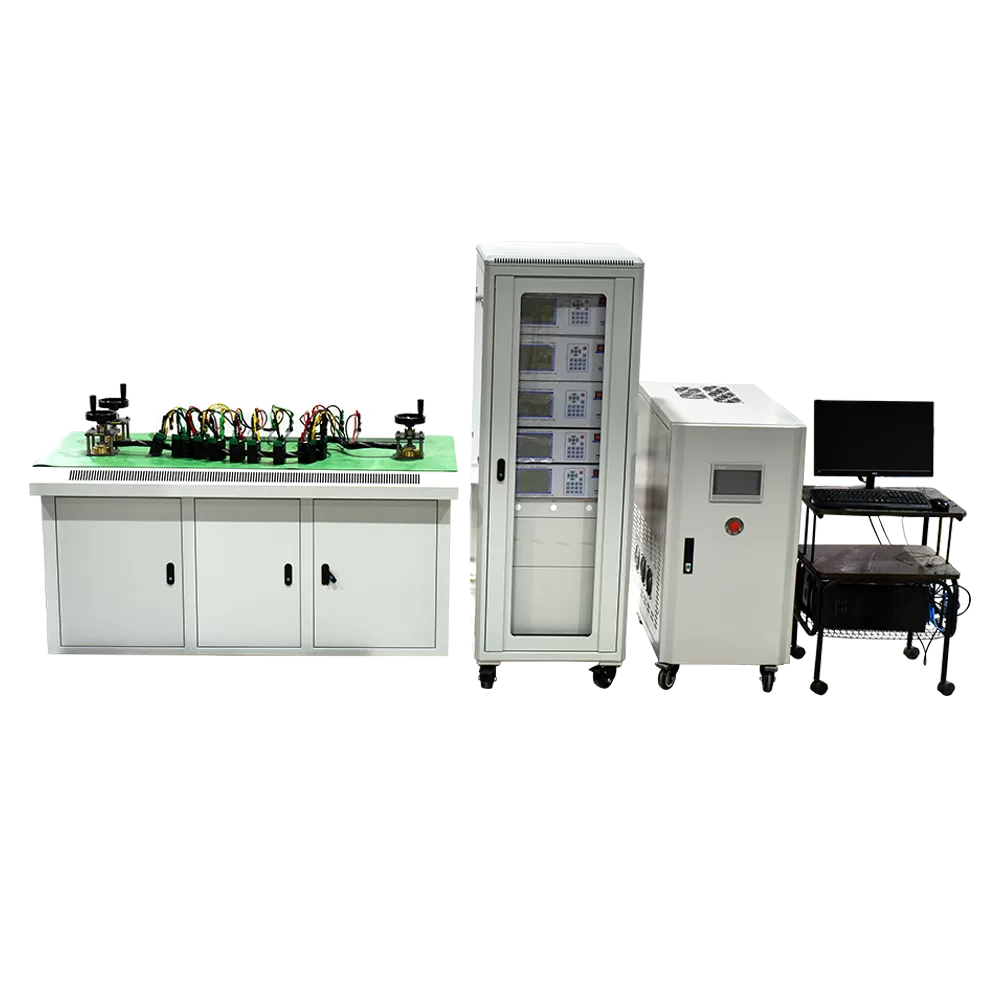
The ZCHG-12 CT PT Test System allows users to enter the CT type, measurement range, precision class, capacity, and power factor through its computer-controlled interface before testing. The system then performs the CT test and manages the resulting data.
Automate Repetitive Testing Operations
Manual switching and repeated calculations can become inefficient when a factory tests many CTs with different specifications.
An automated CT testing system can coordinate measurement and switching functions according to the configured test parameters. With the ZCHG-12, the current and voltage load box can be switched automatically, while voltage adjustment is controlled by the computer and tester.
This makes the testing procedure more consistent and reduces repetitive operator work.
Keep Test Results Ready for Review
Factory testing does not end when the measurement is completed. The results also need to be available for review and quality records.
The ZCHG-12 displays test results on the tester and supports Word test reports through the computer. This provides a straightforward way to move from measurement to documentation without manually transferring every result.
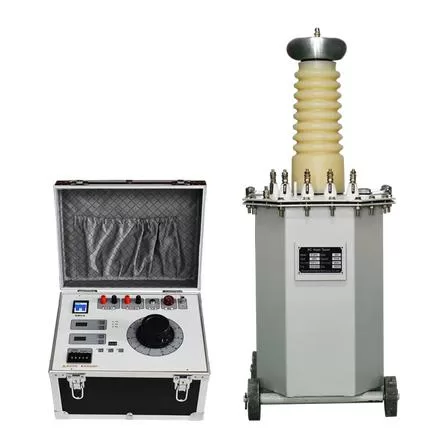
industrial CT tester
What Should You Check When Choosing an Industrial CT Tester?
The right CT tester depends on the CT specifications and the way the factory organizes its testing process. Instead of looking at one specification in isolation, consider the complete testing requirement.
Match the CT Range to Your Production
The first point to check is whether the equipment covers the primary and secondary current ranges used in production.
The ZCHG-12 supports CT rated primary currents from 5 A to 5000 A and secondary currents of 1 A and 5 A. It has a rated capacity of 30 kVA and a standard CT accuracy class of 0.01S.
If your product range changes significantly, it is better to confirm the required current range and accuracy class before choosing the test system.
Check the Required Test Functions
A CT tester should cover the parameters that matter to your products rather than simply offering the largest possible number of functions.
For a typical CT manufacturing application, check whether the equipment supports the required combination of:
- CT accuracy testing
- Ratio and polarity testing
- Excitation characteristics
- Winding resistance
- Secondary burden
- Ratio error
- Phase or angular error
- Demagnetization
The test functions should also match the CT types and accuracy classes produced by your factory.
Consider Testing Capacity and Automation
Testing capacity becomes increasingly important when CT production volume is high.
The ZCHG-12 test bench can accommodate up to 12 CTs at one time. It also provides automatic voltage adjustment and computer-controlled testing.
For a production line, these functions can be more valuable than simply choosing a portable instrument with a wide range of individual measurements.
Industrial CT Tester Solutions for Different Factory Requirements
Different production environments require different levels of automation. A manufacturer testing individual CTs may prioritize measurement flexibility, while a dedicated production line may need a complete test bench with automatic control and higher testing capacity.
Kvtester provides CT/PT analyzers as well as automatic CT testing systems, so the equipment can be selected according to the CT range, required test functions, production volume, and workflow. You can review the available CT/PT test equipment to compare the configurations relevant to your testing requirements.
The key is to match the testing configuration to the actual production process instead of choosing equipment based on a single parameter.
ZCHG-12 for Automated Current Transformer Factory Testing
When a factory needs a dedicated system for automatic CT accuracy testing, the ZCHG-12 combines measurement, control, automatic testing, and result management in one testing system.
Its main specifications include:
- Rated capacity: 30 kVA
- CT primary current: 5–5000 A
- CT secondary current: 1 A and 5 A
- Standard CT accuracy: 0.01S class
- Output voltage: AC 0–420 V
- Output current: AC 0–75 A
- Maximum test quantity: 12 CTs at one time
- Test method: computer-controlled automatic testing
- Standards: IEC 61869-1 and IEC 61869-2
The system also provides CT demagnetization, CT inter-turn insulation testing, polarity checking, and overcurrent and overvoltage protection. More details are available in the ZCHG-12 CT PT Test System.
This configuration is intended for applications where CT testing needs to become part of a repeatable production process rather than remain a separate manual operation.
How to Choose the Right CT Testing Equipment for Your Production Line
Before making a selection, define the testing requirements around your actual products.
Start with the CT primary and secondary current range, accuracy class, rated burden, and required test items. Then consider how many CTs need to be tested in one cycle and how much of the process should be automated.
For a production line, the following questions are useful:
- What CT current range needs to be covered?
- Which accuracy classes need to be tested?
- Which CT characteristics must be measured?
- How many CTs need to be tested in one batch?
- Is automatic load switching required?
- How should test results be stored and reported?
- Does the system need to support a dedicated test bench?
Answering these questions first makes it easier to select a CT tester that fits the production process rather than adapting the production process around the equipment.
Build a CT Factory Testing Process Around Your Requirements
An industrial CT tester is most useful when it fits naturally into the complete factory workflow. Accurate measurement is essential, but so are repeatable operation, suitable test capacity, automated control, and clear test records.
Kvtester provides CT/PT analyzers and automatic CT testing systems for different testing requirements. For manufacturers that need a dedicated production configuration, the equipment can be selected around the required CT range, accuracy class, test functions, and testing capacity.
If you are planning a new CT testing line or upgrading an existing one, you can contact Kvtester with your CT specifications and required test items. This allows us to recommend a testing configuration that matches your production requirements.
Related Products
Latest News
-
 2026-09-302026 Top 3 Chinese Insulation Resistance Transformer Testing Equipment Manufacturers
 -
 2026-09-30How Can a CT PT Analyzer Improve CT and PT Quality Testing in the Laboratory?
 -
 2026-09-30How to Perform Current Transformer Testing Step by Step?
 -
 2026-09-30How to Perform CT Analyzer Testing and Evaluate the Test Results?
 -
 2026-09-30How Do You Troubleshoot Common DC Resistance Tester Operation Problems?