Working Principle and Main Applications of Anti-Interference Dielectric Loss Testers
Working Principle and Main Applications of Anti-Interference Dielectric Loss Testers
Dielectric loss testing is a crucial procedure for assessing the insulation condition of high-voltage electrical equipment. By measuring the dielectric loss factor (tanδ or tgδ) and capacitance of the test object, one can analyze issues such as moisture ingress, aging, deterioration, and structural changes in the insulation.
While laboratory testing conditions are relatively stable, conducting dielectric loss tests in the field—such as at substations—exposes the equipment to potential power-frequency electric field interference from nearby operating equipment, busbars, and high-voltage lines. This interference can cause fluctuations in tanδ readings and compromise measurement stability. Consequently, field dielectric loss testing places high demands on the anti-interference capabilities of the testing instruments.
1. Working Principle of Anti-Interference Dielectric Loss Testers
Real-world insulating materials incur energy loss when subjected to AC voltage; the dielectric loss factor (tanδ) is commonly used to quantify this loss. Dielectric loss testers determine tanδ and capacitance (Cx) by measuring the AC voltage applied to the test object and the resulting current flowing through it, then calculating the values based on the amplitude and phase relationship between the two signals.
A major challenge in field dielectric loss testing is power-frequency interference. If the test signal frequency matches or closely approaches the 50Hz interference frequency present on-site, distinguishing the valid signal becomes difficult.
Anti-interference dielectric loss testers typically employ techniques such as variable-frequency measurement, different-frequency measurement, and digital signal processing. By adjusting the test frequency to avoid dominant on-site power-frequency interference and subsequently processing the acquired signals, these testers enhance the stability and repeatability of the test data.
2. What Are the Functions of Single-Frequency and Dual-Variable-Frequency Testing?
Interference levels vary depending on the site conditions; therefore, testing instruments usually need to offer multiple frequency selection options.
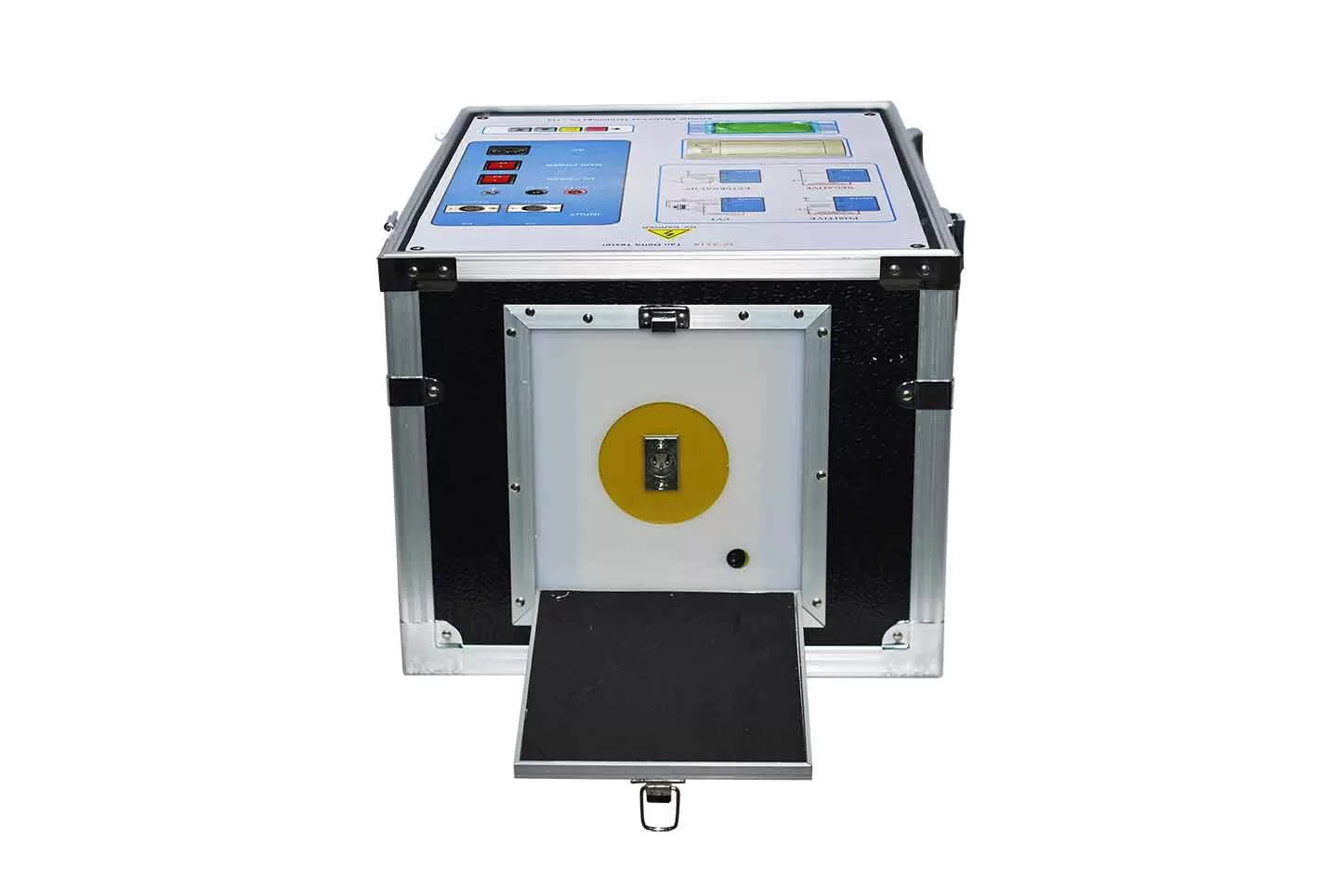
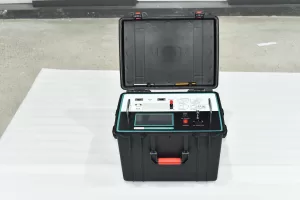
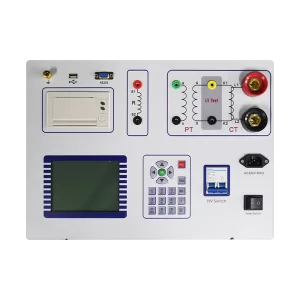
Taking the ZC-221 fully automatic anti-interference dielectric loss tester as an example, it supports single-frequency testing at 45Hz, 50Hz, 55Hz, 60Hz, and 65Hz, as well as automatic dual-variable-frequency testing at 45/55Hz, 55/65Hz, and 47.5/52.5Hz.
When significant power-frequency interference is present on-site, the dual-variable-frequency testing mode can be selected based on actual conditions to minimize the impact of 50Hz interference on the dielectric loss measurement results. The specific test frequency should be selected reasonably based on the type of test object, the on-site environment, and the instrument’s operating requirements.
3. For which equipment is the anti-interference dielectric loss tester primarily used?
The anti-interference dielectric loss tester is primarily used to measure tanδ (dissipation factor) and capacitance in high-voltage electrical equipment. Common test objects include power transformers, high-voltage bushings, current transformers, voltage transformers, capacitive voltage transformers (CVTs), and other high-voltage insulation equipment. Depending on the specific test object, the appropriate connection method—such as normal connection (GST), reverse connection (UST), or others—must be selected based on its insulation structure and grounding status.
The ZC-221 supports normal connection, reverse connection, and the CVT self-excitation method, making it suitable for various on-site dielectric loss tests. Specifically, the CVT test mode allows for the measurement of relevant capacitance and dielectric loss parameters. When equipped with the appropriate standard oil cup and test leads, it can also be used to test the dielectric loss of insulating oil.
4. What precautions should be taken during on-site use?
Dielectric loss testing is a type of high-voltage test. Before testing, one must verify that both the instrument and the test object are reliably grounded and confirm the test lead connections, the status of the test object, and on-site safety measures. Additionally, factors such as test lead layout, ambient humidity, surface contamination on the test object, and strong surrounding electric fields can influence test results. If abnormal tanδ data is observed or significant discrepancies occur between repeated tests, one should not immediately conclude that there is an insulation fault; instead, the grounding, wiring, testing environment, and potential on-site interference should be checked first, and the test repeated. The ZC-221 features a built-in standard capacitor and high-voltage power supply (with selectable output voltages ranging from 0.5 kV to 10 kV) and includes protection functions such as grounding and overcurrent protection to meet standard on-site dielectric loss testing requirements.
5. Summary
Anti-interference dielectric loss testers primarily utilize variable-frequency measurement and signal processing technologies to mitigate the impact of power-frequency interference—common in substation environments—on tanδ and capacitance measurements. For equipment such as transformers, bushings, instrument transformers, and CVTs, selecting the appropriate test frequency, connection method, and test voltage—combined with reliable grounding and standardized operating procedures—helps ensure the acquisition of stable and valid dielectric loss test data. The ZC-221 fully automatic anti-interference dielectric loss tester features capabilities such as multi-frequency testing, forward and reverse connection measurements, and CVT self-excitation testing, meeting the requirements for on-site dielectric loss and capacitance testing of various high-voltage electrical equipment.
Kvtester Electronics Technology Co.,Ltd. is a high-tech enterprise specializing in power testing, testing, research and development, production, and sales of testing equipment. It has been engaged in the electrical testing industry for many years, and its products are of high quality. We welcome customers to come and purchase. Service hotline: 0086-27-81778799, to learn more, visit the official website: www.kvtester.com
Related Products
Latest News
-
 2026-09-10What causes unstable or fluctuating dielectric loss test data?
 -
 2026-09-10What causes high dielectric loss values? Common causes and troubleshooting approaches
 -
2026-09-10What is the difference between the “normal connection” and “reverse connection” methods for dielectric loss testers?
-
 2026-09-10How to Use a Dielectric Loss Tester: Basic Field Testing Procedures and Precautions
 -
 2026-09-10PT Tester With Maintenance Service: Procurement Guide