Home » News » Company News
Transformer Tester for Maintenance: Essential Tests
Regular transformer maintenance helps identify potential electrical problems, evaluate equipment condition, and reduce the risk of unexpected failures. Different maintenance tasks require different testing methods, from checking winding resistance and transformation ratio to measuring no-load and load characteristics.
Choosing a suitable transformer tester for maintenance is therefore important for power utilities, transformer manufacturers, and electrical maintenance teams. The right equipment should match the transformer type, required test items, measurement range, and working environment. Understanding these requirements makes it easier to select testing instruments and establish an effective maintenance process.
Why Is Transformer Testing Important for Routine Maintenance?
Power transformers operate under continuous electrical and thermal stress. Over time, winding connections, insulation materials, and other internal components may experience changes that affect electrical performance.
Routine testing provides useful information about transformer condition and helps maintenance personnel identify abnormalities before they develop into more serious problems.
Several maintenance objectives make transformer testing necessary:
- Identify electrical abnormalities: Detect unusual resistance values, incorrect transformation ratios, and changes in electrical characteristics.
- Check winding connections: Evaluate winding resistance and identify possible connection problems or contact deterioration.
- Evaluate operating performance: Measure capacity, no-load current, no-load loss, and load-related parameters.
- Support preventive maintenance: Establish measurement records and compare results over time to identify changes.
- Verify equipment after repair: Confirm that relevant electrical characteristics meet the required specifications before returning a transformer to service.
For utilities and industrial facilities, these tests also help maintenance teams make better decisions about further inspection, repair, or continued operation.
What Tests Are Needed for Transformer Maintenance?
Transformer maintenance involves several electrical tests. Each test focuses on a different characteristic, so the required instruments depend on the inspection objective.
Transformer Turns Ratio Test
The turns ratio test checks the relationship between the primary and secondary winding turns. It verifies whether the actual transformation ratio matches the rated value.
An incorrect ratio may be related to winding connection problems, incorrect tap-changer positions, or internal winding issues. Comparing measured values with the transformer nameplate and previous test records helps technicians identify possible abnormalities.
For maintenance teams, ratio testing is useful after transformer installation, repair, or tap-changer maintenance. It can also help verify winding connections and vector group information.
DC Winding Resistance Test
DC winding resistance testing measures the resistance of transformer windings. It helps evaluate winding connections, conductor conditions, and contact quality.
Abnormal resistance differences between phases may indicate loose connections, poor contact, damaged conductors, or tap-changer problems. However, technicians should also consider winding temperature, tap position, and measurement conditions when interpreting the results.
A suitable DC resistance tester should provide an appropriate test current and measurement range for the transformer under inspection.
For example, our ZC-205A DC Resistance Tester is designed for transformer DC resistance testing in power systems and transformer manufacturing applications. It provides six output current settings: 10A, 5A, 1A, 200mA, 20mA, and 2mA. Its minimum resolution is 0.1μΩ, and its measurement accuracy is ±(0.2% of reading + 2 words).
The instrument can display and print three-phase winding test data, automatically calculate the three-phase unbalance rate, and store up to 1,000 groups of test results. These functions are useful when maintenance teams need to record and compare winding resistance measurements.
Insulation Resistance Test
Insulation resistance testing evaluates the electrical insulation between transformer windings and between windings and ground.
Moisture, contamination, insulation aging, and other environmental or operating factors may affect insulation performance. Measuring insulation resistance provides useful information for assessing insulation condition.
The test results should be interpreted according to the transformer design, rated voltage, temperature, and applicable maintenance requirements. A single measurement should not be treated as a complete diagnosis of insulation condition.
This test normally requires a dedicated insulation resistance tester. It should not be confused with winding resistance testing, as the two methods evaluate different electrical characteristics.
Transformer No-Load and Load Characteristic Tests
No-load and load tests provide information about transformer electrical performance.
A no-load test measures parameters such as no-load current and no-load loss. It helps evaluate the transformer’s magnetic characteristics and core-related losses.
A load test measures parameters such as short-circuit voltage, load loss, and impedance voltage under specified test conditions. These measurements help evaluate winding-related performance and provide useful reference data for maintenance and technical assessment.
For maintenance teams that need to check transformer capacity and these characteristic parameters, our ZC-202B Transformer Capacity and Load Tester combines capacity measurement with no-load and load characteristic testing.
The instrument measures transformer capacity, no-load current, no-load loss, short-circuit (load) loss, and impedance voltage. It supports three-phase no-load and load tests, automatically checks wiring conditions, and displays three-phase voltage and current vectors.
It also provides waveform, temperature, non-rated voltage, and non-rated current corrections. These functions help technicians obtain more consistent measurement results under different test conditions.
Transformer Winding Deformation Test
Mechanical forces during transportation, installation, or short-circuit events may cause transformer winding displacement or deformation.
Frequency response analysis is one method used to evaluate winding mechanical conditions. By comparing frequency response curves with reference measurements, technicians can identify changes that may indicate winding deformation.
This test is particularly relevant after major transportation events, short-circuit incidents, or other conditions that may place mechanical stress on transformer windings.
A dedicated winding deformation tester is required for this type of analysis. It provides different information from conventional ratio, resistance, and load characteristic tests.
Different Types of Transformer Testers for Maintenance
Since transformer maintenance covers several electrical characteristics, one instrument may not be sufficient for every task. Understanding the main equipment categories helps maintenance teams select a suitable combination.
DC Resistance Testers
A DC resistance tester measures the resistance of transformer windings. It is mainly used to check winding connections, conductor conditions, and contact quality.
Important specifications include output current, resistance measurement range, accuracy, resolution, discharge functions, and data storage.
For field maintenance, automatic discharge indications and overcurrent protection are also useful features because transformer windings can store energy during DC testing.
Transformer Capacity and Load Testers
These instruments measure transformer capacity and characteristic parameters such as no-load current, no-load loss, load loss, and impedance voltage.
They are suitable for maintenance teams that need to evaluate transformer performance and verify capacity-related information.
When selecting this type of tester, check its voltage and current ranges, supported transformer capacities, measurement accuracy, and correction functions.
Insulation and Withstand Voltage Test Equipment
Insulation resistance testers evaluate insulation conditions by measuring resistance under an applied DC voltage. Withstand voltage equipment serves a different purpose by checking whether insulation can withstand a specified test voltage.
The test voltage and procedure must match the transformer type and applicable testing requirements. These instruments should be selected according to the specific insulation test being performed.
Transformer Comprehensive Test Systems
For transformer manufacturers, repair workshops, and centralized testing laboratories, an integrated test system may be more practical than using several independent instruments.
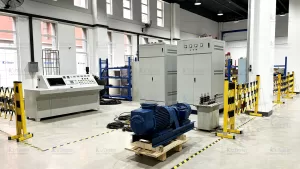
Our ZC-200 Transformer Test Control Desk is designed for comprehensive testing of power and distribution transformers. Depending on the system configuration, its test scope can include winding resistance, transformation ratio and connection group, no-load and load characteristics, insulation resistance, power frequency withstand voltage, and induced voltage withstand tests.
Its modular design allows individual testing units to operate independently or work under computer control. Test data can be collected and organized into reports, helping improve consistency in repeated testing procedures.
How to Choose the Right Transformer Tester for Maintenance?
The right transformer tester should match the actual maintenance tasks rather than simply offer the largest number of functions. The following factors are worth considering before purchasing.
Required Test Functions
First, identify the electrical parameters that need to be measured.
If the main task is checking winding connections, a DC resistance tester may be sufficient. If maintenance work involves capacity and load characteristics, a dedicated capacity and load tester is more appropriate.
For laboratories and transformer repair facilities that conduct several routine tests, a comprehensive testing system may provide a more suitable solution.
Measurement Range and Accuracy
The measurement range should cover the electrical parameters of the transformers being tested.
For DC resistance testing, pay attention to output current and the corresponding resistance range. For capacity and load testing, check the supported voltage, current, and transformer capacity ranges.
Accuracy and resolution should also be considered together. A high resolution does not automatically mean that the instrument provides sufficient measurement accuracy.
Portability and Field Operation
Maintenance teams often work at different substations, industrial facilities, and transformer installation sites. Equipment size, weight, wiring arrangements, and operating conditions can affect field efficiency.
A compact instrument is easier to transport and store. However, portability should be balanced against the required test current, measurement range, and other technical capabilities.
Data Storage and Test Reports
Maintenance records are important for evaluating transformer condition over time.
A tester with data storage, printing, or communication functions can simplify result management. Technicians can compare current measurements with previous records and identify changes that may require further investigation.
For organizations managing multiple transformers, consistent data organization also makes maintenance planning easier.
Safety and Operating Requirements
Transformer testing involves electrical hazards, particularly during high-voltage tests and DC resistance measurements.
Check the instrument’s protection functions, grounding requirements, discharge indications, and operating procedures before use. Testing personnel should follow approved safety procedures and confirm that the transformer is isolated and prepared for testing.
For comprehensive testing setups, system configuration and safety interlocks should also be considered during equipment selection.
Transformer Maintenance Testing Solutions from Kvtester
At Kvtester, we provide different transformer testing instruments for electrical measurement, performance evaluation, and comprehensive testing applications.
The equipment selection depends on the transformer type and the maintenance tasks involved.
For winding resistance measurements, the ZC-205A provides multiple output current settings, three-phase measurement functions, and test data storage.
For capacity and load characteristic measurements, the ZC-202B combines several measurement functions in one instrument, including transformer capacity, no-load current, no-load loss, and load-related parameters.
For transformer manufacturers, repair facilities, and testing laboratories that require multiple routine test functions, the ZC-200 Transformer Test Control Desk offers a more integrated testing arrangement. Its configuration can be matched to the required transformer test items and operating workflow.
Rather than selecting equipment based only on product categories, we recommend matching the instrument specifications with the transformer ratings, required test procedures, and working environment.
Conclusion
Transformer maintenance requires different testing methods to evaluate winding conditions, insulation performance, transformation ratio, and operating characteristics. No single tester can replace every type of transformer test equipment, so selecting instruments according to actual maintenance requirements is essential.
For routine field inspections, dedicated testers can provide practical solutions for specific electrical measurements. For transformer manufacturers and centralized testing facilities, comprehensive test systems may offer better integration and data management.
At Kvtester, we provide transformer testing solutions for different maintenance and testing applications. If you are planning to purchase a transformer tester or configure a testing system, contact us with your transformer specifications and required test items. Our team can help you identify suitable equipment for your application.
Related Products
Latest News
-
 2026-11-03PT Tester for Power Utilities and Essential Testing Requirements
-
 2026-11-03CT Analyzer with Low Frequency: Working Principle and Benefits
-
 2026-11-02Digital Portable CT Tester for Field Testing and CT Analysis
-
 2026-10-30What are the differences in test items between dry-type and oil-immersed transformers?
-
 2026-10-30What are the differences in equipment configuration for comprehensive test benches designed for 10kV, 20kV, and 35kV transformers?