
Proper Usage and Operating Procedures for DC High-Voltage Generators
Proper Usage and Operating Procedures for DC High-Voltage Generators
The DC high-voltage generator is a common piece of high-voltage testing equipment, primarily used for DC withstand voltage tests, leakage current measurements, and testing of components such as zinc oxide surge arresters. Given the high output voltage, correct wiring and adherence to standardized operating procedures are crucial.
The following outlines the general usage of DC high-voltage generators; however, specific operations should always comply with the equipment manual and on-site testing protocols.
1. Pre-test Inspection
Before using the DC high-voltage generator, verify that the equipment and the testing environment meet the necessary requirements.
Key checks include:
Ensuring the control unit, voltage multiplier cylinder, and connecting cables are in good condition;
Confirming the equipment’s grounding terminal is reliably connected to the ground;
Checking that the high-voltage output cable is securely connected to the test object;
Confirming that a sufficient safety distance is maintained between the test object and surrounding equipment;
Checking that the voltage adjustment knob is set to the zero position.
Necessary warning signs and isolation measures should also be established in the high-voltage test area to prevent unauthorized personnel from entering.
2. Proper Equipment Connection
Generally, the grounding wire should be connected first, followed by the control unit, the voltage multiplier cylinder, and the high-voltage output cable.
After wiring is complete, re-verify the grounding and high-voltage connections. Particular attention should be paid to the high-voltage output terminal; ensure it is not too close to surrounding grounded objects to prevent discharge during the voltage-raising process.
Ensure the equipment is powered off during the wiring process.
3. Connecting Power and Starting the Equipment
Once the wiring is confirmed to be correct, connect the power supply.
Before starting the equipment, re-confirm that the voltage adjustment knob is at the zero position. Some DC high-voltage generators feature “zero-start protection,” meaning the equipment will not start properly if the knob has not been returned to zero.
After starting the equipment, observe the instrument displays and equipment status to ensure everything is normal before proceeding to the next step.
4. Gradual Voltage Increase
Once the test begins, adjust the output voltage slowly and steadily; avoid sudden or rapid increases.
Continuously monitor the following during the voltage-raising process:
Output voltage, leakage current, and the status of the test object.
Once the voltage reaches the specified test value, maintain it for the required duration as per the test standards and record the relevant data. If a sudden increase in current, noticeable discharge, abnormal noise, or equipment protection activation occurs during the voltage-raising process, stop raising the voltage immediately and conduct an inspection.
5. Lowering voltage after the test
Upon completion of the test, slowly reduce the output voltage to zero, then turn off the high-voltage output and the equipment power supply.
Do not disconnect test leads while the equipment is still outputting high voltage.
For test objects with significant capacitance, residual charge may remain internally even after the equipment has stopped outputting voltage.
6. Fully discharging the test object
After powering off the equipment, fully discharge the test object according to prescribed methods; only after confirming the absence of residual voltage should the high-voltage lead and other connecting cables be removed.
The general procedure is:
Lower voltage first, then cut power, fully discharge, and finally disconnect leads.
Discharging is a crucial step in DC high-voltage testing; it must not be overlooked, especially after testing objects with high capacitance.
7. Precautions during use
When using the DC high-voltage generator, observe the following points:
① High-voltage testing must be performed by personnel familiar with the relevant operating procedures;
② The equipment must be reliably grounded before raising the voltage;
③ Do not touch high-voltage components or the test object during the voltage-raising process;
④ If equipment protection activates, identify the cause first; do not attempt repeated forced restarts;
⑤ Do not conduct high-voltage tests in humid or rainy conditions, or in environments that do not meet safety requirements;
After the test, confirm that both the equipment and the test object have been fully discharged.
8. Conclusion
The correct use of a DC high-voltage generator can be summarized as follows:
Pre-test inspection → Reliable grounding → Correct wiring → Zero-position start → Slow voltage increase → Observation and data recording → Slow voltage decrease → Power off and discharge → Disconnect wiring.
Standardized operation not only improves the reliability of test data but also minimizes safety risks caused by wiring errors, improper handling, or residual charge. Therefore, operate the DC high-voltage generator in strict accordance with the equipment manual and relevant safety requirements for high-voltage testing.
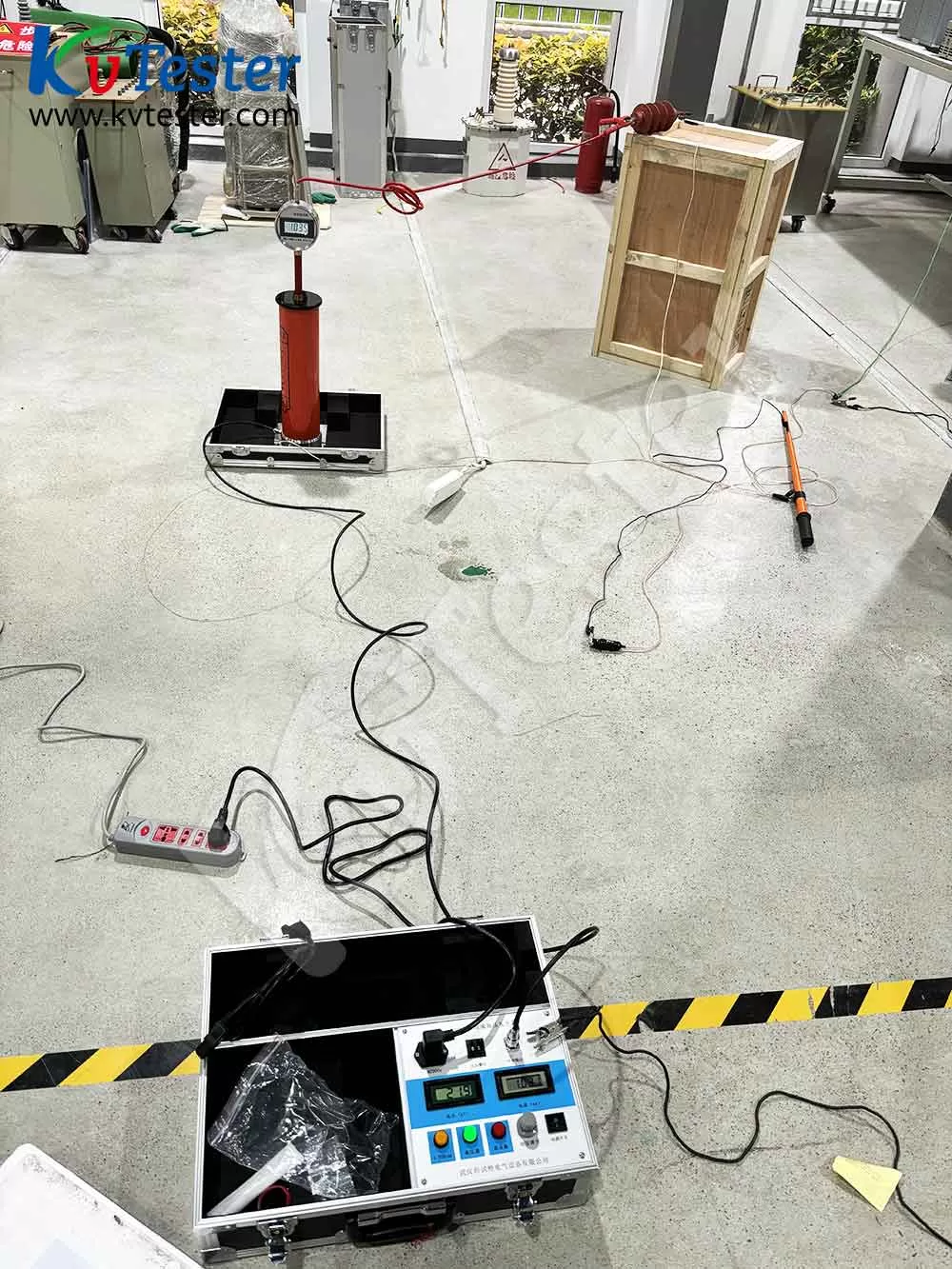
The ZC-540 series DC high-voltage generator is primarily designed for use by power utilities, industrial and mining power departments, research institutes, railways, the chemical industry, and power plants to conduct DC withstand voltage tests on high-voltage electrical equipment—such as zinc oxide arresters, magnetic blowout arresters, power cables, generators, transformers, and switchgear. The instrument utilizes an intermediate-frequency voltage-multiplying circuit and PWM (Pulse Width Modulation) technology, resulting in significantly improved voltage stability. Based on electromagnetic compatibility principles, special measures—including shielding, isolation, and grounding—are employed to ensure that the generator can withstand discharges at rated voltage without sustaining damage.
Kvtester Electronics Technology Co.,Ltd. is a high-tech enterprise specializing in power testing, testing, research and development, production, and sales of testing equipment. It has been engaged in the electrical testing industry for many years, and its products are of high quality. We welcome customers to come and purchase. Service hotline: 0086-27-81778799, to learn more, visit the official website: www.kvtester.com
Related Products
Latest News
-
 2026-10-23How can damage to a transformer during a withstand voltage test be avoided?
 -
 2026-10-23What is the purpose of a power-frequency withstand voltage test?
 -
 2026-10-23How to Select the Appropriate Capacity of a High-Voltage Test Transformer
 -
 2026-10-23Transformer Tester for Substation Testing and Selection
 -
 2026-10-23Substation CT Tester: How to Choose the Right CT Tester for Commissioning