Home » News » Company News
PT Tester for Power Utilities and Essential Testing Requirements
Voltage transformers (PTs), also known as voltage transformers or VTs, provide scaled voltage signals for metering, monitoring, and protection systems in power networks. Their measurement accuracy and operating condition directly affect the reliability of these systems. For power utilities, regular PT testing is therefore essential during equipment commissioning, routine maintenance, and troubleshooting.
A suitable PT tester helps technicians verify electrical characteristics, identify potential defects, and confirm that voltage transformers meet the requirements of their intended applications. Understanding the main test functions and equipment selection criteria can help utilities choose a practical solution for their testing work.
Why Do Power Utilities Need a Reliable PT Tester?
Power utilities operate voltage transformers across substations, transmission networks, and distribution systems. These instruments provide voltage signals to meters, protective relays, and other monitoring devices. Any deviation in their performance may affect measurement results or protection system operation.
A reliable PT tester supports several important tasks:
- Commissioning verification: Confirm PT performance before putting newly installed equipment into service.
- Routine maintenance: Check electrical characteristics and identify changes that may indicate aging or developing faults.
- Measurement accuracy: Verify transformation ratio and phase displacement to support accurate energy metering.
- Protection system reliability: Check whether PT output characteristics meet the requirements of connected protection devices.
- Maintenance records: Store test results to support equipment condition tracking and future comparisons.
For utilities managing a large number of substations, consistent testing procedures and reliable measurement data are particularly important. A suitable tester can reduce manual work and make inspection results easier to review.
What Tests Should a PT Tester Perform for Power Utilities?
Different PT tests evaluate different electrical characteristics. The required functions depend on the PT type, application, and maintenance purpose.
PT Ratio Test
The transformation ratio indicates the relationship between the primary and secondary voltages. A ratio test checks whether the actual ratio matches the rated value.
An incorrect ratio may cause measurement deviations in metering systems or affect the voltage signals supplied to protection equipment. This test is commonly performed during commissioning and routine inspections.
PT Polarity Test
Polarity testing verifies the relative direction of the primary and secondary voltage signals. Correct polarity is important when connecting PTs to metering instruments, protection relays, and other electrical equipment.
Incorrect polarity may lead to abnormal measurement results or incorrect operation of connected systems.
PT Excitation Characteristic Test
The excitation characteristic test evaluates the relationship between excitation voltage and current. It helps technicians understand the magnetic characteristics of the PT core and identify abnormal excitation behavior.
This test can provide useful information when investigating possible core problems or evaluating the condition of voltage transformers.
Secondary Winding Resistance Test
This test measures the resistance of the PT secondary winding. Abnormal resistance values may indicate loose connections, damaged conductors, or other winding-related problems.
Resistance measurements are also useful for comparing different phases or checking changes during periodic maintenance.
PT Ratio Error and Phase-Angle Error Test
For metering applications, transformation ratio error and phase-angle error are important indicators of PT accuracy.
Ratio error reflects the difference between the actual transformation ratio and the rated ratio. Phase-angle error describes the angular difference between the primary and secondary voltage vectors after accounting for the transformation ratio.
Both values should be considered when verifying PT accuracy, especially for applications requiring reliable energy measurement.
Secondary Burden Test
The connected secondary load affects PT operating conditions and measurement performance. A burden test evaluates the load connected to the secondary winding and helps determine whether it falls within the specified operating range.
The combination of ratio, polarity, excitation, resistance, and burden tests provides a more complete understanding of PT performance. For a closer look at the testing process, see our guide on how a PT tester works in a power plant.
PT Testing Requirements in Substations and Power Utility Applications
PT testing requirements vary according to the equipment’s service stage and operating environment.
Substation Commissioning
Before a voltage transformer enters service, technicians need to verify its electrical characteristics and confirm that it is correctly connected to the system.
Ratio, polarity, excitation, and winding resistance tests can help identify installation or manufacturing issues before the equipment is energized.
Routine Maintenance
Voltage transformers operate under continuous electrical stress. Periodic testing helps utilities identify changes in electrical characteristics and assess whether further inspection or maintenance is necessary.
The testing interval should follow the utility’s maintenance policy, equipment condition, and applicable technical requirements.
Metering System Verification
PTs used in energy metering systems need to maintain suitable measurement accuracy. Ratio error and phase-angle error testing are particularly relevant because deviations can affect the accuracy of voltage measurements and energy calculations.
Protection System Inspection
Protection relays depend on voltage signals from PTs to identify abnormal operating conditions. Testing helps verify that the voltage transformer provides the expected signals and that its secondary circuit is suitable for the connected protection system.
Electrical Testing Laboratories
Testing laboratories may need to evaluate different PT types and voltage levels. In these environments, equipment compatibility, measurement accuracy, test range, and data management are important considerations.
How to Choose the Right PT Tester for Power Utilities
A PT tester should match the voltage transformer types and testing tasks handled by the utility. The following factors can help narrow down the options.
Test Range and Supported PT Types
First, confirm which types of voltage transformers the instrument can test. Conventional electromagnetic PTs and capacitive voltage transformers (CVTs or CCVTs) have different structures and testing requirements.
Not every PT tester supports CVT testing. Utilities that work with both electromagnetic PTs and capacitive voltage transformers should check compatibility before purchasing.
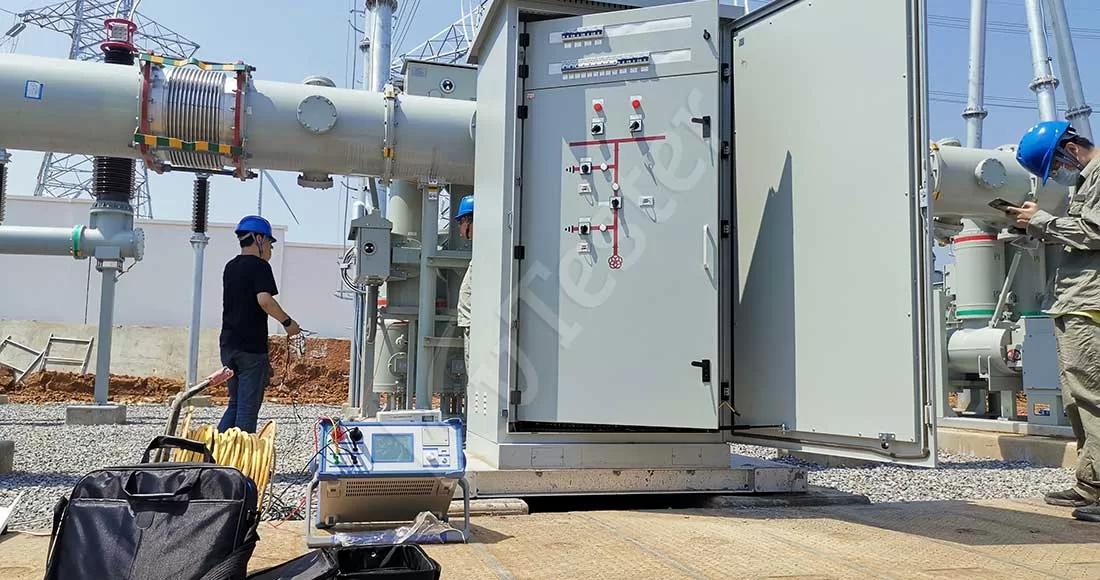
For applications involving different voltage levels and PT structures, the PTA-2000C VT/CVT Analyzer is one option to consider. It is designed for electromagnetic PTs, CVTs, and CCVTs, supporting full error testing for applicable voltage levels from 6 kV to 800 kV. Its maximum high-voltage output is 3 kV.
Measurement Accuracy and Test Functions
Measurement accuracy is another important selection factor. Utilities should compare the instrument’s accuracy specifications with the requirements of their testing procedures.
It is also useful to check whether the tester supports the required functions in one instrument. A device that combines ratio, polarity, excitation, resistance, and burden testing may reduce the need to carry multiple instruments during field inspections.
Field Operation and Portability
Substation testing may involve limited working space, different equipment locations, and demanding site conditions. Weight, dimensions, wiring arrangements, power supply requirements, and operating procedures can all affect field efficiency.
A portable instrument is useful when technicians need to move between testing points or substations. However, portability should not come at the expense of the required measurement range or test functions.
Automatic Testing and Data Management
Automatic test procedures can reduce repetitive manual operations and help standardize testing work. Data storage and report generation are also useful for utilities that need to maintain inspection records.
When comparing instruments, check the available storage capacity, supported data export methods, and whether test results can be organized by equipment or test date.
Dedicated PT Tester vs. Combined CT/PT Analyzer
Power utilities may choose between a dedicated PT tester and a combined CT/PT analyzer. The better option depends on the range of equipment that needs to be tested.
A dedicated PT tester is suitable when most testing work focuses on voltage transformers. It may provide specialized functions for electromagnetic PTs and CVTs, depending on the model.
A combined CT/PT analyzer is more practical when technicians regularly test both current transformers and voltage transformers. It can help reduce the number of instruments required for field work, provided that its PT functions cover the required test items.
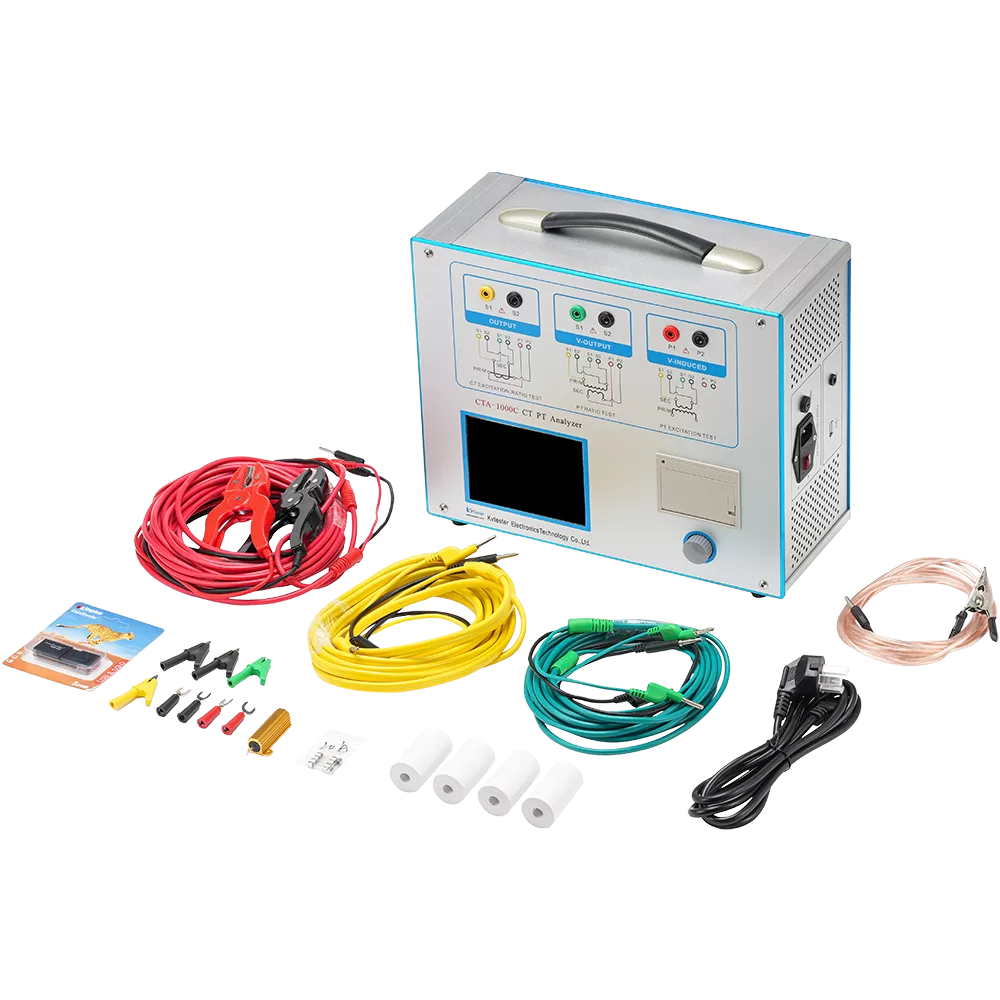
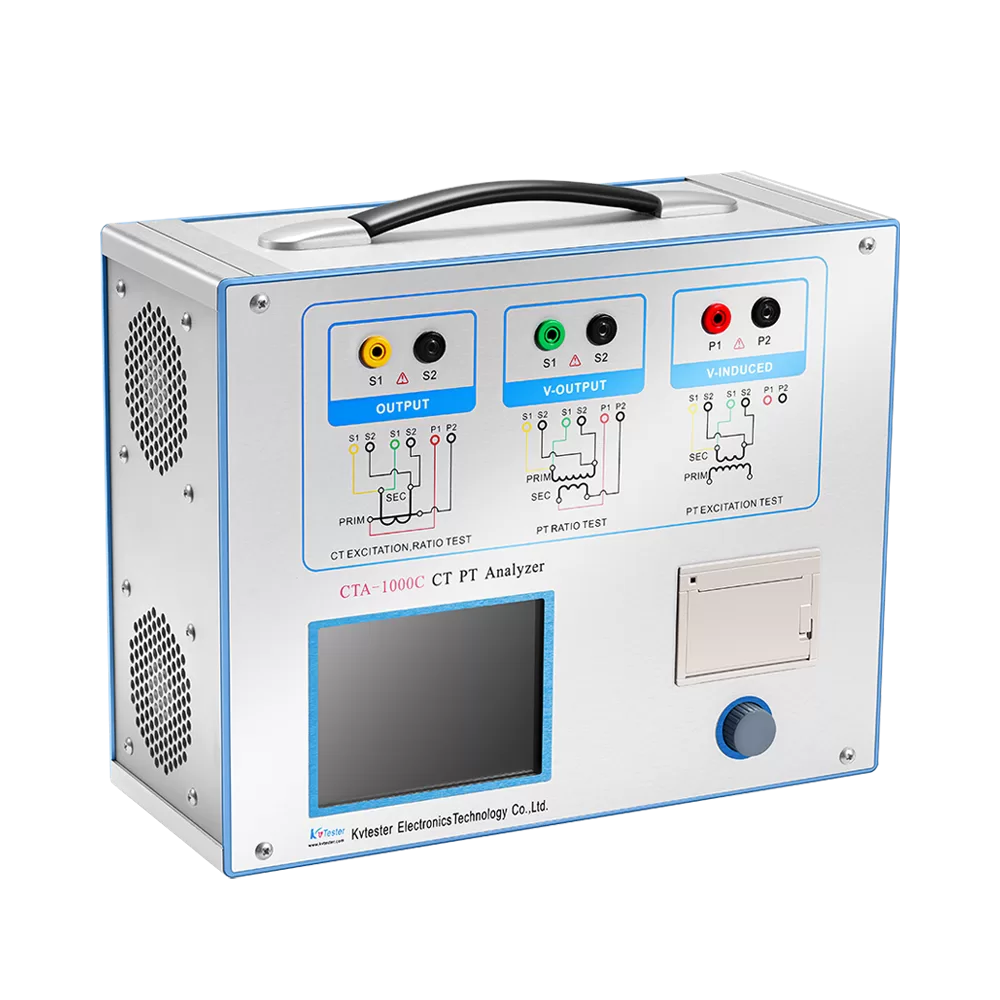
For example, the CTA-1000C CT/PT Analyzer is designed for CT and PT testing. Its output reaches 180 Vrms, 12 Arms, and 36 A peak, making it an option for users who need a combined testing instrument. Before selecting a combined analyzer, utilities should confirm that its supported PT test functions match their specific requirements.
Conclusion
Selecting a PT tester for power utilities requires more than checking the number of available test functions. Utilities should consider the types of voltage transformers in service, required measurement accuracy, test range, field operation, and data management capabilities.
A suitable instrument can support commissioning, maintenance, metering verification, and protection system inspections. By matching equipment capabilities with actual testing requirements, utilities can establish a more consistent and efficient PT testing process.
If you are selecting PT testing equipment for your utility or substation projects, Kvtester can help you evaluate suitable testing solutions based on your PT types, voltage levels, and required test functions. Contact us to discuss your application and request further product information.
Related Products
Latest News
-
 2026-11-03Transformer Tester for Maintenance: Essential Tests
-
 2026-11-03CT Analyzer with Low Frequency: Working Principle and Benefits
-
 2026-11-02Digital Portable CT Tester for Field Testing and CT Analysis
-
 2026-10-30What are the differences in test items between dry-type and oil-immersed transformers?
-
 2026-10-30What are the differences in equipment configuration for comprehensive test benches designed for 10kV, 20kV, and 35kV transformers?