Home » News » Company News
Transformer Capacity and Load Tester: Functions & Selection
Transformer capacity and load testing helps verify whether a transformer meets its rated performance requirements. These tests are important during manufacturing, quality inspection, maintenance, and troubleshooting. They provide useful information about rated capacity, no-load characteristics, load loss, and impedance voltage.
A suitable transformer capacity and load tester combines several measurement functions in one instrument. However, selecting the right equipment requires more than checking its measurement range. Users also need to consider transformer type, test conditions, measurement accuracy, data correction, and field operation requirements.
What Is a Transformer Capacity and Load Tester?
A transformer capacity and load tester is an instrument used to measure transformer capacity and evaluate its electrical characteristics under no-load and load test conditions.
Its main purpose is to help users verify transformer performance and identify differences between measured results and expected values. Depending on the instrument, it can measure parameters such as transformer capacity, no-load current, no-load loss, load loss, and impedance voltage.
These measurements are useful for different stages of transformer production and operation.
During manufacturing, testing helps verify whether a transformer meets its design requirements. During maintenance, it provides information about the transformer’s electrical characteristics and can help identify abnormal performance. Testing companies and power utilities can also use the results for equipment acceptance and quality assessment.
Some instruments combine capacity measurement with no-load and load characteristic testing. This reduces the need to use several separate devices for related measurements and makes routine testing more convenient.
What Parameters Can a Transformer Capacity and Load Tester Measure?
The specific measurement functions depend on the instrument model. A multifunction transformer tester may cover several important parameters related to transformer capacity and operating characteristics.
Transformer Capacity
Transformer capacity is generally expressed in kilovolt-amperes (kVA). It represents the apparent power that a transformer is designed to handle under specified operating conditions.
Capacity testing helps verify whether the measured transformer characteristics correspond to its expected capacity. This is particularly useful when checking distribution transformers during production, repair, or acceptance inspection.
A tester with a suitable capacity measurement range can help users identify discrepancies between the expected and measured transformer performance.
No-Load Current and No-Load Loss
No-load current is the current drawn by a transformer when its secondary winding is open and rated voltage is applied to the primary winding. No-load loss refers mainly to the power consumed by the transformer core under this condition.
These two parameters provide information about the transformer’s magnetic characteristics and core performance.
Abnormally high no-load loss may be associated with core material problems, manufacturing defects, or other magnetic circuit issues. Understanding the possible reasons for increased losses can help technicians investigate the source of abnormal results. Our guide on the causes of excessive transformer no-load loss provides further technical information.
Load Loss and Short-Circuit Loss
Load loss is the power loss associated mainly with current flowing through the transformer windings. It is commonly measured through a short-circuit test.
During this test, one winding is short-circuited while a reduced voltage is applied to the other winding to produce the required test current. The measured power represents the transformer’s load loss under the specified test conditions.
Load loss is important for evaluating winding performance and transformer efficiency. Since winding resistance changes with temperature, test results may need to be corrected to a specified reference temperature before comparison.
Impedance Voltage
Impedance voltage is the voltage required to produce rated current when one transformer winding is short-circuited and the other winding is supplied under the specified test conditions. It is usually expressed as a percentage of the rated voltage.
This parameter is closely related to transformer impedance and voltage regulation. It is also useful for evaluating whether a transformer meets its design requirements.
Measuring impedance voltage together with load loss gives users a more complete understanding of transformer short-circuit characteristics.
How Does Transformer Capacity and Load Testing Work?
Transformer capacity and load testing generally involves measuring electrical parameters under different test conditions. The exact procedure depends on the transformer type, rated voltage, rated current, and the functions supported by the tester.
No-Load Testing
During a no-load test, one winding is supplied with the specified test voltage while the other winding remains open.
The tester measures voltage, current, power, and other relevant electrical parameters. These measurements are used to determine no-load current and no-load loss.
For three-phase transformers, the test also involves checking the phase measurements and connection conditions. Correct wiring is essential because incorrect connections can affect the accuracy and reliability of the results.
Load Loss Testing
Load loss testing is generally performed under short-circuit test conditions.
One winding is short-circuited, and a suitable voltage is applied to the other winding to establish the required test current. The instrument measures the electrical parameters needed to calculate load loss and impedance voltage.
The test current does not always need to reach the rated value if the instrument and test method support appropriate correction. However, the test conditions and correction method must be suitable for the transformer being measured.
Data Processing and Result Correction
Measured values may need correction before they can be compared with rated or reference values.
Common correction factors include temperature correction, waveform correction, and adjustments for non-rated voltage or current. These functions help make test results more comparable under different measurement conditions.
For this reason, automatic correction and data processing are useful features when selecting a transformer capacity and load tester.
Why Are Transformer Capacity and Load Tests Important?
Transformer capacity and load tests provide practical information for quality control, maintenance, and performance evaluation.
First, they help verify transformer specifications. Measuring capacity and characteristic parameters allows manufacturers and inspection teams to check whether a transformer performs as expected.
Second, no-load and load loss measurements help evaluate energy performance. Excessive losses may increase operating costs over the transformer’s service life. Identifying abnormal values during inspection can help prevent unsuitable equipment from entering service.
Third, these tests support transformer maintenance and troubleshooting. Changes in electrical characteristics may indicate potential problems that require further investigation. Test results can also provide useful reference data for future inspections.
For transformer manufacturers, the measurements are valuable during production testing and final quality checks. For utilities and testing organizations, they support equipment acceptance and routine condition assessment.
How to Choose the Right Transformer Capacity and Load Tester?
A suitable tester should match the transformers you work with and the measurement tasks you need to perform. The following factors can help narrow down the options.
Measurement Range and Accuracy
Check the voltage, current, frequency, power, and capacity ranges before purchasing a tester.
The measurement range should cover the specifications of your target transformers. Accuracy is equally important, especially when the instrument is used for manufacturing inspection or technical acceptance.
It is also useful to check the resolution of each measurement. A suitable resolution helps users observe smaller changes in measured values.
Supported Transformer Types and Capacity
Different testers may support different transformer voltage classes, structures, and capacity ranges.
For example, the requirements for testing a small distribution transformer may differ from those for a larger power transformer. Dry-type and oil-immersed transformers may also have different applicable measurement ranges.
Check the manufacturer’s specifications carefully rather than assuming that one capacity range applies to every transformer type.
Three-Phase Testing Functions
Three-phase testing is an important consideration for users working with distribution and power transformers.
Useful functions include three-phase voltage and current measurement, phase vector display, and connection error detection. These features can help technicians identify wiring problems and improve testing efficiency.
If your work involves different transformer connection configurations, make sure the instrument supports the required test arrangements.
Automatic Correction and Data Management
Automatic correction functions can reduce manual calculation and help standardize test results.
Look for functions such as temperature correction, waveform correction, and non-rated voltage or current correction when these are relevant to your testing requirements.
Data storage is another practical factor. An instrument with internal memory, result browsing, printing, or computer communication can make it easier to manage inspection records and compare results over time.
Portability and Field Operation
For field testing, instrument size and weight can affect transportation and setup efficiency.
A portable tester is useful when technicians need to move between substations, transformer rooms, or maintenance locations. However, portability should not come at the expense of the required measurement range and testing functions.
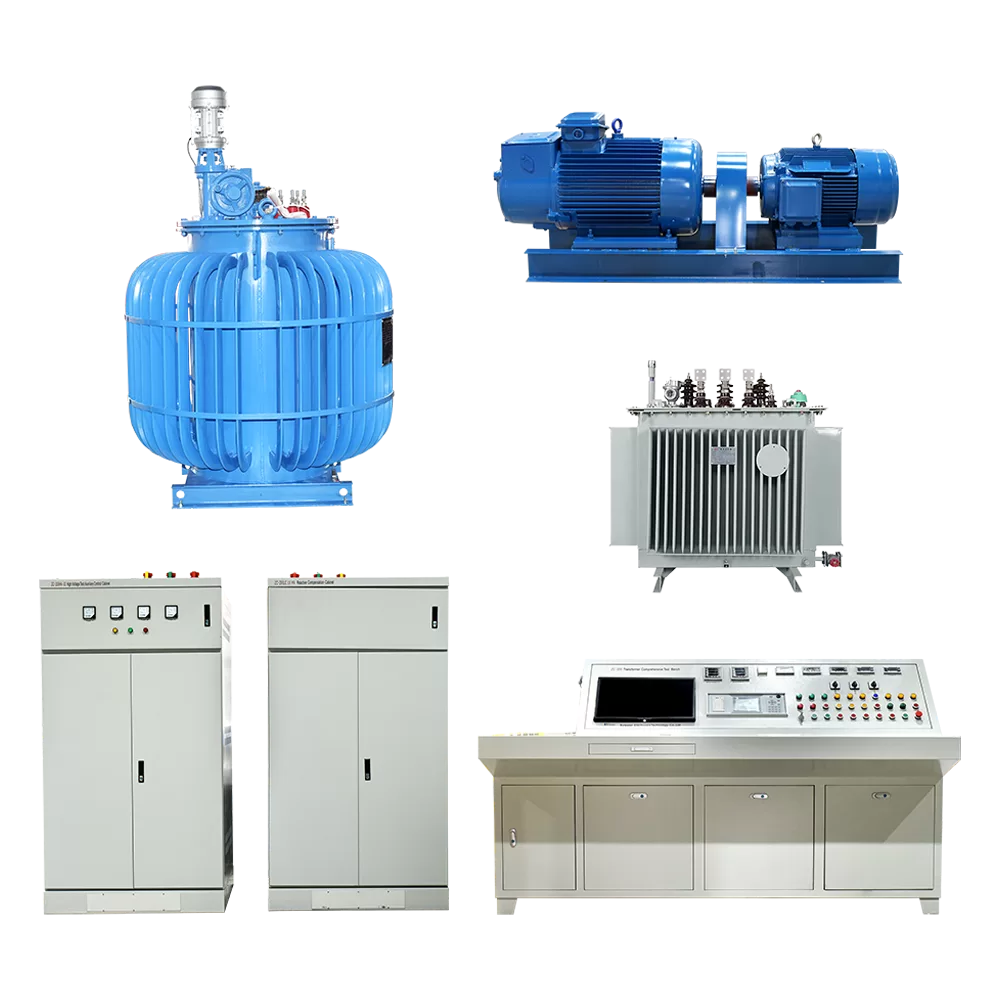
For manufacturers and laboratories handling more comprehensive transformer testing tasks, a larger integrated testing arrangement may be more appropriate. For example, a transformer test control desk can be considered when the testing workflow requires a broader equipment configuration.
Transformer Capacity and Load Testing with Kvtester ZC-202B
For users who need to measure transformer capacity and evaluate no-load and load characteristics with one portable instrument, we offer the ZC-202B Transformer Capacity and Load Tester.
The ZC-202B combines transformer capacity measurement with characteristic parameter testing. It can measure transformer capacity, type, no-load current, no-load loss, short-circuit or load loss, and impedance voltage.
Its main functions include:
- Automatic measurement range switching for voltage and current.
- Three-phase transformer no-load and load testing.
- Automatic connection correctness judgment.
- Three-phase voltage and current vector display.
- Waveform, temperature, non-rated voltage, and non-rated current correction.
- Storage of up to 500 test results.
- Preset parameters for up to 40 samples.
- Built-in thermal printer and computer data communication.
The instrument supports different transformer capacity ranges according to transformer type and voltage class:
- 10 kV dry-type transformers: 30–3150 kVA.
- 10 kV oil-immersed transformers: 30–3150 kVA.
- 35 kV oil-immersed transformers: 50–31500 kVA.
- 20 kV dry-type transformers: 50–2500 kVA.
- 35 kV dry-type transformers: 50–2000 kVA.
Its AC voltage measurement range is 10–650 V, while the AC current measurement range is 0.5–60 A. Both have a stated accuracy of 0.2% ±0.001 of the corresponding measurement unit.
With dimensions of 400 × 300 × 220 mm and a weight of approximately 8 kg excluding accessories, the ZC-202B is suitable for users who need a relatively compact instrument for transformer capacity and characteristic testing.
For more details about its measurement functions and specifications, see the Kvtester ZC-202B Transformer Capacity and Load Tester.
Conclusion
A transformer capacity and load tester helps manufacturers, utilities, and testing organizations evaluate transformer capacity, no-load characteristics, load loss, and impedance voltage. When selecting equipment, it is important to consider measurement accuracy, supported transformer types, three-phase testing functions, automatic correction, data management, and portability.
The right instrument should match your actual testing requirements rather than simply offer the largest measurement range. If you are looking for a solution for transformer capacity and load characteristic testing, contact Kvtester to discuss your application and equipment requirements.
Related Products
Latest News
-
 2026-11-04Anti-interference CT Tester: How to Improve Measurement Stability in the Field
-
 2026-11-04Automatic CT Tester with Data Logger: Improving Grid Commissioning Efficiency
-
 2026-11-03Transformer Tester for Maintenance: Essential Tests
-
 2026-11-03PT Tester for Power Utilities and Essential Testing Requirements
-
 2026-11-03CT Analyzer with Low Frequency: Working Principle and Benefits