
What parameters must be provided to the manufacturer when purchasing series resonant withstand voltage test equipment?
What parameters must be provided to the manufacturer when purchasing series resonant withstand voltage test equipment?
When purchasing series resonant withstand voltage test equipment, many users simply ask questions like, “What size equipment do I need for a 10kV cable?” or “How much does a 35kV series resonant system cost?” In reality, for high-voltage test equipment like series resonant systems—which must be configured based on the specific parameters of the test object—simply providing the voltage rating is often insufficient to accurately determine the required equipment capacity.
To quickly obtain a suitable equipment configuration, it is best to have the following key parameters ready before making a purchase.
1. What is the test object?
First, you need to clearly identify the primary test object—such as power cables, GIS (Gas-Insulated Switchgear), transformers, generators, busbars, or other high-voltage electrical equipment.
This is because different test objects have different equivalent capacitances, as well as varying requirements for test voltage, frequency, and current. Even for the same 35kV voltage class, the series resonant configuration required to test a cable section may differ significantly from that needed for other types of electrical equipment.
If a single set of equipment needs to perform multiple types of tests in the future, this should be stated upfront during the procurement phase to allow the manufacturer to create an integrated design.
2. Rated voltage level of the test object
The voltage level is a crucial factor in determining the output voltage range of the test system.
For instance, you need to specify whether the primary testing targets are 10kV, 35kV, or higher-voltage cables. If a single system must handle both 10kV and 35kV cables, this should also be stated in advance so that the manufacturer can design appropriate reactor combination configurations.
However, it is important to note that equipment selection cannot be simplified to “matching the equipment’s voltage rating directly to the test object’s rated voltage.” The actual test voltage must be determined based on relevant standards, regulations, and specific project technical requirements.
3. Maximum test length of the cable
If the primary test object is power cable, the maximum length for a single test is a critical parameter.
Cables exhibit distinct capacitive characteristics. For a given cable type, increasing the length generally increases the total capacitance, which in turn alters the capacitive current and reactive power capacity required for the test. Therefore, when calculating the series resonant configuration, manufacturers focus on the “maximum length to be tested in a single run” rather than the total length of cable involved in the entire project. For instance, a project might involve multiple cable sections totaling several kilometers in length; however, if actual testing is performed on only one section at a time, the parameters for the longest single section should be provided.
4. Cable Cross-Sectional Area and Model
In addition to length, a cable’s model, construction, and cross-sectional area also affect its capacitance per unit length. Consequently, two cables of the same length may exhibit significant differences in total capacitance due to variations in model and cross-sectional area. Providing the manufacturer’s data on capacitance per unit length allows for more accurate equipment selection. If such data is unavailable, providing the complete cable model, cross-sectional area, and length to technical personnel enables them to perform an estimate.
5. Capacitance of the Test Object
Capacitance is a critical design parameter for series resonant systems. The system’s resonant frequency is determined by the formula: f = 1 / (2π√LC).
Therefore, once the test object’s capacitance is established, the potential operating resonant frequency can be calculated based on the reactor’s inductance, allowing one to determine whether it falls within the equipment’s permissible frequency-tuning range. For test objects such as generators or GIS (Gas-Insulated Switchgear), it is highly recommended to provide capacitance parameters found in the manufacturer’s technical documentation.
6. Required Test Voltage
Equipment manufacturers need to know the maximum test voltage actually required for the test object, rather than just its rated operating voltage. This is because components such as reactors, excitation transformers, voltage dividers, and insulation structures within the series resonant system must be configured according to the maximum test voltage. If the specific test voltage cannot be determined during the procurement phase, the applicable standards, regulations, or project technical specifications should be cited so that the details can be confirmed by both parties.
7. Requirement for a Single System to Handle Multiple Applications
This is an issue easily overlooked during procurement.
Some users may initially consider only 10kV cables but later require the ability to test 35kV cables; others may handle projects involving cables, GIS, and generators simultaneously. If these requirements are known in advance, the system can be designed—through the strategic selection of the number of reactors, individual reactor inductance, and series/parallel configurations—to cover a broader range of testing applications. Conversely, if the system is initially designed for a single operating scenario, adding new types of test objects later may be constrained by limitations in voltage, current, or frequency ranges. 8. On-site Power Supply and Transport Conditions
Details regarding typical on-site power supply conditions and whether the equipment requires frequent relocation should also be provided. For scenarios such as field operations or substation maintenance, factors beyond rated capacity—such as the weight of individual reactor units, transport dimensions, and ease of connection—are crucial. An optimal equipment configuration balances the ability to successfully perform tests with practical convenience during on-site use.
Therefore, when procuring series resonance equipment, it is advisable to prepare information covering at least the following: the type of test object, voltage class, maximum test length, cross-sectional area or capacitance, required test voltage, and any other test objects to be accommodated. The more comprehensive the information provided, the more tailored the manufacturer’s configuration will typically be, thereby minimizing the need for subsequent equipment adjustments due to parameter mismatches.
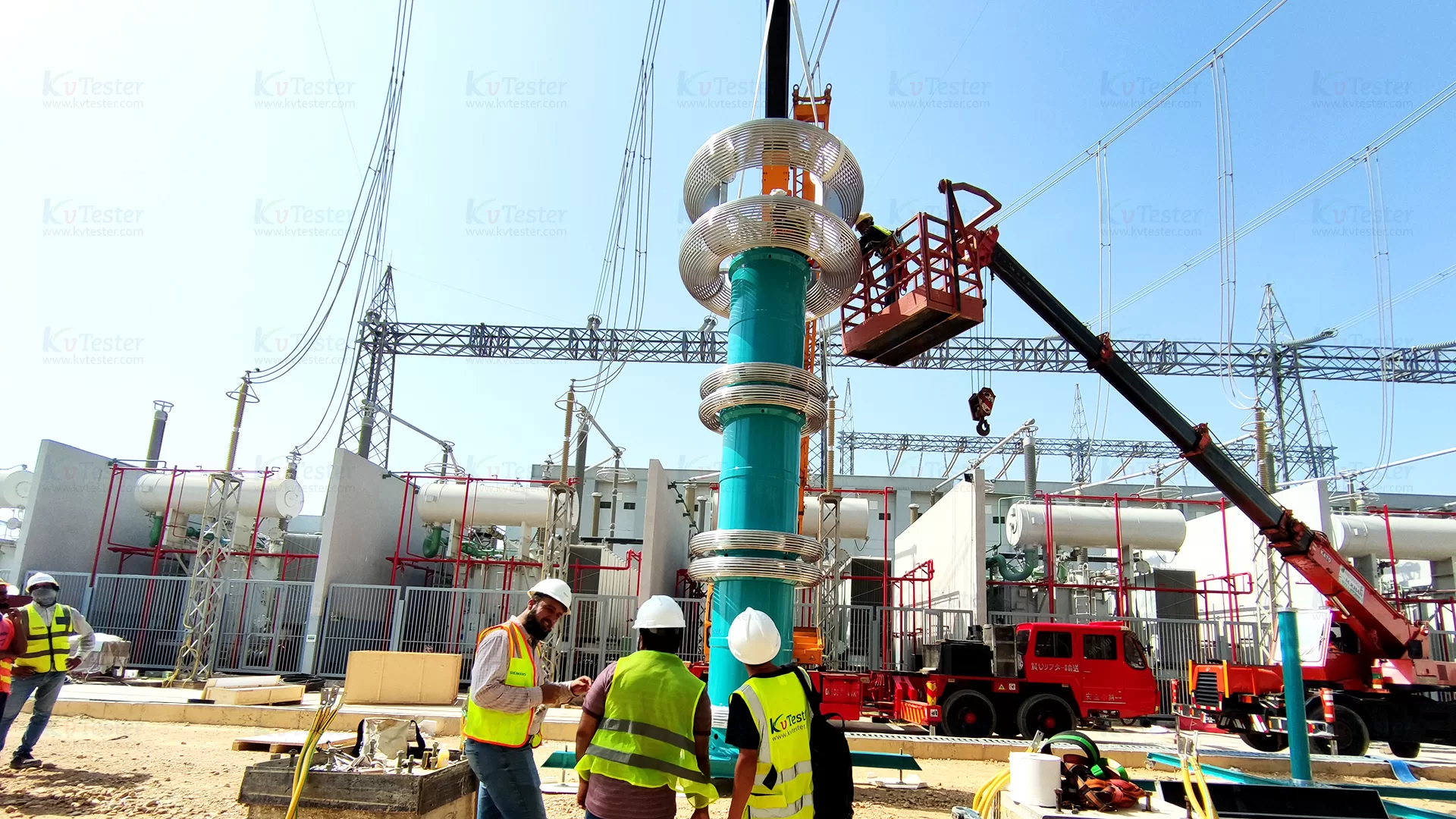
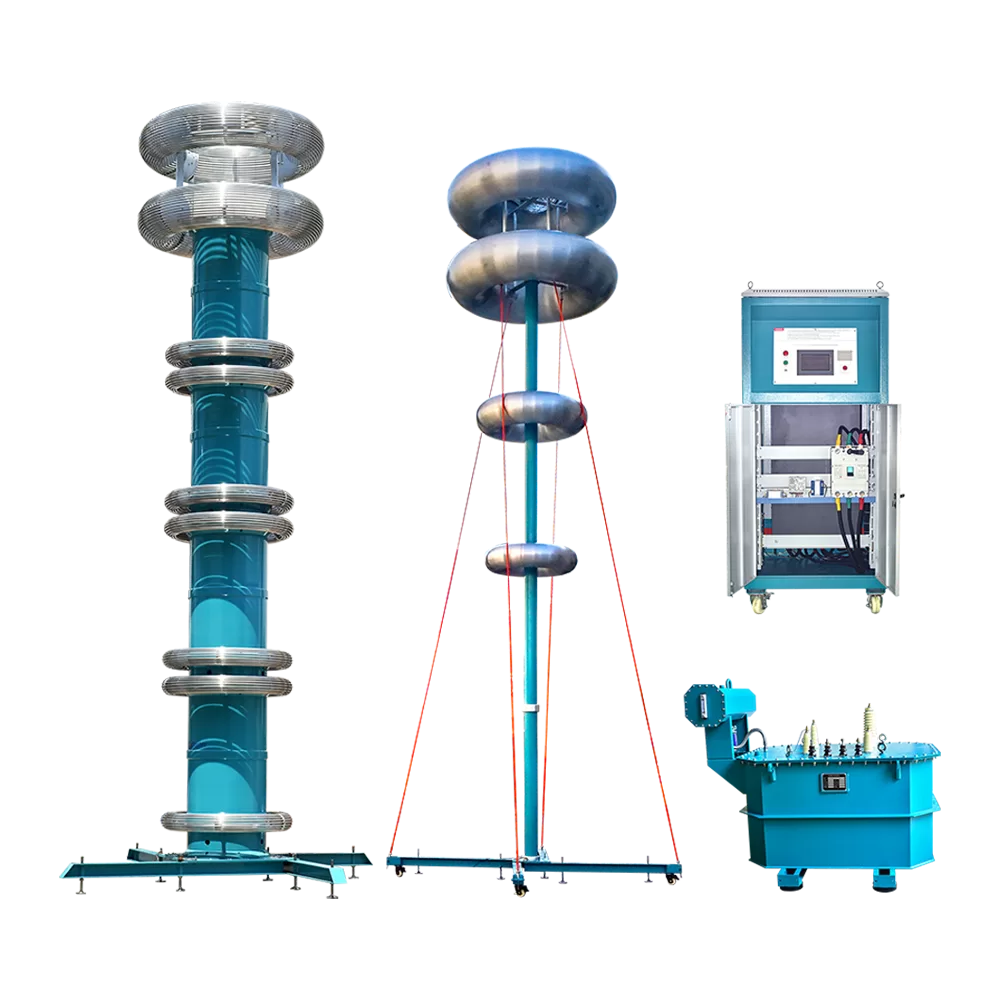
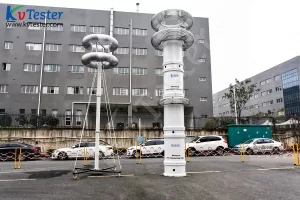
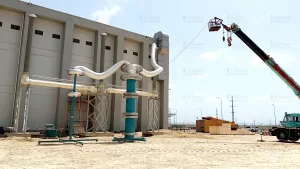
ZCVF-A series frequency conversion series resonant AC withstand voltage device is suitable for AC withstand voltage test of transformer, circuit breaker, switch, GIS system, cable, bushing, insulator and other equipment. It has the functions of high voltage over-voltage protection, low voltage over-current protection, detuning protection, zero position protection, flashover protection, emergency shutdown, under-voltage protection and so on. It not only meets the requirements of equipment test conditions for high voltage and small current, but also meets the requirements of equipment test conditions for low voltage and large current, and has a wide application range.
Kvtester Electronics Technology Co.,Ltd. is a high-tech enterprise specializing in power testing, testing, research and development, production, and sales of testing equipment. It has been engaged in the electrical testing industry for many years, and its products are of high quality. We welcome customers to come and purchase. Service hotline: 0086-27-81778799, to learn more, visit the official website: www.kvtester.com
Related Products
Latest News
-
 2026-09-18Why does the required capacity of series resonant test equipment usually increase with cable length?
 -
 2026-09-18How should 35kV cable series resonant withstand voltage test equipment be configured?
 -
 2026-09-18How to Select AC Withstand Voltage Test Equipment for 10kV Cables?
 -
 2026-09-18How do you select a series resonant withstand voltage test system? Key parameters to consider
 -
 2026-09-18Multi-function Transformer Testing Equipment OEM Guide