
How to Select AC Withstand Voltage Test Equipment for 10kV Cables?
How to Select AC Withstand Voltage Test Equipment for 10kV Cables? A Guide to Series Resonant System Selection
10kV power cables are widely used in industrial and mining enterprises, power distribution projects, new energy plants, and urban power supply systems. AC withstand voltage testing is frequently required during cable commissioning and maintenance. Since power cables act as capacitive loads, using a standard test power supply for AC withstand testing on longer cables may require a very large power capacity; consequently, variable-frequency series resonant equipment has become a common on-site testing solution.
So, how should one select the right series resonant equipment for 10kV cables?
1. Do not determine the equipment model based solely on the “10kV” rating.
Many users provide only the “10kV cable” specification when inquiring about equipment, but this is far from sufficient. Even among 10kV cables, the difference in capacitance between a 100-meter cable and a 2000-meter cable can be significant, resulting in different requirements for the test system’s current and capacity. Therefore, “10kV” refers only to the voltage rating of the test object and does not directly dictate the capacity of the series resonant equipment.
Proper equipment selection requires information such as the maximum cable length to be tested, the cross-sectional area, the capacitance per unit length, and the required test voltage.
2. Why is cable length particularly important?
A cable can be modeled as a large capacitor. As the cable length increases—assuming other conditions like the cable type remain similar—the total capacitance generally increases as well. Capacitive current can be approximated by the formula: I = 2πfCU, where *f* is the test frequency, *C* is the capacitance of the test object, and *U* is the test voltage.
This relationship shows that for a given test voltage and frequency, a higher capacitance results in a higher required test current. Therefore, when configuring equipment for 10kV cables, the maximum cable length for a single test is a critical factor to consider.
3. Why is the cable cross-sectional area also required?
Capacitance per unit length varies depending on the cable type and cross-sectional area. Consequently, knowing only the cable length is insufficient to determine the total capacitance accurately. The most precise method is to calculate the total capacitance using the capacitance-per-unit-length data provided by the cable manufacturer. If relevant technical specifications are not immediately available, you can provide the cable model, cross-sectional area, and length to the series resonant equipment manufacturer. Their technical staff can then perform a preliminary estimate based on standard parameters and incorporate a reasonable margin of safety into the final configuration.
4. How does a series resonant system for 10kV cables work?
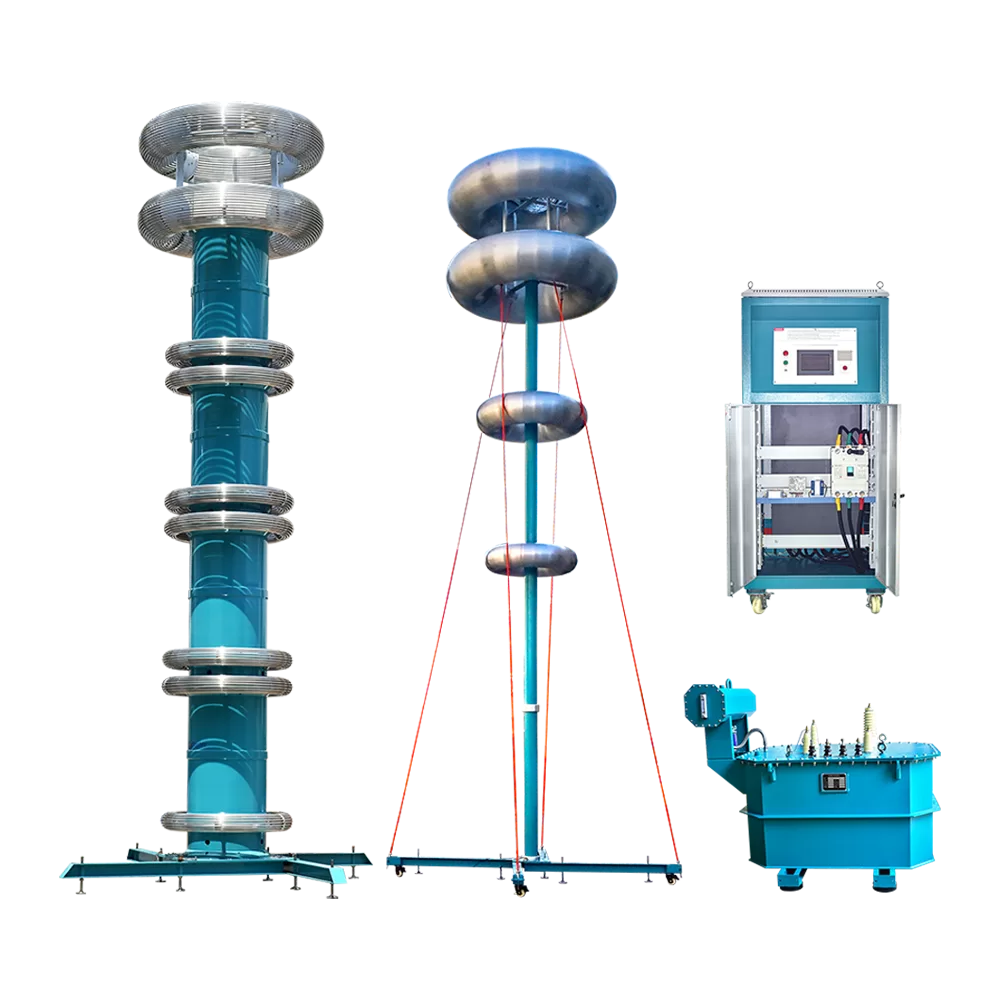
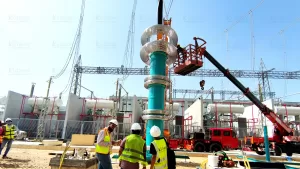
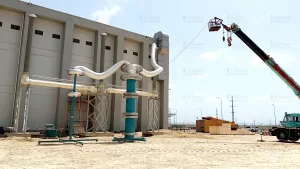
A series resonant system typically consists of a variable-frequency power supply, an excitation transformer, reactors, a voltage divider, and connection accessories. During testing, the reactor and the cable capacitance form a resonant circuit. By adjusting the output frequency of the variable-frequency power supply, the circuit is brought to—or near—a state of series resonance. Once the inductive reactance and capacitive reactance cancel each other out, the power supply primarily compensates for the circuit’s internal active power losses; this allows the required test voltage to be achieved with a relatively low input power capacity. This is a key reason why series resonance is particularly well-suited for testing capacitive loads like cables.
5. Reactor configuration must balance voltage and current requirements
When selecting equipment, do not focus solely on total capacity.
For modular reactors, series combinations are primarily used to increase the withstand voltage, while parallel combinations help increase the permissible current. Manufacturers typically design the appropriate number of reactors and their configuration based on the maximum length, capacitance, and testing scope of the 10kV cables.
If the user anticipates needing to test 35kV cables in the future, it is best to mention this when purchasing the 10kV equipment. With a proper configuration, a single system can often cover multiple testing applications by simply changing the reactor combination.
6. Consider ease of use in the field
10kV cable projects often take place at construction sites, requiring frequent transport and handling of equipment. Therefore, in addition to meeting technical specifications, factors such as the weight of individual reactor units, control methods, wiring complexity, and on-site power supply requirements should be considered. For users such as construction firms and testing companies that may need to use the equipment at multiple sites throughout the year, a modular, easy-to-transport design is usually more practical.
7. What information should be provided to the manufacturer during configuration?
If you plan to purchase series resonant equipment for 10kV cables, it is helpful to compile the following information: cable voltage rating, maximum length for a single test, cross-sectional area, cable model, capacitance, and the test voltage required by the project. If cables of other voltage ratings also need to be accommodated, the corresponding parameters should be provided as well. It must be emphasized that specific test voltages, durations, and frequencies should be determined based on the applicable standards, procedures, and project technical documents; parameters from other projects cannot simply be applied.
In general, there is no single, fixed model of 10 kV cable series resonance equipment that suits every project. Configuring the equipment based on the longest cable length, capacitance, and actual testing requirements helps avoid insufficient capacity while preventing unnecessary waste resulting from over-specification.
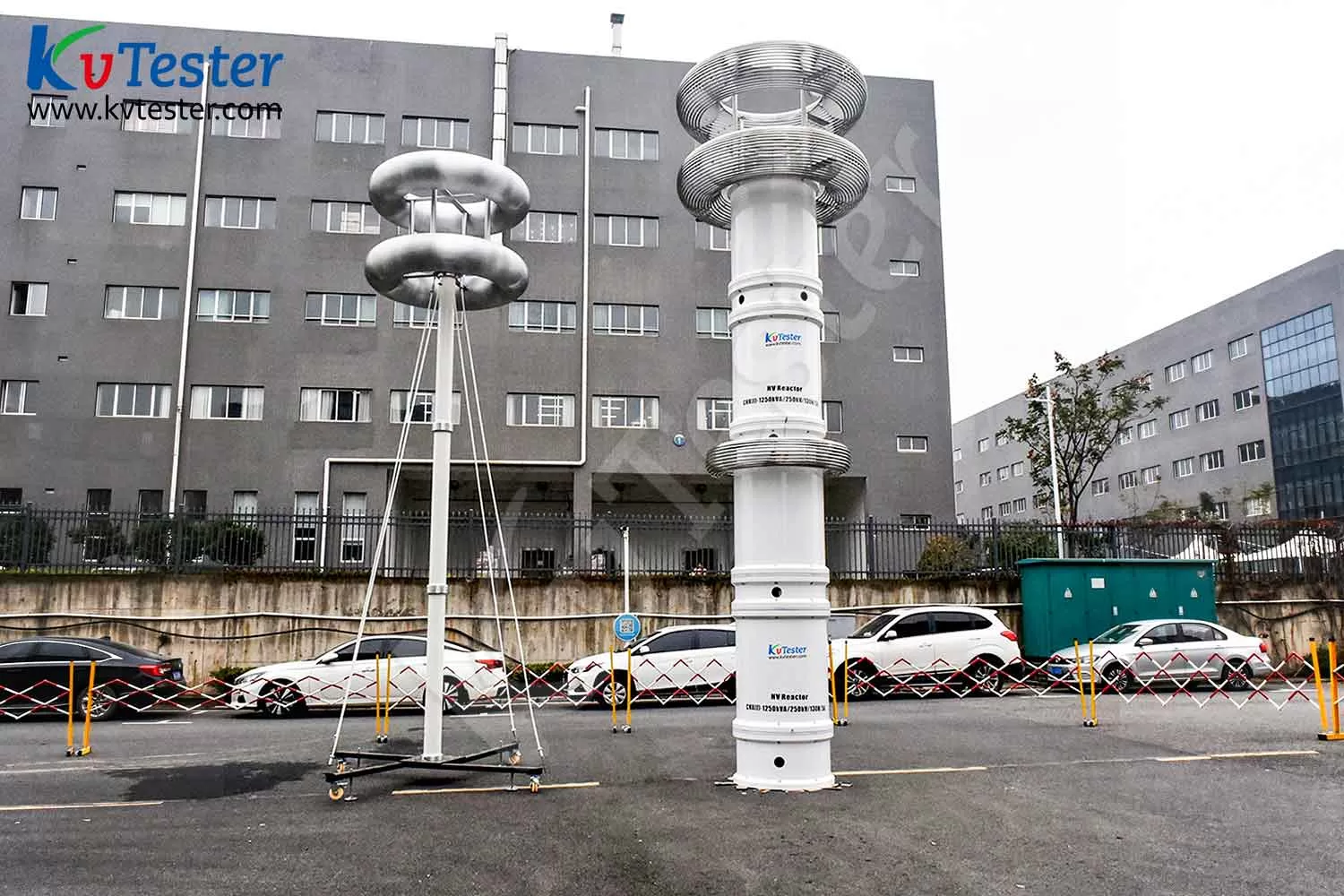
ZCVF-A series frequency conversion series resonant AC withstand voltage device is suitable for AC withstand voltage test of transformer, circuit breaker, switch, GIS system, cable, bushing, insulator and other equipment. It has the functions of high voltage over-voltage protection, low voltage over-current protection, detuning protection, zero position protection, flashover protection, emergency shutdown, under-voltage protection and so on. It not only meets the requirements of equipment test conditions for high voltage and small current, but also meets the requirements of equipment test conditions for low voltage and large current, and has a wide application range.
Kvtester Electronics Technology Co.,Ltd. is a high-tech enterprise specializing in power testing, testing, research and development, production, and sales of testing equipment. It has been engaged in the electrical testing industry for many years, and its products are of high quality. We welcome customers to come and purchase. Service hotline: 0086-27-81778799, to learn more, visit the official website: www.kvtester.com
Related Products
Latest News
-
 2026-09-18Why does the required capacity of series resonant test equipment usually increase with cable length?
 -
 2026-09-18How should 35kV cable series resonant withstand voltage test equipment be configured?
 -
 2026-09-18What parameters must be provided to the manufacturer when purchasing series resonant withstand voltage test equipment?
 -
 2026-09-18How do you select a series resonant withstand voltage test system? Key parameters to consider
 -
 2026-09-18Multi-function Transformer Testing Equipment OEM Guide