
Home » News » Company News
Short Circuit Impedance Tester for Effective Transformer Maintenance
Short Circuit Impedance Tester for Maintenance is an important consideration when evaluating transformer condition and planning preventive maintenance. How can maintenance teams identify possible winding deformation after a short-circuit fault? When should short circuit impedance testing be performed, and what should they look for when selecting a suitable tester?
Short circuit impedance measurement provides useful information about transformer winding conditions. By comparing test results with factory data or previous measurements, technicians can identify changes that may indicate internal mechanical problems. Understanding the testing process, result interpretation, and equipment requirements helps improve the effectiveness of transformer maintenance.
Why Short Circuit Impedance Testing Matters in Transformer Maintenance
Short circuit impedance is an important electrical parameter that reflects the equivalent impedance of transformer windings. It affects short-circuit current, voltage regulation, and transformer operating characteristics.
During operation, transformers may experience mechanical stress caused by external short-circuit currents. Transportation, installation, and other mechanical impacts can also affect winding structures.
Short circuit impedance testing helps maintenance teams evaluate whether these events may have changed the transformer’s internal electrical characteristics.
The main maintenance benefits include:
- Winding condition assessment: Identifying impedance changes that may indicate winding deformation or displacement.
- Post-fault inspection: Evaluating possible winding changes after a short-circuit current event.
- Maintenance comparison: Comparing current measurements with factory values and historical records.
- Return-to-service verification: Providing additional electrical test information after transformer repair or maintenance.
Rather than relying only on visual inspection, technicians can use impedance measurements to obtain electrical evidence about the transformer’s internal condition.
What a Transformer Short Circuit Impedance Test Can Detect
Short circuit impedance testing is particularly useful for evaluating possible mechanical changes in transformer windings.
Winding Deformation
Short-circuit currents can generate substantial electromagnetic forces inside transformer windings. These forces may cause winding displacement or deformation, affecting the transformer’s electrical characteristics.
A change in short circuit impedance compared with the original measurement can indicate a possible mechanical change. Further inspection may be necessary to determine the extent of the problem.
Winding Displacement
Mechanical impacts during transportation, installation, or maintenance may also change the relative positions of transformer windings.
Because winding geometry influences the transformer’s impedance characteristics, measurements can help identify inconsistencies that require further investigation.
Changes in Electrical Characteristics
Short circuit impedance measurements also provide useful information about the transformer’s electrical condition.
However, an abnormal result does not automatically confirm winding deformation. Incorrect connections, different tap positions, test conditions, and measurement errors should also be considered before reaching a conclusion.For more information about the measurement principle, see our guide to the working principle of a transformer short-circuit impedance tester.
When to Perform Short Circuit Impedance Testing During Maintenance
The timing of short circuit impedance testing depends on transformer operating conditions and maintenance requirements. Several situations make this measurement particularly valuable.
After External Short-Circuit Faults
When a transformer experiences a significant external short-circuit event, the resulting electromagnetic forces may affect its windings.
Testing short circuit impedance after the event helps determine whether the electrical characteristics have changed. Comparing the results with factory or previous test data provides a useful reference for further inspection.
After Transportation and Installation
Mechanical shocks and vibration during transportation may affect internal winding structures.
Taking impedance measurements after installation provides a reference for evaluating the transformer’s condition before operation.
During Routine Preventive Maintenance
Periodic measurements help establish a history of transformer impedance characteristics.
Comparing results over time can help maintenance teams identify changes that may require additional investigation.
After Transformer Overhaul
Following major repairs or internal maintenance, short circuit impedance testing can help verify whether the relevant electrical characteristics remain consistent with expected values.
It can also provide additional information before the transformer returns to service.
How to Perform a Transformer Short Circuit Impedance Test
A short circuit impedance test measures the electrical response of a transformer when one winding is short-circuited and a test voltage is applied to the other winding.
The measured voltage and current are used to calculate the equivalent impedance.
Prepare the Transformer
Before testing, disconnect the transformer from the power system and confirm that it has been properly isolated. Follow the applicable safety procedures and verify the transformer connection information.
Check the following details:
- Rated voltage and capacity.
- Winding connection and vector group.
- Tap-changer position.
- Applicable test winding and short-circuit terminals.
Connect the Test Equipment
Short-circuit the designated winding according to the test method, then connect the tester to the other winding.
The connection arrangement should match the transformer configuration and the instrument’s operating instructions.
Apply Test Voltage and Measure Parameters
Apply the required test voltage gradually under the approved test procedure.
The instrument measures electrical parameters such as voltage and current and uses them to calculate impedance-related values.
Record and Compare Results
For three-phase transformers, measure the applicable phases and record the results consistently.
Compare the measurements with factory test values or previous maintenance records. Differences between phases should also be reviewed to identify possible abnormalities.
How to Analyze Transformer Short Circuit Impedance Test Results
Obtaining accurate measurements is only part of the testing process. Correctly interpreting the results is equally important.
Compare Measurements with Factory Values
Factory test data provides an important reference for evaluating transformer condition.
Compare the measured short circuit impedance with the original values under comparable test conditions. Pay attention to changes in percentage impedance rather than relying only on absolute impedance values.
Check Three-Phase Consistency
For three-phase transformers, compare the impedance measurements of different phases.
Significant differences may indicate an abnormal condition, but technicians should first verify wiring, tap positions, and measurement settings.
Review Historical Test Data
A single measurement provides limited information about long-term changes.
Maintaining records from commissioning, routine maintenance, and post-fault inspections makes it easier to identify impedance trends and determine whether further investigation is necessary.
Consider Additional Diagnostic Tests
If impedance measurements indicate possible winding abnormalities, other testing methods can provide complementary information.
For example, frequency response analysis can help evaluate mechanical changes in transformer windings, while DC winding resistance testing can provide information about winding connections and electrical continuity.
Short circuit impedance testing should therefore be treated as one part of a broader transformer condition assessment.
What to Look for in a Short Circuit Impedance Tester for Maintenance
Choosing a suitable short circuit impedance tester requires consideration of transformer specifications, field conditions, and testing requirements.
The following features are particularly important.
Measurement Range and Accuracy
The tester should provide suitable voltage, current, and impedance measurement ranges for the transformers being inspected.
Measurement accuracy is also important when comparing small changes between different test periods.
Single-Phase and Three-Phase Testing
Support for different transformer configurations improves testing flexibility.
A tester that can handle both single-phase and three-phase measurements is useful for maintenance teams working with different transformer types.
Adjustable Test Output
An adjustable internal power output can simplify field testing by reducing dependence on external power regulation equipment.
This is particularly useful when testing large power transformers under on-site conditions.
Automatic Calculation and Data Management
Automatic calculation of short circuit impedance, reactance, and inductance reduces manual calculation work.
Data storage and computer export functions also make it easier to maintain historical records and compare measurement results.
Portability and Field Operation
For maintenance teams working at substations and transformer installations, instrument weight, display visibility, and connection convenience all affect testing efficiency.
A compact instrument with straightforward operation can make routine field measurements more manageable.
Kvtester ZC-204B for Transformer Short Circuit Impedance Testing
For maintenance teams that need to measure the low-voltage short circuit impedance of power transformers, our ZC-204B Transformer Short Circuit Impedance Tester provides an integrated solution.
The ZC-204B features an internal adjustable power output, allowing testing with a 220V power supply without an external voltage regulator under its specified operating conditions. It is particularly suitable for low-voltage short circuit impedance measurement of 35kV and above main transformers, with specific suitability for on-site testing of 110kV and above main transformers.
Its main specifications include:
- AC voltage measurement: 3V–300V.
- AC current measurement: 0.2A–20A.
- Internal power output voltage: 0–250V.
- Internal power output current: 0–10A.
- Impedance measurement range: 0–3000Ω.
- Weight: Approximately 5kg, excluding accessories.
- Dimensions: 360 × 220 × 150mm.
The instrument supports single-phase and three-phase transformer testing. It can automatically calculate the short circuit impedance, reactance, and inductance of each phase. Test data can also be imported into a computer for further analysis and storage.
These functions make the ZC-204B suitable for maintenance teams that need a portable instrument for transformer impedance measurements and winding condition assessment.
Short Circuit Impedance Testing and Other Transformer Maintenance Tests
Short circuit impedance testing provides valuable information, but it does not cover every aspect of transformer condition. Combining different electrical tests helps maintenance teams obtain a more complete assessment.
Several complementary tests include:
- Transformer Winding Resistance Test: Measures winding resistance and helps identify abnormal connections or contact problems.
- Transformer Turns Ratio Test: Checks the transformation ratio and helps identify incorrect tap positions or winding connection issues.
- Insulation Resistance Test: Evaluates insulation resistance between windings and between windings and ground.
- Frequency Response Analysis (SFRA): Helps assess possible mechanical deformation or displacement of transformer windings.
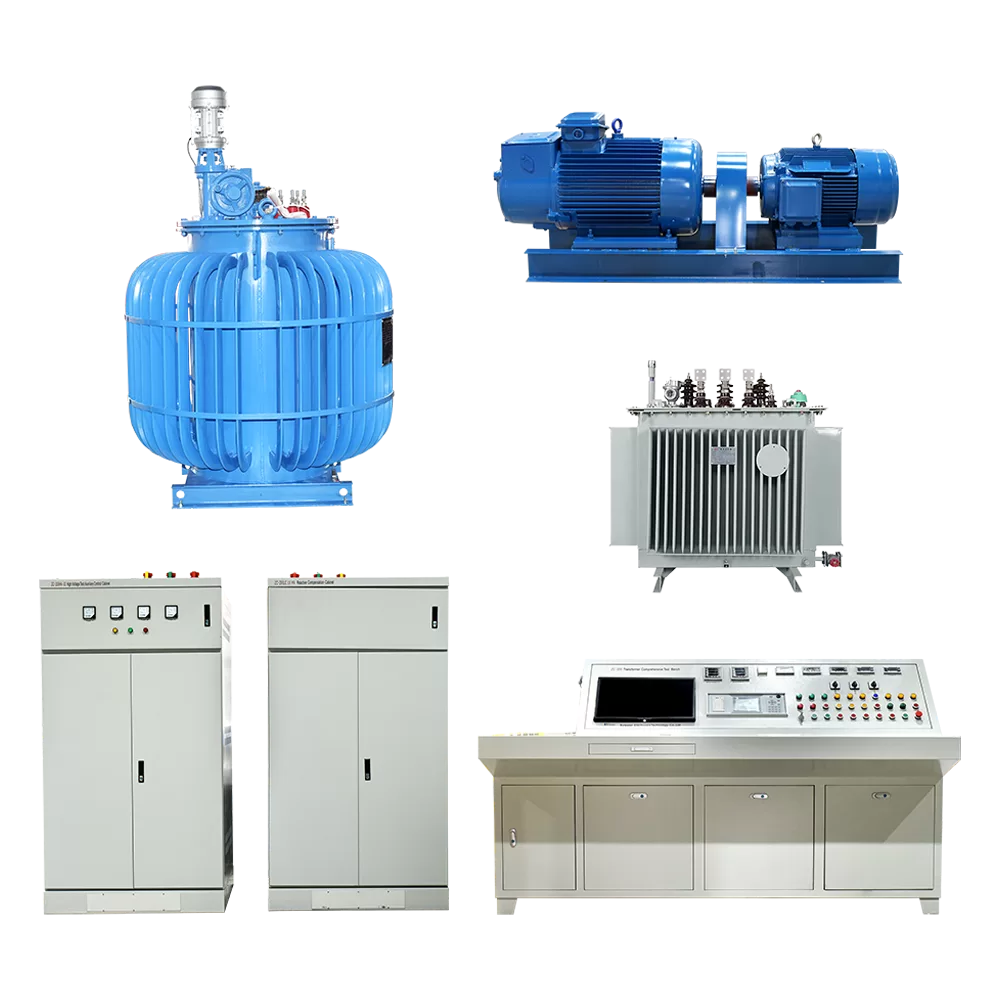
For maintenance departments that require several electrical tests in one system, our ZC-200 Transformer Comprehensive Test System is another option.
Designed for three-phase transformers rated up to 5000kVA and 22kV, the ZC-200 supports no-load current and loss testing, short-circuit impedance and load loss testing, winding resistance testing, voltage ratio and connection group testing, as well as power-frequency and induction withstand voltage tests.
Selecting complementary testing equipment according to the transformer type and maintenance objectives helps improve testing coverage without treating different diagnostic methods as interchangeable.
Conclusion
Short circuit impedance testing is an important part of transformer maintenance, particularly after short-circuit faults, transportation, installation, and major repairs. Comparing measurement results with factory data and historical records helps maintenance teams identify possible changes in winding condition and determine whether further inspection is needed.
Choosing a suitable tester also matters. Measurement accuracy, adjustable output, phase testing capabilities, automatic calculation, and data management should all be considered.
Kvtester provides transformer testing solutions for different maintenance requirements. The ZC-204B is designed for low-voltage short circuit impedance measurement of power transformers, helping technicians obtain and manage the electrical data needed for transformer condition assessment.
Related Products
Latest News
-
 2026-11-05Smart CT PT Analyzer with USB Output for Easier Test Data Handling
-
 2026-11-04Transformer Capacity and Load Tester: Functions & Selection
-
 2026-11-04Anti-interference CT Tester: How to Improve Measurement Stability in the Field
-
 2026-11-04Automatic CT Tester with Data Logger: Improving Grid Commissioning Efficiency
-
 2026-11-03Transformer Tester for Maintenance: Essential Tests