
What is a DC High-Voltage Generator?
What is a DC High-Voltage Generator?
During the installation, maintenance, and preventive testing of power equipment, it is often necessary to perform DC withstand voltage and leakage current tests on lightning arresters, electrical insulation components, and certain high-voltage equipment. A DC high-voltage generator is a common type of test equipment used for these high-voltage tests. Compared to traditional high-voltage test equipment, modern DC high-voltage generators are typically smaller and lighter, feature continuously adjustable output voltage, and offer comprehensive protection functions. Consequently, they are widely used in sectors such as electric power, railways, petrochemicals, metallurgy, industrial and mining enterprises, and high-voltage electrical equipment testing.
1. What is a DC high-voltage generator?
A DC high-voltage generator is a piece of high-voltage test equipment capable of converting alternating current (AC) into adjustable high-voltage direct current (DC). It is primarily used to conduct DC withstand voltage tests, leakage current tests, and related high-voltage DC tests on electrical equipment.
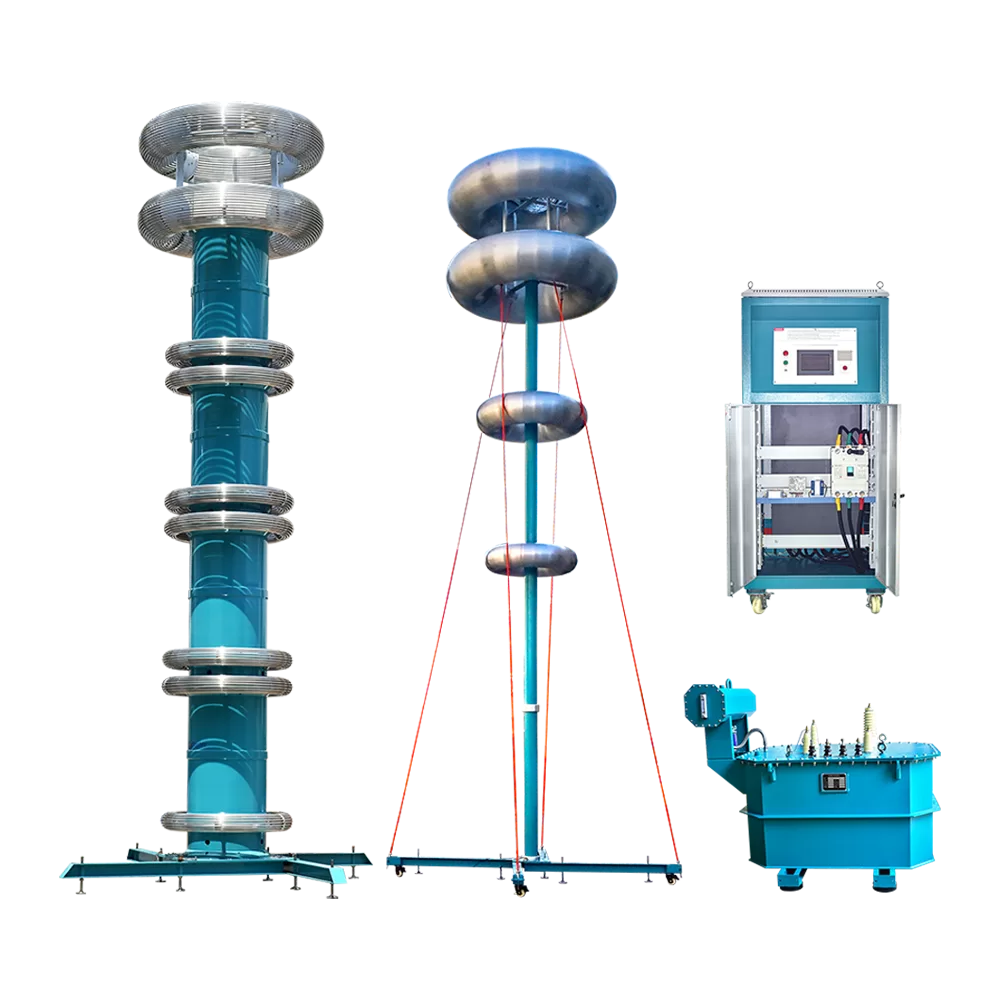
Common DC high-voltage generators typically consist of a control unit, a high-voltage voltage-multiplier cylinder, high-voltage connecting cables, a grounding wire, a discharge device, and relevant measurement accessories. Depending on specific testing requirements, the equipment can be designed with various rated output voltages and currents—such as common voltage ratings of 60kV, 120kV, or 200kV. When selecting a unit, one should not focus solely on the maximum output voltage; instead, the choice should be based on a comprehensive assessment of the type of equipment under test, the required test voltage, leakage current specifications, and on-site operational requirements.
2. What is the working principle of a DC high-voltage generator?
The basic operating process of a DC high-voltage generator can be summarized as follows:
AC Input → High-frequency or medium-frequency conversion → Voltage step-up → Voltage-multiplier rectification → Stable DC high-voltage output.
Once the equipment is powered on, the control unit converts the input power, generating an AC signal at a specific frequency via electronic circuitry. This signal then passes through a high-voltage transformer and a voltage-multiplier rectification circuit, where the voltage is stepped up stage by stage to achieve the desired DC high voltage. Throughout the voltage-boosting process, the operator can continuously adjust the output voltage via the control unit and monitor the test status through voltage and current display units.
Modern DC high-voltage generators are also typically equipped with various protection functions, such as over-voltage protection, over-current protection, zero-start protection, grounding protection, and automatic current limiting or fault protection. The purpose of these protective measures is to promptly cut off or limit the high-voltage output in the event of output anomalies, dielectric breakdown of the test object, or operating conditions falling outside specified requirements, thereby enhancing the safety of both the equipment and the testing personnel.
3. What are the primary applications of DC high-voltage generators?
① Zinc oxide surge arrester testing
This is one of the most typical application scenarios for DC high-voltage generators.
In tests involving zinc oxide surge arresters, applying DC high voltage allows for the measurement of parameters such as the DC reference voltage and leakage current, helping to assess the arrester’s performance status. For instance, tests often involve measuring U1mA (the voltage at 1mA current) and leakage current at specific reference voltages.
It should be noted that testing methods and acceptance criteria vary depending on the voltage rating and model of the arrester; procedures must comply with relevant product standards, testing protocols, and on-site technical requirements.
② DC withstand voltage testing for electrical equipment
DC high-voltage generators can be used for DC withstand voltage testing on certain electrical equipment and insulating materials.
By applying a specific DC high voltage to the test object for a prescribed duration, one can observe the insulation for phenomena such as abnormal discharge, breakdown, or irregular leakage current, thereby evaluating insulation performance. However, it is important to note that not all power equipment is suitable for DC withstand voltage testing. In particular, when testing certain power cables, the appropriate testing method must be selected based on cable type, testing standards, and actual operating procedures; DC withstand voltage testing cannot simply be used as a substitute for mandated AC or VLF (Very Low Frequency) testing methods.
③ Leakage current testing
Although insulating materials possess high insulation resistance, a certain amount of leakage current still flows when DC high voltage is applied. By applying a specified voltage to the test object using a DC high-voltage generator and simultaneously measuring the leakage current, one can help assess the equipment’s insulation status. If the leakage current is significantly abnormal, or if instability or sudden increases occur during voltage ramping, further analysis is required, taking into account the condition of the test object, environmental conditions, wiring configuration, and the testing method used.
④ Testing of high-voltage components and insulating materials
DC high-voltage generators can also be used for testing and inspecting certain high-voltage components, insulators, insulating materials, and related electrical products. DC high-voltage generators are frequently used as high-voltage DC test power sources in electrical equipment manufacturing enterprises, testing agencies, and R&D laboratories.
4. Conclusion
DC high-voltage generators are commonly used equipment in high-voltage electrical testing, primarily for tests such as DC withstand voltage, leakage current, and lightning arrester evaluations. A proper understanding of their operating principles and application scope facilitates more rational equipment selection and on-site testing. As a manufacturer of DC high-voltage generators, we recommend that users consider factors such as the type of test object, test voltage, and output current when selecting equipment, rather than simply pursuing higher voltage ratings
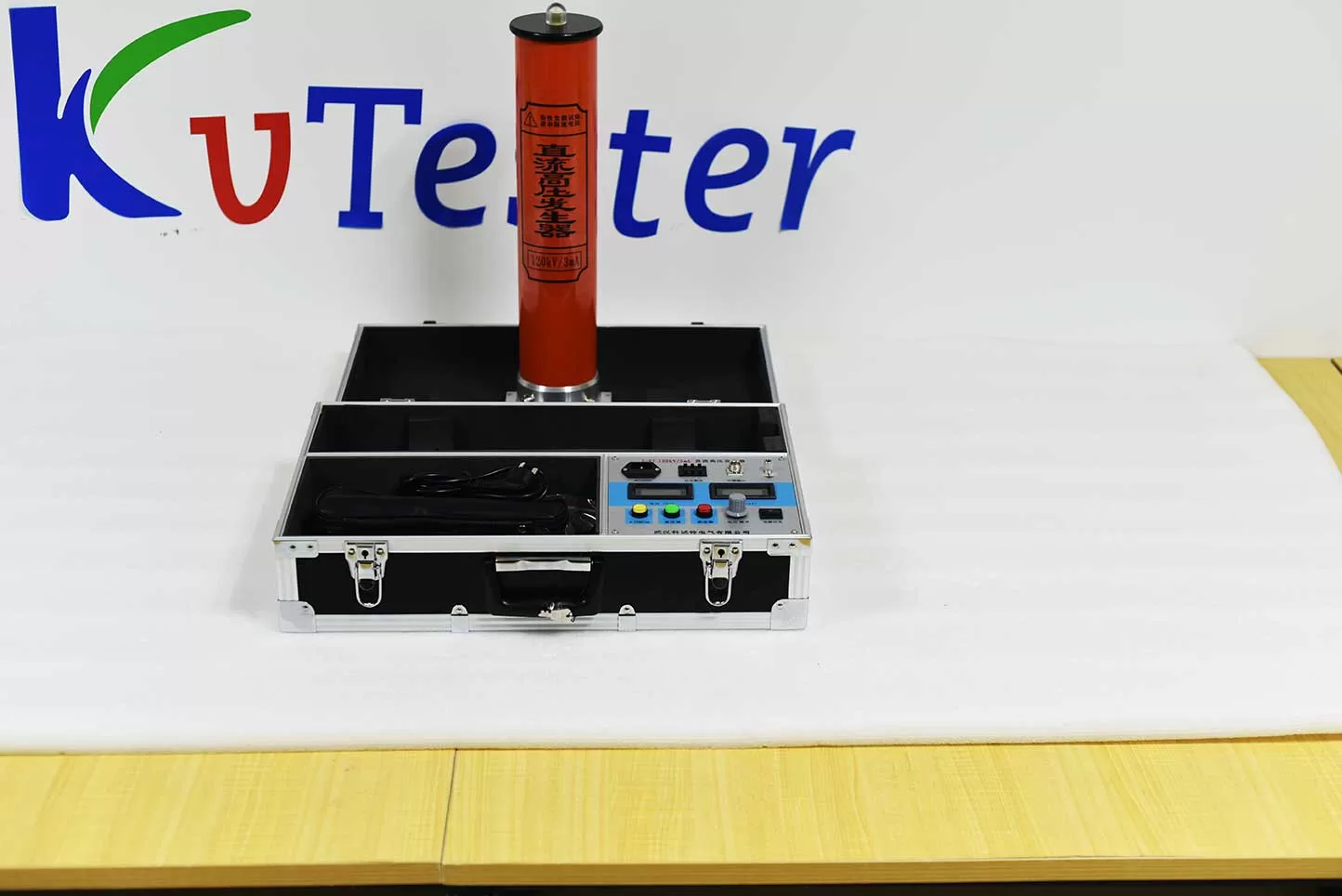
The ZC-540 series DC high-voltage generator is primarily designed for use by power utilities, industrial and mining power departments, research institutes, railways, the chemical industry, and power plants to conduct DC withstand voltage tests on high-voltage electrical equipment—such as zinc oxide arresters, magnetic blowout arresters, power cables, generators, transformers, and switchgear. The instrument utilizes an intermediate-frequency voltage-multiplying circuit and PWM (Pulse Width Modulation) technology, resulting in significantly improved voltage stability. Based on electromagnetic compatibility principles, special measures—including shielding, isolation, and grounding—are employed to ensure that the generator can withstand discharges at rated voltage without sustaining damage.
Kvtester Electronics Technology Co.,Ltd. is a high-tech enterprise specializing in power testing, testing, research and development, production, and sales of testing equipment. It has been engaged in the electrical testing industry for many years, and its products are of high quality. We welcome customers to come and purchase. Service hotline: 0086-27-81778799, to learn more, visit the official website: www.kvtester.com
Related Products
Latest News
-
 2026-10-23How can damage to a transformer during a withstand voltage test be avoided?
 -
 2026-10-23What is the purpose of a power-frequency withstand voltage test?
 -
 2026-10-23How to Select the Appropriate Capacity of a High-Voltage Test Transformer
 -
 2026-10-23Transformer Tester for Substation Testing and Selection
 -
 2026-10-23Substation CT Tester: How to Choose the Right CT Tester for Commissioning