Home » News » Company News
Substation CT Tester: How to Choose the Right CT Tester for Commissioning
A substation CT tester helps verify current transformer performance before commissioning, maintenance, and other electrical testing tasks. Choosing the right equipment requires understanding which CT parameters need to be checked, how protection and metering applications differ, and whether a portable analyzer or an integrated test system better suits the project.
Why a Substation CT Tester Is Needed Before Commissioning
Current transformers (CTs) convert high primary currents into lower secondary currents for metering, monitoring, and protection systems. Their measurement accuracy and electrical characteristics directly affect the reliability of these applications.
Before a substation is energized, CT testing helps identify problems that could affect measurement or protection performance.
Common reasons for testing include:
- New substation commissioning and acceptance.
- CT replacement or secondary circuit modification.
- Periodic maintenance and troubleshooting.
- Verification of CT performance after repair or calibration.
A suitable CT tester helps engineers check whether the measured characteristics meet the applicable technical requirements. The required tests depend on the CT type, its intended application, and the project acceptance criteria.
What Tests Should a Substation CT Tester Perform?
Not every CT requires the same test sequence. Before selecting equipment, identify the parameters that need to be measured and the criteria used to evaluate the results.
CT Ratio and Phase Displacement
The CT ratio determines the relationship between primary and secondary current. Ratio error can affect metering accuracy, while phase displacement is important when evaluating measurement performance.
Check the measured ratio against the rated ratio and verify the applicable accuracy requirements under the specified test conditions.
Excitation and Knee-Point Testing
Excitation testing measures the relationship between applied voltage and excitation current. The resulting curve helps engineers evaluate the CT’s magnetic characteristics and saturation behavior.
For protection CTs, knee-point characteristics may be important when assessing performance under fault conditions. The evaluation criteria should match the CT class and applicable protection requirements.
Polarity, Winding Resistance, and Burden
These tests provide additional information about CT condition and secondary circuit performance.
- Polarity testing checks the relative orientation of the primary and secondary terminals.
- Secondary winding resistance testing helps identify abnormal resistance that may indicate winding or connection problems.
- Burden testing evaluates the impedance or load connected to the CT secondary circuit.
Depending on the analyzer, additional measurements may include residual magnetism, inductance, and accuracy under different burdens.
How Protection CTs and Metering CTs Affect Tester Selection
Protection CTs and metering CTs serve different purposes, so their testing priorities may differ.
Protection CTs
Protection CTs supply current signals to protective relays. Their performance during fault conditions is important, particularly when saturation could affect the current supplied to a relay.
Depending on the CT class and protection scheme, testing may include excitation characteristics, knee-point voltage, winding resistance, ratio, and polarity.
Metering CTs
Metering CTs are used for electrical measurement and energy metering. Ratio error, phase displacement, rated burden, and accuracy class are important considerations.
For either application, select a tester according to the actual CT specifications and required tests rather than assuming that one standard test sequence suits every installation.
Key Specifications to Compare When Choosing a CT Tester
A substation CT tester should match the measurement requirements, operating environment, and testing workload.
Measurement Range and Accuracy
Confirm the supported CT ratio range, ratio accuracy, phase measurement performance, winding resistance range, and burden measurement capability.
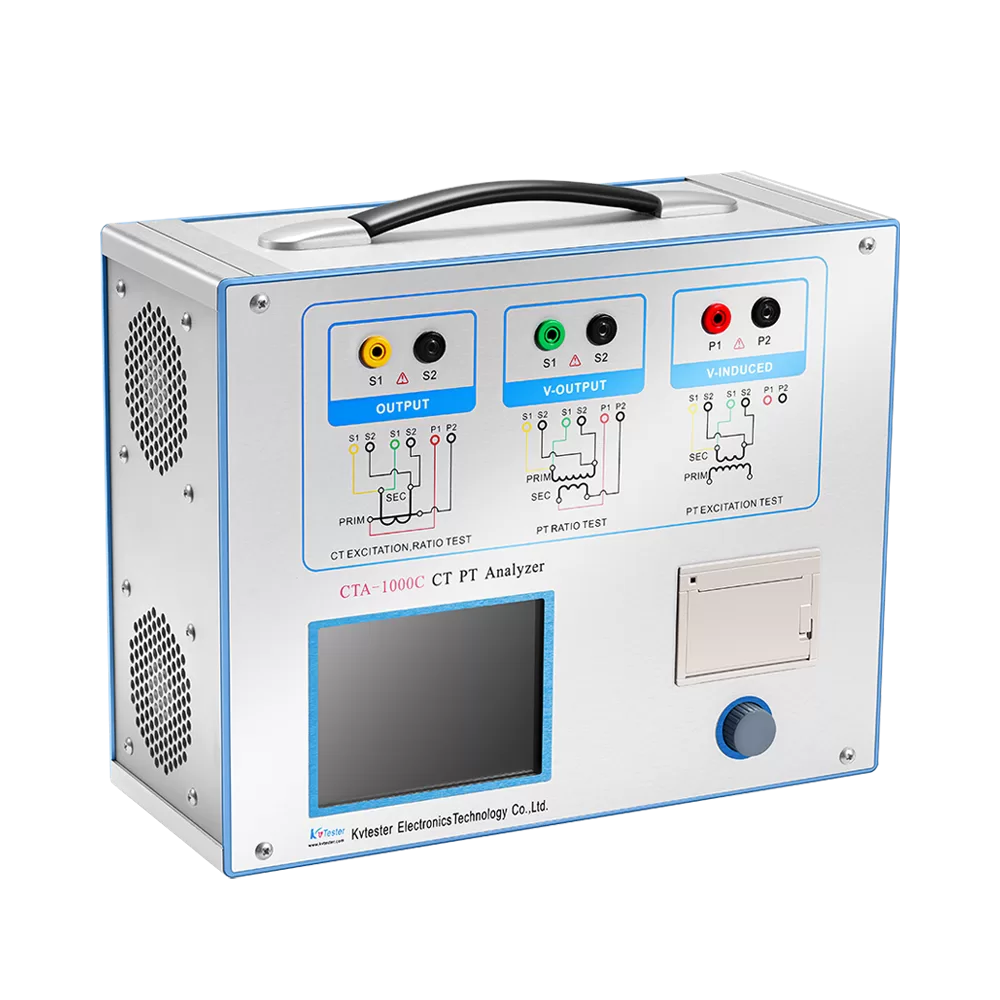
For example, our CTA-1000C CT/PT Analyzer supports a CT ratio range of 1–40,000 with stated accuracy of ±0.05%. Its DC resistance measurement range is 0–300 Ω, and its burden measurement range is 0–1,000 VA. The instrument also supports PT testing, making it an option for teams that need both CT and PT measurement functions.
Output Capability and Portability
Output voltage and current affect the tests an instrument can perform. Check these specifications against the required test procedures instead of assuming that every analyzer supports every CT configuration.
Our CTA-1000D CT/PT Analyzer supports automatic CT evaluation against selected IEC or IEEE standards. Its automatic test duration is under 2 minutes, and it weighs approximately 9 kg without accessories. The analyzer supports CT ratio and phase-angle accuracy, excitation characteristics, winding resistance, burden impedance, and residual magnetism measurements.
These features can be useful for field teams that need several CT characteristics checked with a portable instrument. The final choice should still reflect the required measurement ranges and accuracy limits.
Automation and Test Records
For teams testing many CTs, automated measurement, data processing, and report generation can reduce repetitive manual work.
Consider how many CTs need to be tested per day, whether several units must be tested in sequence, and whether the results need to be stored for calibration or acceptance records.
How to Test a CT During Substation Commissioning
A consistent procedure helps engineers obtain reliable results and maintain clear test records. The exact connections and sequence must follow the equipment instructions and the approved project procedure.
- Review the CT information. Confirm the rated ratio, secondary current, accuracy class, terminal markings, and required tests.
- Prepare the testing area. Follow the approved isolation, grounding, and work-permit procedures.
- Connect the tester. Use the manufacturer’s wiring diagram and verify the connections before starting.
- Configure the test. Enter the required CT parameters and select the appropriate measurement functions.
- Run the measurements. Perform the required ratio, polarity, excitation, resistance, and burden tests as applicable.
- Review the results. Compare measured values with the CT specifications and project acceptance criteria.
- Save the records. Document the results, investigate abnormal readings, and complete any required retesting.
CT secondary circuits require particular care. Never leave a CT secondary circuit open while primary current is flowing. Follow the approved safety procedure before disconnecting or reconnecting any secondary wiring.
Substation CT Tester vs. Primary Injection Test Equipment
A CT tester and a primary injection test set serve different testing purposes. Understanding this distinction helps prevent gaps in a commissioning plan.
A CT tester evaluates CT characteristics such as ratio, polarity, excitation, winding resistance, and burden, depending on the instrument’s capabilities.
Primary injection equipment supplies current through a primary circuit. It can be used to verify current paths and support checks of associated secondary circuits when combined with suitable measurement equipment.
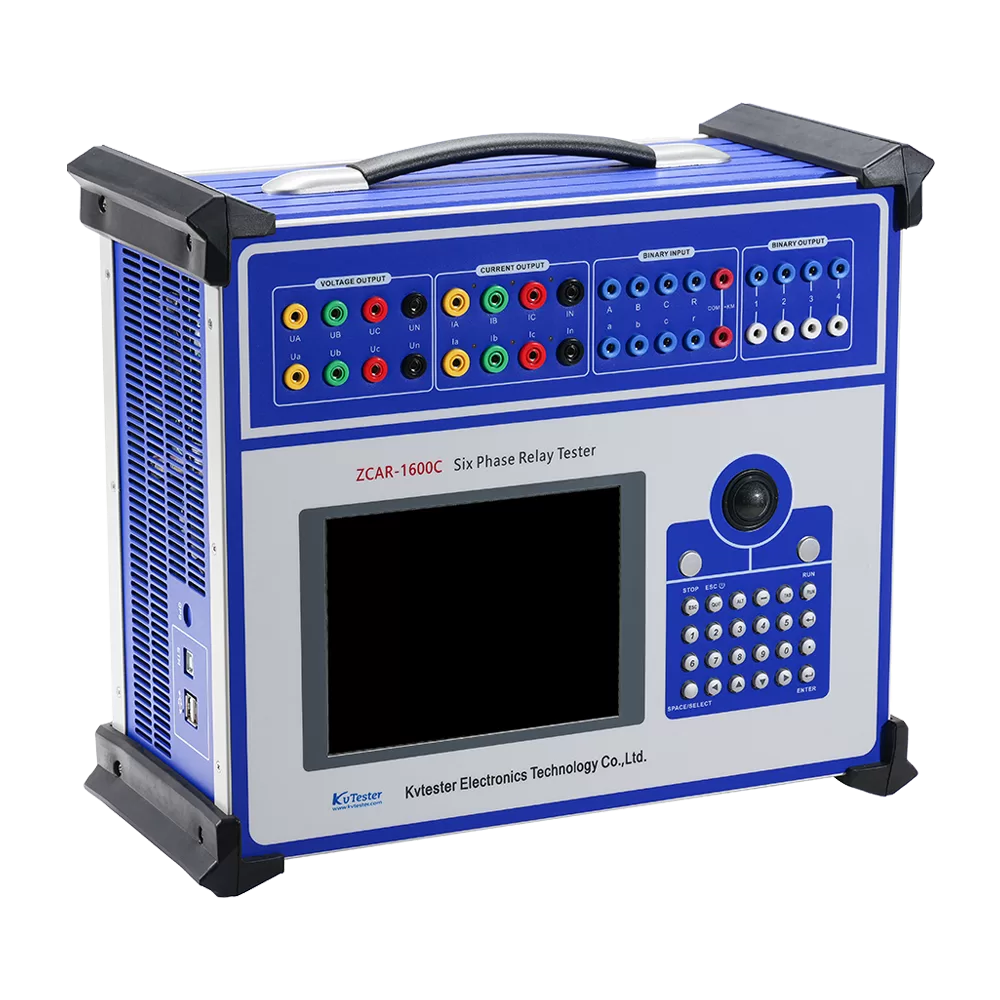
A relay protection tester serves another purpose: it evaluates relay operating characteristics, protection logic, and related functions.
These instruments are complementary rather than interchangeable. The equipment required depends on whether the project needs to verify CT characteristics, primary current paths, relay performance, or a combination of these tasks.
Which CT Testing Solution Fits Your Substation Project?
The most suitable solution depends on the testing environment and workload.
Portable CT Testing for Field Teams
For commissioning and maintenance teams that move between testing locations, portability and a broad range of measurement functions can be important.
The CTA-1000C and CTA-1000D are options to evaluate for CT/PT testing. Compare their documented functions, measurement accuracy, output capability, and supported procedures with the actual requirements of the substation.
Automated Testing for Manufacturers and Test Centers
When testing large numbers of CTs, an integrated test system may offer a more suitable workflow than a portable analyzer.
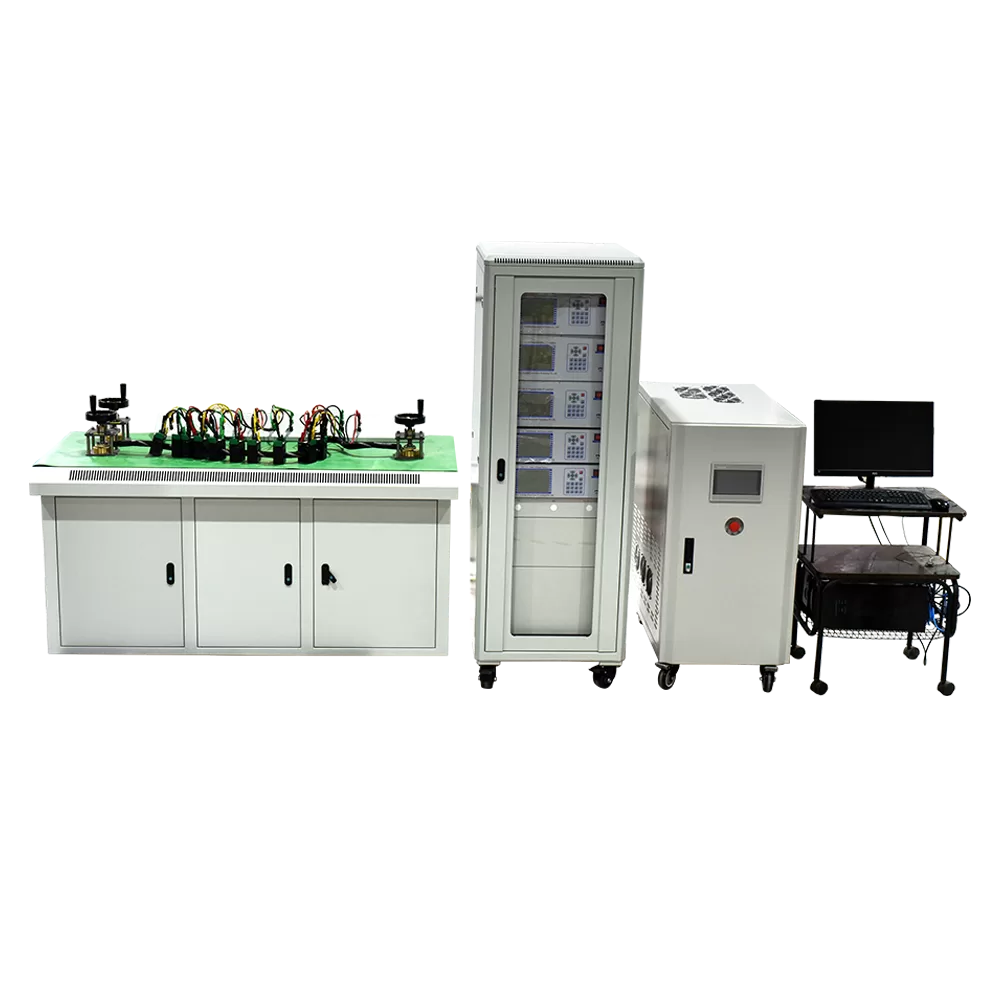
Our ZCHG-12 CT PT Test System is designed for CT accuracy testing and calibration. Its specifications include a rated primary current range of 5–5,000 A, secondary currents of 1 A or 5 A, and a rated capacity of 30 kVA. The test bench supports up to 12 CTs at one time and includes computer-controlled automatic testing, result management, and report generation.
This configuration is worth considering for CT manufacturers and metering test centers that need structured, repeatable testing. For substation projects, confirm that the system configuration and test functions match the intended field or laboratory workflow.
What to Prepare Before Purchasing
Before choosing a substation CT tester, prepare the following information:
- CT type, rated ratio, primary and secondary current, and accuracy class.
- Required tests and applicable acceptance criteria.
- Number of CTs to be tested and expected testing frequency.
- Required measurement accuracy and reporting functions.
- Available power supply, working environment, and portability requirements.
These details make it easier to determine whether a portable CT/PT analyzer or an integrated testing system is appropriate.
Conclusion
Choosing the right substation CT tester starts with identifying the CT types, required measurements, and commissioning criteria. Ratio, phase displacement, excitation, polarity, winding resistance, and burden testing each provide different information about CT performance.
At Kvtester, we offer portable CT/PT analyzers and automated testing systems for different testing workflows. By comparing the actual specifications with your project requirements, you can select equipment that supports reliable testing without paying for functions you do not need.
Related Products
Latest News
-
 2026-10-20CVT Compatible CT PT Analyzer: Selection Guide
-
 2026-10-20China CT PT Analyzer Supplier: Manufacturer Guide
-
 2026-10-20CT PT Test System: Testing Methods and Equipment Selection
-
 2026-10-16How can measurement errors in no-load tests be minimized?
- 2026-10-16Why is the no-load test on a transformer typically conducted by applying voltage to the low-voltage side?