
How do you choose a DC high-voltage generator?
DC high-voltage generators are commonly used for tests such as DC withstand voltage, leakage current measurement, and zinc oxide arrester testing on electrical equipment. When selecting a unit, one should not focus solely on the “maximum output voltage”; instead, a comprehensive assessment based on the test object and actual operating conditions is required.
1. Rated Output Voltage
Rated output voltage is the most fundamental selection parameter. Common specifications include 60kV, 120kV, and 200kV. When selecting, determine the equipment class based on the maximum test voltage required by the test object, while allowing for an appropriate safety margin. A higher voltage rating is not necessarily better; meeting actual testing needs is what matters most.
2. Rated Output Current
Output current is also a critical parameter. If the test object has high leakage current and the equipment’s rated output current is insufficient, issues such as an inability to raise the voltage, unstable output, or triggering of equipment protection mechanisms may occur. Therefore, when selecting a unit, you must consider both:
The maximum test voltage + the maximum output current likely required during the test process.
3. Voltage and Current Measurement Accuracy
In DC withstand voltage and leakage current tests, voltage and current data serve as the primary basis for evaluating test results. Consequently, attention should be paid to the equipment’s voltage and current measurement accuracy as well as display resolution; measurement performance is particularly important when conducting tests involving microampere-level leakage currents.
4. Protection Functions
Abnormalities such as discharges, breakdowns, or overcurrents can occur during high-voltage testing. Therefore, the equipment should feature comprehensive protection functions—such as overvoltage protection, overcurrent protection, zero-start protection, and automatic protection against anomalies. A robust protection design enhances both safety and operational stability.
5. On-site Usability
If the equipment is frequently used in locations like substations or construction sites, factors such as the weight, dimensions, wiring method, and ease of transport for the control unit and voltage multiplier cylinder should be considered. For testing projects requiring frequent relocation, portability is a key factor that should not be overlooked.
Conclusion
When selecting a DC high-voltage generator, it is recommended to focus on output voltage, output current, measurement accuracy, protection functions, and portability, ensuring the equipment is matched to the specific test object and testing requirements.
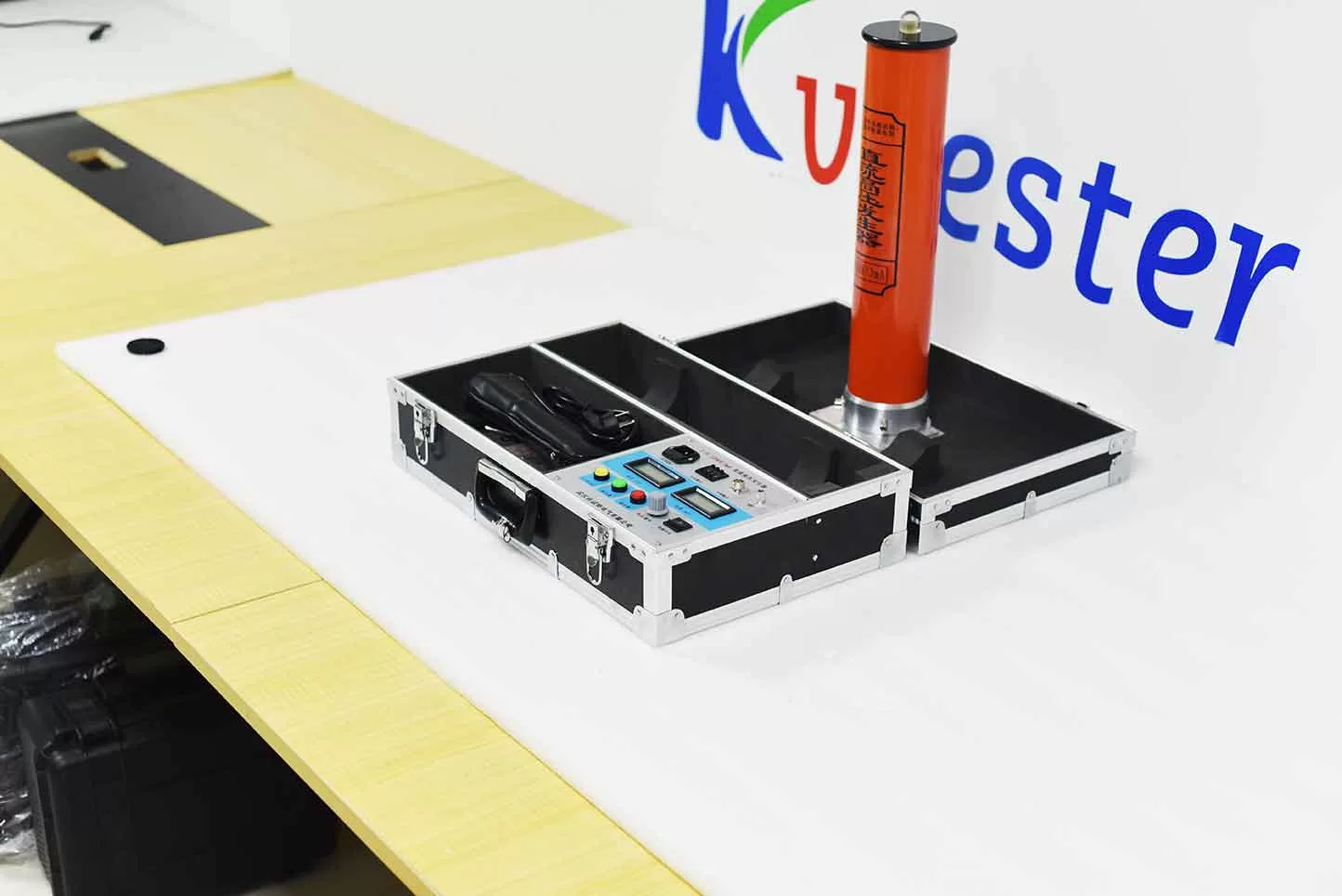
The ZC-540 series DC high-voltage generator is primarily designed for use by power utilities, industrial and mining power departments, research institutes, railways, the chemical industry, and power plants to conduct DC withstand voltage tests on high-voltage electrical equipment—such as zinc oxide arresters, magnetic blowout arresters, power cables, generators, transformers, and switchgear. The instrument utilizes an intermediate-frequency voltage-multiplying circuit and PWM (Pulse Width Modulation) technology, resulting in significantly improved voltage stability. Based on electromagnetic compatibility principles, special measures—including shielding, isolation, and grounding—are employed to ensure that the generator can withstand discharges at rated voltage without sustaining damage.
Kvtester Electronics Technology Co.,Ltd. is a high-tech enterprise specializing in power testing, testing, research and development, production, and sales of testing equipment. It has been engaged in the electrical testing industry for many years, and its products are of high quality. We welcome customers to come and purchase. Service hotline: 0086-27-81778799, to learn more, visit the official website: www.kvtester.com
Related Products
Latest News
-
 2026-10-23How can damage to a transformer during a withstand voltage test be avoided?
 -
 2026-10-23What is the purpose of a power-frequency withstand voltage test?
 -
 2026-10-23How to Select the Appropriate Capacity of a High-Voltage Test Transformer
 -
 2026-10-23Transformer Tester for Substation Testing and Selection
 -
 2026-10-23Substation CT Tester: How to Choose the Right CT Tester for Commissioning