
In what scenarios are VLF, variable-frequency series resonant, and power-frequency withstand voltage tests respectively suitable?
In what scenarios are VLF, variable-frequency series resonant, and power-frequency withstand voltage tests respectively suitable?
During high-voltage testing, clients often encounter three types of AC withstand voltage tests: Very Low Frequency (VLF), variable-frequency series resonant, and power-frequency withstand voltage tests. While all three can be used for insulation withstand testing, they differ in their target applications and site requirements; thus, one cannot simply claim that one is universally better than the others.
In short:
VLF withstand testing is best suited for on-site testing of medium-voltage cables;
Variable-frequency series resonant testing is best suited for high-voltage, large-capacitance AC withstand testing;
Power-frequency withstand testing is best suited for withstand testing of conventional electrical equipment with lower capacitance.
1. In what scenarios is VLF withstand testing suitable?
The common output frequency for VLF withstand testing is 0.1 Hz, meaning the voltage completes one full cycle every 10 seconds. It outputs low-frequency AC high voltage, not DC high voltage. IEEE 400.2-2024 defines VLF on-site cable testing as the use of AC signals below 1 Hz and notes that 0.1 Hz is a common commercial VLF test frequency.
The most typical application for VLF withstand testing is power cables, particularly medium-voltage cables such as those rated at 10 kV or 35 kV.
A cable essentially acts as a large capacitor; the longer the cable, the higher its capacitance. If a 50 Hz power-frequency withstand test method were used, the test current and required equipment capacity would increase significantly. By lowering the frequency to around 0.1 Hz, VLF testing drastically reduces capacitive current, allowing the test equipment to be smaller and lighter—making it much more suitable for on-site transport and operation.
Therefore, VLF high-voltage generators are commonly used for:
Acceptance withstand voltage tests for 10 kV and 35 kV cables;
Preventive testing of in-service cables;
Withstand voltage verification following cable fault repairs;
On-site cable testing at distribution rooms, substations, wind farms, photovoltaic plants, industrial/mining enterprises, and municipal projects.
Its advantages include equipment portability, relatively simple wiring, and lower requirements for on-site power supply capacity. Its disadvantages are that the frequency differs significantly from the standard power frequency, making it unsuitable for all types of equipment and unable to replace all power-frequency AC withstand voltage tests.
2. In what scenarios is variable-frequency series resonance suitable?
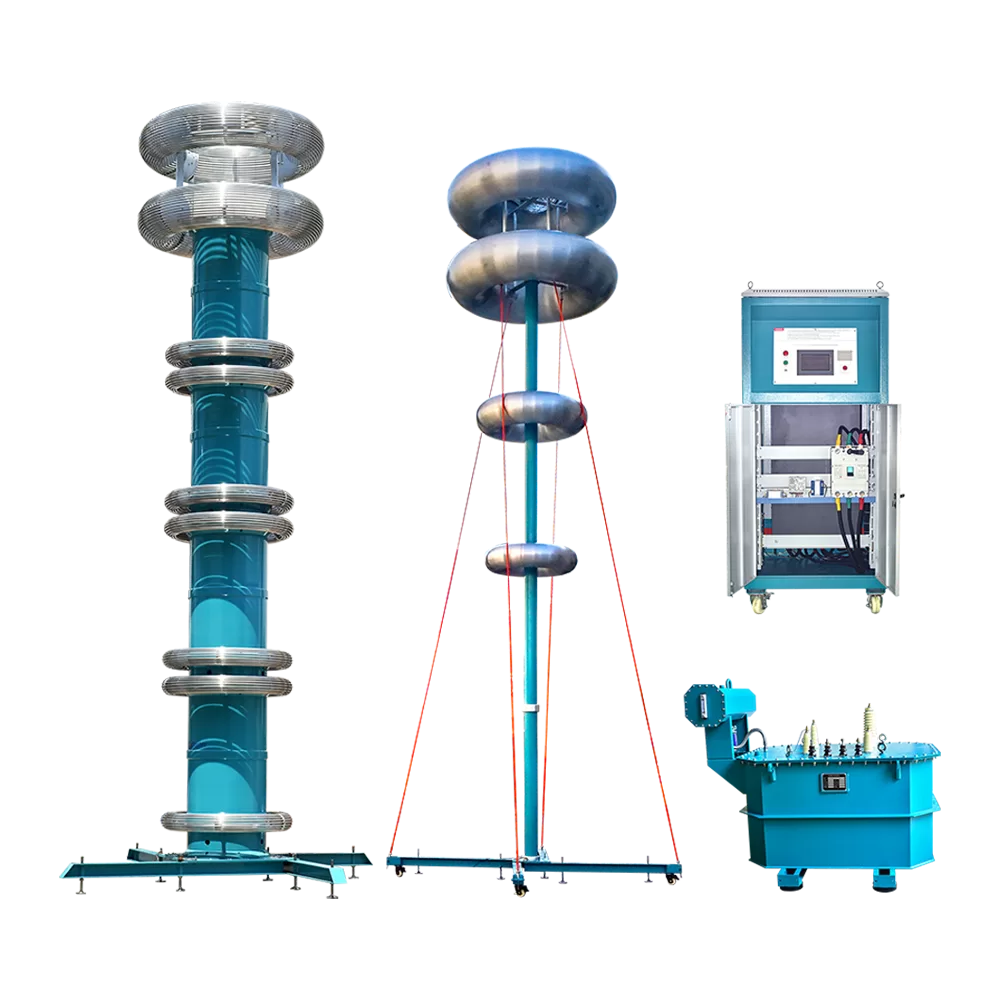
Variable-frequency series resonance test equipment operates by adjusting the frequency to achieve resonance between the reactor and the capacitance of the test object, thereby generating a high test voltage from a relatively low input power capacity.
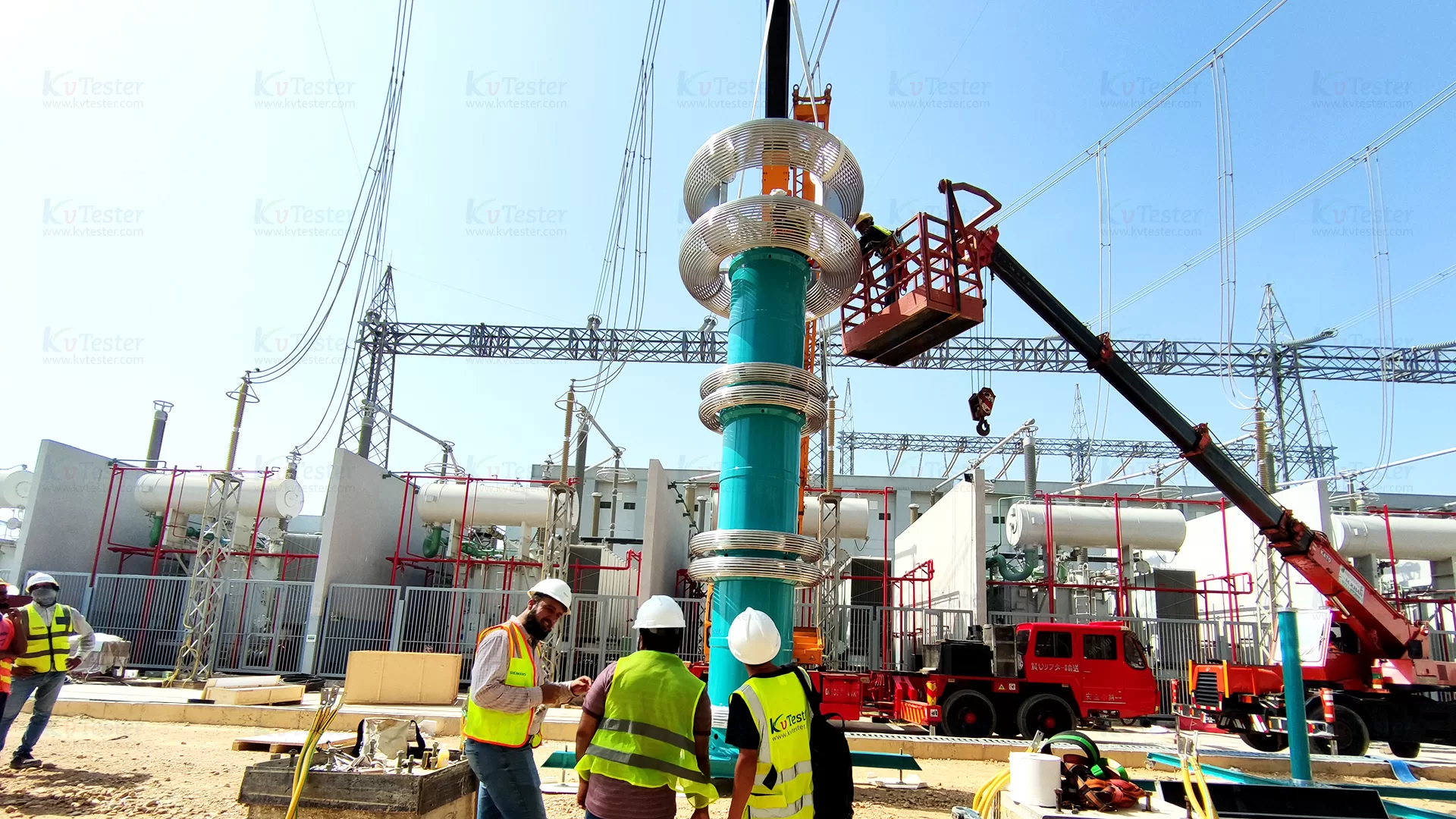
It is particularly suitable for large-capacity, high-voltage test objects requiring AC withstand voltage testing. AC resonance test systems are commonly used for high-voltage testing of low-loss capacitive loads such as cables, GIS (Gas-Insulated Switchgear), capacitive equipment, generator windings, and insulators.
Common application scenarios for variable-frequency series resonance include:
AC withstand voltage testing for high-voltage and extra-high-voltage cables;
On-site AC withstand voltage testing for GIS equipment;
Withstand voltage testing for large generator and motor stator windings;
Testing of large-capacity objects such as capacitors, bushings, and busbars;
On-site testing where the required test frequency and waveform must closely match standard AC withstand voltage conditions.
Its advantages include high test capacity, high voltage ratings, and superior output waveforms, making it ideal for large-capacity equipment and high-voltage projects. Compared to standard power-frequency withstand voltage equipment, series resonance systems significantly reduce the required input power capacity and the total equipment capacity.
Its drawbacks include a relatively complex system configuration—typically comprising a variable-frequency power supply, an excitation transformer, a reactor, a voltage divider, and a control system—as well as more demanding requirements for on-site wiring, tuning, and transportation compared to VLF (Very Low Frequency) equipment.
3. In what scenarios is power-frequency withstand voltage testing suitable?
Power-frequency withstand voltage testing typically outputs high-voltage AC at 50 Hz or 60 Hz, frequencies close to the actual operating frequency of the power system. It is a traditional and intuitive method for AC withstand voltage testing.
Power-frequency withstand voltage testing is suitable for electrical equipment with moderate capacity and controllable test currents, such as:
Switchgear; circuit breakers; instrument transformers; insulators; busbars; bushings; small-capacity transformers or electrical components; and short cables or test objects with low capacitance.
The advantages of power-frequency withstand voltage testing include a test frequency that closely matches actual operating conditions, a wide range of applications, and an intuitive testing process. For many types of conventional electrical equipment, it remains a standard method for verifying insulation strength. However, if the test object is a long-distance cable or high-capacitance equipment, the test capacity required for power-frequency withstand voltage testing becomes very high; the equipment may be bulky and heavy, and the requirements for the on-site power supply are stringent. In such cases, Very Low Frequency (VLF) or variable-frequency series resonant schemes should be considered.
4. How to choose between the three methods?
If the primary task is testing 10kV or 35kV medium-voltage cables—especially for on-site acceptance, preventive maintenance, or post-repair verification—a VLF high-voltage generator is usually the preferred choice.
If the test object involves high voltage ratings and large capacitance—such as long-distance high-voltage cables, GIS, large generators, or motors—a variable-frequency series resonant test system is generally more suitable.
If the test objects are switchgear, instrument transformers, insulators, busbars, or low-capacitance electrical equipment, and sufficient test capacity is available on-site, then power-frequency withstand voltage equipment can be selected.
In summary:
For on-site cable testing, prioritize VLF;
For high-voltage, high-capacitance testing, prioritize variable-frequency series resonance;
For conventional, low-capacitance equipment, prioritize power-frequency withstand voltage testing.
5. Summary
Very Low Frequency (VLF) testing, variable-frequency series resonant testing, and power-frequency withstand voltage testing are not mutually exclusive alternatives; rather, each is suited to specific test objects and on-site conditions.
VLF high-voltage generators are suitable for field withstand voltage testing of power cables, particularly 10kV and 35kV medium-voltage cables.
Variable-frequency series resonant test systems are suitable for AC withstand voltage testing of high-voltage, large-capacity equipment with significant capacitive loads.
Power-frequency withstand voltage equipment is suitable for AC withstand voltage verification of conventional electrical equipment with lower capacitance.
When selecting test equipment, customers should not focus solely on output voltage; instead, they should make a comprehensive assessment based on the type of test object, voltage rating, capacitance, testing standards, on-site power supply conditions, and logistics (transport and installation) requirements.
Related Products
Latest News
-
 2026-09-302026 Top 3 Chinese Insulation Resistance Transformer Testing Equipment Manufacturers
 -
 2026-09-30Industrial CT Tester: How Is It Used for Current Transformer Factory Testing?
 -
 2026-09-30How Can a CT PT Analyzer Improve CT and PT Quality Testing in the Laboratory?
 -
 2026-09-30How to Perform Current Transformer Testing Step by Step?
 -
 2026-09-30How to Perform CT Analyzer Testing and Evaluate the Test Results?