How can damage to a transformer during a withstand voltage test be avoided?
How can damage to a transformer during a withstand voltage test be avoided?
A power-frequency withstand voltage test serves as a direct assessment of a transformer’s main insulation integrity. However, since the test voltage is typically higher than the equipment’s normal operating voltage, improper test conditions can impose unnecessary electrical stress on the insulation. Therefore, a withstand voltage test should not be viewed merely as “raising the voltage”; rather, it requires strict control over several stages, including pre-test inspections, parameter selection, the voltage-ramping process, and post-test discharging.
1. Assess the insulation condition before the withstand voltage test
As a test that places high demands on insulation strength, a withstand voltage test should generally not be performed without first verifying the insulation status of the equipment. Before the test, conduct preliminary insulation assessments—such as measuring insulation resistance, absorption ratio, or polarization index—and evaluate the equipment’s suitability for the test by reviewing maintenance records, operational history, and on-site environmental conditions. If signs of significant moisture ingress, an abnormal drop in insulation resistance, or other clear defects are detected, the root cause must be identified and addressed rather than attempting to “verify” the condition by simply increasing the test voltage.
2. Select the appropriate test voltage and duration
A key to preventing damage to a transformer is to strictly adhere to relevant testing standards, the equipment’s voltage rating, and technical documentation when determining the withstand voltage value.
A higher test voltage is not necessarily better, nor should the test duration be extended arbitrarily. Exceeding the specified voltage or duration increases the electrical stress on the insulation, potentially damaging insulation that was otherwise in good condition. Requirements for withstand voltage tests vary based on voltage class, whether the equipment is new, currently in service, or has recently undergone maintenance; therefore, the same set of parameters cannot be applied universally.
3. Ensure a smooth voltage-ramping process
During a withstand voltage test, use testing equipment capable of smooth output regulation, gradually increasing the voltage from a low level to the specified test value. Abrupt application or rapid changes in voltage can subject the transformer’s insulation to significant transient stress. Consequently, the voltage-ramping process must be conducted steadily, with continuous monitoring of both the test voltage and current. Once the specified test voltage is reached, it must be maintained for the required duration. Upon completion of the test, the voltage should be reduced gradually; the test power supply must never be disconnected abruptly while the equipment is still under high voltage.
4. Closely monitor for any abnormalities during the test
Throughout the withstand voltage test, carefully observe the operating status of both the transformer under test and the test equipment. If any signs of discharge, unusual noises, flashovers, smoke, a sudden increase in test current, or the triggering of protection systems occur, the test must be stopped immediately to investigate the cause. Do not repeatedly force the voltage higher. This is especially critical if insulation issues are suspected; repeated high-voltage testing could exacerbate existing insulation defects. Therefore, a thorough analysis and inspection should be conducted first.
5. Ensure test equipment capacity and protection functions meet requirements
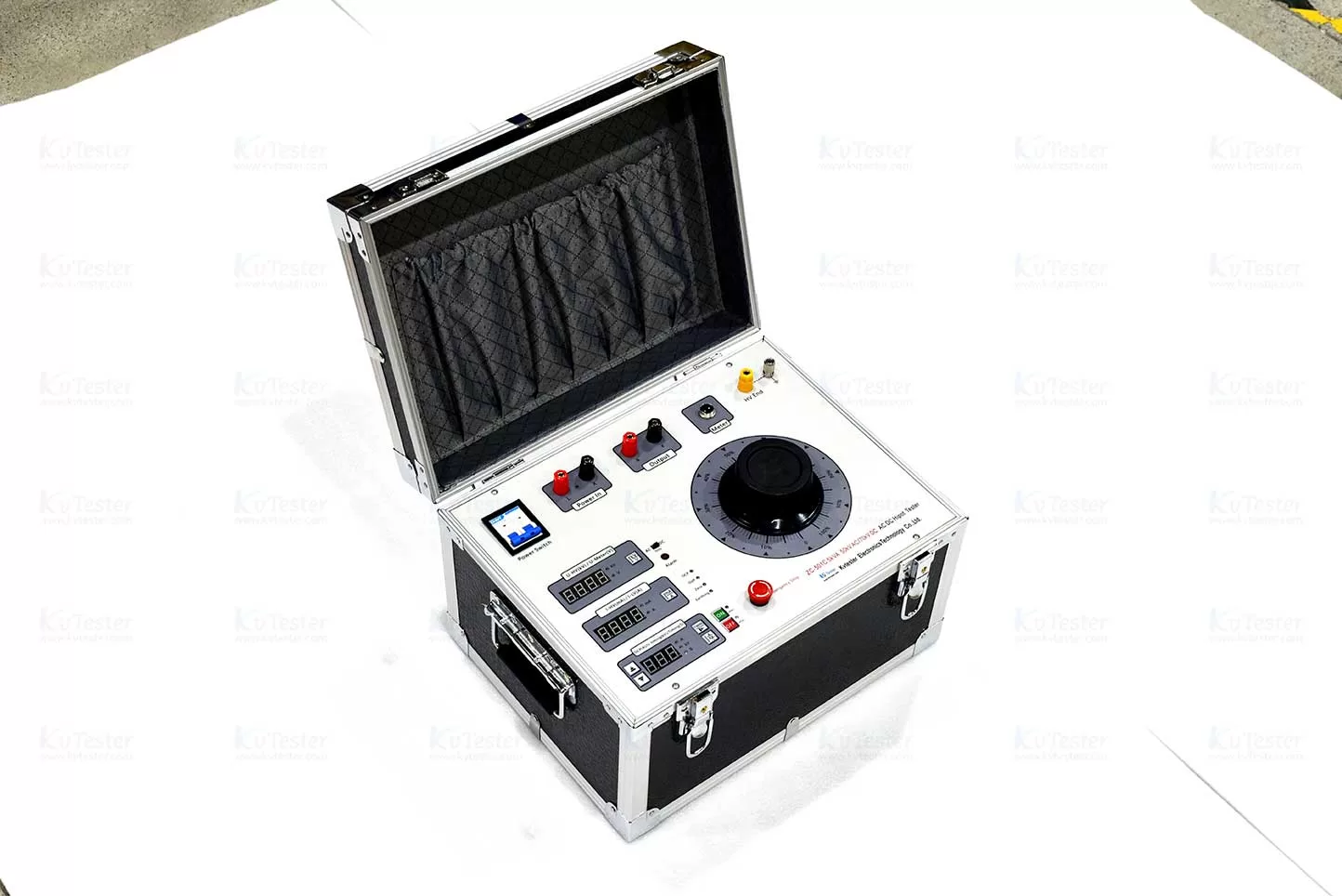
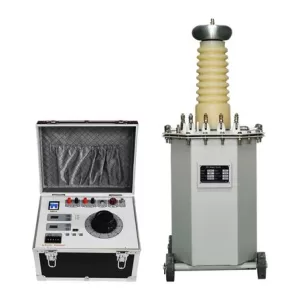
If the capacity of the test transformer is insufficient, it may lead to an unstable output voltage or an inability to reach the required test voltage, which compromises the test results. Consequently, the test equipment must be selected with an appropriate capacity based on the required test voltage, the capacitance of the test object, and the necessary test current.
Furthermore, the test system must be equipped with essential overcurrent and overvoltage protection. In the event of a breakdown, flashover, or an anomaly in the test circuit, the system should be capable of immediately cutting off the high-voltage output to prevent the fault from escalating.
6. Ensure complete discharge after the test
Transformer windings and insulation structures possess a certain degree of capacitance, meaning residual charges may remain after a withstand voltage test. Therefore, once the voltage has been lowered and the test power supply disconnected, the test object must be thoroughly discharged and reliably grounded in accordance with established procedures. Only after confirming that no residual voltage remains should the test leads be removed or any subsequent operations performed. This process is a vital measure for protecting the equipment and a crucial component of on-site safety management during withstand voltage testing.
Conclusion
To prevent damage to a transformer during a withstand voltage test, it is essential to verify the insulation status beforehand, correctly select the test voltage and duration, ensure smooth voltage ramping (both up and down), monitor for any abnormalities, and carry out proper discharging and grounding after the test. Power-frequency withstand voltage tests must be performed by qualified and experienced personnel in strict accordance with relevant standards, the transformer’s technical documentation, and the specific on-site test protocol. Standardizing and controlling test conditions allows a withstand voltage test to effectively verify insulation strength while simultaneously reducing the risk of unnecessary insulation damage.
Related Products
Latest News
-
 2026-10-23What is the purpose of a power-frequency withstand voltage test?
-
 2026-10-23How to Select the Appropriate Capacity of a High-Voltage Test Transformer
-
 2026-10-23Transformer Tester for Substation Testing and Selection
-
 2026-10-23Substation CT Tester: How to Choose the Right CT Tester for Commissioning
-
 2026-10-20CVT Compatible CT PT Analyzer: Selection Guide