How to Select the Appropriate Capacity of a High-Voltage Test Transformer
How to Select the Appropriate Capacity of a High-Voltage Test Transformer
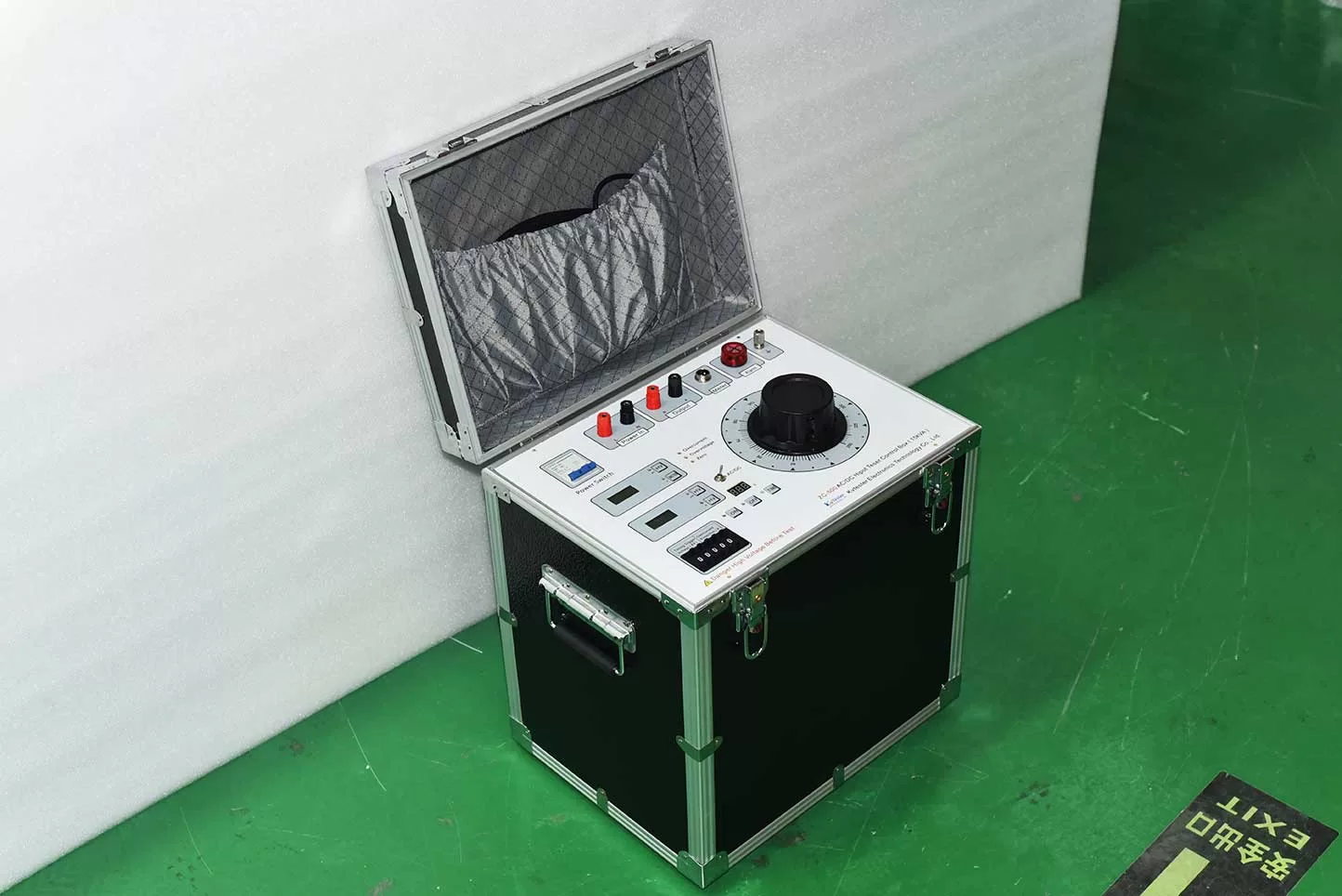
A high-voltage test transformer is commonly used in power-frequency AC withstand voltage testing. When selecting a test transformer, it is essential to consider not only the required test voltage but also the test current and apparent power demanded by the equipment under test (EUT).If the selection is based solely on the maximum output voltage without considering the required capacity, problems such as difficulty in raising the test voltage, output voltage drops, or failure to reach the specified withstand voltage may occur.Therefore, the selection of a suitable test transformer should take into account several key parameters, including the test voltage, capacitance of the test object, test frequency, and required test current.
1. Determine the Required Test Voltage
The rated output voltage of the test transformer must be sufficient to meet the withstand voltage requirements of the equipment under test.
For example, if a piece of electrical equipment requires a power-frequency AC withstand voltage test at 30 kV, the maximum output voltage of the test transformer must be equal to or higher than the specified test voltage.
Therefore, the first step in selecting a test transformer is to determine the actual withstand voltage specified by the applicable testing standards, rather than simply referring to the rated voltage of the equipment under test.
2. Calculate the Test Current Based on the Capacitance of the Test Object
During an AC withstand voltage test, most insulation systems can be approximately treated as capacitive loads.The greater the capacitance of the test object, the higher the capacitive current required at a given test voltage.
The test current can be approximately calculated using the following formula:I = 2πfCU
Where:
I — Test current (A)
f — Test frequency (Hz)
C — Total capacitance of the test object and associated test circuit (F)
U — Applied test voltage (V)
For example, when performing a 50 kV AC withstand voltage test, an insulator with relatively low capacitance and a long power cable may impose significantly different capacity requirements on the test transformer.
This is because the capacitive charging current increases proportionally with the capacitance of the test object.
3. Determine the Required Transformer Capacity Based on Test Voltage and Current
Once the required test voltage and test current have been determined, the apparent power required for the test can be estimated using the following formula:S ≈ U × I
Where:
S — Required apparent power (VA)
U — Test voltage (V)
I — Test current (A)
For example, consider the following test conditions:Test voltage: 50 kVCapacitance of the test object: 3,000 pFTest frequency: 50 Hz
The approximate test current is:
I = 2 × 3.14 × 50 × 3,000 × 10⁻¹² × 50,000
I ≈ 0.047 A
The required apparent power is:
S = 50 kV × 0.047 A
S ≈ 2.35 kVA
This calculation indicates that the test transformer must have sufficient rated output voltage and apparent power capacity to meet the specified testing requirements.In practical applications, additional factors such as the capacitance of voltage dividers, test leads, and other components in the high-voltage test circuit, as well as transformer losses, should also be considered.An appropriate capacity margin should be included to ensure stable and reliable operation during the withstand voltage test.Estimating the test current using I = 2πfCU and determining the required apparent power from the test voltage and current are fundamental principles in selecting equipment for AC withstand voltage testing.
4. Why Is Insufficient Transformer Capacity a Problem?
If the rated capacity of the test transformer is insufficient, the load current will increase as the applied test voltage rises.
This may lead to several operational problems, including:
Inability to raise the output voltage to the specified test level
Excessive voltage drop or unstable output voltage
Overloading of the test transformer
Activation of overload protection devices
Failure to complete the required withstand voltage test
These problems are particularly significant when testing equipment with relatively high capacitance, such as power cables, capacitors, and large-capacity generators.Under power-frequency AC withstand voltage test conditions, these test objects may draw substantial capacitive charging currents, requiring a test transformer with a considerably higher rated apparent power.For high-capacitance test objects, the use of a conventional AC test transformer may result in an impractically large power capacity requirement.In such cases, a series-resonant AC withstand voltage test system may be considered, provided that the selected test method complies with the applicable testing standards.By compensating for the capacitive reactive power of the test object through resonance, a series-resonant test system can significantly reduce the apparent power required from the input power supply.
5. Is a Higher-Capacity Test Transformer Always Better?
A test transformer with a higher rated capacity is not necessarily the best choice.If the transformer capacity is too low, it may fail to meet the test requirements. However, selecting a transformer with an unnecessarily high capacity will increase equipment size, weight, and cost, making transportation, installation, and on-site operation less convenient.Therefore, the most appropriate approach is to determine the required transformer capacity based on the maximum test voltage and maximum test current associated with the equipment typically tested.A reasonable capacity margin should also be incorporated to accommodate variations in test conditions and ensure reliable operation.The objective is to select a test transformer that provides sufficient electrical performance while maintaining practical considerations such as portability, cost-effectiveness, and operational convenience.
Conclusion
The selection of a high-voltage test transformer for power-frequency AC withstand voltage testing can be summarized in three fundamental steps:
Determine the required test voltage according to the applicable testing standards.
Calculate the required test current based on the total capacitance of the test object and the test frequency.
Determine the required apparent power capacity from the test voltage and current, allowing an appropriate capacity margin.
In practical applications, additional factors should also be evaluated, including the type of equipment under test, stray and additional capacitance in the test circuit, test frequency, and on-site operating conditions.For high-capacitance equipment such as power cables, where the required capacity of a conventional AC test transformer may become excessively large, alternative test methods, such as series-resonant AC withstand voltage testing, should be evaluated in accordance with the relevant standards and technical requirements.Proper selection of the test transformer’s rated voltage and apparent power capacity is essential for ensuring reliable test performance, voltage stability, and safe operation during high-voltage AC withstand testing.
Related Products
Latest News
-
 2026-10-23Transformer Tester for Substation Testing and Selection
-
 2026-10-23Substation CT Tester: How to Choose the Right CT Tester for Commissioning
-
 2026-10-20CVT Compatible CT PT Analyzer: Selection Guide
-
 2026-10-20China CT PT Analyzer Supplier: Manufacturer Guide
-
 2026-10-20CT PT Test System: Testing Methods and Equipment Selection