What causes high dielectric loss values? Common causes and troubleshooting approaches
What causes high dielectric loss values? Common causes and troubleshooting approaches
In dielectric loss tests for high-voltage electrical equipment—such as transformers, bushings, instrument transformers, and CVTs—tanδ (or tgδ) is a key parameter for assessing insulation condition. If an unusually high dielectric loss value is observed during field testing, analysis should cover multiple aspects, including the insulation condition of the test object, the testing environment, wiring methods, and on-site interference. It is important to note that a high dielectric loss value does not necessarily indicate a severe insulation failure; the correct approach is to first rule out issues related to testing conditions and external factors, then make a comprehensive judgment based on historical data and other test results.
1. Moisture or aging of the test object’s insulation
Moisture absorption by insulation materials is a common cause of increased dielectric loss values.
When insulation absorbs moisture, dielectric conductance and polarization losses may increase, causing tanδ to rise. For equipment that has been in service for a long time—such as transformers, bushings, and instrument transformers—aging or deterioration of insulation materials can also manifest as a gradual increase in dielectric loss values. Therefore, if test results show a long-term upward trend, further analysis should be conducted by considering the equipment’s service life, maintenance records, and historical test data.
2. Surface contamination or moisture on the test object
Dielectric loss tests are sensitive to the surface condition of the test object. Contaminants such as dust, oil, or moisture on the surface of bushings, insulators, or test terminals can create additional leakage current, leading to inflated measurement results. This is particularly likely to affect test results in high-humidity environments or when condensation forms on the equipment surface. In such cases, the surface of the test object should be cleaned and dried, and the test repeated once environmental conditions have stabilized to see if the data returns to normal.
3. Issues with test wiring or grounding
Dielectric loss testing involves measuring minute loss signals, placing high demands on wiring quality and grounding. Loose connections on high-voltage or measurement leads, poor contact in shielded cables, or unreliable instrument grounding can introduce additional interference or leakage current, resulting in abnormal tanδ readings. Therefore, if an excessively high dielectric loss value is detected, first verify that the selected test mode (e.g., normal connection or reverse connection) matches the actual wiring, and check the connections of all test terminals, grounding wires, and test leads.
4. Strong on-site power-frequency interference
When performing dielectric loss tests at a substation, nearby operating equipment, high-voltage busbars, and transmission lines generate strong power-frequency electric fields.
If interference signals enter the measurement circuit, they can affect the test results, manifesting as an inflated tanδ value, numerical fluctuations, or poor repeatability. In such cases—provided the wiring and grounding are confirmed to be correct—a re-test can be performed using an anti-interference dielectric loss tester equipped with variable-frequency or different-frequency testing capabilities.
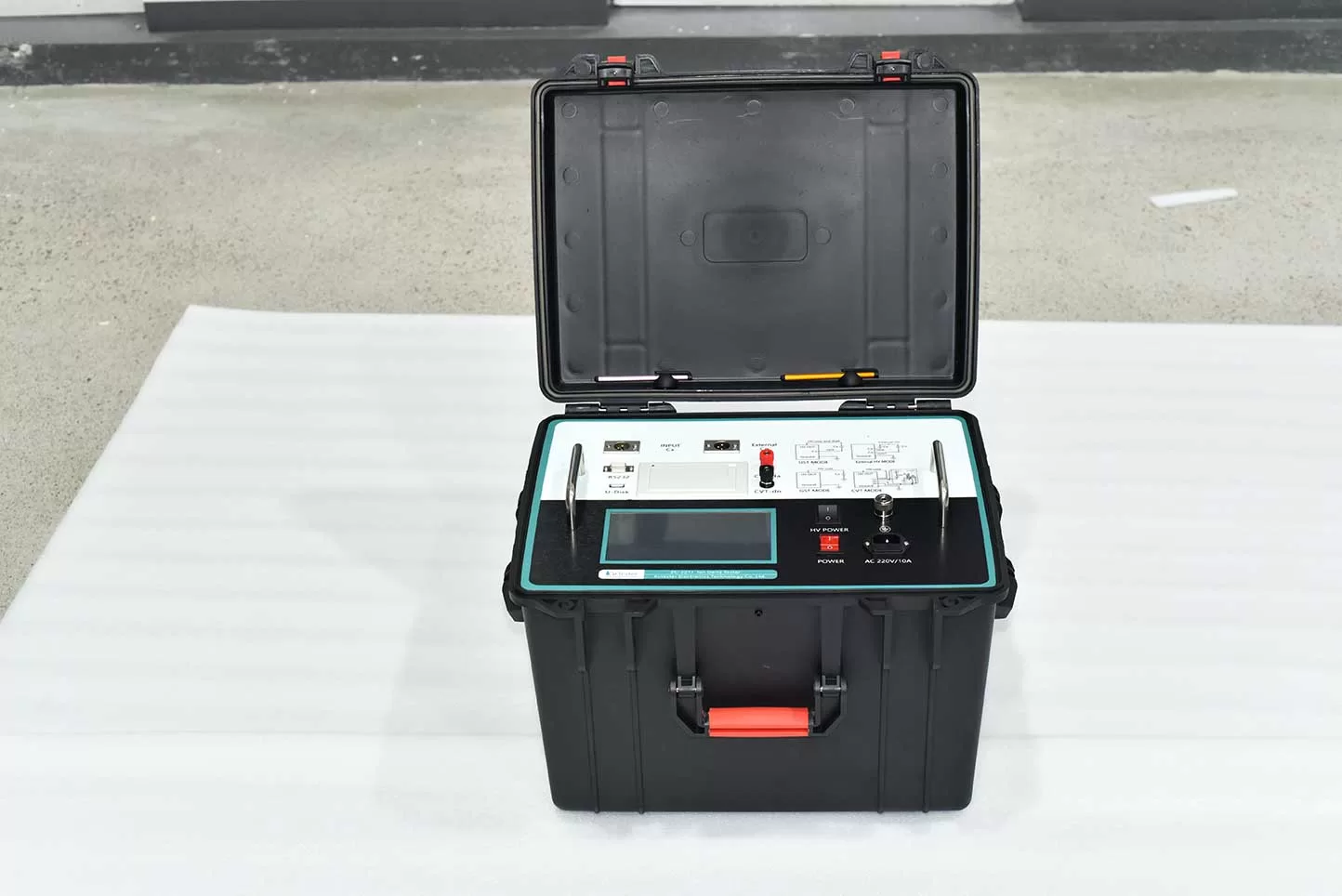
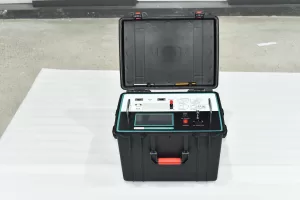
For example, the ZC-221 fully automatic anti-interference dielectric loss tester supports various single-frequency and dual-variable-frequency test modes, helping to mitigate the impact of on-site 50Hz power-frequency interference on measurement results.
5. Changes in temperature and test conditions
Dielectric loss is correlated with temperature; therefore, tanδ values measured at different temperatures cannot be directly compared. If the current test temperature is significantly higher than that of previous tests, discrepancies in results may occur even if the equipment’s condition remains unchanged.
Consequently, when analyzing dielectric loss data, one should record the ambient temperature, humidity, test voltage, test frequency, and wiring configuration, aiming to make longitudinal comparisons under similar conditions.
6. How to troubleshoot high dielectric loss values?
When an abnormal dielectric loss value is detected on-site, the following troubleshooting steps can be taken:
First, verify the correctness of the test wiring, instrument grounding, and test mode; next, check the surface of the test object for moisture or contamination; then, perform a repeat test under identical conditions to observe data stability; if on-site interference is strong, change the test frequency or use a dual-variable-frequency mode for re-testing.
If the dielectric loss value remains consistently high—and shows a significant deviation from historical data—after ruling out issues with wiring, environmental factors, and interference, a comprehensive assessment should be made by considering capacitance, insulation resistance, and other insulation test parameters.
Summary
Excessively high dielectric loss values may result from insulation moisture absorption or aging, or they may be related to the surface condition of the test object, test wiring, grounding quality, ambient temperature and humidity, and on-site power-frequency interference. Therefore, when an abnormal tan δ reading is encountered in the field, the equipment’s insulation status should not be assessed based solely on a single test result. A more accurate determination of the actual cause of the dielectric loss anomaly requires an analysis that includes verifying test conditions, repeating measurements, comparing historical data, and considering results from other tests.
Kvtester Electronics Technology Co.,Ltd. is a high-tech enterprise specializing in power testing, testing, research and development, production, and sales of testing equipment. It has been engaged in the electrical testing industry for many years, and its products are of high quality. We welcome customers to come and purchase. Service hotline: 0086-27-81778799, to learn more, visit the official website: www.kvtester.com
Related Products
Latest News
-
 2026-09-10What causes unstable or fluctuating dielectric loss test data?
 -
 2026-09-10What is the difference between the “normal connection” and “reverse connection” methods for dielectric loss testers?
 -
 2026-09-10How to Use a Dielectric Loss Tester: Basic Field Testing Procedures and Precautions
 -
 2026-09-10Working Principle and Main Applications of Anti-Interference Dielectric Loss Testers
 -
 2026-09-10PT Tester With Maintenance Service: Procurement Guide