
What causes unstable or fluctuating dielectric loss test data?
What causes unstable or fluctuating dielectric loss test data?
During dielectric loss testing of high-voltage electrical equipment—such as transformers, bushings, instrument transformers, and CVTs—the tanδ value may sometimes fluctuate repeatedly, results from consecutive tests on the same specimen may be inconsistent, and even the capacitance reading may show some variation. Unstable dielectric loss data does not necessarily indicate an insulation anomaly in the test specimen. Factors such as on-site power-frequency interference, test lead layout, grounding conditions, and the surface condition of the specimen can all affect the final measurement results. Therefore, when data fluctuations occur, one should first verify the testing conditions before analyzing the equipment’s insulation status.
1. Strong on-site power-frequency interference
Substations are typical environments with strong interference for dielectric loss testing. Nearby energized busbars, transformers, and high-voltage lines generate power-frequency electric fields; when interference signals couple into the measurement circuit, they can affect the tanδ test results. A common symptom in such cases is data fluctuation during consecutive tests on the same specimen, resulting in poor repeatability. For sites with significant power-frequency interference, variable-frequency or dual-variable-frequency testing methods can be employed to avoid the dominant interference frequencies.
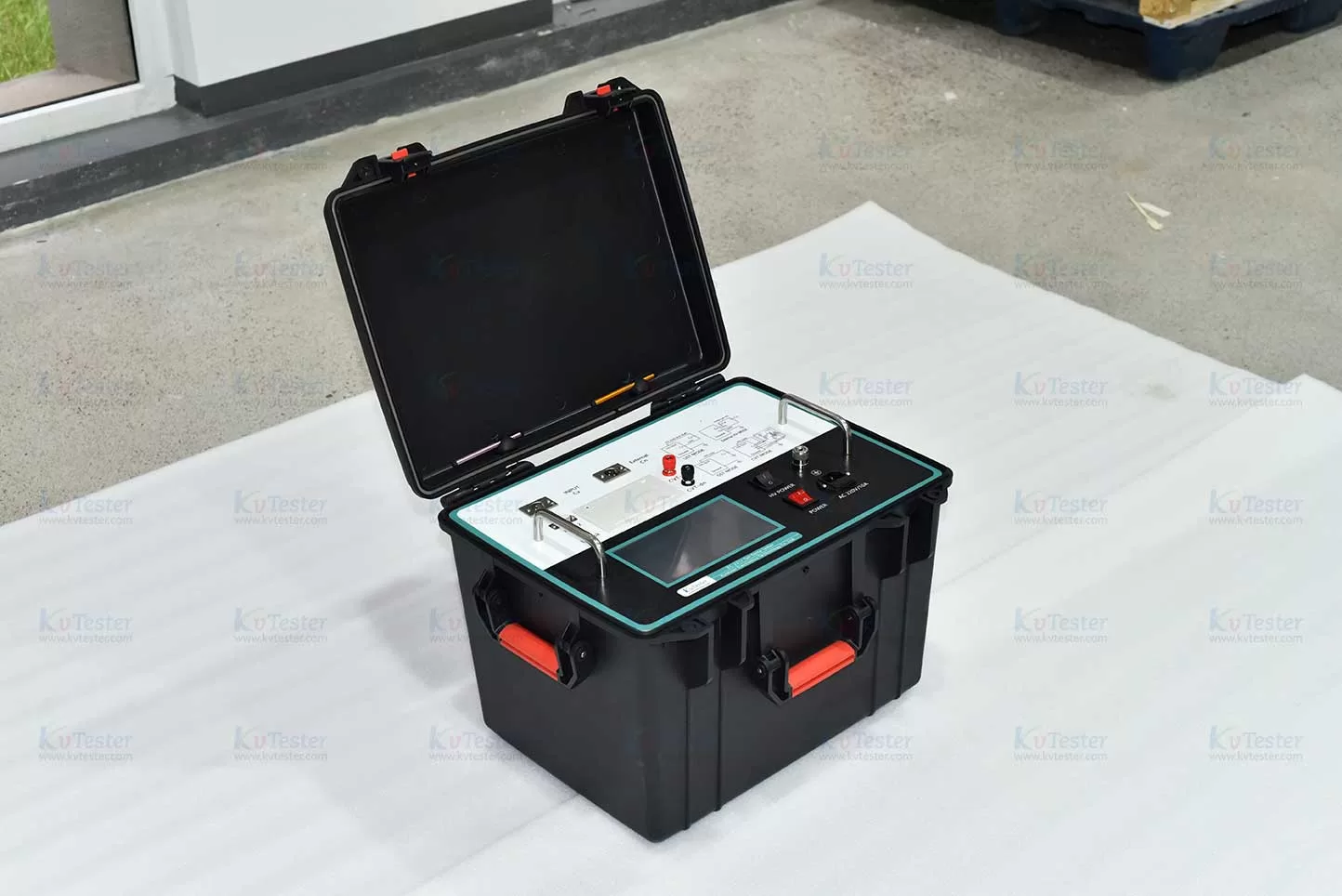
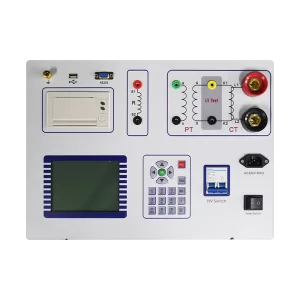
The ZC-221 fully automatic anti-interference dielectric loss tester supports single-frequency testing at 45Hz, 50Hz, 55Hz, 60Hz, and 65Hz, as well as automatic dual-variable-frequency testing at 45/55Hz, 55/65Hz, and 47.5/52.5Hz, allowing the appropriate testing method to be selected based on on-site interference conditions.
2. Unreliable grounding of the instrument or specimen
Dielectric loss testing places high demands on grounding quality.
If the instrument’s grounding wire is not securely connected, the grounding point has poor contact, or the specimen’s grounding status does not meet testing requirements, the measurement circuit may be susceptible to external interference, leading to unstable data. Therefore, if repeated tanδ fluctuations are observed, the first step is to check the reliability of the instrument’s grounding and confirm that the on-site grounding method aligns with the test protocol.
3. Improper connection or layout of test leads
The connection status of high-voltage test leads, measurement leads, and shielded cables directly affects dielectric loss test results. Poor contact at test terminals, loose cables, or placing high-voltage leads and measurement leads too close together or in a crossed configuration can introduce additional interference. Before testing, verify the reliability of all terminal connections and arrange the test leads according to the instrument’s manual. In environments with strong interference, pay special attention to the shielding and routing of the measurement leads.
4. Moisture or contamination on the test object’s surface
If moisture, dust, or oil stains are present on the surface of bushings, insulators, or test terminals, unstable surface leakage currents may form. These currents can superimpose onto the test signal, causing fluctuations in the tanδ measurement results. Particularly in high-humidity environments or when condensation is present on the equipment surface, the test object should be cleaned and dried; measurements should only be retaken once test conditions have stabilized.
5. Inconsistent test parameters or wiring configurations
When performing repeated tests on the same object, data obtained under varying conditions—such as changes in test voltage, frequency, or normal/reverse connection modes—cannot be directly compared. Therefore, to assess the stability of dielectric loss data, ensure consistent test conditions, including voltage, frequency, wiring configuration, and environmental factors. If a 50Hz test is used initially followed by a dual-variable-frequency test, the corresponding test conditions must be noted when analyzing the two sets of data.
6. How to troubleshoot data fluctuations?
If dielectric loss data proves unstable during on-site testing, a “from outside in” troubleshooting approach is recommended.
First, verify the reliability of test lead connections and instrument grounding; next, check that the test object’s surface is clean and dry; then, confirm the correctness of the test voltage, frequency, and connection mode (normal/reverse). If these conditions are satisfactory, perform multiple consecutive tests under identical conditions to observe data repeatability. In environments with strong power-frequency interference, re-testing using variable-frequency or dual-variable-frequency methods is advisable. If tanδ and capacitance values continue to show abnormal fluctuations after ruling out on-site interference and testing condition issues, further analysis is required, incorporating the equipment’s historical test data and results from other insulation tests.
Summary
Common causes for repeated fluctuations in dielectric loss test data include on-site power-frequency interference, poor grounding, improper test lead arrangement, surface moisture on the test object, and inconsistent testing conditions.
Therefore, when encountering unstable data, one should not immediately conclude that an insulation fault exists. It is more effective to first rule out issues related to wiring, the environment, and interference, and then conduct an analysis based on repeated tests and historical data comparisons to reach a reliable conclusion.
Kvtester Electronics Technology Co.,Ltd. is a high-tech enterprise specializing in power testing, testing, research and development, production, and sales of testing equipment. It has been engaged in the electrical testing industry for many years, and its products are of high quality. We welcome customers to come and purchase. Service hotline: 0086-27-81778799, to learn more, visit the official website: www.kvtester.com
Related Products
Latest News
-
 2026-09-10What causes high dielectric loss values? Common causes and troubleshooting approaches
 -
2026-09-10What is the difference between the “normal connection” and “reverse connection” methods for dielectric loss testers?
-
 2026-09-10How to Use a Dielectric Loss Tester: Basic Field Testing Procedures and Precautions
 -
 2026-09-10Working Principle and Main Applications of Anti-Interference Dielectric Loss Testers
 -
 2026-09-10PT Tester With Maintenance Service: Procurement Guide