Home » News » Company News
CT Analyzer with Low Frequency: Working Principle and Benefits
Low-frequency testing is an important method for evaluating current transformer (CT) excitation characteristics, especially when testing transformers with high knee-point voltages. By using a test frequency below the rated frequency while maintaining the required magnetic flux, a CT analyzer can reduce the voltage needed during excitation testing. This makes it easier to assess CT magnetic performance without requiring the same high terminal voltage as a rated-frequency test.
Understanding how this method works helps engineers select suitable testing equipment, interpret excitation curves, and evaluate CT performance more effectively.
What Is a CT Analyzer with Low Frequency Testing?
A CT analyzer is an electrical testing instrument used to evaluate the performance and accuracy of current transformers. It can measure several important parameters, including transformation ratio, phase-angle error, winding resistance, burden, and excitation characteristics.
Low-frequency testing is a method used during CT excitation analysis. Instead of applying a signal at the rated frequency, the analyzer uses a lower frequency to obtain the required magnetic flux with a lower test voltage.
This method is particularly useful for protection CTs with high knee-point voltages, where conventional rated-frequency excitation testing may require higher voltage output.
A CT analyzer with low-frequency testing can help engineers:
- Obtain CT excitation characteristics.
- Analyze the magnetic saturation behavior of the core.
- Determine the knee-point voltage and excitation current.
- Evaluate CT performance against relevant technical requirements.
The purpose is not simply to reduce the test frequency, but to obtain meaningful excitation data under appropriate magnetic conditions.
Why Does a CT Analyzer Use Low Frequency Testing?
The main reason for using low-frequency excitation testing is the relationship between magnetic flux, voltage, and frequency in a transformer.
For a sinusoidal excitation voltage, the magnetic flux is proportional to the ratio of voltage to frequency:
[
\Phi_m \propto \frac{U}{f}
]
Where:
- (\Phi_m) is the maximum magnetic flux.
- (U) is the applied voltage.
- (f) is the test frequency.
When the frequency decreases, the applied voltage can also be reduced while maintaining approximately the same maximum magnetic flux.
Reducing the Required Test Voltage
Some protection CTs have high knee-point voltages. Testing these transformers at their rated frequency may require a relatively high excitation voltage.
Low-frequency testing provides another approach. By reducing the test frequency and adjusting the voltage accordingly, the analyzer can establish the required magnetic flux with a lower voltage output.
This helps reduce the voltage demand on the test equipment and the secondary winding during excitation testing.
Maintaining Comparable Magnetic Conditions
Frequency reduction alone does not guarantee a valid test. The magnetic flux must remain consistent with the required test conditions.
This is why the relationship between voltage and frequency is important. The applied voltage must be adjusted according to the selected test frequency to maintain the required flux level.For a more detailed explanation, see our article on CTA-1000C low-frequency testing principles.

How Does Low Frequency CT Testing Work?
Low-frequency CT testing focuses on the relationship between excitation voltage, excitation current, and the magnetic properties of the CT core.
The general testing process involves the following steps.
Connect the CT Secondary Winding
Connect the CT secondary terminals to the analyzer according to the instrument’s wiring instructions. The primary winding is normally left open during the excitation test.
Before testing, confirm the CT nameplate information and ensure that the connections are correct.
Apply a Low-Frequency Excitation Signal
The analyzer applies an AC excitation signal at a frequency below the CT’s rated frequency.
The voltage is adjusted to establish the required magnetic flux. This reduces the voltage needed compared with excitation testing at the rated frequency.
Measure Excitation Voltage and Current
During the test, the instrument measures the excitation voltage and corresponding current.
As the excitation voltage increases, the magnetic flux in the core also increases. When the core approaches saturation, the excitation current rises much more rapidly.
Generate and Analyze the Excitation Curve
The measured data is used to generate a CT excitation curve, also known as a V-A characteristic curve.
Engineers can examine the curve to identify the transition toward magnetic saturation and assess the excitation characteristics of the CT.
The results can then be converted to the rated-frequency basis when the applicable test method and standard permit this conversion.
What Parameters Can a Low Frequency CT Analyzer Measure?
Excitation testing provides important information about the magnetic characteristics of a current transformer. However, a complete CT analyzer usually supports several additional measurement functions.
Excitation Characteristics
The excitation curve shows the relationship between the applied secondary voltage and excitation current.
It helps engineers understand how the CT core responds to increasing magnetic excitation and identify abnormal changes in its magnetic behavior.
Knee-Point Voltage and Current
The knee point is an important reference for evaluating protection CT performance.
It identifies the region where a relatively small increase in excitation voltage causes a significant increase in excitation current. Both voltage and current at this point help engineers assess the CT’s excitation characteristics.
Saturation Characteristics
CT saturation affects the ability of a current transformer to reproduce primary current accurately.
By analyzing the excitation curve, engineers can evaluate the magnetic saturation behavior of the core and determine whether it meets the intended protection requirements.
Other CT Measurement Parameters
Depending on the analyzer model, additional measurement functions may include:
- Transformation ratio and phase-angle error.
- Secondary winding resistance.
- Secondary burden impedance.
- Accuracy Limit Factor (ALF).
- Instrument Security Factor (FS).
- Residual magnetism.
These parameters are obtained through their corresponding measurement procedures rather than from low-frequency excitation testing alone.
Low Frequency Testing vs. Power Frequency CT Testing
Low-frequency and power-frequency testing are two approaches to evaluating CT excitation characteristics. The main difference is the frequency of the applied test signal and the voltage required to establish the same magnetic flux.
| Comparison | Low-Frequency Testing | Power-Frequency Testing |
| Test frequency | Below rated frequency | Rated frequency, typically 50 or 60 Hz |
| Required voltage | Lower for the same magnetic flux | Higher for the same magnetic flux |
| Magnetic conditions | Must maintain the required flux | Uses rated-frequency excitation |
| Main consideration | Requires appropriate frequency conversion | Requires sufficient voltage output |
| Application | CT excitation analysis | Conventional excitation testing |
Which Testing Method Should You Choose?
Low-frequency testing is useful when the CT has a high knee-point voltage and the available test equipment cannot conveniently provide the voltage required at rated frequency.
Power-frequency testing is also suitable when the analyzer can provide sufficient output voltage and the test procedure requires measurements at the rated frequency.
Neither method is automatically more accurate. The selection should depend on the CT specifications, applicable testing standards, analyzer capabilities, and required measurement conditions.
Where Is a Low Frequency CT Analyzer Used?
Low-frequency CT testing is relevant to several stages of transformer production, commissioning, and maintenance.
Current Transformer Manufacturing
CT manufacturers use excitation testing to evaluate core magnetic characteristics and verify that products meet design requirements.
Testing can also help identify differences between transformer units during production quality control.
Power Utilities and Substations
Power utilities need to verify CT performance before equipment enters service and during scheduled maintenance.
Excitation characteristics provide useful information when assessing the magnetic performance of protection CTs.
Electrical Testing Laboratories
Testing laboratories perform CT excitation and accuracy evaluations for quality inspection, calibration, and technical assessment.
A multifunction CT analyzer can help reduce the need for separate instruments when several CT parameters must be measured.
Transformer Maintenance and Condition Assessment
When investigating CT performance, engineers can use excitation curves together with winding resistance, ratio, and other test results.
Comparing these measurements helps provide a more complete understanding of the transformer’s condition.
How to Choose the Right CT Analyzer with Low Frequency?
Choosing a suitable CT analyzer requires more than checking whether the instrument supports low-frequency testing. Its measurement range, output capability, accuracy, and supported functions should also match the actual testing requirements.
Check the Excitation Testing Capability
Confirm whether the instrument supports low-frequency excitation testing and whether its test frequency range meets your requirements.
Also check whether the software can convert test results to the rated-frequency basis under the applicable testing method.
Check the Output Voltage and Current
The analyzer must provide sufficient excitation output for the CTs being tested.
Consider the maximum output voltage, current, and power, particularly when testing protection CTs with high knee-point voltages.
Consider Measurement Accuracy and Test Functions
A suitable analyzer should support the parameters required by your testing procedures.
These may include:
- CT ratio and phase-angle error.
- Excitation characteristics and saturation analysis.
- Secondary winding resistance.
- Burden measurement.
- ALF and FS evaluation.
Automatic evaluation and report generation can also improve testing efficiency.
Consider Portability and Working Conditions
For field testing, equipment weight, dimensions, connection methods, and operating conditions are important.
For example, our CTA-1000D CT/PT Analyzer weighs approximately 9 kg and completes automatic testing in less than 2 minutes. It supports CT excitation analysis, ratio and phase-angle accuracy, winding resistance, burden impedance, and residual magnetism measurement.
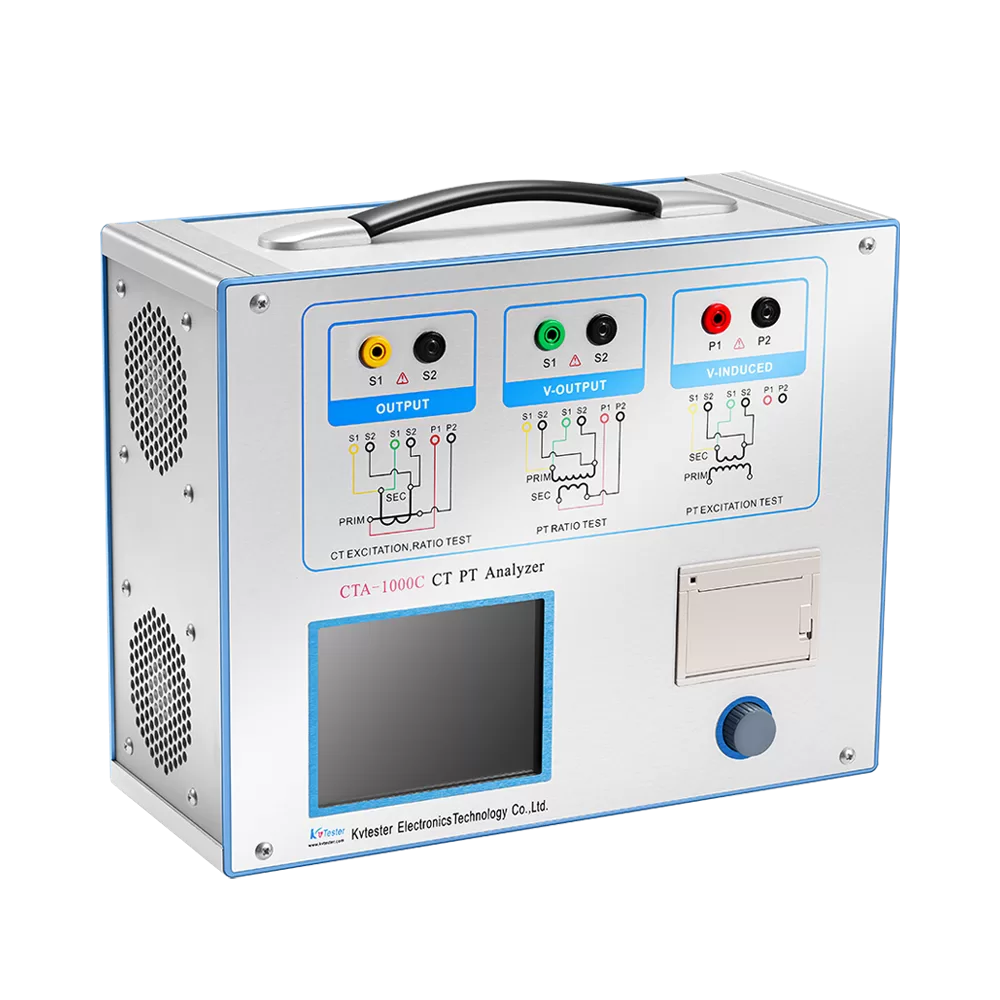
For users requiring a broader range of CT/PT testing functions, our CTA-1000C CT/PT Analyzer provides an output of up to 180 Vrms, 12 Arms, and 36 A peak. Its CT ratio measurement range is 1–40,000, with a stated accuracy of ±0.05%.
For an instrument with explicitly specified low-frequency excitation testing, our CTA-100A CT/PT Analyzer uses the low-frequency method for CT/PT excitation characteristic testing. It also supports ratio, polarity, secondary winding resistance, and burden measurements, with a unit weight of less than 5 kg.
When comparing these models, confirm the exact excitation frequency range and test requirements with our technical team rather than assuming that all CT analyzers share identical low-frequency capabilities.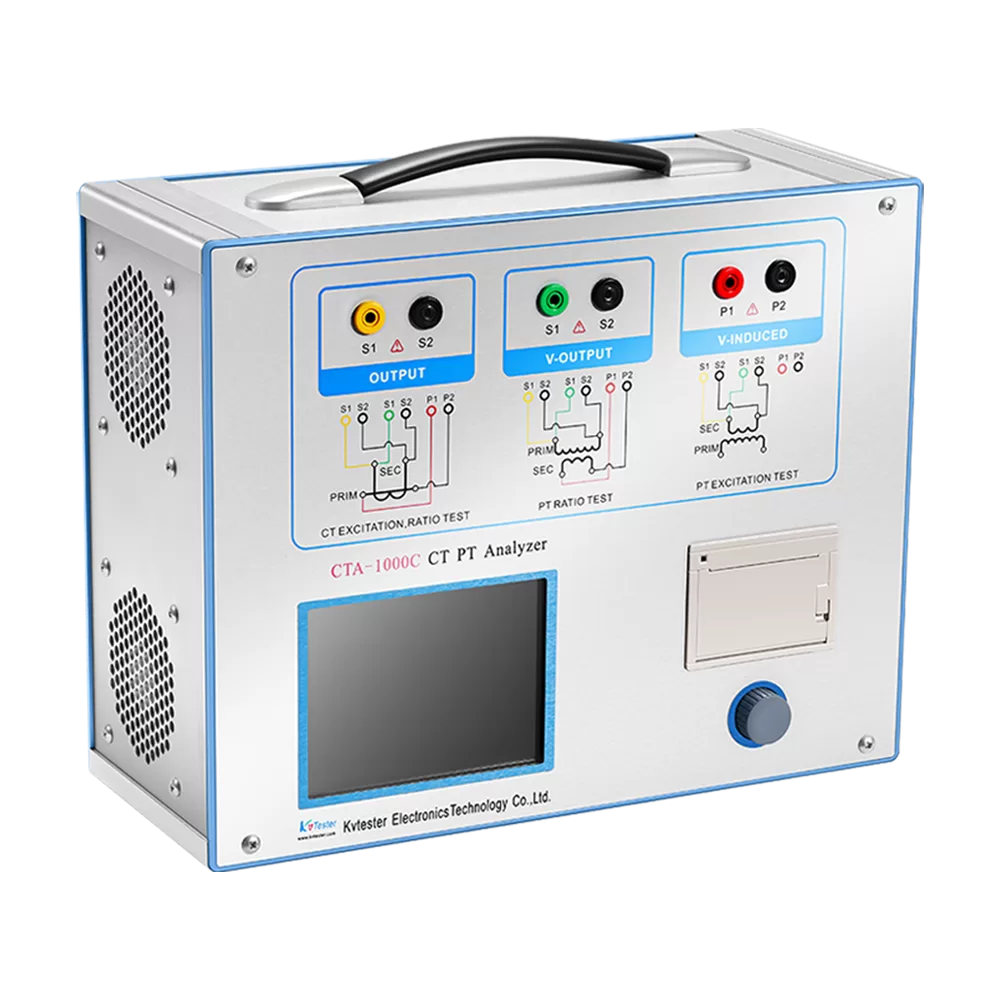
Conclusion
A CT analyzer with low-frequency testing provides an effective approach to evaluating current transformer excitation characteristics. By maintaining the required magnetic flux at a lower frequency, this method reduces the voltage needed for excitation testing, which is particularly useful for CTs with high knee-point voltages.
When selecting a CT analyzer, consider its excitation testing method, output capability, measurement accuracy, supported functions, and portability. Matching these features to your actual CT testing requirements will help ensure reliable and efficient testing.
At Kvtester, we provide CT/PT analyzers for different testing applications, from portable field measurements to comprehensive CT performance analysis. Contact our team to discuss your testing requirements and find suitable equipment for your application.
Related Products
Latest News
-
 2026-11-03Transformer Tester for Maintenance: Essential Tests
-
 2026-11-03PT Tester for Power Utilities and Essential Testing Requirements
-
 2026-11-02Digital Portable CT Tester for Field Testing and CT Analysis
-
 2026-10-30What are the differences in test items between dry-type and oil-immersed transformers?
-
 2026-10-30What are the differences in equipment configuration for comprehensive test benches designed for 10kV, 20kV, and 35kV transformers?