Home » News » Company News
Lightweight Transformer Tester Selection Guide
A lightweight transformer tester can make field maintenance easier when technicians need to transport equipment between substations, distribution rooms, and service locations. The challenge is finding a compact instrument that reduces carrying effort while still delivering the measurements required for reliable testing. Weight, dimensions, test functions, and operating conditions all influence whether a tester is suitable for everyday fieldwork.
What Makes a Transformer Tester Lightweight?
A lightweight transformer tester is designed to reduce the physical burden of transporting and operating test equipment. Its practicality depends on more than the weight of the main unit.
- Compact dimensions make equipment easier to store in service vehicles and carry through confined spaces.
- A manageable accessory kit reduces the number of separate components technicians need to transport.
- Integrated measurement functions can reduce the need to carry multiple instruments.
- Straightforward connections and controls can simplify setup during repeated inspections.
The complete setup matters. Test leads, clamps, protective cases, and external accessories can add to the total carrying load. Buyers should also distinguish handheld instruments from compact bench-top testers, as these designs serve different field conditions.
Lightweight Transformer Tester Benefits for Field Maintenance
Portability becomes especially valuable when technicians need to move frequently or work in restricted spaces.
Easier transport between locations
Maintenance teams may need to carry instruments across substations, industrial facilities, and distribution rooms. Lower equipment weight can reduce handling effort when several transformers must be inspected during one visit.
More convenient operation in confined spaces
Compact equipment is often easier to position near the transformer and organize alongside test leads and other tools. This can be useful in crowded electrical rooms, although safe working clearances and access to connection points must always take priority.
A more manageable testing setup
A multifunction tester can combine related measurements in one instrument. When its functions cover the required procedures, technicians may need to carry fewer devices and spend less time organizing their equipment.
The goal is not simply to choose the smallest instrument. It is to make the entire testing process easier without compromising the required measurements.
Key Specifications to Compare in a Lightweight Transformer Tester
Weight and dimensions
Check the main unit’s weight, dimensions, carrying case, and included accessories. If technicians regularly work alone, consider whether the complete kit can be transported and positioned safely.
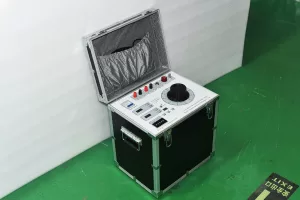
The Kvtester ZC-202B Transformer Capacity and Load Tester provides a practical example of a compact multifunction instrument. Its published dimensions are 400 × 300 × 220 mm, and its main unit weighs approximately 8 kg without accessories. These specifications help buyers assess its transport requirements more accurately than a general description such as compact or portable.
Measurement range and accuracy
A lightweight tester must still support the transformer ratings and electrical parameters involved in the work. Review the measurement range, resolution, accuracy, and applicable test conditions before comparing instruments.
The ZC-202B measures transformer capacity, no-load current and loss, load loss, short-circuit loss, and impedance voltage. Its AC voltage measurement range is 10–650 V, and its AC current range is 0.5–60 A. Automatic range switching and correction functions also help simplify related measurements.
These capabilities make it worth considering when field teams need several capacity and load-related measurements in one instrument. Its stated weight excludes accessories, so the total carrying load should be checked before purchase.
Power supply and operating convenience
Confirm whether a tester requires mains power, supports battery operation, or needs additional power equipment. Battery operation may be useful at remote locations, but it should not be assumed to be a standard feature of every compact instrument.
Clear controls, automatic functions, and convenient data storage can also reduce repetitive work. For maintenance teams that compare results over time, consistent records are useful for identifying changes that may require further investigation.
Compact Transformer Testers for Different Maintenance Tasks
Not every transformer test requires the same instrument. Selecting equipment according to the task helps avoid carrying unnecessary devices or purchasing a compact tester that cannot complete the required procedure.
- Transformer ratio testing checks the transformation ratio and related winding information.
- DC winding resistance testing helps compare winding resistance and investigate possible connection problems.
- No-load and load characteristic testing measures parameters such as no-load current, losses, and impedance voltage.
- Insulation and withstand voltage testing require instruments designed for the relevant test method and voltage level.
For winding resistance measurements, the Kvtester ZC-205A DC Resistance Tester is designed for transformer resistance testing in power systems and transformer manufacturing. It provides selectable output currents of 10 A, 5 A, 1 A, 200 mA, 20 mA, and 2 mA, with a minimum resolution of 0.1 μΩ and stated accuracy of ±(0.2% of reading + 2 digits).
The instrument can display and print three-phase winding measurements, calculate the three-phase unbalance rate, convert resistance to a reference temperature, and store up to 1,000 groups of results. Kvtester has also described the ZC-205A as having a small, lightweight design in its technical content. However, the product specifications do not state a numerical weight or overall dimensions, so buyers should confirm these details when strict portability requirements apply.
A compact resistance tester can be useful when winding resistance is the main task. If maintenance requires additional measurements, the team should check whether a second instrument or a multifunction solution would provide better overall efficiency.
How to Choose a Lightweight Transformer Tester for Your Application
The best choice depends on the number of tests required, the frequency of transport, and the working environment.
Routine field inspections
A dedicated instrument may be suitable when technicians repeatedly perform one main measurement. Prioritize manageable weight, sufficient measurement range, simple connections, and convenient result storage.
Multi-parameter testing
When several related measurements are needed, compare the carrying load and setup time of a multifunction tester with those of separate instruments. A combined solution may reduce the number of devices required, provided it supports the necessary transformer ratings and test procedures.
Workshop and comprehensive testing
A workshop may prioritize a broader range of testing functions over minimum weight. More extensive systems can support multiple procedures, but their workspace, power supply, installation, and transportation requirements should be assessed separately.
Before purchasing, confirm:
- Transformer type, rated voltage, and capacity.
- Required test functions and measurement ranges.
- Maximum acceptable weight for the complete kit.
- Accuracy, resolution, and data-recording requirements.
- Power supply and operating conditions.
- Calibration, technical support, and accessory availability.
Our guide to transformer testing equipment for grid maintenance also discusses how maintenance teams can plan tests and use historical measurements to support equipment assessment.
Lightweight Transformer Tester Design and Long-Term Usability
A portable tester should remain practical after repeated transport and use. Several design considerations can affect its long-term value.
- Enclosure and connectors: Check their suitability for the intended working environment and frequency of use.
- Cable management: Well-organized leads and accessories can reduce setup time and simplify transport.
- Ergonomics: Controls and displays should remain easy to access and read during normal operation.
- Maintenance: Confirm calibration requirements, service availability, and accessory replacement options.
- Safety: Follow the manufacturer’s instructions and applicable isolation, grounding, and discharge procedures. A smaller instrument does not reduce electrical hazards.
Also consider the total workflow. An instrument that is easy to carry but requires complicated connections or extensive manual calculations may not improve overall efficiency.
Common Mistakes When Selecting a Lightweight Transformer Tester
Several avoidable mistakes can reduce the benefits of choosing compact equipment.
- Comparing only the main unit’s weight while ignoring accessories.
- Assuming compact dimensions guarantee easy operation.
- Choosing a tester without checking its measurement range and accuracy.
- Expecting one lightweight instrument to complete every transformer test.
- Overlooking power requirements, calibration, and data-recording needs.
A better approach is to define the testing plan first, establish a practical transport limit, and then compare instruments that meet both the technical and operational requirements.
Conclusion
Choosing a lightweight transformer tester means balancing portability, measurement performance, and ease of operation. The ZC-202B offers published dimensions and a main-unit weight that help buyers evaluate its suitability for field transport, while the ZC-205A provides dedicated winding resistance measurement functions in a design Kvtester describes as small and lightweight.
Before making a final decision, confirm the complete carrying weight, required test functions, operating conditions, and accessory needs. The most suitable instrument is one that makes fieldwork easier while delivering the measurements required for dependable transformer maintenance.
Related Products
Latest News
-
 2026-10-26IEC Standard CT Analyzer Supplier: Choosing the Right Equipment
-
 2026-10-26Multi-function CT Tester Wholesale: Supplier Guide
-
 2026-10-23How can damage to a transformer during a withstand voltage test be avoided?
-
 2026-10-23What is the purpose of a power-frequency withstand voltage test?
-
 2026-10-23How to Select the Appropriate Capacity of a High-Voltage Test Transformer