Home » News » Company News
IEC Standard CT Analyzer Supplier: Choosing the Right Equipment
Selecting an IEC Standard CT Analyzer Supplier requires more than checking whether an analyzer supports IEC-based evaluation. The equipment must match the applicable standard, CT specifications, required test items, and measurement accuracy. For manufacturers, testing laboratories, and power utilities, these details determine whether a testing solution fits daily operations and project acceptance requirements.
Which IEC Standards Matter for Current Transformer Testing?
IEC 61869-1 covers general requirements for instrument transformers, while IEC 61869-2 addresses additional requirements for current transformers. Buyers should identify the standard edition and specific requirements referenced in their project documentation before selecting test equipment.
Three details need particular attention:
- Applicable standard: Confirm the IEC standard and edition specified by the project or customer.
- Required tests: Identify the CT characteristics that must be measured and evaluated.
- Acceptance criteria: Clarify the required accuracy class, test conditions, evaluation method, and reporting requirements.
A supplier’s statement that an analyzer supports IEC evaluation does not automatically mean that every test or application is covered. Confirm that the equipment’s functions and specifications match the requirements of your particular CT. The standard used for evaluation, the test procedure, and the equipment’s own measurement specifications should be considered together.
What Should an IEC Standard CT Analyzer Be Able to Test?
The required functions depend on the CT type, application, and test procedure. Instead of choosing an analyzer solely by its function count, match its measurement capabilities to the tests you actually perform.
Common CT testing requirements include:
- Ratio and phase-angle error: Verify transformation performance against the required accuracy criteria.
- Excitation and saturation: Assess excitation characteristics and saturation behavior for the intended application.
- Winding resistance: Check winding resistance as part of CT condition assessment and testing.
- Burden impedance: Evaluate the burden associated with the CT measurement circuit.
- Polarity and residual magnetism: Check polarity and, where required, residual magnetism.
Measurement range and accuracy are equally important. A model may support a particular test but still be unsuitable if its range, accuracy, or evaluation functions do not meet the project’s requirements.
Automation also affects productivity. Automatic test sequences and result evaluation can reduce manual operations, while digital records help technicians review and manage test results. Confirm which functions are included in the selected configuration rather than assuming all models provide identical capabilities.
For CT manufacturers, test repeatability is especially important when measurements are performed across production batches. Testing laboratories may need to retain results for later review, while field engineers may prioritize fast setup and straightforward operation. These differences affect which functions deserve priority in the equipment specification.
Which CT Analyzer Solution Fits Your Testing Workflow?
Different users need different equipment configurations. A production line may prioritize repeatability and efficient routine testing, while field service teams may place greater value on portability and fast measurements.
CT manufacturers and testing laboratories
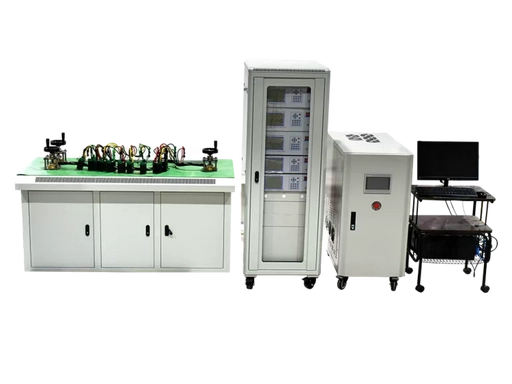
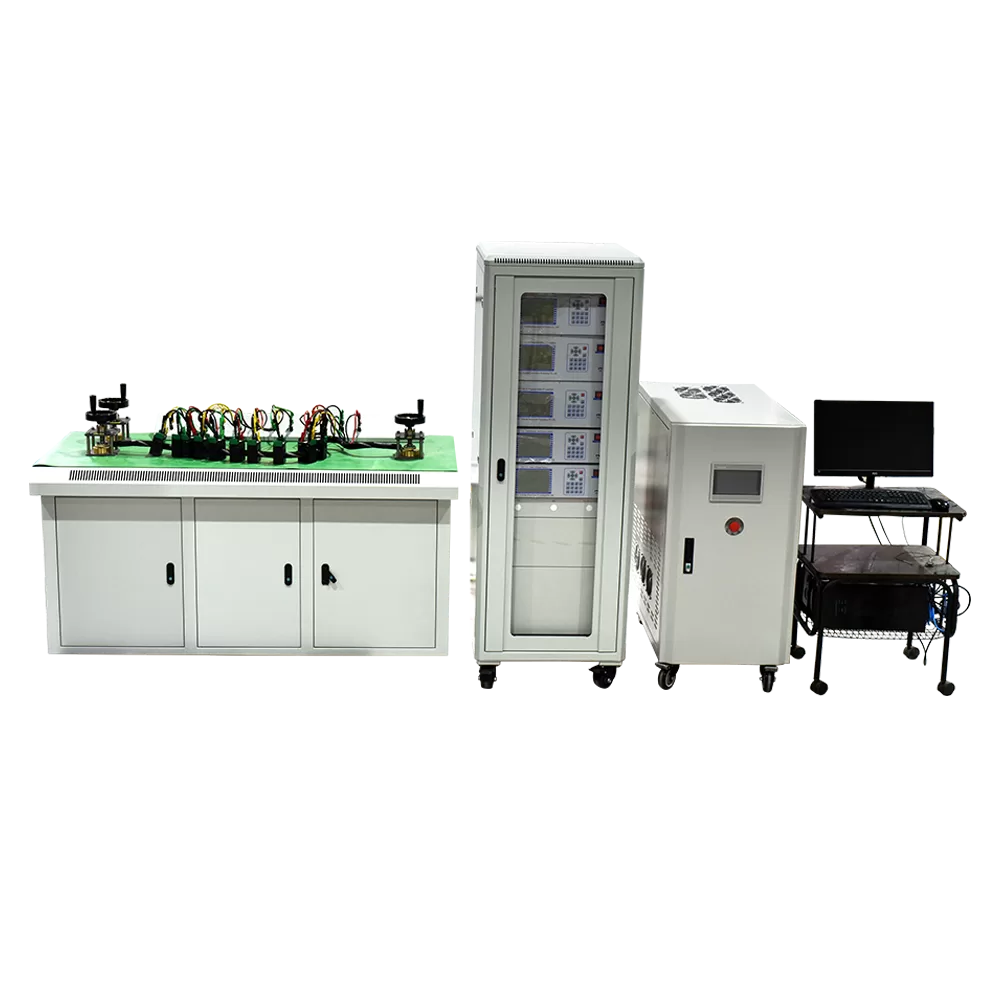
Manufacturers and metering test centers often need structured testing procedures, accuracy evaluation, and organized test records. Kvtester offers the ZCHG-12 CT PT Test System, which supports automatic CT accuracy testing, demagnetization, inter-turn insulation testing, and polarity checks.
Its technical specifications include a CT rated primary current range of 5–5,000 A, secondary currents of 1 A or 5 A, and a standard CT accuracy specification of 0.01S class. The system lists IEC 61869-1 and IEC 61869-2 under standards compliance. Its test bench can handle up to 12 CTs at one time, making batch testing a relevant consideration for production environments. Buyers should confirm the required test configuration and acceptance criteria before ordering.
Field testing and maintenance teams
Portable analyzers are useful when technicians need to test CTs at substations, transformer facilities, or other operating locations. Test duration, transport weight, operating safety, and automatic evaluation can all affect field efficiency.
The CTA-1000D CT/PT Analyzersupports automatic evaluation according to IEC and IEEE standards. Its listed automatic test duration is under 2 minutes, its typical ratio measurement error is 0.02% for ratios from 1 to 2,000, and its weight is under 9 kg. It supports CT measurements including ratio, phase angle, excitation characteristics, winding resistance, burden impedance, polarity, and residual magnetism.
The analyzer also operates at a maximum test voltage of 180 V. This specification is relevant when assessing its operating procedure and suitability for field work; technicians must still follow the equipment manual and applicable electrical safety requirements.
These specifications help distinguish portable field testing from larger, computer-controlled testing systems. The right choice depends on the required measurements, test volume, and working environment.
Applications requiring CT and PT testing
Some teams need one instrument for both current transformers and voltage transformers. In these cases, confirm the supported CT and PT functions separately, including excitation, saturation, burden impedance, winding resistance, and polarity where applicable.
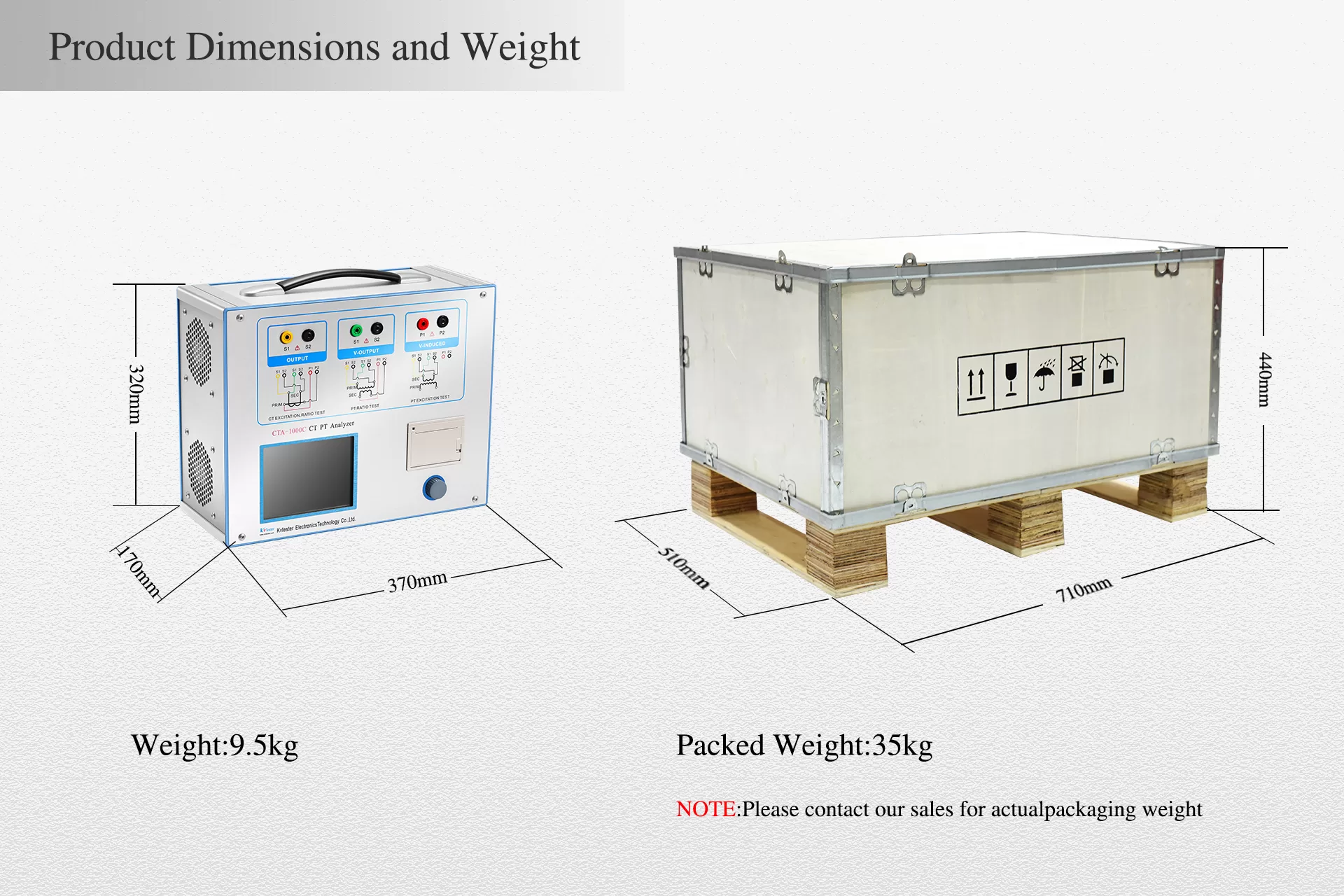
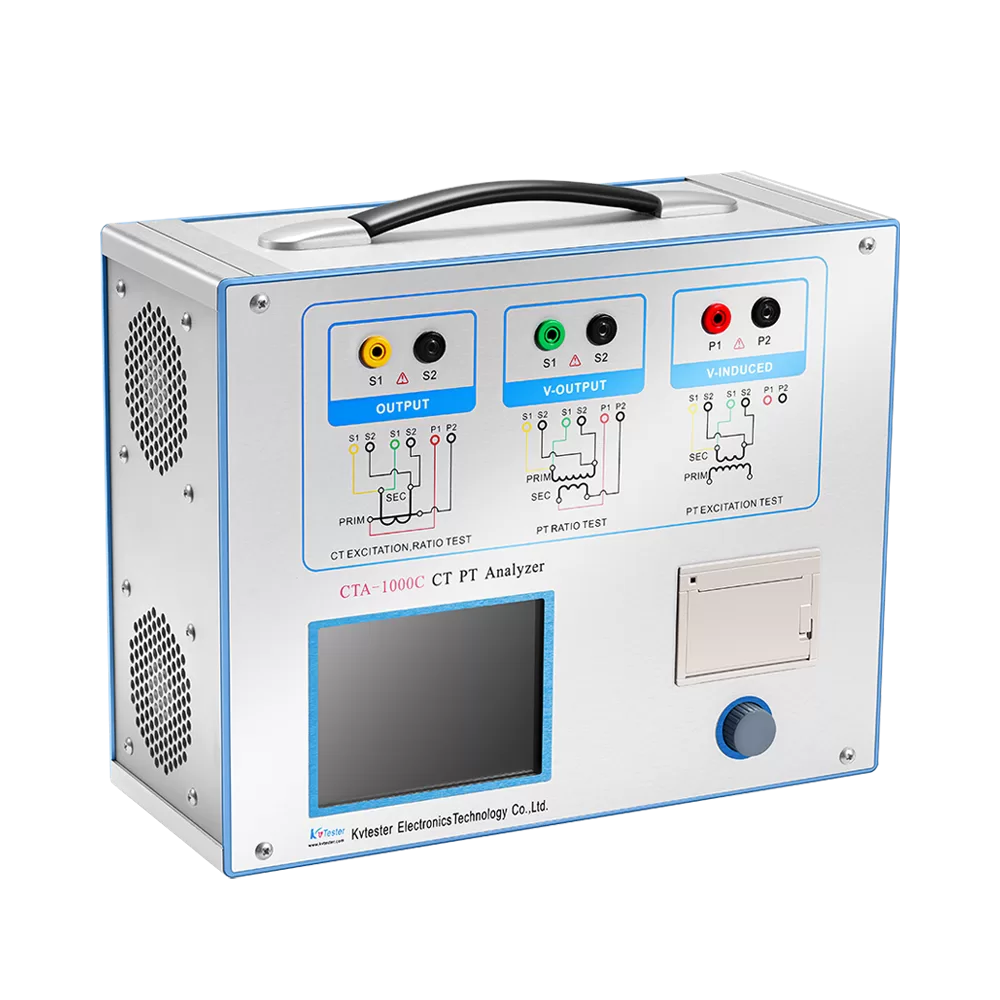
The CTA-1000C CT/PT Analyzer supports CT/PT testing and automatic IEC/IEEE evaluation. Its listed typical ratio measurement error is 0.05%, automatic test duration is under 2 minutes, and weight is under 9.5 kg. It supports CT functions such as ratio and phase-angle accuracy, excitation characteristics, winding resistance, and burden impedance, alongside PT testing functions.
How to Evaluate an IEC Standard CT Analyzer Supplier?
A supplier should be able to explain how its equipment relates to your testing requirements, not simply provide a list of product features.
Focus on evidence relevant to your application:
- Technical documentation: Request specifications covering measurement range, accuracy, test functions, and applicable standards.
- Test evaluation: Confirm how the analyzer evaluates results and which standard options are supported.
- Calibration and records: Ask what calibration documents, sample reports, and data export options are available.
- Technical support: Establish how the supplier will assist with configuration, operation, troubleshooting, and maintenance.
It is also useful to check whether the supplier can support the complete testing workflow. A product may have the required measurement functions, but the project may also need specific accessories, software options, report formats, or assistance with test setup. Clarifying these requirements before purchase helps avoid configuration gaps.
You can also review supplier background and product scope through our guide to the top 8 CT tester suppliers in China. Use supplier comparisons as a starting point, then verify each candidate against your own technical specifications and project requirements.
How Should CT Test Results and Technical Records Be Managed?
Test results are useful only when they can be interpreted, reviewed, and connected to the relevant test procedure. Before choosing an analyzer, consider how your team will manage measurement data throughout production, calibration, maintenance, or acceptance testing.
Three aspects deserve attention:
- Result evaluation: Confirm which measured values are calculated automatically and whether the analyzer compares them with a selected standard.
- Record output: Check whether results can be saved, exported, printed, or organized in the format required by your internal process.
- Traceability: Establish how test records will identify the tested CT, test conditions, equipment configuration, and date of measurement.
For manufacturers, consistent records can support production quality control and help investigate measurement deviations. Testing laboratories may need reports that can be reviewed during audits or customer acceptance. Field service teams may prefer straightforward data storage that allows results to be retrieved after on-site testing.
The equipment’s available data functions should match the documentation process required by the project. If a customer specifies a report template or particular evaluation criteria, confirm those details with the supplier before finalizing the order.
What Should Buyers Confirm Before Ordering CT Analyzers?
Before placing an order, prepare a clear specification covering the CT types, rated primary and secondary currents, required tests, accuracy criteria, and applicable IEC requirements. This allows the supplier to recommend a suitable model and configuration.
For multiple-unit orders, also confirm:
- Whether all units will use the same hardware, software, accessories, and test configuration.
- Whether operating manuals, calibration documents, and test report formats meet your team’s requirements.
- Whether delivery schedules, training, spare parts, and after-sales support are defined in the quotation.
- Whether the proposed equipment has been checked against the project’s technical acceptance criteria.
- Whether the supplier can confirm configuration consistency and provide support for commissioning and operator training.
For international orders, it is also worth clarifying the power supply requirements, language of technical documentation, shipping arrangements, and availability of remote support. These practical details can affect deployment just as much as the analyzer’s measurement functions.
Find a CT Analyzer for Your IEC Testing Requirements
The right analyzer depends on the applicable IEC requirements, the CT characteristics being tested, and the accuracy and workflow your team needs. A portable CT/PT analyzer may suit field testing, while a computer-controlled test system may be more appropriate for routine accuracy testing in manufacturing or metering laboratories.
At Kvtester, our CT/PT testing solutions cover different testing workflows and equipment configurations. Share your CT specifications, required test items, applicable standards, and expected testing volume so that we can help identify a suitable solution.
Related Products
Latest News
-
 2026-10-26Multi-function CT Tester Wholesale: Supplier Guide
-
 2026-10-26Lightweight Transformer Tester Selection Guide
-
 2026-10-23How can damage to a transformer during a withstand voltage test be avoided?
-
 2026-10-23What is the purpose of a power-frequency withstand voltage test?
-
 2026-10-23How to Select the Appropriate Capacity of a High-Voltage Test Transformer