How Should Small and Medium-Sized Transformer Factories Configure Their Factory Acceptance Testing (FAT) Equipment?
How Should Small and Medium-Sized Transformer Factories Configure Their Factory Acceptance Testing (FAT) Equipment?
For small and medium-sized transformer manufacturers, the proper configuration of factory acceptance testing (FAT) equipment is a critical step in ensuring product quality, enhancing testing efficiency, and controlling production costs. Manufacturers—particularly those producing 10kV and 35kV oil-immersed or dry-type transformers—must establish a comprehensive testing system tailored to their product capacity, voltage ratings, production scale, and relevant industry standards.
1. What Are the Key Components of Transformer Factory Acceptance Testing?
Factory acceptance testing is designed to verify a transformer’s electrical performance, insulation integrity, and manufacturing quality. Common tests include:
① Measurement of DC winding resistance;
② Measurement of voltage ratio and verification of the vector group (connection group);
③ Measurement of no-load loss and no-load current;
④ Measurement of load loss and short-circuit impedance;
⑤ Applied voltage (power-frequency withstand voltage) test;
⑥ Induced voltage (induced withstand voltage) test;
⑦ Measurement of insulation resistance;
⑧ Inspection of tap changers and other applicable components.
The specific tests required for a given transformer depend on the applicable product standards and technical specifications agreed upon.
2. What Testing Equipment Should Small and Medium-Sized Transformer Factories Acquire?
①. DC Winding Resistance Tester
Used to measure the DC resistance of transformer windings across all phases and tap positions. This helps assess the quality of winding connections and brazing/welding, as well as the contact integrity of tap changers.
When selecting a unit, prioritize factors such as test current range, measurement range, accuracy, and the inclusion of an automatic discharge function.
②. Transformer Turns Ratio and Vector Group Tester
Used to verify the voltage ratio, ratio error, and vector group, ensuring that the winding connections align with the design specifications.
It is recommended to choose a model that supports three-phase automatic testing, tap-position detection, and data storage.
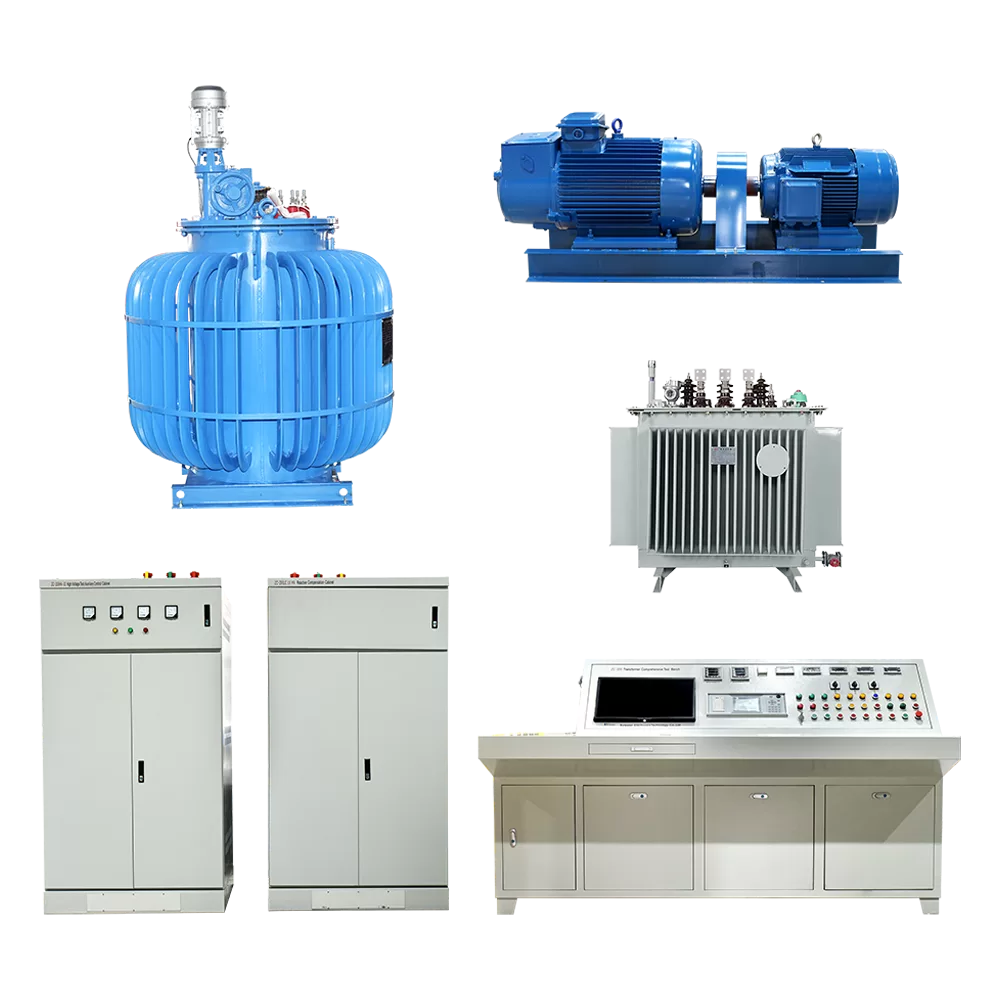
③. Integrated Transformer Testing System
Primarily used to perform measurements for no-load loss, no-load current, load loss, and short-circuit impedance. For manufacturers engaged in mass production, it is recommended to implement an integrated transformer test system—complemented by appropriate test power sources, instrument transformers, and control units—to enhance testing efficiency.
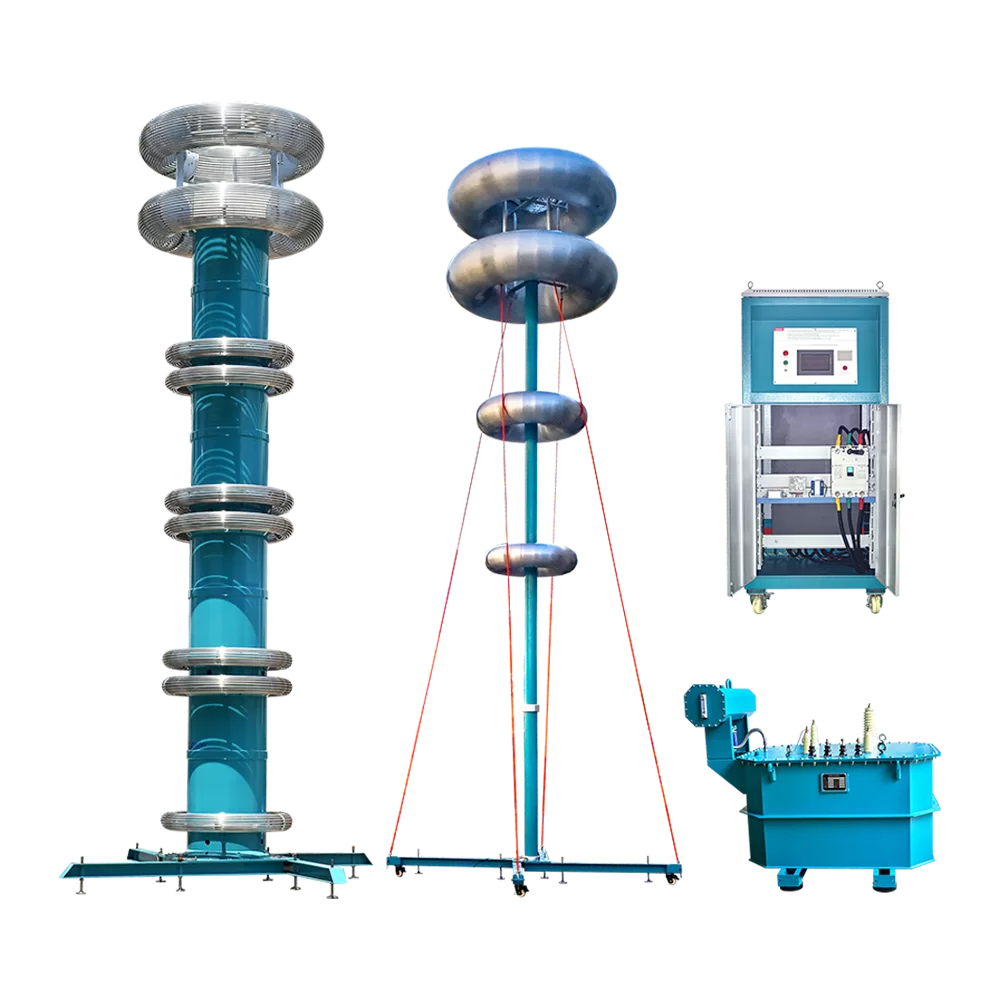
④. Power-Frequency Withstand Voltage Test Equipment
Primarily used for applied-voltage withstand tests on transformers, this equipment verifies the insulation integrity of windings—both relative to the ground and between the windings themselves.
The equipment’s capacity and output voltage should be determined based on the insulation level of the transformer under test, the required test voltage, and the capacitive current.
⑤. Induced Withstand Voltage Test Equipment
This equipment verifies specific insulation properties of a transformer by applying a test power source at a specified frequency and voltage.
Selection of this equipment should account for the transformer’s capacity, the required test frequency, the necessary voltage levels, and excitation conditions.
⑥. Insulation Resistance Tester
Used to measure the insulation resistance of transformer windings (relative to the ground and between windings), providing a benchmark for assessing the insulation condition.
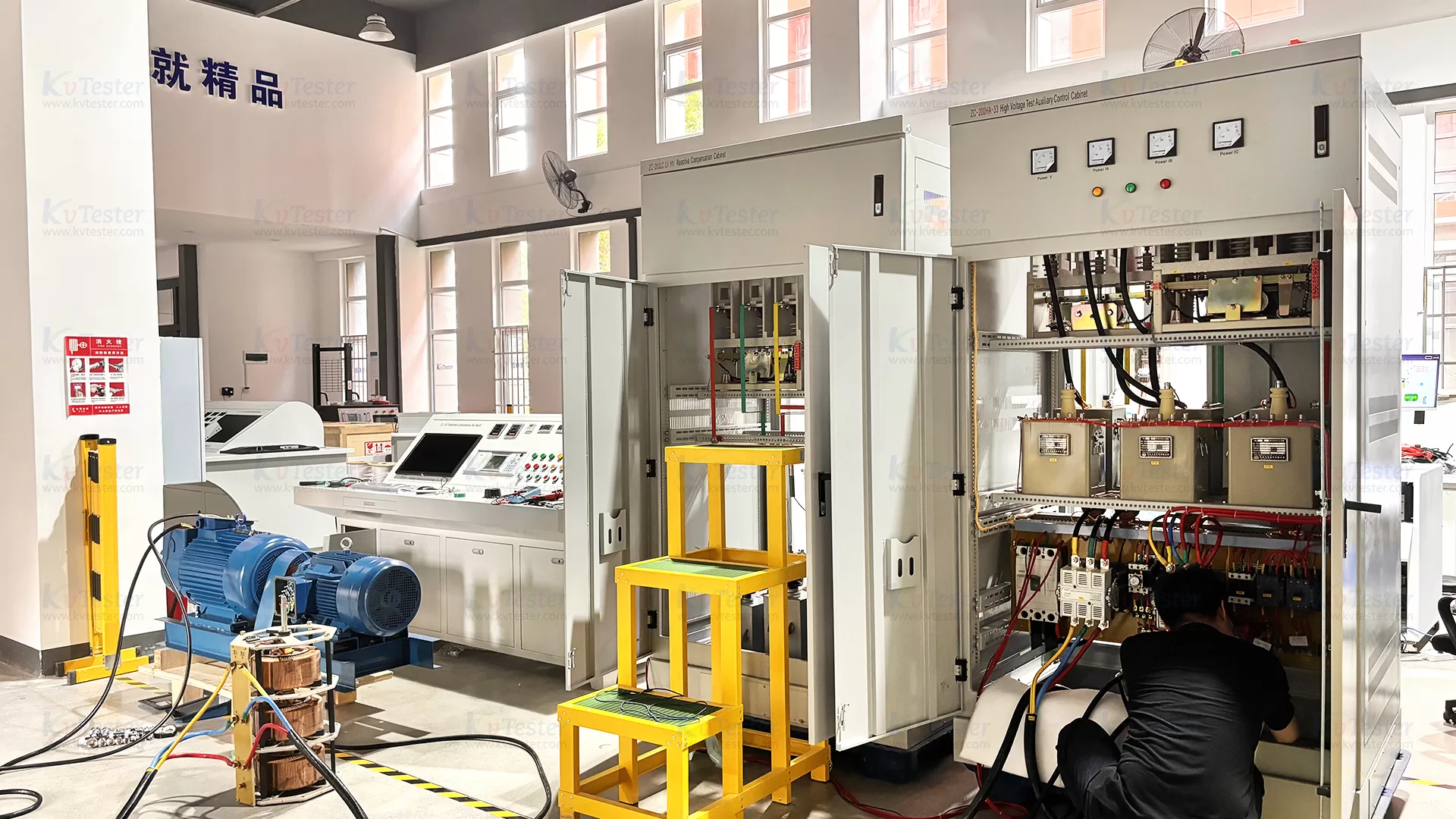
For small-to-medium-sized transformer manufacturers looking to establish or upgrade their factory-acceptance testing (FAT) facilities, an integrated transformer test system is a highly viable solution. Such a system can be configured to include tests for no-load loss, load loss, short-circuit impedance, DC resistance, and turns ratio/vector group. When combined with the necessary withstand voltage test equipment, it forms a comprehensive factory-testing framework. Features such as centralized control, automated data acquisition, and report management help minimize redundant tasks and boost testing efficiency. This approach is well-suited for manufacturers producing transformers across various voltage classes, such as 10kV and 35kV. The specific testing capabilities will depend on the chosen system configuration.
3. How should equipment be configured based on factory scale?
For transformer factories with lower production volumes and a relatively standardized product range, priority should be given to acquiring a DC resistance tester, a turns ratio/vector group tester, an insulation resistance tester, and systems capable of performing the required loss and withstand voltage tests.
For manufacturers with a diverse product portfolio and higher daily output, it is advisable to consider an integrated test bench. Such a setup consolidates measurement, control, data acquisition, and report generation, thereby reducing the need for repetitive wiring and improving overall testing efficiency.
It should be noted that while the level of automation can be upgraded in stages, this must never come at the expense of the mandatory factory-acceptance tests required for each product.
4. What should be considered when configuring factory acceptance test (FAT) equipment?
First, the technical parameters of the equipment must be determined based on the factory’s maximum production capacity, highest voltage rating, and product types to avoid issues such as insufficient power supply capacity or mismatched measurement ranges.
Second, the testing area must be equipped with a reliable grounding system, safety fencing, access control interlocks, emergency stop mechanisms, and discharge facilities to ensure safety during high-voltage testing.
Furthermore, all measuring instruments must undergo verification or calibration as required to ensure the accuracy and reliability of test results.
Enterprises should also ensure compliance with relevant standards, such as the GB/T 1094 series for transformers and GB 20052-2024, “Minimum Allowable Values of Energy Efficiency and Energy Efficiency Grades for Power Transformers.”
5. Conclusion
When configuring factory acceptance test equipment, small and medium-sized transformer manufacturers should adhere to the principles of “meeting standards, rational selection, ensuring safety and reliability, and optimizing efficiency.”
By systematically configuring instruments such as DC resistance testers, transformer turns-ratio and vector group testers, comprehensive transformer test systems, and withstand voltage test equipment, manufacturers can establish a robust factory testing framework—providing a reliable foundation for quality control and enhanced production efficiency.
Related Products
Latest News
-
 2026-11-10Analysis and Troubleshooting of Common Faults in High-Voltage Switch Mechanical Characteristic Testers
-
 2026-11-10Why do loop resistance testers use high-current testing? What is the difference between 100A and 200A?
-
 2026-11-10How to Choose Between 2500V and 5000V Insulation Resistance Testers? What Are the Differences?
-
 2026-11-10Working Principle and Precautions for Transformer DC Resistance Testers
-
 2026-11-05Smart CT PT Analyzer with USB Output for Easier Test Data Handling