
Home » News » Company News
CT Analyzer Laboratory Equipment: Ultimate Guide for Precision CT Testing & Calibration
In modern power laboratory operations, traditional manual CT testing methods suffer from low efficiency, large manual errors, and incomplete test data. Modern CT analyzer laboratory equipment completely solves these pain points with integrated testing functions, intelligent data analysis, and standardized report output, becoming essential standard equipment for power research laboratories, substation maintenance centers, and electrical equipment manufacturing factories worldwide.
What Is CT Analyzer Laboratory Equipment?
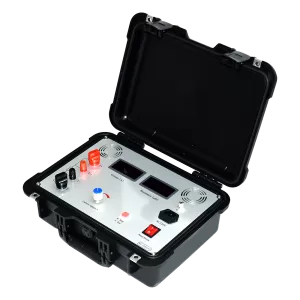
CT analyzer laboratory equipment is a professional testing device designed specifically for comprehensive performance detection of current transformers. Different from ordinary industrial testing tools, laboratory-grade CT analyzers feature higher testing accuracy, richer functional modules, and stricter compliance with international industry standards (IEC, IEEE, GB). It mainly targets laboratory calibration, batch product testing, scientific research analysis, and equipment performance appraisal scenarios, supporting full-parameter testing of various types of CTs including protection-class and measurement-class transformers.
The core working principle of standard CT analyzer laboratory equipment adopts the industry-standard low-frequency test method, calculate the CT’s equivalent circuit parameters through high-speed data acquisition and algorithm analysis, and accurately measure key performance indicators such as transformation ratio error, phase error, excitation characteristic, winding resistance, and saturation characteristics. Meanwhile, the equipment can automatically demagnetize CTs after testing to eliminate residual magnetism interference and ensure the accuracy of subsequent test data.
Core Functions of Professional CT Analyzer Laboratory Equipment
High-quality CT analyzer laboratory equipment integrates multiple testing and analysis functions to realize one-stop full-item detection of current transformers, covering all indicators required by laboratory calibration and industrial acceptance standards. Its core functions are as follows:
1. Full-Parameter CT Performance Testing
The equipment supports comprehensive testing of core CT parameters, including transformation ratio accuracy, polarity verification, winding resistance measurement, excitation curve analysis, and burden characteristic testing. It can accurately capture key data such as knee-point voltage, accuracy limit factor (ALF), secondary time constant (Ts), and remanence coefficient (Kr), realizing comprehensive evaluation of CT operating performance . Whether it is single-ratio or multi-tap CTs, the equipment can complete automatic testing of all ratio combinations with supporting accessories, avoiding manual repeated wiring .
2. Intelligent Automated Testing & Standard Evaluation
Laboratory-grade CT analyzers adopt one-button automated test procedures, eliminating complex manual operation steps. Users only need to set the corresponding industry standards, and the device will automatically complete the test sequence, data calculation, and result judgment. It can intelligently evaluate whether the CT meets IEC 61869, IEEE C57.13 and other international standards, and automatically mark unqualified indicators, greatly improving laboratory testing efficiency .
3. Unknown CT Parameter Identification & Demagnetization
For old or unmarked current transformers with missing nameplate parameters, CT analyzer laboratory equipment can automatically identify core parameters such as rated current and accuracy level through signal analysis, solving the problem of difficult parameter confirmation for old equipment. In addition, the built-in automatic demagnetization function can thoroughly eliminate CT residual magnetism after each test, effectively avoiding test result deviation caused by magnetic saturation .
4. Mass Data Storage & Standard Report Output
The equipment is equipped with large-capacity offline storage, which can store thousands of groups of test data without loss after power failure. It supports USB and PC terminal data transmission, facilitating laboratory data archiving, secondary analysis, and batch management. Meanwhile, it can automatically generate standardized test reports with data charts and evaluation conclusions, meeting the data traceability and filing requirements of professional laboratories .
Key Application Scenarios of CT Analyzer Laboratory Equipment
CT analyzer laboratory equipment has wide and irreplaceable application value in power industry laboratories and industrial testing scenarios, covering the whole chain of CT production, calibration, operation and maintenance, and scientific research.
1. Power Laboratory Calibration & Verification
Professional metering laboratories and power inspection institutions use CT analyzer laboratory equipment to complete regular calibration of power system CTs, ensuring that metering and protection CTs in substations meet national and international accuracy standards, which is the core guarantee for safe and economical operation of power grids.
2. Electrical Equipment Manufacturing Testing
CT manufacturers apply laboratory-grade CT analyzers for batch factory testing of finished products, screening unqualified products in the production process, realizing precise quality control, and ensuring that each current transformer meets factory technical indicators.
3. Substation Operation & Maintenance Diagnosis
In substation daily maintenance and equipment overhaul scenarios, the portable laboratory CT analyzer can quickly complete on-site performance testing of operating CTs, diagnose hidden dangers such as CT saturation, parameter drift, and performance aging, and provide accurate data support for equipment maintenance and replacement .
4. Electric Power Scientific Research & Teaching
University electrical laboratories and power research institutions rely on high-precision CT analyzer laboratory equipment to carry out CT performance research, power system transient characteristic experiments, and new product development tests, providing accurate experimental data for technological innovation and talent training in the power industry.
Key Advantages of Laboratory-Grade CT Analyzers vs. Ordinary Industrial Testers
Many users confuse industrial portable CT testers with professional CT analyzer laboratory equipment. In fact, laboratory-grade equipment has obvious advantages in accuracy, function and stability, which is the fundamental reason why it is the preferred equipment for professional laboratories:
- Higher Testing Accuracy: Laboratory equipment adopts high-precision data acquisition chips and professional algorithm calibration, with far lower test error than ordinary industrial testers, meeting metering-level calibration requirements.
- More Complete Functional Modules: It supports saturation characteristic analysis, multi-tap automatic testing, standard adaptive evaluation and other advanced functions that ordinary testers do not have, covering all laboratory testing needs.
- Stronger Stability & Repeatability: Optimized circuit design and anti-interference structure ensure stable test results in complex electromagnetic environments, with excellent data repeatability, suitable for long-term batch testing and scientific research experiments.
- Standardized Compliance: Fully compliant with global mainstream power testing standards, supporting customized test schemes for different scenarios, with authoritative test results and recognized reports.
How to Choose High-Quality CT Analyzer Laboratory Equipment?
When purchasing CT analyzer laboratory equipment, laboratories and enterprises need to select equipment based on testing scenarios, accuracy requirements and standard compliance. Here are 5 core selection criteria:
First, confirm the testing accuracy level, prioritize equipment with metering-grade accuracy to meet laboratory calibration requirements.
Second, check functional integrity to ensure it covers ratio error, excitation characteristic, demagnetization and full-item testing functions.
Third, verify standard compatibility to support IEC, IEEE and local industry standard evaluation.
Fourth, focus on operational convenience, prefer one-button automatic testing and intelligent report output functions to improve laboratory efficiency.
Fifth, check data storage and expansion performance to support long-term data archiving and multi-scenario accessory expansion .
Conclusion
CT Analyzer Laboratory Equipment is an indispensable core instrument in modern power laboratories, providing high-precision, automated and standardized testing solutions for current transformer calibration, performance analysis and quality inspection. With the continuous upgrading of power grid intelligence and industrial electrical equipment, the demand for high-precision laboratory CT analyzers is constantly increasing. Choosing professional, standard-compliant and high-stability CT analyzer laboratory equipment can effectively improve laboratory testing efficiency, ensure power equipment operation safety, and provide solid technical support for power industry quality control and technological innovation.
FAQs About CT Analyzer Laboratory Equipment
Q1: What is the main use of a CT analyzer in a laboratory?
A laboratory CT analyzer is mainly used for precise calibration, performance testing, parameter identification and quality evaluation of current transformers, ensuring CT accuracy and stability to support power system safe operation and laboratory standard testing.
Q2: Can CT analyzer laboratory equipment test multi-ratio CTs?
Yes. Equipped with professional switch box accessories, the equipment can automatically test all tap combinations of multi-ratio CTs, realizing full-coverage testing without manual rewiring .
Q3: Why is CT demagnetization function important for laboratory testing?
Residual magnetism inside CTs will cause test result deviation. The automatic demagnetization function of laboratory-grade equipment can eliminate residual magnetism after each test, ensuring the accuracy and repeatability of experimental data.
Related Products
Latest News
-
 2026-09-21Smart Transformer Testing Equipment: Features for Efficient Testing
 -
 2026-09-21Transformer Testing Equipment for Grid Maintenance Guide
 -
 2026-09-20CT PT Analyzer for Commissioning: Substation Testing Guide
 -
 2026-09-20ANSI Standard CT Tester: Specs, Tests & Buying Guide
 -
 2026-09-18Why does the required capacity of series resonant test equipment usually increase with cable length?