
Home » News » Company News
2026 CT Tester For Power Utility Buying Guide
Introduction: Why Power Utilities Need Professional CT Testers
Current Transformers (CT) are the core sensing components of power grid metering and protection systems. Unqualified CT transformation ratio error, phase angle deviation or core saturation will lead to inaccurate electricity billing, protection relay maloperation, and even large-scale grid outage accidents.
A dedicated CT tester (also named CT/PT analyzer) injects controlled test signals to detect CT winding resistance, excitation curve, saturation knee point, remanence, ratio & phase error, burden impedance, and polarity. It can also complete full potential transformer (PT) verification in one unit, complying with IEC 61869 global standards.
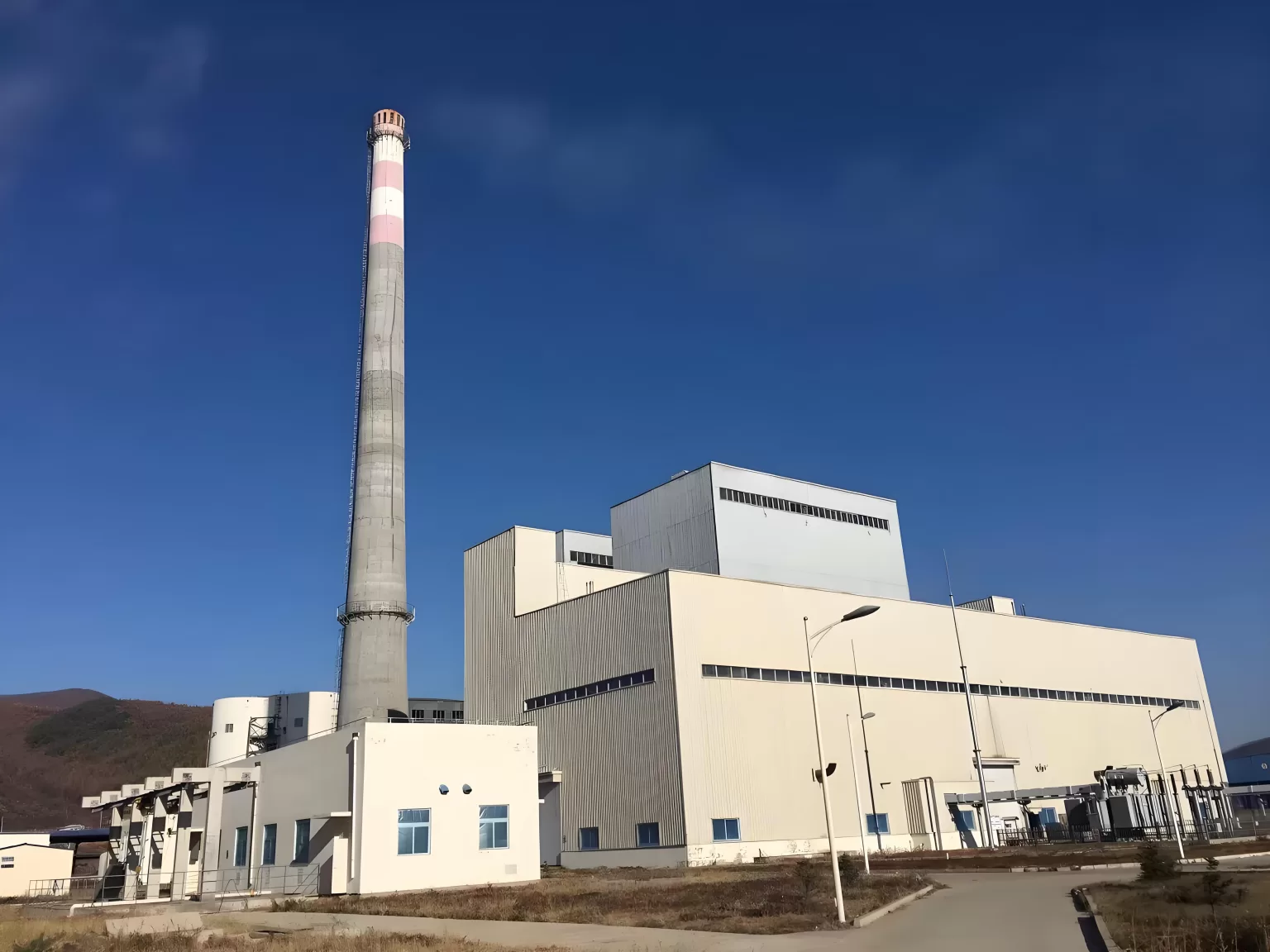
For power utilities, renewable farms, 110kV/132kV transmission substations, power plants and railway traction power systems, a qualified CT tester is mandatory equipment for handover commissioning, annual preventive test and post-upgrade equipment verification. Industry data shows standardized CT testing can cut equipment failure risk by 30% and extend instrument transformer service life by 20%.
If you are upgrading your power testing fleet or purchasing new CT analyzers for field maintenance, this guide sorts out all key selection indicators and mainstream product horizontal comparison to help you pick cost-effective equipment matching your on-site workflow.
Core Functions & Technical Benchmarks Power Utilities Must Check Before Purchase
Before comparing brands, confirm the tester covers all mandatory test items for utility scenarios:
1. Full CT Testing Capabilities
- Ratio & phase angle error measurement (covering metering 0.2/0.5 class and protection ALF/FS parameters)
- Excitation characteristic curve, saturation knee point voltage & residual magnetism test
- Secondary winding resistance, saturated/unsaturated inductance, burden impedance detection
- Multi-ratio CT automatic identification and polarity judgment
- Transient CT parameter evaluation (TPS/TPX/TPY if for high-voltage transmission substations)
2. PT Integrated Test Function
Most utility teams prefer all-in-one CT/PT testers to reduce equipment carrying quantity on-site. Standard PT test items include excitation saturation, burden, winding resistance and polarity verification.
3. Critical Precision Standard (Non-Negotiable For Grid Calibration)
Utility-grade testers require typical ratio error ≤0.02%, phase displacement accuracy within 1 minute to meet official metering calibration traceability requirements. Low-precision entry-level testers cannot pass third-party regulatory audit for power grid projects.
4. Field-Friendly Hardware Indicators
- Lightweight body (≤10kg) for frequent substation site transportation
- Low maximum test voltage (≤180V) to eliminate high-voltage safety risks for field operators
- Wide input power adaptability (85–264V AC, 45–65Hz) for unstable on-site power supply
- Automatic wiring identification, one-click full auto-test to cut working time by over 70%
- Built-in data storage, USB/Bluetooth export and automatic compliance test report generation
5. Standard Compliance Certification
Prioritize testers with IEC, CE, ISO9001 certification, supporting automatic report evaluation per IEC and IEEE standards, which simplifies regulatory inspection and tender document submission.
Mainstream CT Tester Brand Comparison Table For Power Utility (2026)
Model | Brand | Typical Ratio Accuracy | Phase Displacement Accuracy | Max Output Voltage | Weight | Automation Level | Core Target Application | Core Advantage For Utilities |
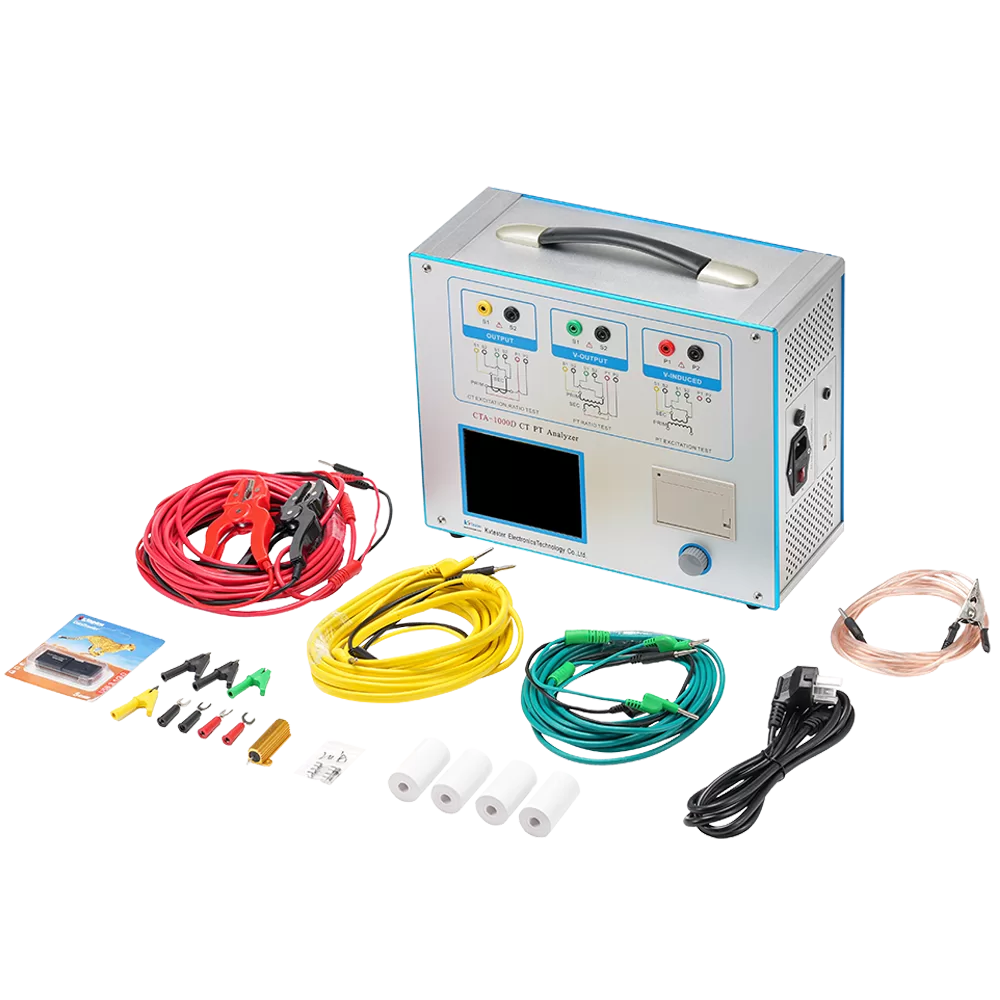
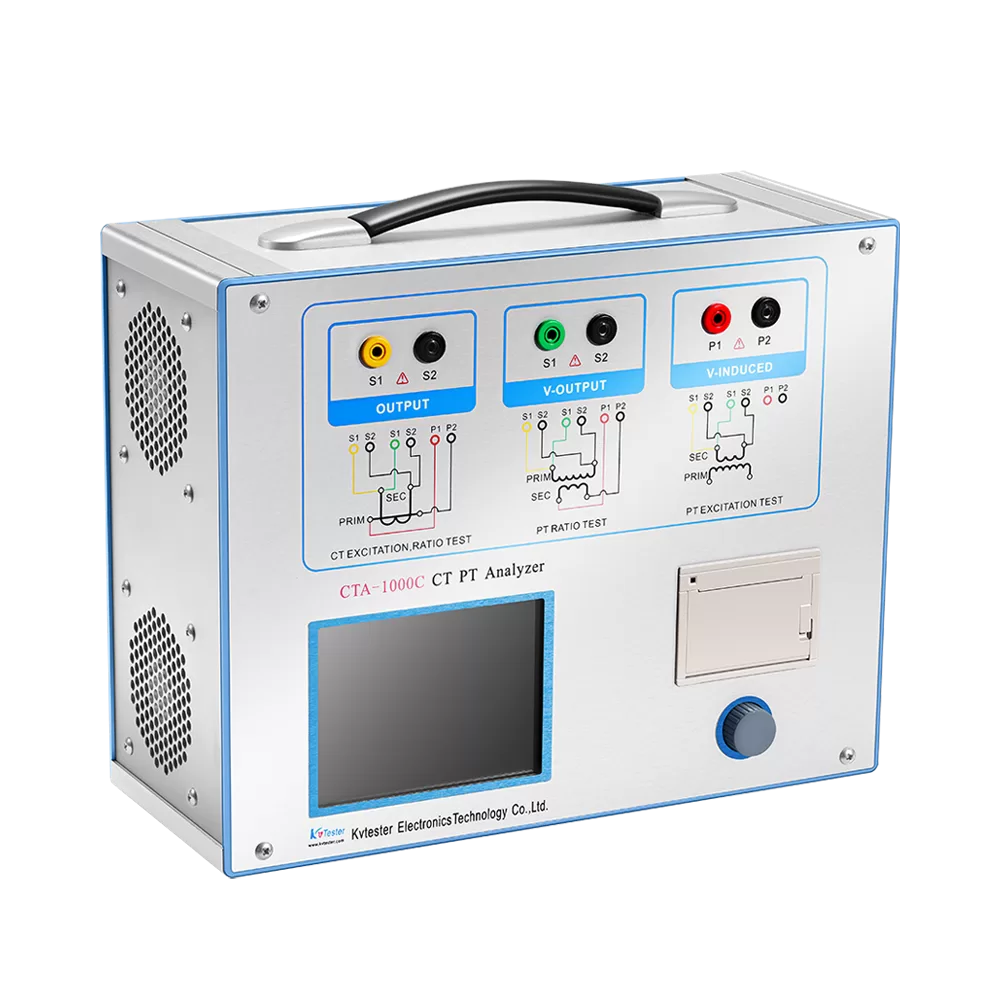
CTA-1000D | Kvtester | ±0.02% (1–2000 ratio)±0.03% (2000–5000 ratio) | 0.01min resolution, typical 1min accuracy | 120V | 9kg | Fully automatic, one-click test <2min | All voltage class substations, power plant, third-party calibration lab | Same core precision as Omicron CT Analyzer; lightweight portable design, full CT+PT dual test, lower overall procurement & after-sales cost |
CT Analyzer | Omicron | ±0.02% | 1min typical accuracy | 120V | <8kg | Semi-automatic | High-end relay protection calibration, overseas top grid labs | Industry benchmark precision, mature software system, high import price and long after-sales response cycle in Asia |
RDCT-3000 | Wrindu | ±0.02% | Standard industrial grade | 2000V | Medium weight | Fully automatic | Large transformer factory batch testing | High voltage output, suitable for factory offline mass inspection |
TRAX Series | Megger | ±0.03% | Medium precision | 2000V | Heavy | Fully automatic | Multi-function high-voltage comprehensive test | Integrated multiple HV test modules, bulky for daily field CT patrol inspection |
In-Depth Introduction Of Kvtester & CTA-1000D CT/PT Analyzer
About Kvtester Electronics Technology Co.,Ltd.
Kvtester is a high-tech power testing equipment manufacturer founded in 2008, with independent R&D, production and global sales capacity.
- Global coverage: Products exported to over 40 countries, more than 30,000 testing instruments delivered to power utilities, power generation plants, railway traction systems and electrical OEM factories worldwide.
- Quality system: Fully certified ISO9001 quality, ISO14000 environmental, ISO45001 occupational health safety management systems, all products pass third-party high-voltage research institute test verification.
- After-sales support: 7×24-hour remote technical service, global on-site service support, free firmware upgrade and test report software, customized function development for special grid project demands.
- Core positioning: Provide cost-effective high-precision power testing equipment that reaches international top-tier accuracy standards, suitable for mid-to-large power utility daily maintenance and tender project equipment bidding.
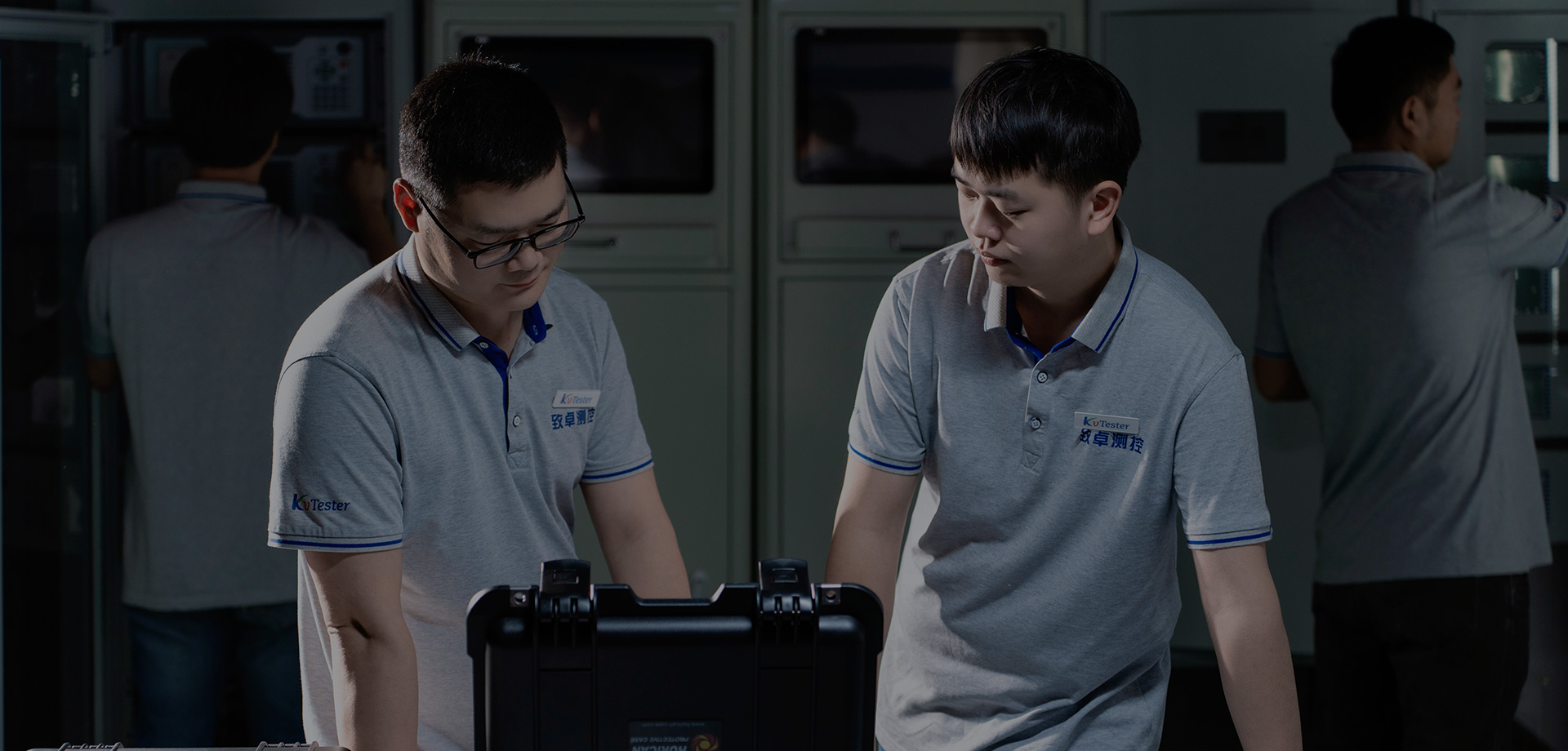
CTA-1000D Core Advantages Matching Power Utility Demands
Equivalent top-tier precision as Omicron
CT Analyzer The core measurement index of CTA-1000D reaches typical ratio error 0.02%, phase displacement resolution 0.01min, consistent with Omicron CT Analyzer’s calibration accuracy standard, fully meeting 0.1/0.2 class metering CT official calibration requirements. For power utilities that need high precision but control procurement budget, this model avoids the high premium of imported European brands.
Integrated CT & PT all-item automatic testing
Single unit completes CT ratio/phase error, excitation curve, saturation knee point, burden, winding resistance, remanence test, plus full PT characteristic detection. No need to carry separate PT testing accessories, greatly reducing field equipment transport burden.
High on-site operation safety
Maximum test output voltage only 120V, far below high-voltage test equipment, eliminating accidental electric shock risk for field engineers during secondary circuit testing; built-in automatic wiring detection to avoid wiring error damage to CT secondary winding.
Ultra-portable for patrol maintenance
Only 9kg without accessories, equipped with shock-resistant pull-out protective case, suitable for frequent traveling between remote substations, wind/solar renewable power stations and industrial mining power systems.
Standardized report for grid audit
Built-in IEC & IEEE standard automatic judgment module, one-click generate traceable signed test certificates, convenient for power utility routine inspection, project handover and third-party regulatory audit.
If you need technical datasheet, test case report or quotation of CTA-1000D CT/PT Analyzer for your utility’s equipment procurement plan, contact Kvtester’s professional power testing solution team to get customized support.
Typical Application Scenarios Of CT Tester For Power Utilities
- Substation Routine Preventive Test
After equipment overhaul, annual maintenance, verify all measurement & protection CT/PT accuracy to prevent relay misoperation under short-circuit fault. - New Power Station & Renewable Energy Farm Handover Acceptance
Solar and wind farm sites have large quantities of instrument transformers; automatic CT testers shorten single-unit test time from 2 hours to 15 minutes, greatly accelerating project grid-connection progress. - Power Equipment Manufacturer Quality Control
CT/PT OEM factories use high-precision CT analyzers for finished product offline calibration to ensure batch product compliance with export IEC standards. - Third-Party Power Testing & Calibration Laboratories
Laboratories need traceable high-precision testing equipment to issue official calibration certificates; CTA-1000D’s 0.02% measurement accuracy fully meets laboratory metering grade requirements. - Railway Traction & Large Industrial Mining Power Systems
Industrial power grids and railway traction power supply have strict protection CT transient performance requirements, the tester can evaluate remanence, ALF and transient saturation parameters comprehensively.
2026 Industry Trends For Utility CT Testers To Watch
- Intelligent & Cloud Interconnection
New generation CT analyzers support wireless data synchronization, cloud asset management dashboards, remote real-time test data upload, matching smart substation and Internet of Energy (IoE) construction trends. - Embedded AI Anomaly Diagnosis
Advanced models integrate AI algorithms to automatically identify CT core aging, saturation defects and wiring hidden troubles during testing, reducing manual data analysis workload for engineers. - Lightweight Integrated Design
Manufacturers continue to optimize body weight and volume, abandoning bulky separate power amplifier modules, to adapt to frequent outdoor field patrol testing.
Frequently Asked Questions From Power Utility Buyers
What’s the difference between a CT PT tester and a relay tester?
CT PT tester targets instrument transformer characteristic verification (ratio, phase error, excitation, saturation) to guarantee metering accuracy; relay tester simulates grid fault signals to verify protection relay tripping logic. The two devices work in matching workflow for substation maintenance, and cannot replace each other.
Can CT testers perform live line testing?
Most standard CT analyzers require de-energized secondary circuits for testing with higher data accuracy. Individual advanced models support safe secondary injection live testing, but operators must strictly follow IEC safety operation specifications.
How often should a CT tester itself be calibrated?
Professional utility testing equipment needs annual calibration with certified reference standard instruments, to maintain long-term measurement accuracy within 0.1% error range.
What’s the price range of utility-grade CT testers in 2026?
Entry-level portable models range from $3,000–$6,000; mid-to-high precision all-in-one CT/PT analyzers (like CTA-1000D) cost $6,500–$10,000; imported top European brands exceed $12,000–$15,000.
Related Products
Latest News
-
 2026-09-20CT PT Analyzer for Commissioning: Substation Testing Guide
 -
 2026-09-20ANSI Standard CT Tester: Specs, Tests & Buying Guide
 -
 2026-09-18Why does the required capacity of series resonant test equipment usually increase with cable length?
 -
 2026-09-18How should 35kV cable series resonant withstand voltage test equipment be configured?
 -
 2026-09-18How to Select AC Withstand Voltage Test Equipment for 10kV Cables?