Home » News » Company News
Intelligent CT Tester for Accurate Current Transformer Testing
Current transformer testing requires accurate measurements, consistent procedures, and reliable records. Manual calculations and repeated instrument adjustments can increase testing time and make results more difficult to compare across different transformers. An intelligent CT tester addresses these challenges by combining multiple measurement functions with automated analysis, helping engineers evaluate current transformer performance more efficiently.
What Is an Intelligent CT Tester?
An intelligent CT tester is an instrument that measures and analyzes key electrical characteristics of current transformers (CTs). Compared with conventional testing arrangements that may require several instruments and manual calculations, an intelligent tester can integrate multiple test functions into one system.
Core Testing Capabilities
Depending on the model, an intelligent current transformer tester can perform:
- Transformation ratio and polarity tests to verify the relationship between primary and secondary circuits.
- Excitation characteristic tests to evaluate magnetic behavior and identify the knee point where applicable.
- Secondary winding resistance tests to identify abnormal resistance that may affect transformer performance.
- Ratio error and phase-angle error measurements to assess metering accuracy.
- Burden tests to evaluate the load connected to the CT secondary circuit.
These functions support different stages of CT inspection, commissioning, maintenance, and manufacturing. The available measurements and accuracy specifications vary by instrument, so users should confirm that the selected model covers their required test procedures.
What Makes a CT Tester Intelligent?
Intelligent testing involves more than displaying measurement values. Depending on the instrument, it may include automatic test sequencing, parameter calculation, standard-based evaluation, guided wiring diagrams, and digital record management.
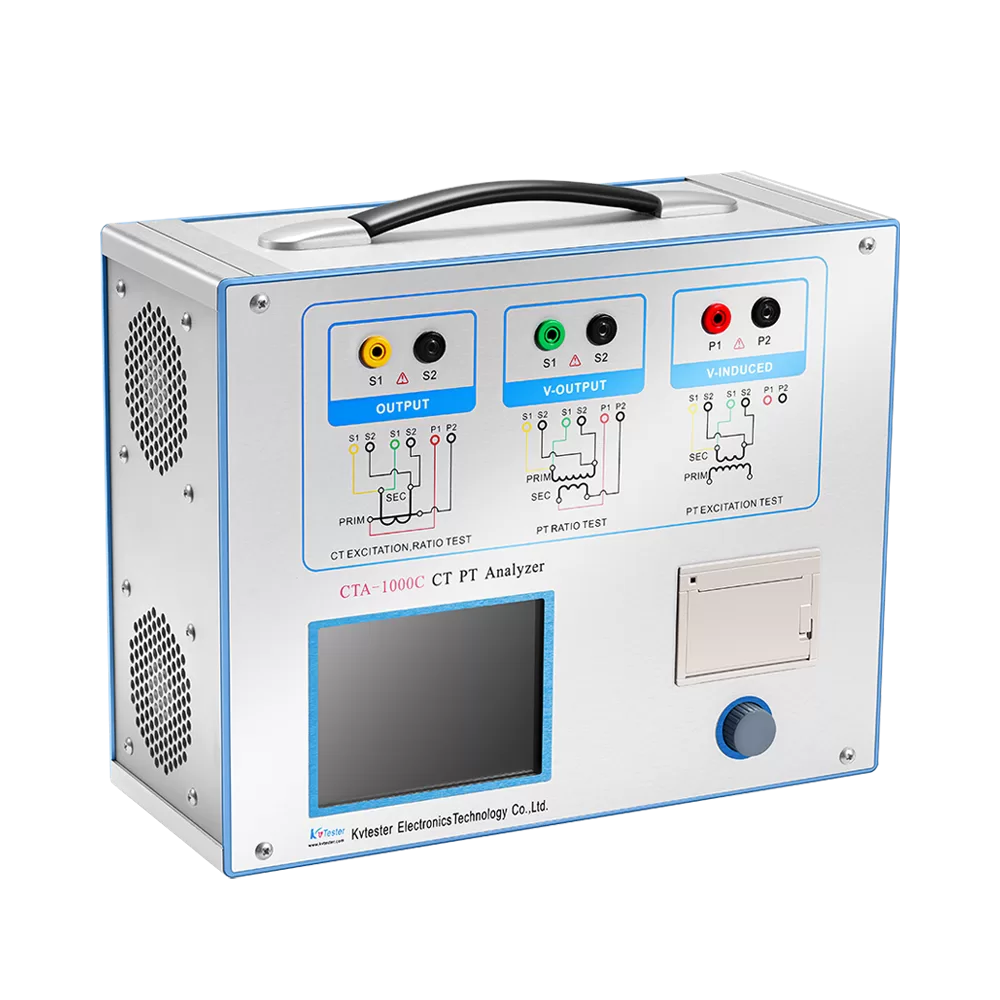
For example, the CTA-1000D CT/PT Analyzer from Kvtester automatically determines relevant CT characteristics and evaluates the results against a selected IEC or IEEE standard. Its automatic analysis covers excitation data, saturation inflection point, remanence coefficient, accuracy limit overcurrent factor, transformation ratio, and error data. This makes it a relevant option for engineers who need more than basic ratio measurements.
Key Tests Performed by an Intelligent CT Tester
Understanding the purpose of each test helps engineers determine which functions matter most for their applications.
CT Ratio and Polarity Testing
The transformation ratio test verifies whether the measured relationship between primary and secondary current corresponds to the expected ratio. An incorrect ratio can affect metering accuracy and protection settings.
Polarity testing checks the relative direction of the primary and secondary terminals. Incorrect polarity can cause problems in differential protection, directional protection, and other circuits that depend on the correct phase relationship.
Excitation Characteristics and Knee-Point Analysis
The excitation test examines how excitation current changes as voltage is applied to the CT secondary winding. The resulting curve helps engineers evaluate the magnetic characteristics of the core.
For protection CTs, the knee-point voltage and related parameters are particularly useful when assessing performance under high-current fault conditions. An intelligent analyzer can calculate and display these parameters automatically, reducing the need for separate manual calculations.
Winding Resistance, Burden, and Accuracy
Secondary winding resistance measurements help identify abnormal resistance that may result from winding problems or poor connections. Burden testing evaluates the electrical load connected to the secondary circuit, which can influence CT accuracy.
Ratio error and phase-angle error measurements are also important when checking metering performance. The required tests depend on the CT accuracy class, intended application, and applicable standard.
How Automated CT Testing Improves Efficiency
Automated testing can simplify repetitive procedures, but its value depends on how well the instrument fits the testing workflow.
From Manual Setup to Guided Testing
Traditional testing arrangements may require operators to configure multiple instruments, adjust test conditions, and calculate certain parameters separately. An intelligent CT tester can consolidate these steps into a more structured procedure.
For example, the CTA-1000E uses a dynamic graphical interface to display test parameters and the corresponding wiring diagram. It also supports automatic calculation of CT characteristics and provides USB data export. These features help technicians move between different test functions without repeatedly consulting separate setup instructions.
Faster Analysis and More Consistent Records
Kvtester’s CTA-1000D performs automatic CT evaluation against the selected IEC or IEEE standard within seconds at the press of a button. Its stated automatic test duration is less than two minutes, making it suitable for applications where testing time matters.
Automation can reduce repetitive manual work and improve consistency in data processing. However, it does not eliminate the need for correct connections, suitable test conditions, instrument calibration, and engineering review. Results should always be interpreted in the context of the applicable acceptance criteria.
Applications of Intelligent CT Testing Equipment
Intelligent CT testers are useful in several environments, although the preferred equipment configuration differs between field work and production testing.
Substation Commissioning and Maintenance
During commissioning, engineers need to verify CT ratio, polarity, excitation characteristics, and other required parameters before connecting instrument transformers to metering and protection circuits.
During maintenance, repeatable test procedures help technicians identify changes in transformer characteristics and investigate suspected faults. A portable analyzer is particularly useful when equipment must be transported between different testing locations.
Transformer Manufacturing and Quality Control
CT manufacturers need to verify electrical characteristics during development, production, and final inspection. A multifunction analyzer can consolidate several measurements into one workflow, while automated systems may be more appropriate when testing large numbers of transformers.
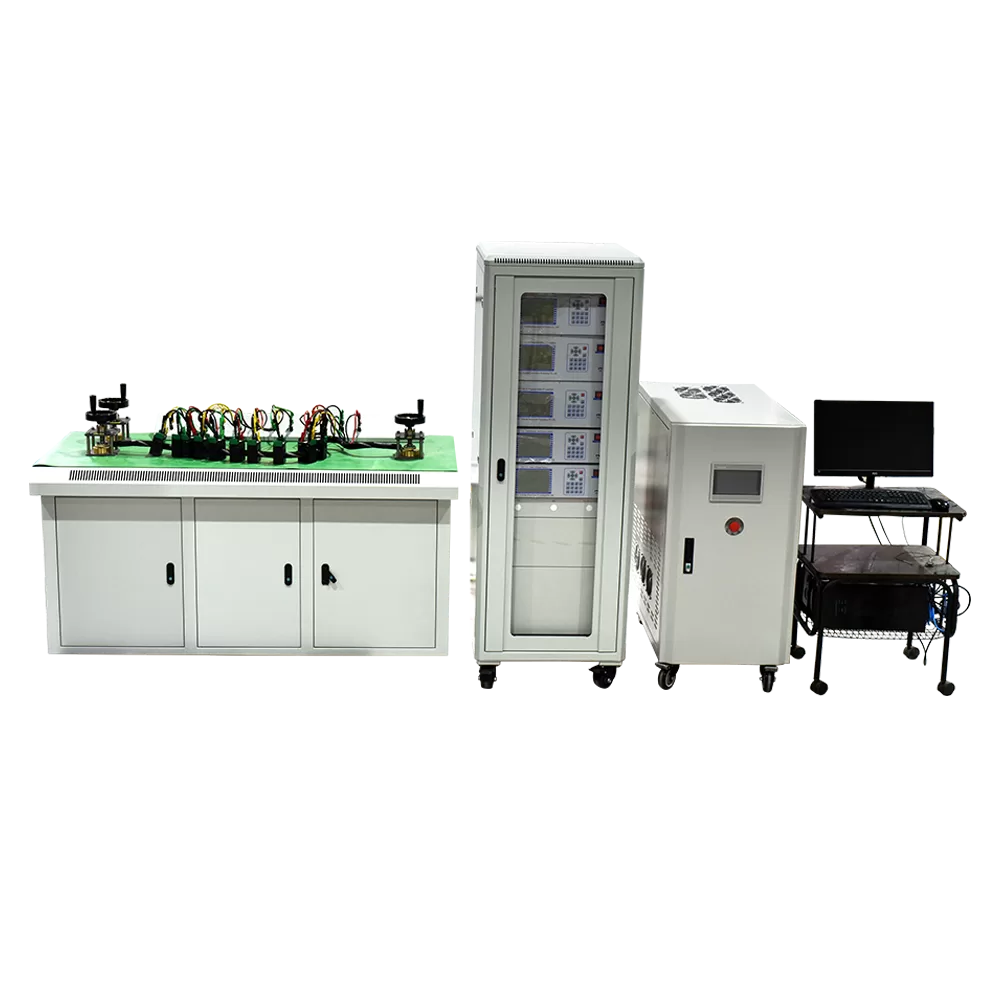
For production lines and metering test centers, Kvtester’s ZCHG-12-1000A Automatic CT Testing System provides computer-controlled testing with automatic and manual operating modes. It can test 12 current transformers with the same ratio at one time and supports test data recording, printing, and backup. This system is better suited to batch accuracy testing than to the portable, individual-transformer testing typically performed with a handheld or compact analyzer.
How to Choose the Right Intelligent CT Tester
The most suitable instrument is the one that meets the required test specifications and fits the working environment. Before purchasing, consider the following factors.
Measurement Range and Accuracy
Check the supported CT ratio range, resistance range, excitation test capability, and accuracy specifications. Confirm that these values meet the requirements of the transformers being tested.
Do not assume that the accuracy stated for ratio measurement also applies to winding resistance, phase-angle error, or other functions.
Automation and Analysis Functions
Determine whether you need automatic test sequencing, excitation curve analysis, knee-point calculation, standard-based evaluation, or guided wiring diagrams. A field service team may prioritize straightforward operation, while a laboratory may need more detailed analysis and reporting.
Data Storage and Reporting
Digital records make it easier to compare measurements, maintain inspection histories, and prepare test documentation. If testing traceability is important, check data storage capacity, export options, report generation, and compatibility with your existing workflow.
Portability and Working Conditions
For on-site testing, consider the instrument’s weight, power requirements, connection process, and operating environment. A portable analyzer can reduce transportation and setup demands, while a fixed testing system may be more practical for high-volume production.
Finally, verify the applicable testing standards and safety procedures. An instrument should be selected according to the actual CT type, test scope, and acceptance criteria rather than the number of functions alone.
Selecting an Intelligent CT Tester for Your Application
Different testing environments call for different levels of automation. A portable analyzer may be sufficient for commissioning, maintenance, and individual CT evaluation. Manufacturers and calibration centers processing multiple units may benefit more from a computer-controlled testing system.
At Kvtester, we provide CT testing equipment for both portable measurement and automated accuracy testing. The CTA-1000D is worth considering when automatic analysis of CT characteristics is a priority, while the CTA-1000E offers a broad range of CT/PT measurements and integrated data management. For batch testing, the ZCHG-12-1000A provides a different approach through computer-controlled testing of multiple CTs.
Before choosing a model, identify the required measurements, CT ratings, accuracy class, testing volume, and reporting needs. Comparing these requirements with the technical specifications will help narrow the options and avoid paying for functions that your application does not need.
Conclusion
An intelligent CT tester combines electrical measurements with automated calculations and data analysis to make current transformer testing more efficient and consistent. Its practical value depends on the accuracy of its measurements, the test functions available, and how well its workflow matches the intended application.
For field testing, commissioning, and maintenance, a portable analyzer with automatic evaluation may be the right choice. For manufacturing and calibration facilities, an automated CT testing system may better support repeated or batch measurements.
If you are selecting equipment for a specific CT testing application, contact Kvtester with your required test functions, transformer ratings, and accuracy requirements. Our team can help you identify a suitable testing configuration based on your technical and operational needs.
Related Products
Latest News
-
 2026-10-27Combined CT PT Tester for Current and Voltage Transformer Testing
-
 2026-10-27IEC Standard Custom Transformer Tester for Reliable Testing
-
 2026-10-27Current Transformer Testing Equipment: Types & Selection
-
 2026-10-26IEC Standard CT Analyzer Supplier: Choosing the Right Equipment
-
 2026-10-26Multi-function CT Tester Wholesale: Supplier Guide