Home » News » Company News
Combined CT PT Tester for Current and Voltage Transformer Testing
Current and voltage transformers play an important role in power measurement, protection, and monitoring. Inaccurate transformation ratios, polarity errors, abnormal excitation characteristics, or excessive secondary winding resistance can affect metering results and relay protection performance. Testing both types of instrument transformers efficiently requires equipment that supports their different electrical characteristics and testing requirements.
What Is a Combined CT PT Tester?
A combined CT PT tester is an instrument designed to test both current transformers (CTs) and voltage transformers (PTs). It integrates multiple measurement functions into one unit, reducing the need to carry and operate several separate instruments for routine testing.
Depending on the model, a CT/PT analyzer can measure transformation ratio, polarity, excitation characteristics, secondary winding resistance, burden, ratio error, and phase-angle error. These measurements help technicians assess transformer performance and identify potential problems before they affect the connected power system.
A combined tester does not necessarily support every test for every transformer type. For example, a device designed for electromagnetic PT testing should not automatically be assumed to support capacitive voltage transformers (CVTs). Checking the instrument’s specified functions is essential before selecting equipment for a particular application.
Common Tests Performed by CT PT Testing Equipment
The tests required for a current transformer differ from those used for a voltage transformer. Understanding the main measurements helps technicians choose a suitable analyzer and interpret the results correctly.
Transformation Ratio and Polarity Tests
The transformation ratio test checks whether the primary-to-secondary ratio meets the expected value and helps identify ratio deviations. The polarity test verifies the relationship between primary and secondary terminals, which is important for metering, differential protection, and directional protection.
Excitation Characteristic and Winding Resistance Tests
The excitation characteristic test evaluates the relationship between applied voltage and excitation current. It can help assess magnetic performance and identify the knee point where applicable. The secondary winding resistance test helps identify abnormal resistance that may affect accuracy or indicate connection problems.
Burden and Accuracy Tests
Burden testing evaluates the load connected to the secondary circuit. Excessive burden can affect transformer accuracy, particularly in current transformer applications. Ratio error and phase-angle error tests assess measurement deviations that can influence metering and protection performance.
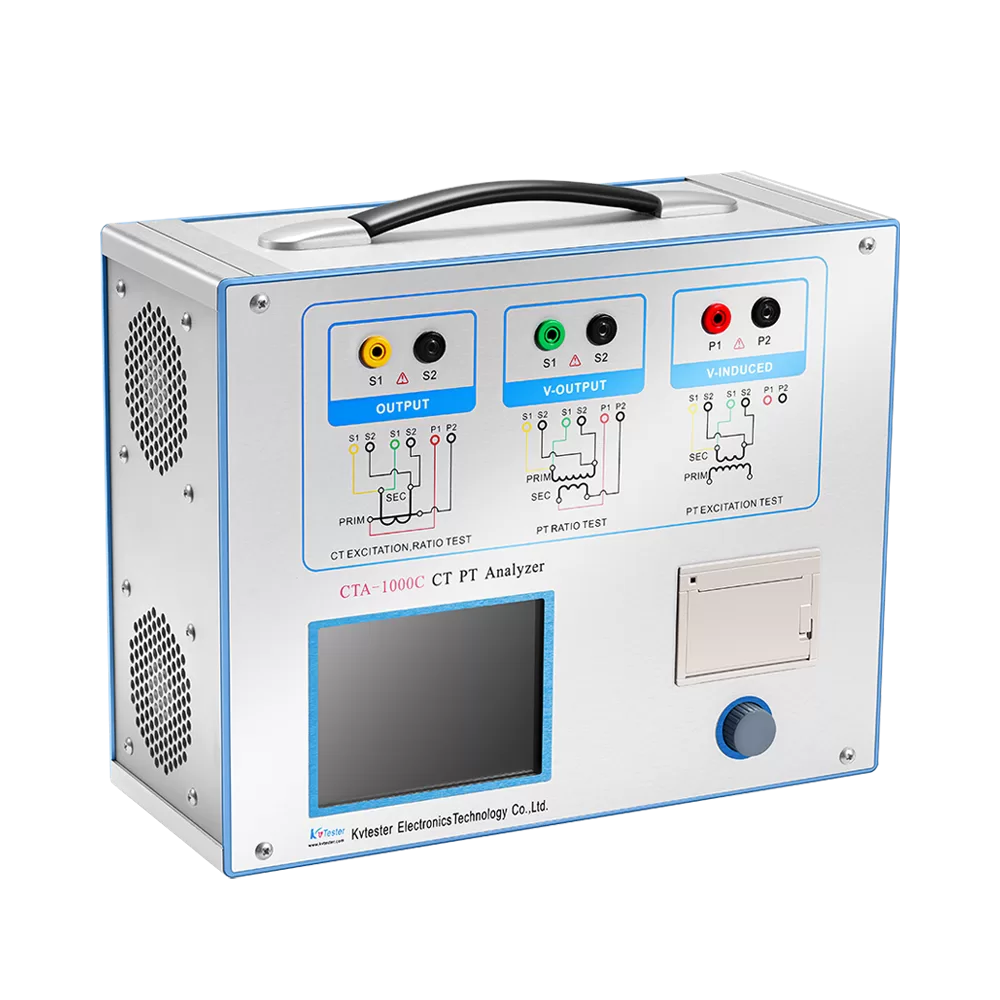
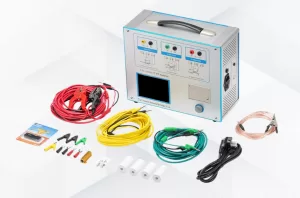
Our CTA-1000C CT/PT Analyzer combines multiple CT and PT measurement functions in one portable instrument. Its specified CT ratio measurement range is 1–40,000, with an accuracy of ±0.05%. The instrument also supports PT ratio testing, secondary resistance measurement, and burden measurement. The exact measurement accuracy should be checked against the relevant specification for each test.
Key Differences Between CT Testing and PT Testing
Although CTs and PTs are both instrument transformers, they serve different purposes and require appropriate test methods.
Current Transformer Testing
Current transformers reduce high primary current to a standardized secondary current for metering and protection. Their testing often focuses on excitation characteristics, knee-point performance, transformation ratio, polarity, secondary resistance, and burden.
For protection CTs, excitation behavior and saturation-related parameters can be particularly important when evaluating performance under fault conditions. The required tests depend on the CT’s design, accuracy class, and intended application.
Voltage Transformer Testing
Voltage transformers reduce high primary voltage to a lower, measurable secondary voltage. Their testing commonly includes transformation ratio, polarity, excitation characteristics, winding resistance, and ratio error. The required procedures depend on the PT design, winding arrangement, rated voltage, and applicable testing standards.
A combined CT PT tester simplifies equipment management, but the test connections and parameters must still be selected for the transformer under examination. Technicians should follow the instrument’s wiring diagrams and the applicable test procedure rather than assuming CT and PT tests use identical connections.
Benefits of Using a Combined CT PT Analyzer
A combined analyzer can make routine instrument-transformer testing more convenient, especially when maintenance teams need to inspect different types of equipment at the same site.
Fewer Instruments and Simpler Field Work
One instrument can cover multiple measurement tasks, reducing the need to transport several separate testers. Integrated test procedures may also simplify parameter entry and result review. These advantages are useful for field teams working across substations, industrial power systems, and electrical testing facilities.
Automated Testing and Data Management
Depending on the model, automation features may guide wiring, calculate relevant transformer parameters, store test records, and export results for later review. These functions can help technicians maintain consistent testing workflows and compare measurements over time.
However, a combined analyzer is not a universal replacement for every specialized instrument. High-voltage insulation tests, power-frequency withstand tests, and certain CVT-specific measurements may require dedicated equipment. The best configuration depends on the actual test scope rather than the number of functions advertised.
Where CT PT Testing Equipment Is Used
Combined CT/PT testing equipment serves several stages of the instrument-transformer lifecycle.
Manufacturing and Quality Control
Manufacturers use suitable testing equipment to verify transformer characteristics, identify defects, and document test results before delivery. For production environments with larger testing volumes, a dedicated test system may be more appropriate than a portable analyzer.
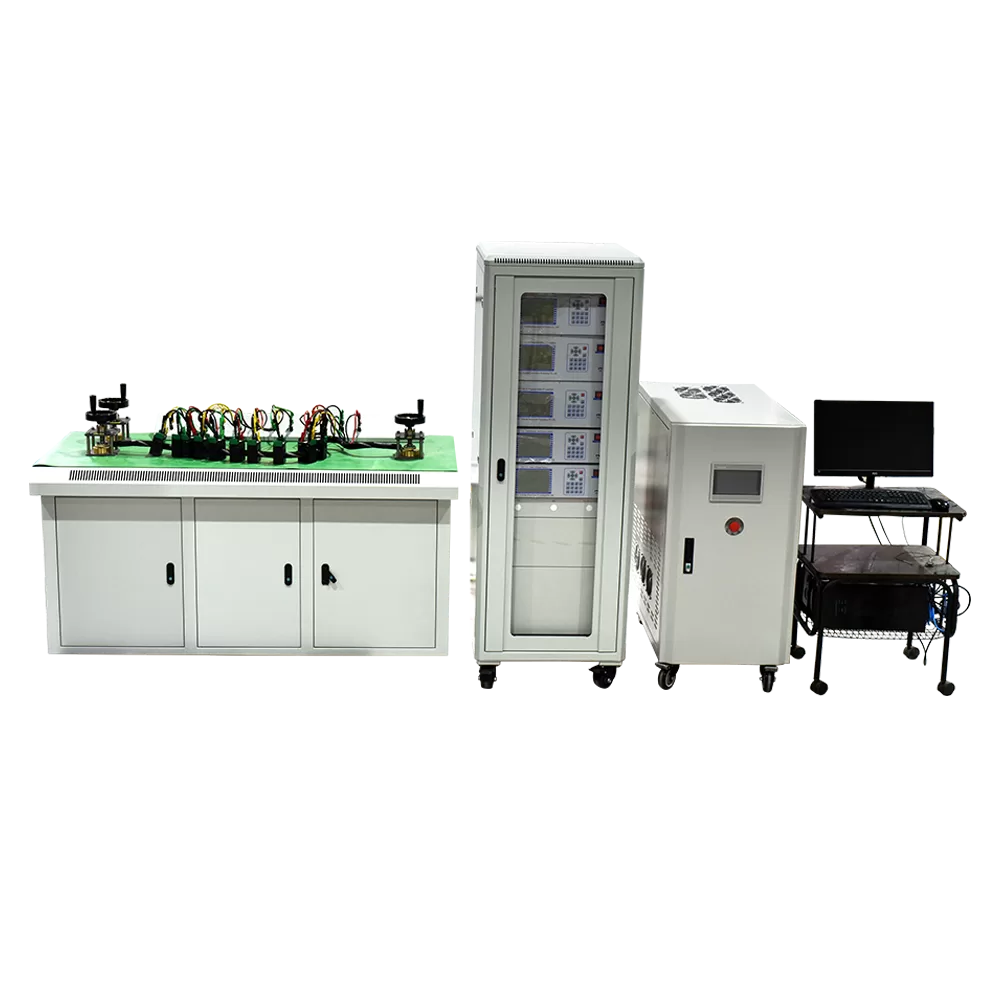
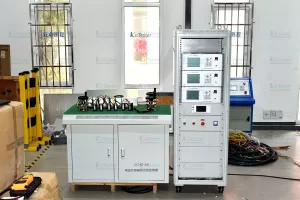
Our ZCHG-12 CT PT Test System is designed for automated current-transformer accuracy testing and related functions, including demagnetization, inter-turn insulation testing, and polarity checking. It supports testing up to 12 CTs at one time, making it relevant to manufacturers and metering test centers with batch-testing requirements. Its specified functions are primarily CT-focused, so users should confirm that the system matches their full CT/PT testing scope.
Substation Commissioning and Routine Maintenance
Engineers use CT/PT testing equipment during commissioning to check ratio, polarity, excitation behavior, and other required parameters before integrating instrument transformers into metering and protection circuits.
During routine maintenance, periodic testing helps identify changes in electrical characteristics and supports condition assessment. When troubleshooting suspected winding problems or incorrect connections, technicians can also use test results to narrow down potential causes.
Metering and Calibration Facilities
Testing teams evaluate measurement accuracy and verify that transformers meet the relevant requirements. Consistent test procedures and traceable records help support quality control, calibration work, and maintenance planning.
How to Choose the Right Combined CT PT Tester
Selecting a suitable CT PT tester starts with the transformers and measurements involved in the actual work. The following factors can help narrow the options.
Confirm the Transformer Type and Test Functions
Determine whether the equipment will test protection CTs, metering CTs, electromagnetic PTs, or other transformer designs. List the essential measurements, including ratio, polarity, excitation characteristics, winding resistance, burden, and error analysis. Confirm that the selected model supports each required test.
Check Measurement Range and Accuracy
Compare the specified measurement range and accuracy with the transformer ratings and the acceptance criteria used in your testing procedure. Do not assume that one accuracy specification applies to every measurement function.
Consider Portability and Data Management
Field technicians may prioritize weight, ease of wiring, display readability, and suitability for the expected working environment. If traceable records are important, check storage capacity, report generation, data export, and analysis software.
For field testing, our CTA-1000E CT/PT Analyzer supports a broad range of CT and electromagnetic PT measurements, including ratio, polarity, excitation characteristics, secondary winding resistance, and applicable error measurements. Its specified CT and PT ratio measurement ranges are both 1–40,000, with a stated ratio accuracy of ±0.05% for each. The instrument weighs less than 10 kg and can store up to 10,000 groups of test data. These features may suit teams that need several measurement functions and onboard data management in a portable device.
Verify Standards and Safety Requirements
Check whether the equipment supports the standards and test methods required by the project. A standard should not be assumed to apply to every transformer type or test. Review the manufacturer’s operating instructions, connection requirements, protection features, and training needs before using the instrument.
Before purchasing, compare the complete technical specifications with the required test procedure. In particular, confirm whether the instrument supports the specific transformer design, measurement range, accuracy, and reporting functions needed for the job.
Conclusion
A combined CT PT tester can simplify current and voltage transformer testing by bringing multiple measurement functions into one instrument. Its practical value depends on how well the available tests, accuracy, operating method, and data management features match the intended application.
For field maintenance and commissioning, a portable CT/PT analyzer may offer a convenient solution. For high-volume manufacturing, an automated testing system may be more suitable. Confirming the transformer type and required test scope before purchasing helps ensure that the selected equipment meets both technical and operational needs.
For assistance matching your testing requirements with a suitable instrument, contact Kvtester to discuss the application and equipment configuration.
Related Products
Latest News
-
 2026-10-27IEC Standard Custom Transformer Tester for Reliable Testing
-
 2026-10-27Current Transformer Testing Equipment: Types & Selection
-
 2026-10-26IEC Standard CT Analyzer Supplier: Choosing the Right Equipment
-
 2026-10-26Multi-function CT Tester Wholesale: Supplier Guide
-
 2026-10-26Lightweight Transformer Tester Selection Guide