Home » News » Company News
CT PT Test System: Testing Methods and Equipment Selection
What should you look for in a CT PT Test System to verify transformer accuracy, identify potential faults, and improve testing efficiency? The right solution depends on the transformer type, required test items, measurement accuracy, and whether you need portable testing or automated batch testing.
What Is a CT PT Test System?
A CT PT Test System is used to evaluate the electrical characteristics and performance of instrument transformers. CT stands for Current Transformer, while PT stands for Potential Transformer, also commonly called a Voltage Transformer (VT).
A CT reduces high current to a measurable level for metering and protection. A PT reduces high voltage to a suitable level for measurement and protection circuits. Both require reliable testing to ensure that their measurement results meet the required specifications.
A suitable testing solution helps transformer manufacturers, calibration laboratories, and electrical testing teams verify performance, identify abnormal characteristics, and maintain consistent quality.
What Tests Can a CT PT Test System Perform?
The required tests depend on the transformer type and the intended application. Before selecting equipment, identify which parameters must be measured and evaluated.
CT Ratio and Phase Error Testing
The transformation ratio determines the relationship between primary and secondary current. Ratio error and phase displacement affect measurement accuracy, so they are important when evaluating metering and protection CTs.
Testing should consider the rated burden and, where required, the actual connected burden.
Excitation and Saturation Testing
Excitation testing evaluates the relationship between applied voltage and excitation current. The resulting curve helps identify saturation characteristics and determine whether the CT meets its intended protection or measurement requirements.
For protection CTs, saturation behavior and the knee-point characteristics may be particularly important.
Polarity and Winding Resistance Testing
Polarity verification checks whether the primary and secondary terminals have the correct relative orientation. Winding resistance measurements can help identify winding or connection problems.
Depending on the equipment, additional tests may include burden impedance, inductance, residual magnetism, and accuracy evaluation under different burdens.
PT Testing
PT testing may include ratio, polarity, excitation, saturation, winding resistance, and burden-related measurements. The exact test functions depend on the analyzer and its supported measurement configuration.
CT and PT testing requirements should be evaluated separately rather than assuming that every instrument supports all tests for both transformer types.
How Does a CT PT Test System Work?
Most testing procedures follow a structured process. The exact connections and operating steps depend on the equipment and transformer specifications.
- Prepare the transformer: Confirm its rated ratio, rated current or voltage, accuracy class, terminal configuration, and required test items.
- Connect the test equipment: Follow the manufacturer’s wiring diagram and safety instructions. Verify that all connections are secure before starting.
- Configure the test: Enter the required transformer parameters and select the applicable test functions.
- Run the measurement: The equipment applies the appropriate test signals and measures the transformer’s response.
- Review the results: Compare measured values with the applicable limits and technical requirements.
- Save the report: Record the test results for quality control, calibration records, or maintenance documentation.
Automated testing can reduce repetitive manual operations, but reliable results still depend on correct connections, suitable test settings, and proper interpretation of the measured data.
What Should You Check When Choosing a CT PT Test System?
The best equipment is not necessarily the one with the most functions. It is the one that meets your actual testing requirements.
Measurement Range and Accuracy
Check the supported CT and PT ratio ranges, measurement accuracy, output capability, phase measurement performance, and winding resistance range. Compare these specifications with the transformers you test most frequently.
Required Test Functions
Make a list of essential tests before comparing products. A laboratory performing CT accuracy calibration may have different requirements from a field team checking transformer characteristics or a manufacturer testing products in batches.
Automation and Report Management
If you test many transformers every day, automatic switching, parameter configuration, data processing, and report generation can reduce repetitive work. Confirm which functions are included in the proposed configuration.
Safety and Working Environment
Consider output voltage and current, protective functions, power supply requirements, portability, operating temperature, and installation space. Always follow the equipment manufacturer’s operating instructions and the applicable safety procedures.
CT PT Test System vs. Portable CT PT Analyzer: Which Do You Need?
The main difference is the testing workflow and intended application.
| Selection Factor | Integrated Test System | Portable CT/PT Analyzer |
| Typical application | Laboratory testing and production workflows | Field testing, maintenance, and calibration |
| Testing workflow | Can integrate control, switching, measurement, and reporting | Designed for more portable, instrument-based testing |
| Batch testing | Suitable configurations can support multiple test objects | Depends on the instrument and accessories |
| Mobility | Depends on the test bench and system configuration | Generally easier to transport |
| Key consideration | Capacity, automation, and workflow integration | Measurement range, portability, and supported test functions |
For example, a transformer manufacturer that needs to test multiple CTs during production may benefit from an automated test bench. A maintenance team that travels between substations may prefer a portable analyzer.
The final choice should be based on the required test functions and actual workload, not on the product name alone.
Which CT PT Testing Equipment Fits Your Application?
At Kvtester, we offer different CT/PT testing options for distinct testing workflows.
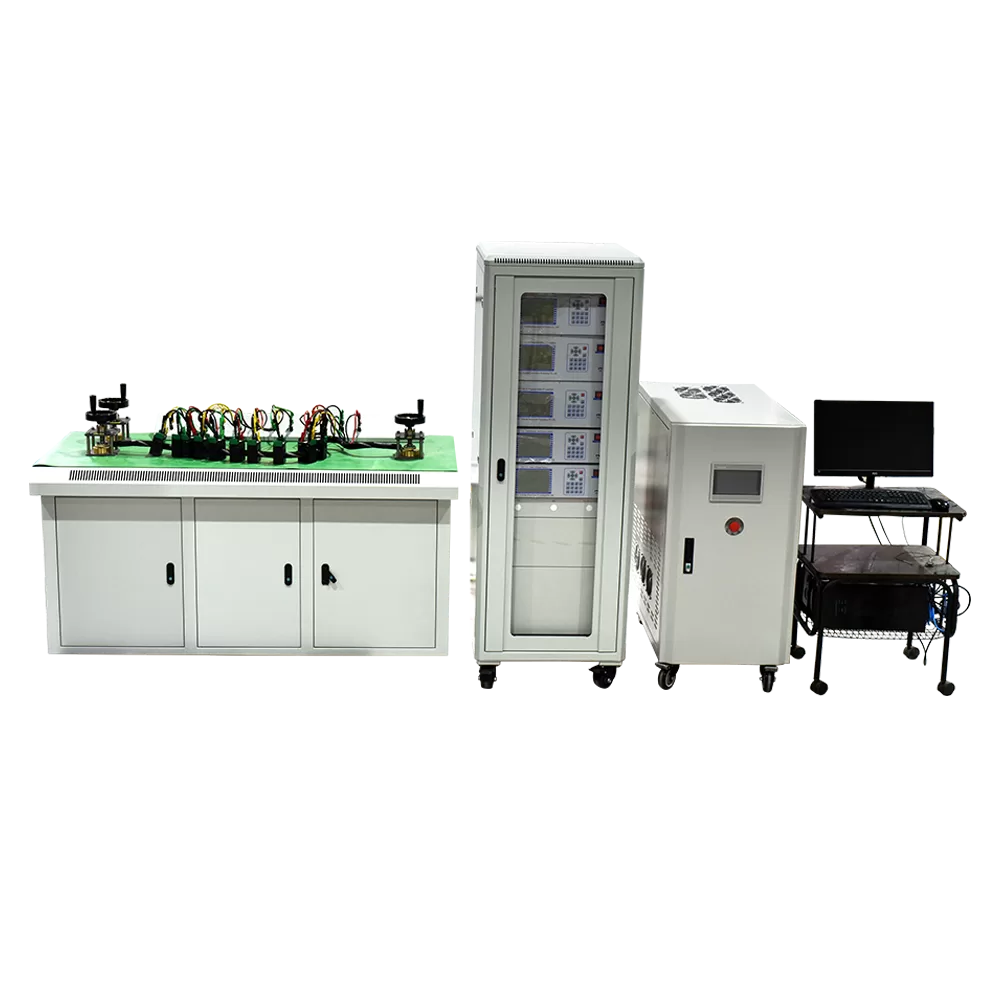
ZCHG-12 CT PT Test System for Batch Testing
Our ZCHG-12 CT PT Test System is designed for CT accuracy testing and calibration workflows. It supports computer-controlled automatic testing, data analysis, result management, and report generation.
Key specifications include:
- CT rated primary current: 5–5,000 A
- CT rated secondary current: 1 A or 5 A
- Rated capacity: 30 kVA
- Standard CT accuracy: 0.01S class
- Maximum test objects on the bench: 12 CTs at one time
- Test functions: CT accuracy testing, demagnetization, inter-turn insulation testing, and polarity checking
These specifications make the system worth evaluating for CT manufacturers and metering test centers that need structured, repeatable testing. The supported test configuration should be confirmed against your specific requirements.
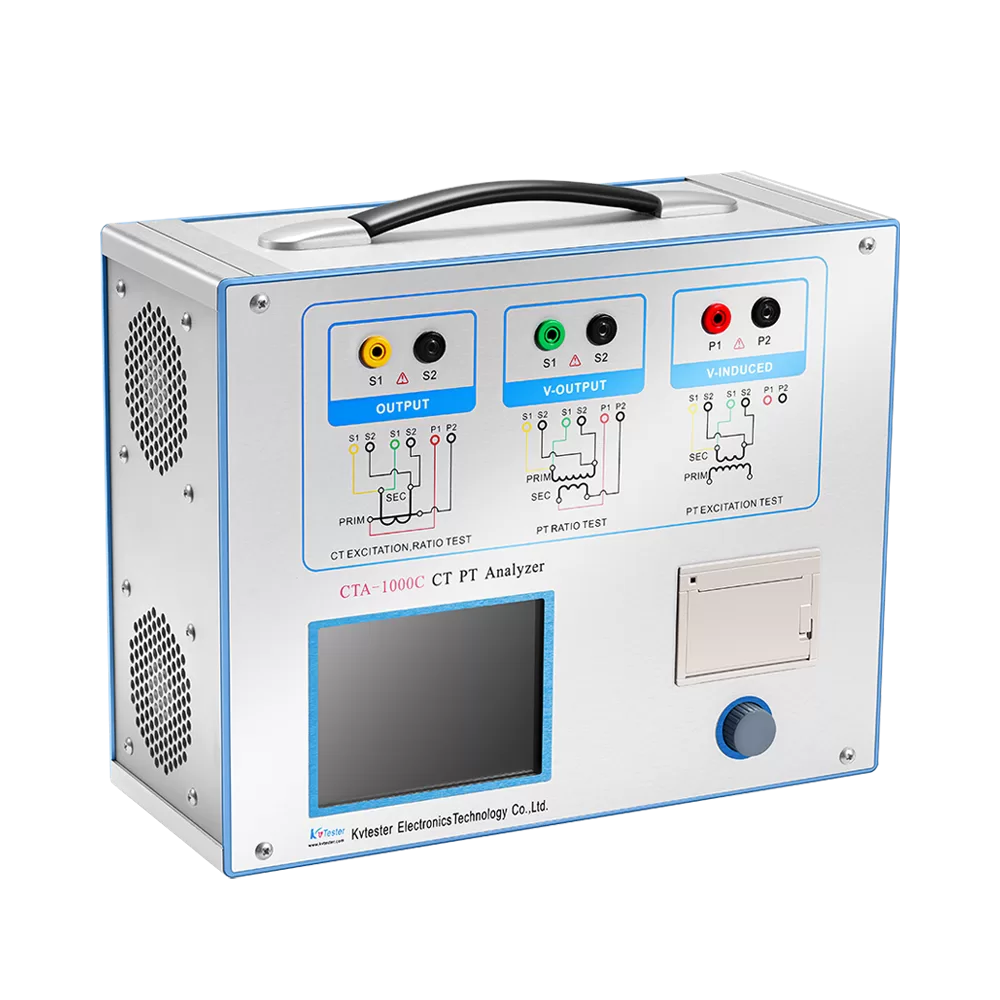
CTA-1000C for Portable CT/PT Testing
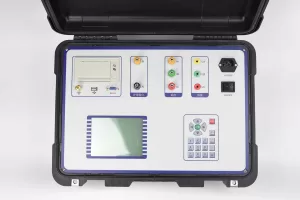
Our CTA-1000C CT/PT Analyzer is designed for CT and PT testing, including field testing and calibration applications.
Key specifications include:
- CT ratio range: 1–40,000, with stated accuracy of ±0.05%
- PT ratio range: 1–40,000, with stated accuracy of ±0.2%
- DC resistance range: 0–300 Ω
- Burden range: 0–1,000 VA
- Output capability: up to 180 Vrms, 12 Arms, and 36 A peak
- Weight: less than 10 kg
The CTA-1000C is a practical option to evaluate when portability and a broad range of CT/PT measurements are priorities. Confirm the required accuracy and test functions against the detailed specifications before purchase.
CTA-1000D for On-Site CT Analysis
Our CTA-1000D CT/PT Analyzer supports automatic CT evaluation against selected IEC or IEEE standards. Its stated automatic test duration is under 2 minutes, and its weight is approximately 9 kg without accessories.
The analyzer supports measurements including CT ratio and phase-angle accuracy, excitation characteristics, winding resistance, burden impedance, and residual magnetism. Its specifications also describe PT excitation, saturation, polarity, and burden-related measurements.
For teams that need to move between testing locations, the CTA-1000D is worth considering when its supported functions and accuracy specifications match the application.
What Should You Prepare Before Purchasing?
Before requesting a quotation, prepare the following information:
- Transformer details: CT or PT type, rated ratio, rated primary and secondary values, and accuracy class.
- Required tests: Ratio, polarity, excitation, winding resistance, burden, or other specified tests.
- Testing workload: Number of transformers tested per day and whether batch testing is required.
- Technical requirements: Applicable standards, accuracy limits, output requirements, and reporting needs.
- Installation conditions: Available power supply, operating environment, space, and portability requirements.
Providing these details makes it easier to determine whether a portable analyzer or an integrated testing system is the better fit.
Conclusion
Choosing the right CT PT Test System starts with understanding the transformers you test, the parameters you need to verify, and the workload your team handles. Portable analyzers are worth considering for mobile testing and calibration, while integrated test systems can be better suited to structured laboratory and production workflows.
At Kvtester, we offer CT/PT analyzers and automated testing solutions for different applications. Review our CT/PT test equipment range to compare available options, or contact our team with your transformer specifications and required test items to discuss a suitable configuration.
Related Products
Latest News
-
 2026-10-20CVT Compatible CT PT Analyzer: Selection Guide
-
 2026-10-20China CT PT Analyzer Supplier: Manufacturer Guide
-
 2026-10-16How can measurement errors in no-load tests be minimized?
- 2026-10-16Why is the no-load test on a transformer typically conducted by applying voltage to the low-voltage side?
-
 2026-10-16What are the consequences of non-compliant short-circuit impedance?