
Home » News » Company News
How Can a CT PT Analyzer Improve CT and PT Quality Testing in the Laboratory?
Reliable CT and PT quality testing depends on consistent measurements, efficient test procedures, and clear evaluation of the results. In a laboratory, repeated manual operations can make testing slower and create unnecessary work when engineers need to check multiple electrical characteristics. A CT PT analyzer brings these measurements into a more structured workflow, helping laboratories improve testing efficiency while maintaining the accuracy required for quality control.
For laboratories that handle different CT and PT testing requirements, choosing the right CT PT test equipment starts with understanding which measurements are needed, how often they are performed, and what accuracy the workflow requires.
What Does Quality Testing Need From a CT PT Analyzer?
A laboratory needs more than a single measurement from a CT PT analyzer. Different test functions provide different information about transformer performance, so the analyzer should cover the measurements required by the laboratory’s actual workflow.
The key is not simply to select an analyzer with more functions. We recommend matching the measurement range, accuracy, output capability, and test functions with the CTs and PTs that the laboratory actually handles.
CT Testing Functions
For CT quality testing, the relevant measurements include:
- Ratio and phase-angle accuracy
- Accuracy under different burdens
- Winding resistance
- Excitation characteristics
- Saturation
- Burden impedance
- Polarity
- Saturated and non-saturated inductance
- ALF and FS
- Residual magnetism
These measurements work together. Ratio and phase-angle results show transformation accuracy, while excitation and saturation testing provides information about the CT’s magnetic characteristics. Winding resistance and burden measurements add further information about the operating condition being evaluated.
PT Testing Functions
PT testing requires a different combination of measurements. A suitable analyzer should cover PT excitation characteristics, transformation ratio, polarity, secondary winding resistance, and ratio error.
This makes a CT PT analyzer particularly useful when one laboratory needs to handle both CT and PT quality testing without building completely separate testing workflows for each transformer type.
How Can a CT PT Analyzer Make Laboratory Testing More Efficient?
Once the required measurements are defined, the next consideration is how efficiently the laboratory can complete them. Repeated connection changes, manual calculations, and separate evaluation steps can add time to every test.
A CT PT analyzer can bring measurement and evaluation into one workflow, allowing engineers to move from connection and test selection to measurement and result evaluation with fewer manual steps.
Reduce Repeated Manual Operations
A laboratory may need to perform several tests on the same transformer. When each measurement requires a separate setup, the overall procedure becomes more complicated.
With an integrated analyzer, CT ratio, phase-angle accuracy, excitation, saturation, burden, winding resistance, and polarity can be handled within the same testing platform where supported.
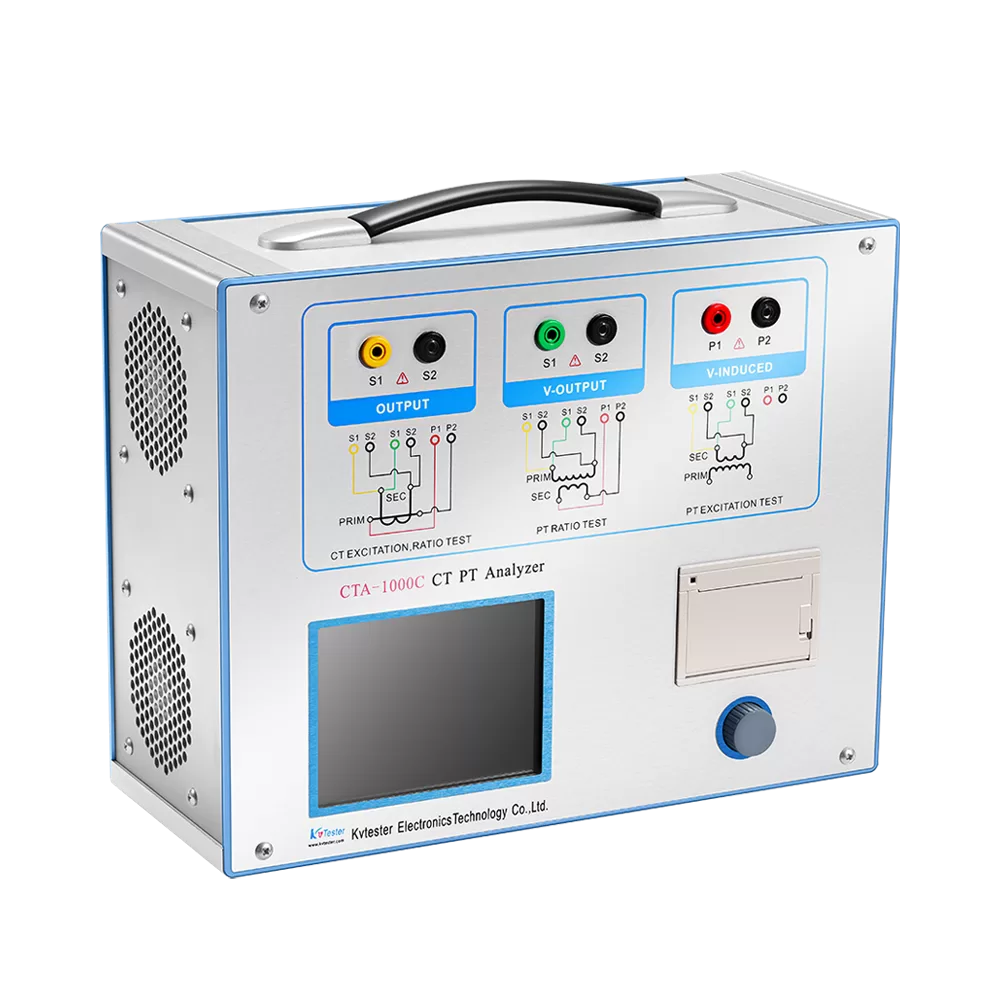
For example, the CTA-1000E CT/PT analyzer uses a single testing platform for CT and PT measurements. Its functions include excitation characteristics, transformation ratio, polarity, secondary winding resistance, secondary burden, ratio error, and angular error. It also supports automatic calculation of knee-point voltage/current, ALF, FS, Ts, Kr, and saturated and unsaturated inductance.
Speed Up Result Evaluation
Fast evaluation becomes more important as testing volume increases.
The CTA-1000E can automatically test CT/PT parameters and select the appropriate standard according to the transformer type. Its automatic testing functions cover knee-point voltage and current, 5% and 10% error curves, ALF, FS, Ts, Kr, and saturated and unsaturated inductance.
For laboratory work, this reduces the need to calculate each parameter separately and keeps the testing process more consistent.
How Does CT Testing Support Laboratory Quality Control?
CT quality control becomes more useful when several measurements are considered together rather than relying on ratio testing alone.
For laboratory engineers, the test sequence should provide enough information to determine whether the CT meets the required performance criteria and whether the results are consistent with the intended application.
Ratio and Phase-Angle Accuracy
Ratio and phase-angle measurements are central to CT quality testing because they show how accurately the transformer reproduces the expected electrical relationship.
The CTA-1000E provides a CT ratio measurement range of 1–40,000 with ±0.05% accuracy. Its phase measurement range is ±2 min, with 0.5 min accuracy. These specifications provide a useful reference when matching analyzer performance to the CTs being tested.
Excitation and Saturation
Excitation testing helps engineers examine how a CT behaves as the applied voltage increases. Saturation characteristics are especially relevant when evaluating protection CT performance.
The CTA-1000E uses an advanced frequency conversion method for CT/PT volt-ampere characteristic and error-curve testing. It provides up to 180 Vrms output and 12 Arms output current, with a 36 A peak current, and can handle CT testing with a knee point of up to 60 kV.
This provides laboratories with a practical way to examine excitation and saturation behavior without adding separate test equipment to the same workflow.
Winding Resistance and Burden
Winding resistance and burden provide additional information that cannot be obtained from ratio testing alone.
The CTA-1000E measures DC resistance from 0 to 300 Ω with 0.1% ± 2 mΩ accuracy. Its burden measurement range is 0–1000 VA with 0.2% ± 0.02 VA accuracy.
These measurements can be included as part of a broader CT quality-testing procedure, giving engineers more information when evaluating the transformer.
How Should PT Testing Fit Into the Same Quality Workflow?
When a laboratory handles both CTs and PTs, it is more efficient to plan the testing workflow around the actual measurement requirements rather than treating every transformer as a completely separate task.
The test functions should cover the required PT characteristics while keeping the setup and evaluation process straightforward.
The main PT measurements include:
- Excitation characteristics
- Transformation ratio
- Polarity
- Secondary winding resistance
- Ratio error
The CTA-1000E supports PT ratio measurement from 1 to 40,000 with ±0.05% accuracy and provides PT excitation, polarity, secondary winding resistance, and ratio-error testing.
This combined approach is useful for laboratories that test both current and voltage transformers as part of equipment manufacturing or power-system testing.
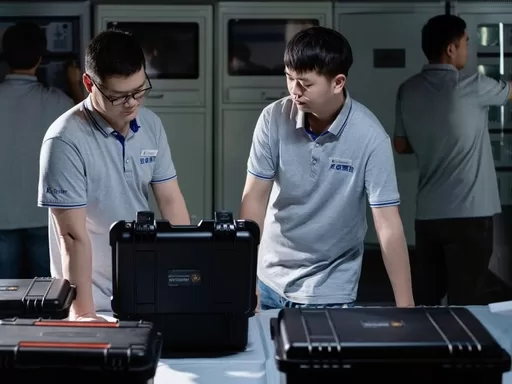
CT PT analyzer for lab test
What Should You Check When Choosing a CT PT Analyzer?
After defining the test items, equipment selection becomes much easier. We recommend checking the analyzer against four practical areas: measurement range, accuracy, testing functions, and laboratory workflow.
Check the Measurement Range
The analyzer needs to cover the ratio, resistance, burden, voltage, and current ranges required by the transformers under test.
The CTA-1000E supports:
- CT ratio: 1–40,000
- PT ratio: 1–40,000
- DC resistance: 0–300 Ω
- Burden: 0–1000 VA
- Output: 0–180 Vrms, 12 Arms, 36 A peak
Its voltage measurement accuracy is ±0.1%, while both CT and PT ratio accuracy are ±0.05%.
These specifications should be considered together with the laboratory’s existing test requirements rather than viewed as isolated numbers.
Match Accuracy to the Testing Requirement
Measurement accuracy should be considered alongside the required test range and transformer class.
For laboratories testing 0.2S class CTs, the analyzer needs sufficient ratio and phase measurement capability for the required verification. The CTA-1000E supports 0.2S class current transformer testing and a turns ratio range of 1–40,000.
We recommend comparing the analyzer’s accuracy, measurement range, and resolution with the actual requirements of the laboratory procedure.
Consider Data Management
For repeated laboratory testing, data management becomes increasingly important.
The CTA-1000E can store up to 10,000 groups of test data. Test results can be exported through USB, while its background analysis software supports test report preservation, conversion, analysis, comparison, and evaluation.
This allows test data to remain part of the laboratory workflow instead of being handled as isolated measurement records.
How Can a CT PT Analyzer Support Production Quality Testing?
For CT and PT manufacturers, laboratory testing is closely connected with product development, production inspection, and final quality verification.
The analyzer should therefore fit naturally into the existing testing workflow rather than add another complicated operating procedure.
Development and Production Testing
During development, engineers may need to examine several CT characteristics and adjust the design according to test results.
During production, the focus shifts toward consistent testing across units and batches. An analyzer that combines multiple measurements can make this process easier to repeat.
The CTA-1000E provides an English dynamic graphical interface, dynamic wiring diagrams, and automatic display of relevant parameters according to the selected test item. This helps engineers set up and perform different tests without repeatedly changing the basic operating process.
Final Quality Verification
Before a transformer moves to the next stage, engineers need clear test results for the required characteristics.
A structured CT/PT testing process helps keep measurements organized and makes it easier to review whether each required test has been completed.
Which CT PT Analyzer Fits a Laboratory Testing Workflow?
Different laboratories have different priorities, so we do not recommend selecting a CT PT analyzer based on one specification alone.
For laboratories that need a broad range of automated CT and PT measurements, the CTA-1000E provides CT/PT ratio measurement up to 40,000, DC resistance measurement up to 300 Ω, burden measurement up to 1000 VA, and automated evaluation of key CT/PT parameters. It measures 400 × 320 × 203 mm and weighs less than 10 kg.
For laboratories that place greater emphasis on compact equipment and fast CT/PT verification, the CTA-100A CT PT analyzer provides a CT/PT ratio measurement range of 1–40,000, supports CT knee-point testing up to 60 kV, and can complete CT DC resistance, excitation, turns ratio, and polarity tests with a single click. Typical testing takes less than 1 minute.
The CTA-100A also weighs less than 5 kg and measures 300 × 285 × 140 mm. It can store up to 1,000 sets of test data and includes PC-based analysis software for saving, converting, comparing, and evaluating test reports.
The choice should therefore be based on the CT/PT types being tested, required measurement ranges, accuracy requirements, test volume, and whether portability is important to the laboratory workflow.
How Can Laboratories Build a More Consistent CT and PT Testing Process?
An efficient laboratory workflow should connect the test requirement with the measurement, evaluation, and final quality decision.
A practical process can follow this sequence:
- Identify the CT or PT type and required test items.
- Confirm the analyzer’s measurement range and accuracy.
- Connect the transformer according to the test procedure.
- Select the required test function.
- Perform the measurement and automatic evaluation.
- Review the results against the applicable requirements.
- Record the completed test results for quality control.
This approach keeps the testing process focused and repeatable. It also makes equipment selection easier because every specification can be linked to an actual testing requirement.
Improve Laboratory CT PT Testing With the Right Analyzer
A CT PT analyzer should ultimately make laboratory testing easier to manage, not simply add more measurement functions.
By combining the required CT and PT measurements with appropriate accuracy, automatic evaluation, and practical data management, laboratories can reduce unnecessary manual work and improve the consistency of quality testing.
At Kvtester, we provide CT/PT testing solutions for laboratory, manufacturing, and power-system testing applications. If you are selecting equipment based on your CT/PT types, measurement ranges, testing standards, and laboratory workflow, contact Kvtester for technical consultation.
Related Products
Latest News
-
 2026-09-302026 Top 3 Chinese Insulation Resistance Transformer Testing Equipment Manufacturers
 -
 2026-09-30Industrial CT Tester: How Is It Used for Current Transformer Factory Testing?
 -
 2026-09-30How to Perform Current Transformer Testing Step by Step?
 -
 2026-09-30How to Perform CT Analyzer Testing and Evaluate the Test Results?
 -
 2026-09-30How Do You Troubleshoot Common DC Resistance Tester Operation Problems?