What factors affect the accuracy of transformer test results?
What factors affect the accuracy of transformer test results?
Transformer testing encompasses various procedures, including measurements of DC resistance, turns ratio, insulation resistance, dielectric loss, no-load loss, load loss, and withstand voltage. While the underlying principles vary by test, the accuracy of the results is generally influenced by factors such as the condition of the test equipment, wiring configurations, environmental conditions, equipment temperature, and on-site interference. Therefore, when analyzing transformer test data, one should not focus solely on the final numerical values; it is equally important to verify that the test conditions met the required standards.
1. Accuracy and condition of test equipment
The test equipment itself is a fundamental factor affecting the accuracy of results. If an instrument has not been calibrated for a long time—leading to a decline in measurement precision—or if test leads and clamps are aged or suffer from poor contact, the test results may be skewed. Before conducting formal tests, ensure that the equipment is in proper working order and select the appropriate measurement ranges and parameters for the specific test. For instruments requiring periodic verification or calibration, confirm that their current calibration status meets the necessary requirements.
2. Correctness of test wiring
Transformer testing involves a wide range of procedures, each requiring specific wiring configurations.
For instance, DC resistance testing requires reliable contact between the test clamps and the terminals; dielectric loss testing demands careful arrangement of high-voltage leads, measurement leads, and grounding wires; and no-load or load tests require the correct connection of voltage, current, and power measurement circuits.
Wiring errors, loose terminals, or excessive contact resistance can directly compromise the accuracy of the measurement results.
3. Impact of temperature variations
Many transformer test parameters are temperature-dependent; DC resistance and insulation resistance, in particular, are highly sensitive to temperature changes. As the winding temperature rises, the resistance of the conductors changes, and insulation resistance also shifts significantly with temperature. Consequently, when performing tests at different times, it is essential to record the winding temperature, oil temperature, or ambient temperature. When comparing current results against factory specifications or historical data, the values must be adjusted (converted) to a standard temperature as required. Ignoring temperature differences can easily lead to the misinterpretation of normal temperature-related fluctuations as equipment anomalies.
4. On-site Electromagnetic Interference
In field environments such as substations, high-voltage equipment, busbars, power lines, and other electrical apparatus in operation generate electromagnetic interference. For tests involving weak signals—such as those for dielectric loss or partial discharge—this on-site interference can have a particularly significant impact, potentially leading to data fluctuations, poor repeatability, or even anomalous readings. Consequently, it is essential to ensure proper instrument grounding, use shielded test leads, optimize cable routing, and implement appropriate anti-interference measures tailored to the specific site conditions.
5. Quality of the Test Power Supply
Tests such as no-load tests, load tests, and withstand voltage tests impose specific requirements on the test power supply. Instability in supply voltage, frequency fluctuations, or significant distortion in the voltage waveform can all affect test results. In no-load loss tests, for instance, deviations in voltage or frequency directly alter the magnetic flux in the iron core, which in turn causes variations in the measured no-load current and no-load loss. Therefore, the test power supply should be kept as stable as possible, with voltage, frequency, and waveform quality strictly controlled in accordance with test requirements.
6. Condition of the Transformer Itself
Variations in factors such as the duration of an outage, tap changer position, residual magnetism in the iron core, and oil temperature can lead to changes in certain test data.
For example, residual magnetism may remain in the iron core following a DC resistance test, which can influence the results of subsequent no-load tests. Similarly, the DC resistance of the windings and the transformer turns ratio will vary depending on the position of the on-load or off-circuit tap changer.
Accordingly, when repeating tests or comparing results against historical data, it is important to ensure that the equipment status and test conditions remain consistent.
7. Operational Methods and Data Processing
The methods employed by the operator can also influence the final results.
Issues such as taking readings too early, selecting inappropriate test currents, increasing voltage too rapidly, or applying incorrect data conversion methods can introduce additional errors.
For tests requiring multiple measurements, data should only be recorded once it has stabilized. Furthermore, test conditions—including test voltage, test current, temperature, and tap changer position—must be carefully documented to facilitate subsequent analysis.
Summary
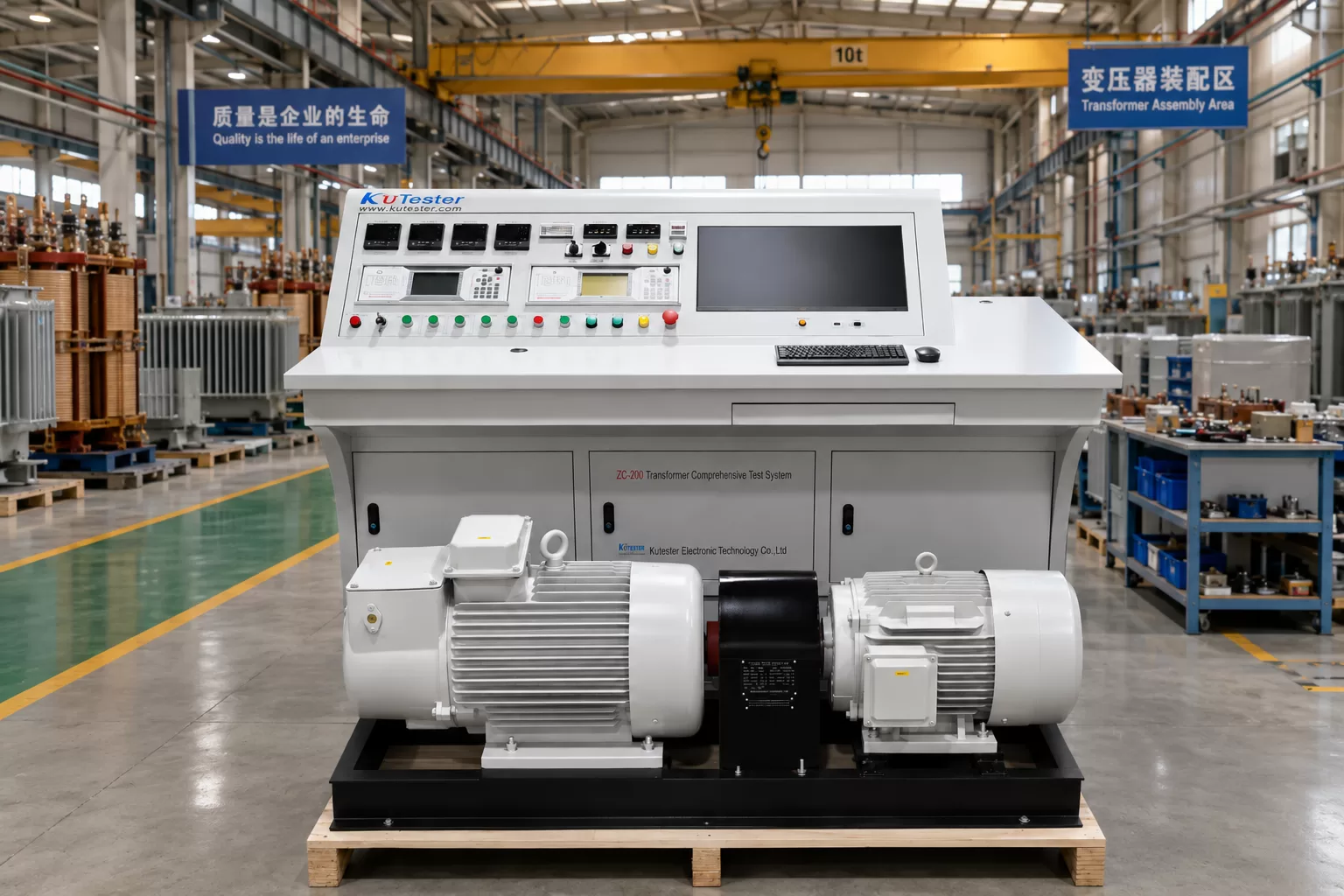
Factors affecting the accuracy of transformer test results primarily include test instrumentation, wiring configurations, temperature, on-site electromagnetic interference, the test power supply, the condition of the equipment itself, and operational procedures. During actual testing, it is essential to ensure consistent test conditions, adhere to standardized wiring and operational practices, and conduct a comprehensive comparison of the test results against factory specifications, historical data, and other relevant test parameters. Only when test conditions are reliable can the test data accurately reflect the actual state of the transformer.
Related Products
Latest News
-
 2026-10-30What is the basic principle of partial discharge testing?
-
 2026-10-28Compact Portable Transformer Tester for Field Testing
-
 2026-10-28Intelligent CT Tester for Accurate Current Transformer Testing
-
 2026-10-27Combined CT PT Tester for Current and Voltage Transformer Testing
-
 2026-10-27IEC Standard Custom Transformer Tester for Reliable Testing