Home » News » Company News
Compact Portable Transformer Tester for Field Testing
Field transformer testing often takes place in substations, maintenance sites, and other environments where space, transportation, and working time are limited. A compact portable transformer tester helps technicians perform essential electrical measurements without moving the transformer to a dedicated testing area. However, portability alone is not enough. The right equipment must also match the required tests, measurement accuracy, and conditions at the job site.
Understanding the main testing functions and selection criteria makes it easier to choose suitable equipment for commissioning, routine maintenance, troubleshooting, and transformer repair.
What Is a Compact Portable Transformer Tester?
A compact portable transformer tester is electrical testing equipment designed to be transported between work locations and used for specific transformer measurements. Compared with larger testing systems, portable instruments are generally easier to carry, set up, and store.
Depending on the model, a portable transformer tester may support one or several of the following functions:
- Transformer turns ratio testing to verify the relationship between primary and secondary windings.
- Winding DC resistance testing to identify resistance differences, poor connections, or potential winding problems.
- Transformer capacity and load characteristic testing to assess capacity and relevant electrical performance.
- Data storage and analysis to help technicians review measurements and maintain test records.
Not every portable tester performs all these tests. Before choosing a model, technicians should identify the measurements required for the project and confirm that the instrument supports them.
Common Tests Performed by Portable Transformer Testers
Portable equipment can support several important transformer testing tasks. Selecting the appropriate instrument for each task helps technicians obtain useful results without carrying unnecessary equipment.
Transformer Ratio Testing
Transformer turns ratio testing checks whether the ratio between the primary and secondary windings corresponds to the expected value. An incorrect ratio may indicate winding connection problems, incorrect tap positions, or other issues requiring further investigation.
When selecting a ratio tester, consider the following factors:
- Measurement range: The instrument should cover the transformer ratios encountered in your work.
- Accuracy: Suitable accuracy helps technicians identify deviations from expected values.
- Phase and connection support: Confirm compatibility with the transformer configuration being tested.
- Data management: Automatic calculations and stored results can simplify documentation and comparison between tests.
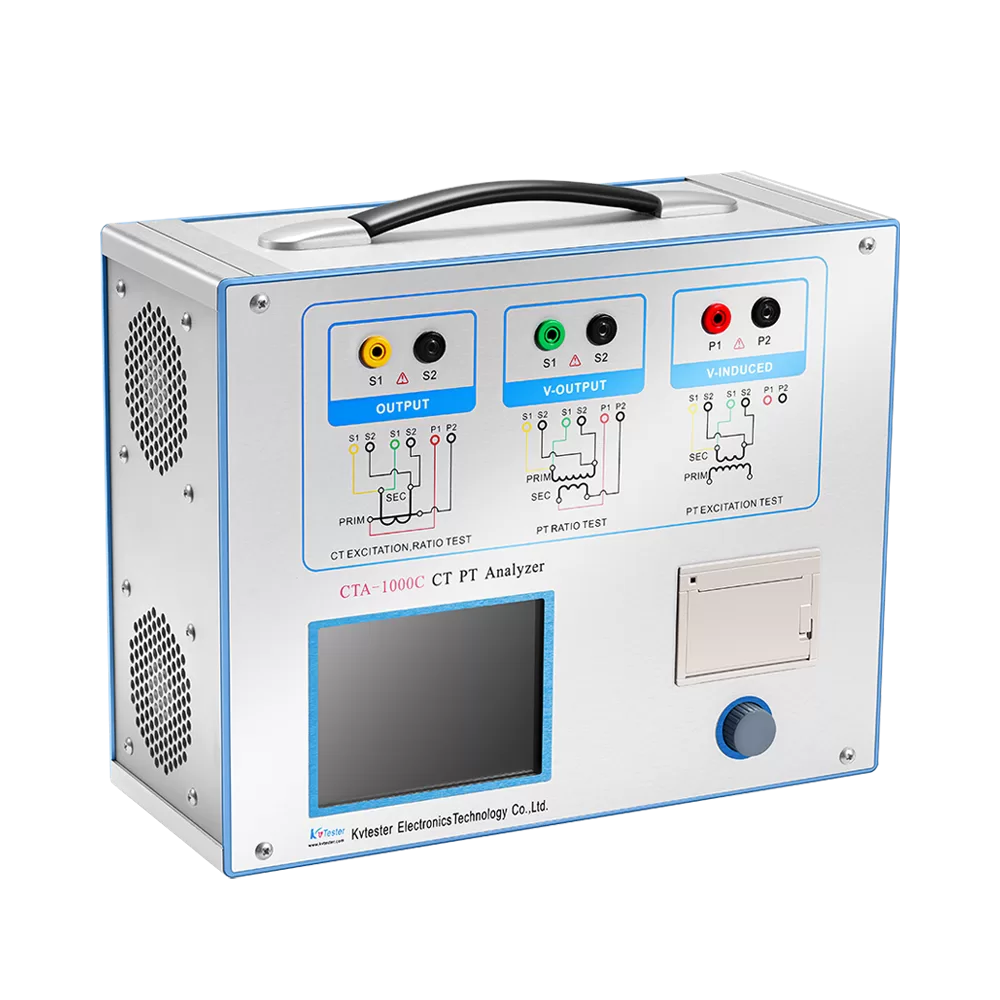
For field technicians who regularly test current transformers and voltage transformers, a dedicated CT/PT analyzer may be more appropriate than a general transformer tester. The required test functions should always determine the equipment choice.
Winding DC Resistance Testing
Winding DC resistance testing helps evaluate winding continuity and identify differences between phases. It can also help reveal problems such as poor electrical connections, damaged conductors, or abnormal contact resistance.
Kvtester offers the ZC-205A DC Resistance Tester for transformer winding resistance measurements. Its functions include multiple test current settings, three-phase resistance analysis, resistance unbalance calculation, and storage for up to 1,000 groups of test data. The stated measurement accuracy is ±(0.2% of reading + 2 digits).
When performing this test in the field, technicians should pay attention to several practical details:
- Select an appropriate test current according to the winding resistance and instrument requirements.
- Ensure that the test leads and connections are secure before taking measurements.
- Allow readings to stabilize when necessary, especially when testing windings with higher inductance.
- Compare phase measurements and previous records where applicable.
- Follow the instrument’s discharge and connection procedures before removing test leads.
These steps help improve measurement consistency and reduce the risk of misinterpreting results.
Transformer Capacity and Load Characteristic Testing
Transformer capacity and load characteristic testing serves a different purpose from winding resistance measurement. It helps assess transformer capacity and relevant no-load and load characteristics, depending on the test configuration and operating conditions.
For field teams that need these functions, the ZC-202B Transformer Capacity and Load Tester combines transformer capacity measurement with no-load and load characteristic testing. Its listed dimensions are 400 × 300 × 220 mm, and its weight is approximately 8 kg without accessories.
These specifications make transportation and storage easier for technicians who frequently move between testing locations. The instrument also supports an AC power supply range of 85–264 V and an operating temperature range of −10°C to +50°C.
Before testing, technicians should confirm that the instrument’s measurement functions and operating conditions are suitable for the transformer and test procedure. A compact instrument can simplify fieldwork, but correct connections, appropriate test conditions, and compliance with the operating instructions remain essential.
Why Portability Matters in Field Testing
Portable testing equipment can improve the efficiency of transformer maintenance, particularly when technicians need to work across multiple sites or within limited access areas.
The main advantages include:
- Easier transportation: Compact dimensions and lower weight reduce the effort required to move equipment between substations, workshops, and service locations.
- Faster setup: A portable instrument can reduce the logistical work associated with transporting and arranging a large testing system.
- Better use of working time: Technicians can carry out suitable measurements at the transformer location, reducing unnecessary equipment movement.
- Convenient data handling: Instruments with internal storage allow test results to be retained for later review, comparison, and reporting.
- More flexible deployment: Portable equipment is useful for scheduled maintenance as well as field inspections and troubleshooting.
However, portability should not be the only selection criterion. A lightweight tester that cannot perform the required measurement may create additional work by forcing technicians to bring other instruments to the site.
Where Portable Transformer Testing Equipment Is Used
The appropriate tester depends on the working environment and the purpose of the inspection. Several common applications illustrate why matching the equipment to the task is important.
Substation Maintenance and Commissioning
Substation technicians may need to check transformer conditions during installation, commissioning, scheduled maintenance, or troubleshooting. Portable instruments help bring suitable measurement functions directly to the equipment being inspected.
Common considerations include:
- Whether the required tests can be completed with one instrument or require several specialized testers.
- Whether the equipment is practical to transport through the site and position near the transformer.
- Whether test results can be stored for maintenance records and future comparisons.
- Whether the instrument can operate within the site’s environmental and power supply conditions.
For field teams, a well-matched portable tester can make routine measurements easier to organize while helping maintain consistent testing procedures.
Transformer Repair and Manufacturing
Transformer repair workshops and manufacturers also use electrical testing equipment to verify winding and performance characteristics during production, repair, and quality inspection.
The testing requirements may differ from those at a substation. For example, winding resistance measurements can help identify phase differences, while capacity and load characteristic testing can support the evaluation of relevant transformer performance.
Kvtester also provides equipment and solutions for the transformer manufacturing and testing process. When planning a testing setup, manufacturers should consider the transformer ratings, test sequence, expected throughput, and whether a portable instrument or a more comprehensive testing system is appropriate.
How to Choose a Portable Transformer Tester
Choosing the right equipment requires more than comparing dimensions and weight. The following factors help determine whether a tester is suitable for your field applications.
Check the Required Test Functions
Begin by listing the measurements your technicians need to perform. Transformer ratio, winding DC resistance, capacity, and load characteristics are different testing requirements and may call for different instruments.
Consider these questions before purchasing:
- Which transformer types and ratings will be tested?
- Which electrical parameters must be measured?
- Are single-phase or three-phase measurements required?
- Is data storage needed for maintenance reports or quality records?
- Can the selected instrument cover the required tests, or will additional equipment be necessary?
This initial assessment helps prevent the purchase of equipment that is portable but unsuitable for the actual workload.
Compare Accuracy and Measurement Range
Accuracy and measurement range directly affect whether an instrument can provide useful results for the intended application. Review the manufacturer’s specifications and compare them with the requirements of your testing procedures.
Pay attention to:
- The stated accuracy and the conditions under which it applies.
- The supported measurement range for the parameters you need to test.
- The available test currents or other adjustable measurement settings, where relevant.
- The instrument’s ability to store and retrieve readings for later analysis.
It is also important to follow the specified connection method and test procedure. Measurement accuracy depends not only on the instrument but also on correct setup and operation.
Consider Power Supply and Data Management
Field environments may have different power supply conditions and data recording requirements. A tester should be practical to operate at the intended location.
Check the following points:
- Power supply compatibility: Confirm the available supply and the instrument’s accepted input range.
- Environmental conditions: Compare the rated operating temperature with the expected conditions at the job site.
- Data storage: Determine how many records the instrument can retain and whether this is sufficient for your workload.
- Data review: Check whether results can be retrieved or exported in the format needed for maintenance records.
- Accessories and transportation: Consider the test leads, cables, carrying arrangements, and other items required for field deployment.
For example, the ZC-202B supports an AC input range of 85–264 V and an operating temperature range of −10°C to +50°C. These specifications should be compared with the actual working environment before the instrument is selected.
Review Safety and Operating Requirements
Electrical testing requires careful preparation, regardless of the size of the equipment. A compact design does not eliminate the hazards associated with transformers or electrical connections.
Before testing, technicians should:
- Follow the applicable site safety procedures and the instrument’s operating manual.
- Isolate the equipment and verify its electrical condition as required by the test procedure.
- Confirm that test leads and accessories are suitable for the intended measurement.
- Make connections only according to the specified wiring diagram.
- Follow the prescribed discharge and disconnection steps after testing.
The required safety measures depend on the test method and equipment involved. Technicians should not rely on portability or automated functions as substitutes for safe working practices.
Choosing Compact Transformer Testing Equipment from Kvtester
The most suitable portable transformer tester depends on the measurements you need, how frequently the instrument will be transported, and the conditions in which it will operate.
For winding resistance measurements, the ZC-205A provides dedicated resistance testing functions and data storage. For transformer capacity and no-load and load characteristic testing, the ZC-202B offers a compact instrument with a weight of approximately 8 kg without accessories.
These models address different testing needs, so the choice should be based on the intended application rather than size alone. If your work involves several transformer tests, it is worth reviewing the complete testing procedure before deciding whether one portable instrument or a combination of specialized testers will be more practical.
Conclusion
A compact portable transformer tester can make field testing more convenient by reducing transportation effort, simplifying setup, and helping technicians collect measurement data at the job site. The key is to balance portability with test functions, accuracy, measurement range, data management, and operating conditions.
Before making a decision, define the required measurements and compare the instrument specifications with your actual working needs. This approach helps ensure that the selected equipment supports reliable testing without adding unnecessary complexity to field operations.
If you need help selecting a suitable transformer tester for your application, contact Kvtester. Share your transformer type, rated capacity, required tests, and field conditions, and our team can help you identify an appropriate testing solution.
Related Products
Latest News
-
 2026-10-28Intelligent CT Tester for Accurate Current Transformer Testing
-
 2026-10-27Combined CT PT Tester for Current and Voltage Transformer Testing
-
 2026-10-27IEC Standard Custom Transformer Tester for Reliable Testing
-
 2026-10-27Current Transformer Testing Equipment: Types & Selection
-
 2026-10-26IEC Standard CT Analyzer Supplier: Choosing the Right Equipment