Why Transformer Factories Need Professional Transformer Testing Equipment
Transformer manufacturing involves complex electromagnetic design, winding processing, insulation assembly, and oil injection procedures. Tiny production defects such as winding short circuits, insufficient insulation strength, unqualified resistance values, and excessive no-load loss will lead to transformer overheating, breakdown, or even safety accidents after grid integration. For transformer factories, relying on manual inspection or scattered simple testing tools cannot meet modern production quality control requirements.
Equipped with dedicated
transformer testing equipment for transformer factory, manufacturers can realize full-process quality monitoring from semi-finished product inspection to finished product factory testing. First, standardized factory testing eliminates unqualified products at the production stage, effectively reducing after-sales maintenance costs and customer complaints. Second, professional test data supports product certification and bidding qualifications, helping transformer factories gain market recognition and meet the acceptance standards of power grid, industrial, and commercial projects. Third, integrated automated testing equipment greatly improves production efficiency, shortens testing cycles, and adapts to large-scale mass production needs of transformer factories.
Core Types of Transformer Testing Equipment for Transformer Factory Production
Complete transformer factory testing covers electrical performance, insulation characteristics, loss parameters, winding performance, and oil quality detection. According to production and testing links, mainstream factory transformer testing equipment is divided into six core categories, covering all routine and type test items required by the industry.
1. Transformer DC Resistance Tester
DC resistance testing is the most basic routine test for transformer factory delivery. This professional equipment accurately measures the DC resistance of transformer high and low voltage windings, effectively detecting common production defects such as winding wrong turns, poor wire connection, and unbalanced three-phase resistance. Modern factory-grade DC resistance testers support automatic current regulation and fast data sampling, with high measurement accuracy, which is suitable for batch testing of power transformers, distribution transformers, and dry-type transformers in production lines.
2. Transformer Turn Ratio Tester
Turn ratio and polarity are key indicators to ensure transformer voltage conversion accuracy. The transformer turn ratio tester used in factories can quickly measure the transformation ratio of each phase and verify winding connection polarity, avoiding product quality problems caused by wrong winding assembly or turn number errors. The equipment features simple operation and strong anti-interference ability, fully adapting to complex electromagnetic environments in factory workshops.
3. Insulation Performance Testing Equipment
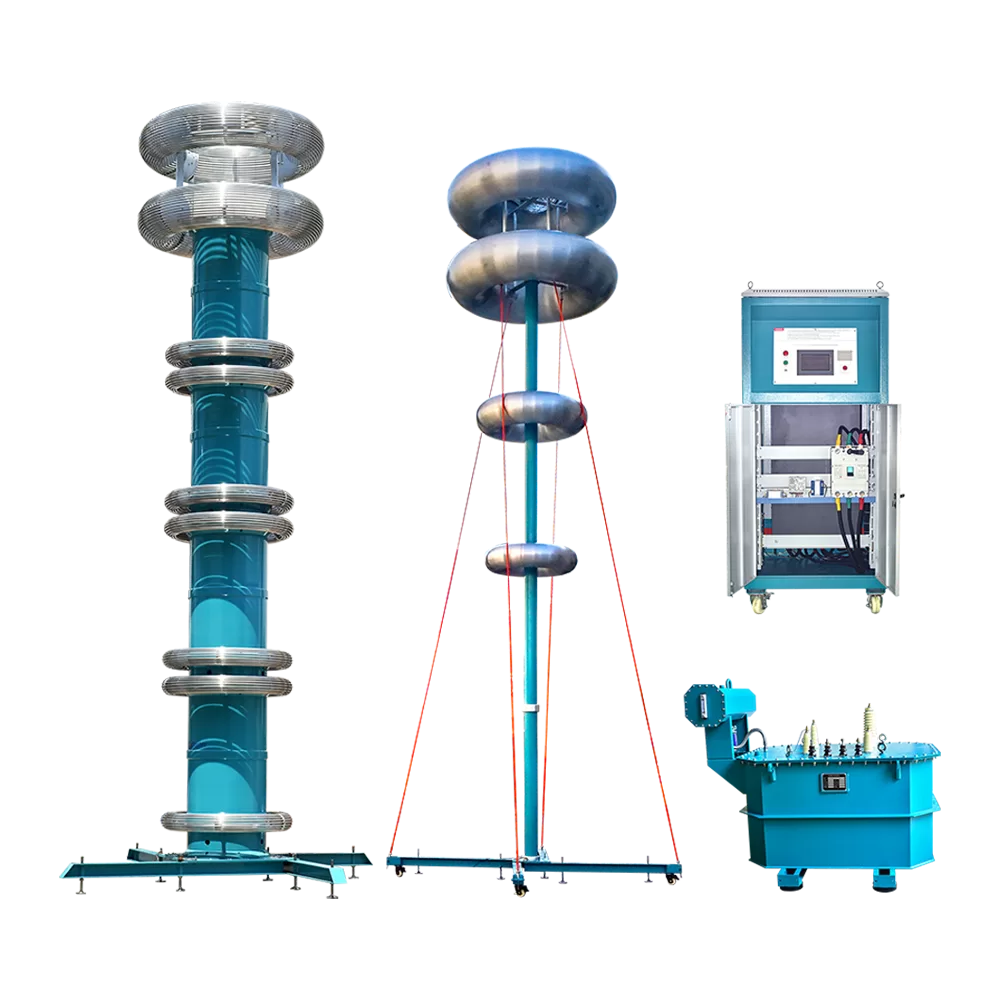
Insulation safety determines the service life and operational safety of transformers. Factory insulation testing equipment includes insulation resistance testers, high voltage withstand testers, and partial discharge detectors. These devices detect insulation aging, dielectric defects, and internal discharge hidden dangers of transformer windings and insulating materials. For oil-immersed and dry-type transformers, standardized insulation testing before delivery is a necessary condition to meet global safety certification standards.
4. Transformer Loss & Load Testing System
No-load loss, load loss, and short-circuit loss are core performance indicators of transformers, directly affecting energy-saving efficiency and operational stability. Professional factory loss testing equipment adopts high-precision power analysis modules to realize accurate measurement of loss parameters with minimal measurement uncertainty. Integrated test systems can automatically complete no-load and load tests, generate standard test reports, and help factories strictly control product energy consumption indicators to meet international energy efficiency standards.
5. Winding Deformation Tester
Sweep frequency response winding deformation testers are essential equipment for transformer factory quality inspection. During production, transportation, and assembly, transformer windings may be deformed or displaced. This equipment uses frequency sweep analysis technology to accurately judge winding structural abnormalities, effectively avoiding hidden faults that cannot be detected by conventional electrical performance tests. It is widely used in the type test and sampling inspection of high-voltage power transformers.
6. Integrated Transformer Comprehensive Test Bench
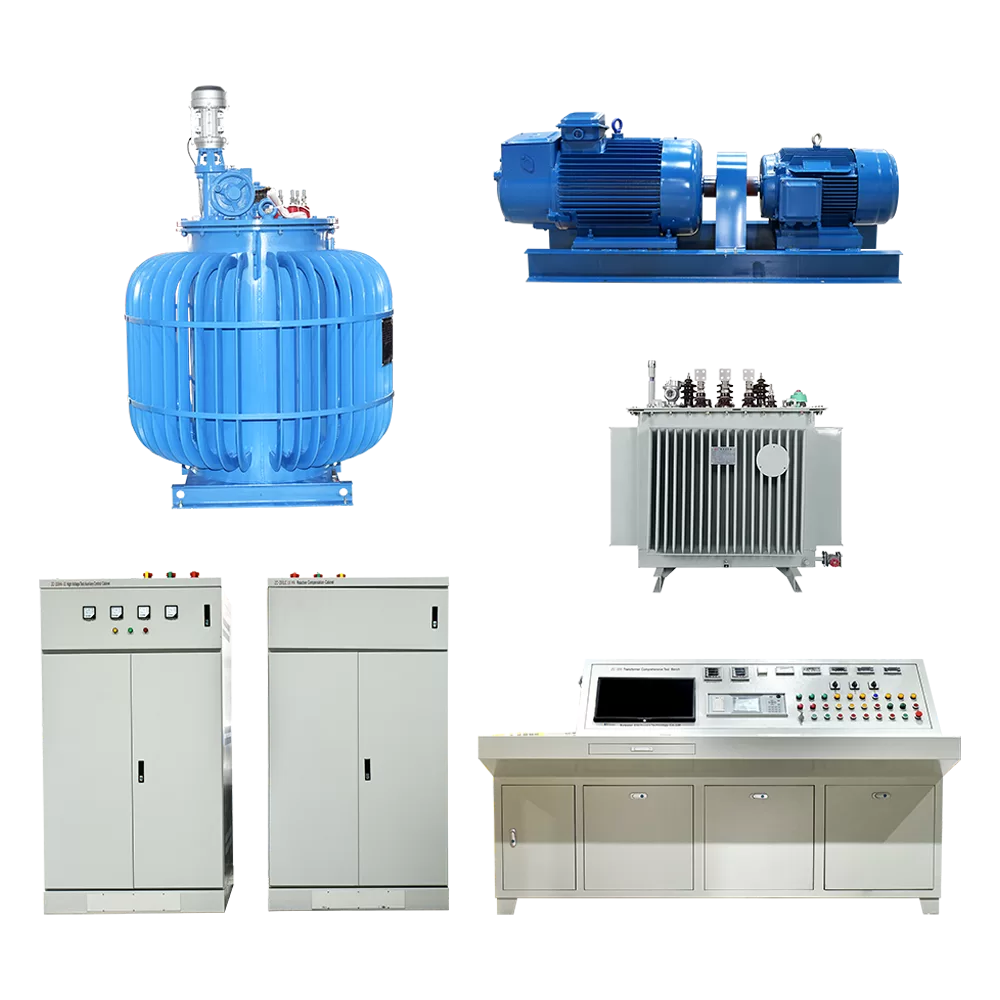
For large and medium-sized transformer factories with high production capacity,
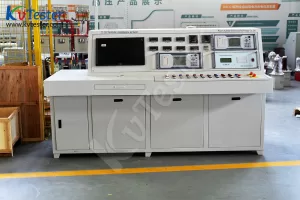
integrated comprehensive test benches have become mainstream configuration. Different from single-function testing instruments, the integrated test platform integrates DC resistance, turn ratio, insulation, loss, and withstand voltage testing functions. It adopts an automatic high and low voltage switching matrix, which can automatically complete all routine test items after one-time wiring. This one-stop testing solution solves the pain point of scattered testing procedures in traditional factories, greatly improving testing efficiency and standardizing test data management.
Key Advantages of Specialized Transformer Testing Equipment for Factories
Compared with general-purpose electrical testing instruments, factory-dedicated transformer testing equipment for transformer factory is customized for transformer manufacturing scenarios, with prominent industry advantages.
First, high compatibility and full coverage. Professional factory testing equipment supports all types of transformers, including oil-immersed power transformers, dry-type distribution transformers, box-type transformers, and special industrial transformers, meeting the diversified production and testing needs of transformer factories.
Second, automation and high efficiency. Most factory-grade testing devices are equipped with intelligent software systems and HMI human-machine interfaces, supporting automatic testing, data recording, report generation, and data storage. It reduces manual operation errors, saves labor costs, and adapts to assembly line batch testing.
Third, standard compliance and traceability. The test data and reports generated by professional equipment fully comply with IEC and IEEE industry standards, supporting factory product certification, third-party inspection, and project acceptance. All test data can be traced, helping factories establish a complete production quality management system.
Fourth, high stability and durability. Workshop environments have complex interference factors such as electromagnetic radiation and voltage fluctuations. Factory-dedicated testing equipment has strong anti-interference performance, stable long-term operation, and low failure rate, reducing equipment maintenance costs for manufacturers.
How Transformer Factories Select Qualified Testing Equipment
To match production scale and quality control standards, transformer factories need to select testing equipment based on production capacity, product voltage level, and test scenarios. Here are the core selection principles:
1. Match product specifications: Small and medium-sized transformer factories focusing on low-voltage distribution transformers can choose single-function high-precision testing instruments; large factories producing high-voltage power transformers need to configure integrated comprehensive test benches and partial discharge detection equipment.
2. Focus on measurement accuracy and stability: Loss parameters and insulation indicators have extremely strict error requirements. It is necessary to select equipment with high-precision sampling chips and professional algorithm calibration to ensure test data authenticity and validity.
3. Prioritize automated and intelligent functions: Intelligent testing equipment with one-click testing and automatic report generation can effectively improve production efficiency, which is the key to improving the market competitiveness of transformer factories.
4. Verify standard compliance: Ensure that the equipment’s test items, data formats, and report templates meet international industry standards to avoid unqualified product acceptance caused by non-standard testing.
Conclusion
Transformer testing equipment for transformer factory is the fundamental guarantee for transformer manufacturing quality, production standardization, and market competitiveness. From basic electrical performance testing to comprehensive integrated testing solutions, professional testing equipment runs through the entire production and delivery process of transformers. By equipping standardized, automated, and high-precision transformer testing systems, transformer factories can effectively control product quality, reduce production costs, meet global industry certification requirements, and win long-term competitive advantages in the international power equipment market.

 2026-09-21Smart Transformer Testing Equipment: Features for Efficient Testing
 2026-09-21Transformer Testing Equipment for Grid Maintenance Guide
 2026-09-20CT PT Analyzer for Commissioning: Substation Testing Guide
 2026-09-20ANSI Standard CT Tester: Specs, Tests & Buying Guide
 2026-09-18Why does the required capacity of series resonant test equipment usually increase with cable length?