
Home » News » Company News
Smart Transformer Testing Equipment: Features for Efficient Testing
Efficient transformer testing requires more than a digital meter. It requires a workflow that reduces manual handling, improves measurement consistency, supports safe operation, and keeps test data available for quality review. Kvtester transformer testing equipment is designed for manufacturers, utilities, commissioning teams, and service providers that need reliable results from routine production testing through maintenance verification.
Smart transformer testing equipment combines automated control, accurate data acquisition, guided operation, protective functions, and practical data management. The result is a more efficient way to verify transformer performance while reducing the risk of manual calculation errors, incomplete records, and inconsistent test procedures.

What Makes Transformer Testing Equipment Smart?
For transformer manufacturers and field engineers, smart should mean more than a large display or digital interface. A smart transformer test solution helps users complete required measurements with fewer manual steps and clearer control of the complete testing process.
The most valuable capabilities include automated or computer-controlled test sequences, synchronized acquisition of voltage, current, power, frequency, and power factor, automatic calculation of relevant transformer parameters, clear parameter input and guided operating prompts, stored test records with date and time information, and practical data transfer for review and quality documentation.
In a conventional testing process, operators may need to switch instruments, observe several meters, record values manually, and calculate results separately. This can slow down testing and make result consistency dependent on individual operating habits. A smarter test workflow centralizes measurements and reduces unnecessary manual handling.
For example, an automated system can capture three-phase electrical values during a no-load or load test, calculate relevant results, and store the data under the transformer test record. This gives quality teams a clearer basis for reviewing product performance and comparing results over time.
Key Features That Improve Testing Efficiency
Automated Test Control
Automation is one of the most important features for improving transformer test efficiency. It helps standardize how test procedures are carried out, particularly when the same test sequence is repeated across multiple units.
A computer-controlled transformer test system can allow operators to select a test item, enter transformer parameters, execute a programmed procedure, and collect results in a more organized workflow. This is particularly valuable for routine testing of power and distribution transformers, where repeatability and production throughput are essential.
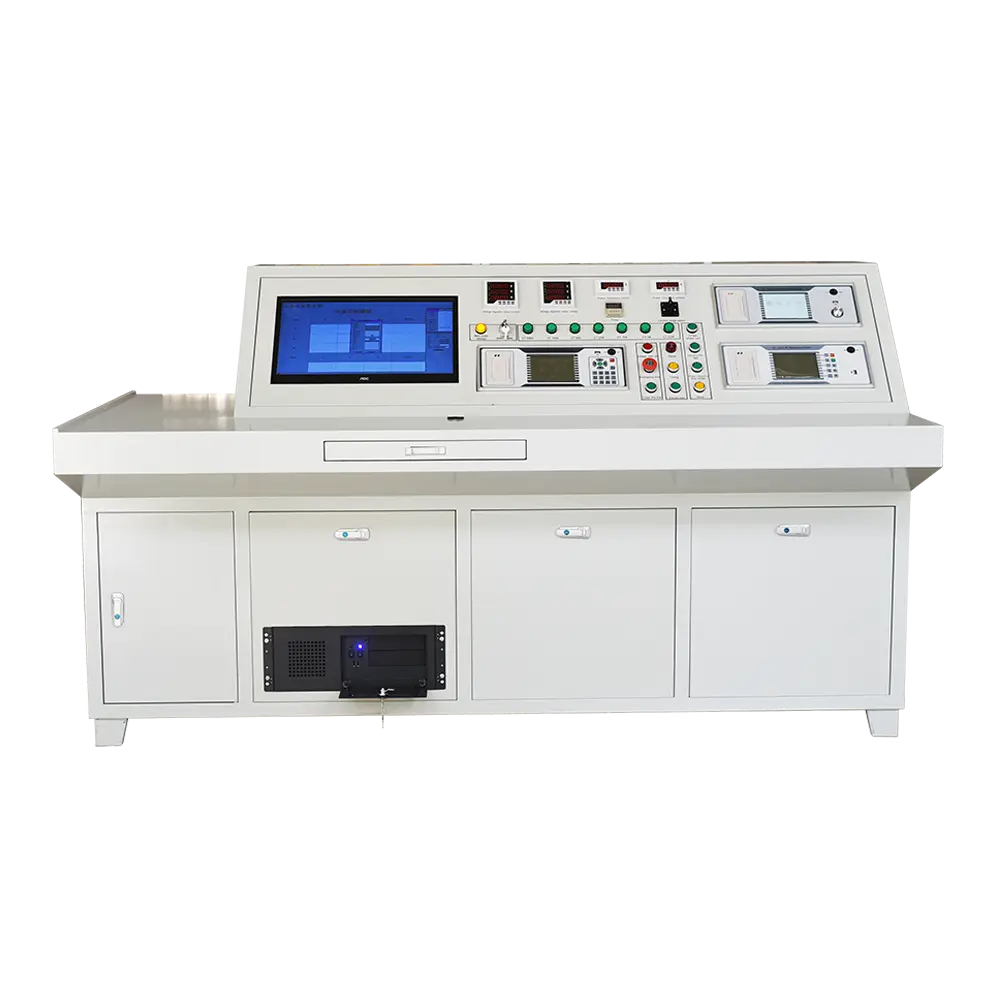
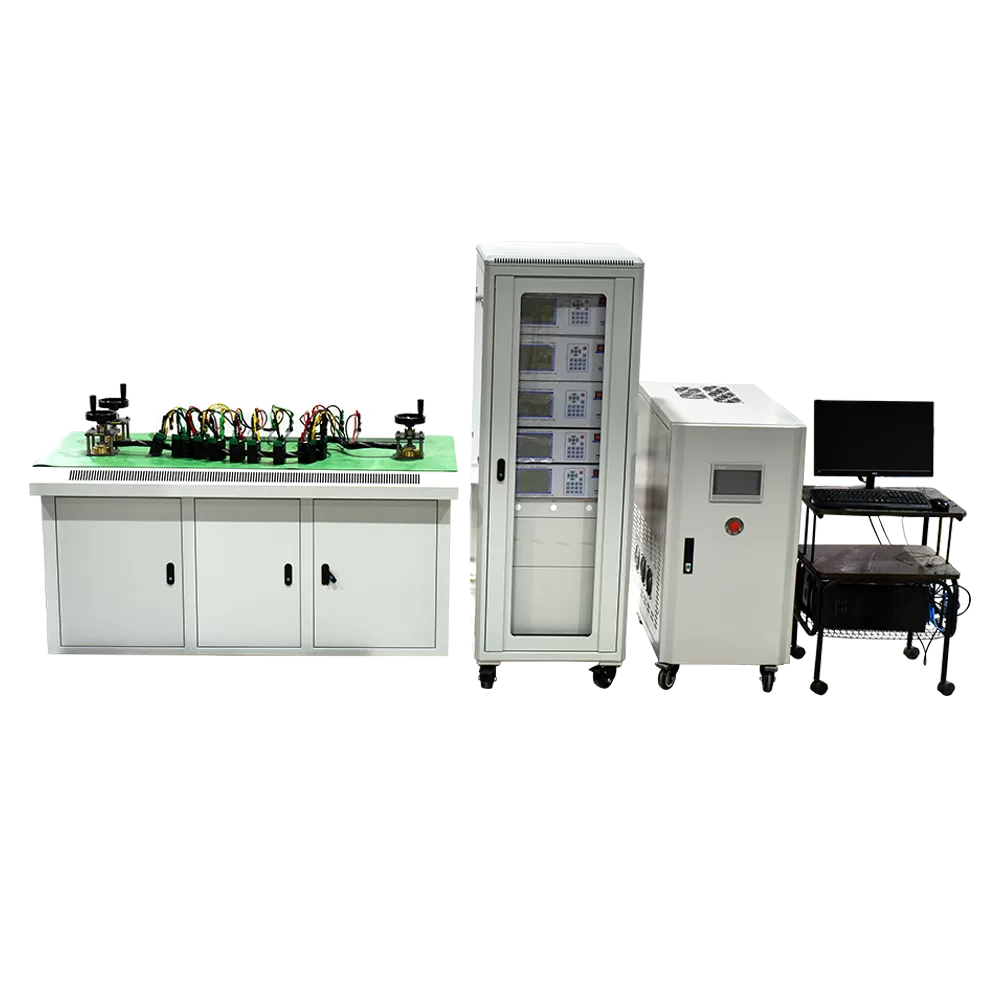
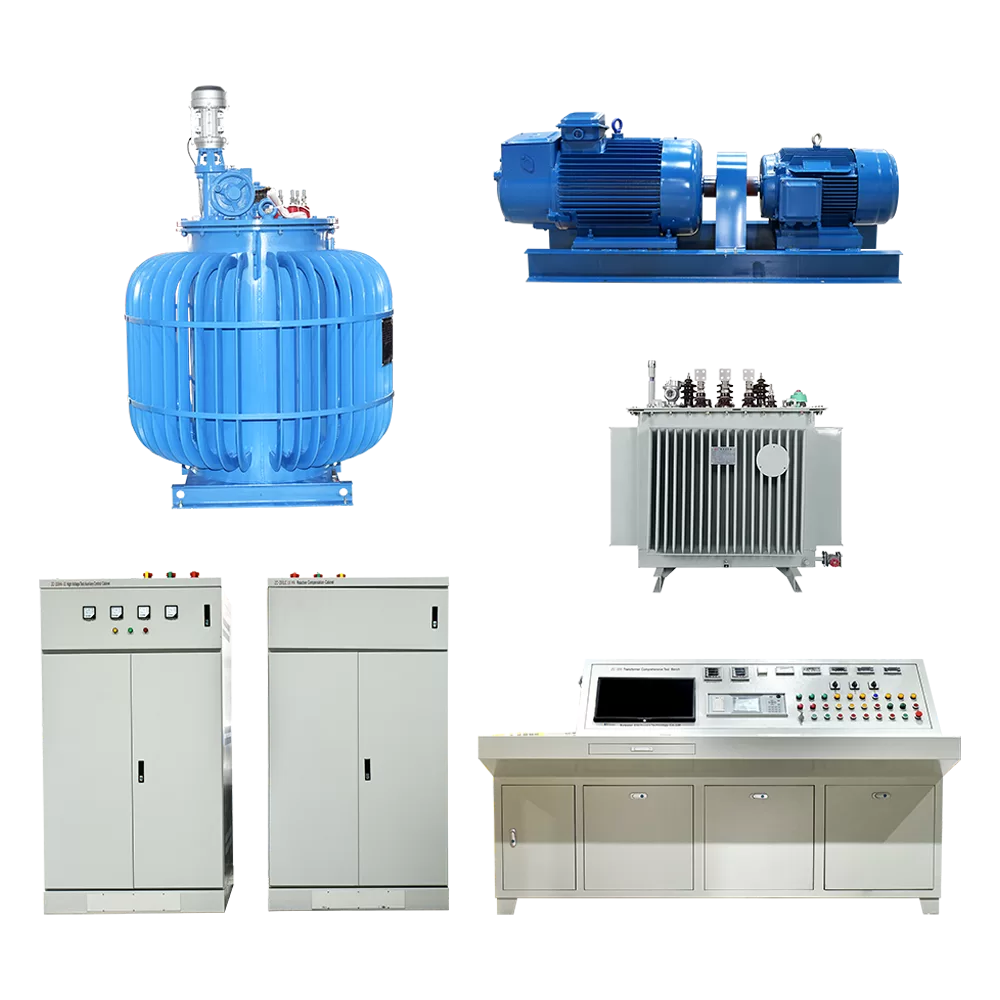
The ZC-200 Transformer Test Control Desk is designed for this application. Its modular configuration supports independent testing units and computer-controlled automatic testing for no-load characteristics, load characteristics, winding resistance, transformation ratio and group, power-frequency withstand voltage, induced withstand voltage, and insulation resistance.
For transformer factories, this approach helps reduce time spent moving between separate instruments and manually consolidating results from different test stages.
Accurate Data Acquisition and Automatic Calculation
Testing efficiency must never come at the cost of measurement reliability. Smart transformer testing equipment should collect essential electrical values accurately and use those values to calculate test results automatically.
Depending on the test configuration, the system may measure three-phase voltage and current, active and reactive power, total power, frequency, power factor, no-load current percentage, impedance voltage percentage, winding resistance, transformation ratio, and group.
Automated calculation is particularly useful because it reduces the need for manual formulas, handwritten records, and repeated data verification. It also helps prevent calculation differences between operators.
For short-circuit impedance testing, an instrument can measure voltage, current, power, and frequency, then calculate short-circuit impedance, reactance, and leakage inductance. These values help teams assess transformer winding condition after short-circuit current exposure, transportation, installation, or maintenance work.
Digital Records and Traceable Test Data
A test is more valuable when the result can be located, reviewed, and compared later. Smart equipment should help users store test records with relevant transformer details, measurement values, and test time information.
For production quality control, traceable data can answer practical questions: which transformer was tested, which parameters were used, when the test was completed, whether measured values met the required acceptance range, and whether the result can be compared with a previous production, commissioning, or maintenance record.
A well-organized data workflow also reduces reliance on paper records and manual spreadsheet entry. The exact reporting and export capabilities depend on the instrument model and its configured software or interfaces. Equipment descriptions should clearly state whether they support data storage, printing, USB transfer, PC-based analysis, or other specific functions.
Fast Winding Resistance Testing
Winding resistance testing is a core task for transformer manufacturers and maintenance teams because it can help identify poor connections, tap changer issues, winding abnormalities, or problems caused by transport and service conditions.
A smart DC resistance tester should provide stable output, high measurement accuracy, fast charging and discharging of transformer windings, and clear discharge safety indications. It should also reduce the amount of manual calculation required after testing.
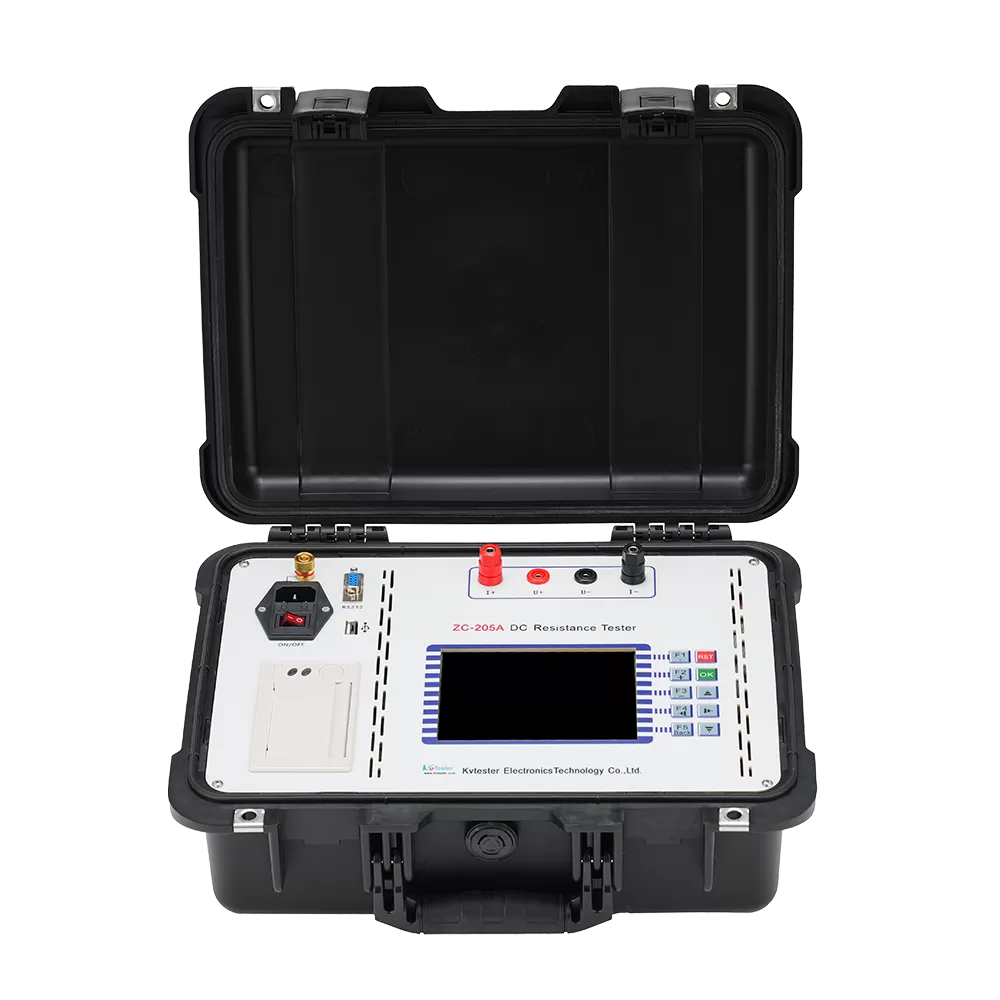
The ZC-205A DC Resistance Tester uses a fast DC power supply with up to 24 V opening voltage to support fast winding charge and discharge. It can display and print three-phase winding data, calculate the three-phase unbalance rate, and show resistance converted to the rated temperature. Wiring inspection, overcurrent protection, test-result storage, and a discharge alarm support safer and more efficient testing.
For teams that test many units each day, these features can reduce waiting time between tests and make winding-resistance records easier to manage.
Safety Features Matter as Much as Speed
Transformer testing may involve high current, high voltage, stored energy, and exposed connections. Smart testing equipment should therefore help users work more safely, not only more quickly.
Key functions to evaluate include zero-position protection before energization, overvoltage and overcurrent protection, high-voltage grounding protection, interlocking between test projects, wiring inspection, clear alarm and status indication, automatic return-to-zero or controlled voltage reduction, and electrical isolation between high-voltage equipment and the operator control area.
The ZC-200 configuration includes zero-position protection, overvoltage protection, overcurrent protection, and high-voltage ungrounded protection. Its internal CT and PT isolation supports separation between the operating panel and high-voltage hazards.
For AC withstand and induced withstand testing, operators must still follow applicable safety procedures, ensure correct grounding, maintain a controlled test area, and use qualified personnel. Automation supports safer operation, but it does not replace proper site procedures or electrical safety management.
Which Tests Benefit Most From Smart Equipment?
Automated and digital functions can streamline no-load tests by synchronizing sampling and recording no-load current and loss data. They can make load tests more consistent by collecting electrical parameters in one workflow. They can also improve transformation ratio tests through guided setup, automatic measurement, and structured recording of ratio, ratio error, group, polarity, and phase relationships.
Winding resistance testing benefits from rapid charge and discharge, temperature conversion, and phase-balance calculation. Short-circuit impedance testing benefits from automatic calculation of impedance, reactance, and leakage inductance. Power-frequency withstand and induced withstand testing benefit from controlled voltage rise, timing, status monitoring, and safe voltage reduction.
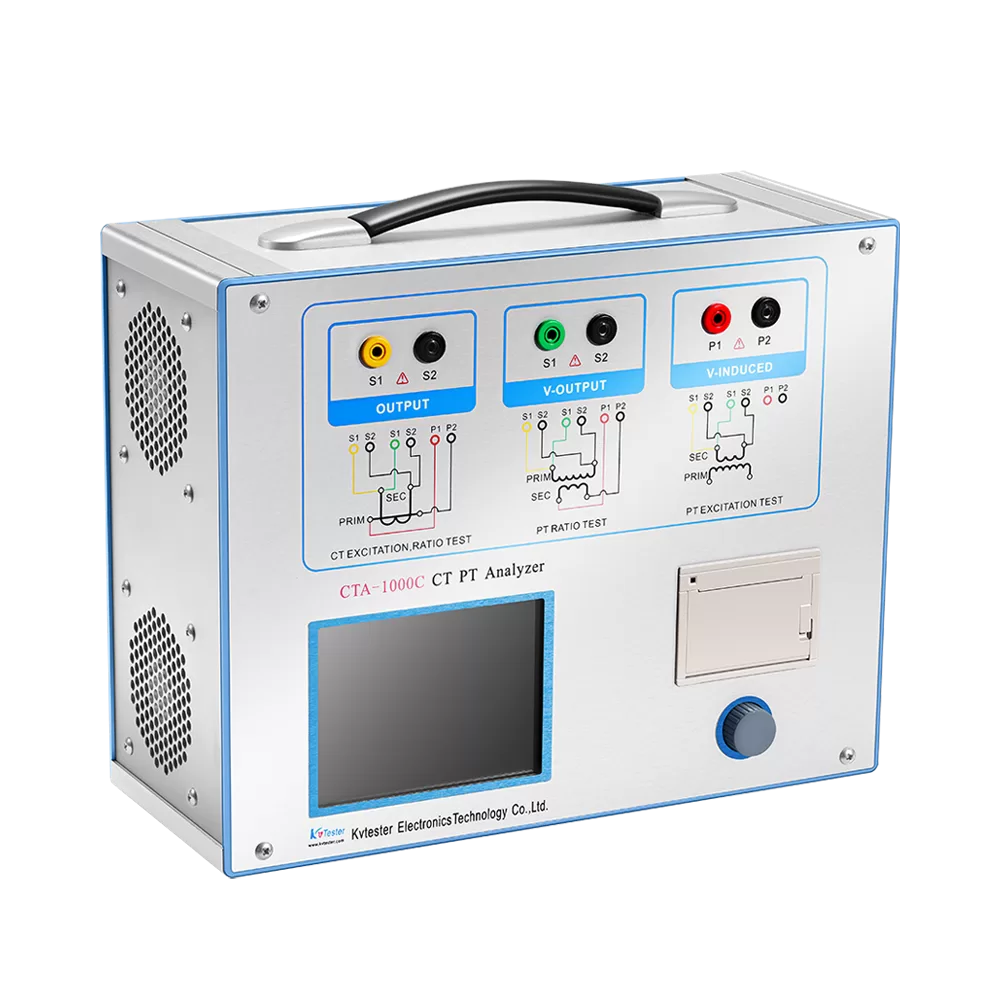
For CT and PT applications, the test scope differs from power-transformer testing. A CT/PT analyzer can support excitation characteristics, ratio, polarity, secondary winding resistance, burden, ratio error, and phase displacement testing. Equipment selection should always begin with the actual test object and required test items.
How to Choose Smart Transformer Testing Equipment
When selecting transformer testing equipment, avoid choosing only by the number of advertised functions. The best configuration matches the transformer type, working environment, test frequency, and quality-control workflow.
First, identify whether you are testing power transformers, distribution transformers, CTs, PTs, or multiple equipment categories. Then define whether the work involves routine factory testing, maintenance testing, commissioning testing, or fault investigation. Confirm the test items that must be completed in-house, then match the required voltage, current, capacity, and accuracy ranges.
You should also decide whether your process requires a complete automated test bench or separate portable instruments. Evaluate computer control, data storage, printing, USB transfer, safety protections, training needs, calibration requirements, and potential future expansion before making a final decision.
A modular comprehensive test system is often suitable for transformer factories that need a repeatable routine-test workflow across several electrical test items. Separate instruments may be more practical for field teams that need portability and only perform selected tests during commissioning or maintenance.
Improve Test Consistency With the Right Configuration
Smart transformer testing equipment should help your team achieve faster test execution, reliable measurement results, and data that supports quality decisions. The right solution is not necessarily the system with the most functions. It is the configuration that covers your required test items, matches your transformer ratings, and fits your operating process.
Kvtester provides transformer testing systems and individual instruments for routine factory testing, field commissioning, maintenance, and diagnostic applications. Share your transformer type, capacity, voltage level, and required test scope with our team to discuss a suitable smart transformer testing equipment configuration.
Related Products
Latest News
-
 2026-09-21Transformer Testing Equipment for Grid Maintenance Guide
 -
 2026-09-20CT PT Analyzer for Commissioning: Substation Testing Guide
 -
 2026-09-20ANSI Standard CT Tester: Specs, Tests & Buying Guide
 -
 2026-09-18Why does the required capacity of series resonant test equipment usually increase with cable length?
 -
 2026-09-18How should 35kV cable series resonant withstand voltage test equipment be configured?