
Home » News » Company News
Smart CT Analyzer: Functions, Testing & Top Rated Models
Introduction
Current transformers (CTs) are the backbone of accurate power metering and reliable relay protection in electrical grids. Even minor CT inaccuracies, saturation issues, or residual magnetism can lead to false tripping, billing errors, and unplanned grid downtime.
Traditional CT testing relies on risky high-current primary injection and time-consuming manual measurements, which are inefficient and prone to human error. This is where a smart CT analyzer changes the game. Designed for safe, fast, and fully automated CT diagnostics, modern smart analyzers comply with global IEC and IEEE standards to keep power assets stable and accurate.

In this guide, we break down how smart CT analyzers work, what tests they perform, and which top-tier models fit field and laboratory testing scenarios.
What Is a Smart CT Analyzer?
A smart CT analyzer is a specialized intelligent testing device built to evaluate the performance, accuracy, and structural integrity of current transformers. Unlike conventional manual testers, it uses low-voltage secondary injection technology to replace dangerous high-current primary testing, delivering precise, repeatable results with minimal manual operation.
Equipped with advanced digital signal processing algorithms, modern smart CT analyzers automatically calculate key CT parameters, judge pass/fail status per industry standards, and generate complete test reports — making them essential tools for substation commissioning, routine maintenance, and fault troubleshooting.
Key Functions & Test Parameters of a Smart CT Analyzer
Smart CT analyzers conduct comprehensive diagnostics covering metering accuracy, core performance, and winding condition, covering all critical CT testing items required by power industry regulations.
1. Accuracy & Operational Error Testing
It measures turns ratio error and phase displacement, two core indicators for metering and relay protection. Tiny phase errors can trigger incorrect relay tripping, while ratio deviations directly affect power billing accuracy. The device also evaluates CT performance under different burden loads to ensure stable rated operation.
2. Core Saturation & Excitation Characteristic Analysis
The analyzer tests knee-point voltage, excitation current, and full excitation curves to identify CT core aging, degradation, and saturation thresholds. This is critical for verifying the reliability of protection-class CTs (5P/10P) under grid fault conditions. It also features automatic demagnetization to eliminate residual magnetism after testing.
3. Structural & Electrical Integrity Testing
It precisely measures CT winding resistance to detect loose connections, internal damage, or burnout. Additionally, it automatically identifies CT polarity and calculates professional parameters like ALF and FS for complete performance evaluation.
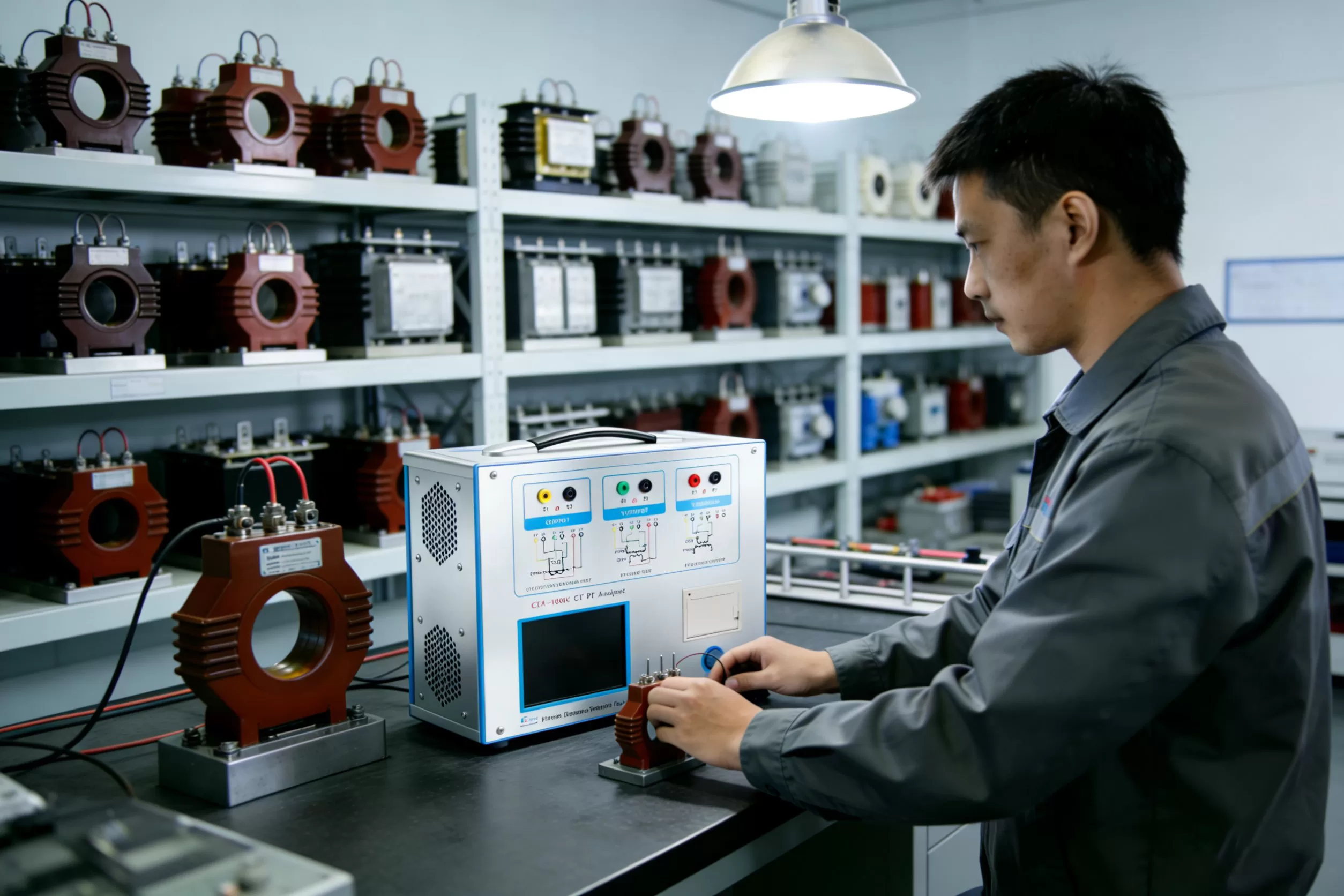
How a Smart CT Analyzer Works (Step-by-Step Field Workflow)
Smart CT analyzers streamline complicated traditional testing procedures into a simple, automated workflow, ideal for on-site field deployment:
- Connect test leads to the CT’s primary (P1/P2) and secondary (S1/S2) terminals.
- Input CT nameplate parameters, including rated current, accuracy class, and applicable standards (IEC/IEEE).
- The device outputs a safe low-voltage signal to simulate real operating conditions.
- Run the automated test cycle, which completes full diagnostics in under 2 minutes.
- Automatic demagnetization is performed to remove residual magnetism.
- The system generates a standardized test report with clear pass/fail results.
Traditional Manual CT Testing vs. Smart CT Analyzer Testing
Limitations of Conventional Testing Methods
Traditional CT testing requires multiple separate devices, complex wiring, and manual data calculation. High-current primary injection poses serious electric shock risks. Moreover, manual tests cannot accurately draw saturation curves or eliminate residual magnetism, often leading to inaccurate judgments and inconsistent test data.
Core Benefits of Smart CT Analyzers
- Enhanced Safety: Low-voltage secondary injection eliminates high-current operation risks.
- Higher Efficiency: One-click automated testing cuts field work time drastically.
- Superior Precision: Industry-leading measurement accuracy for professional calibration.
- Standard Compliance: Auto-evaluation per IEC 61869 and IEEE C57.13 standards.
- Portable & Practical: Lightweight body designed for outdoor substation field work.
Top Smart CT/PT/VT Analyzers for Professional Power Testing
For grid operators, power plant maintainers, and electrical testing labs, selecting a reliable smart analyzer ensures accurate, long-term CT and VT diagnostics. Below are three high-performance, widely adopted models for diverse testing scenarios.
1. CTA-1000D High-Precision CT/PT Analyzer
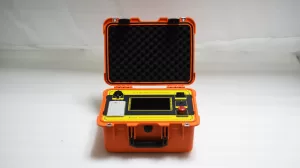
The CTA-1000D is a flagship smart CT analyzer built for high-precision calibration and laboratory-grade testing. Boasting a ultra-low ratio error of 0.02%, it delivers industry-leading accuracy for metering-class 0.1 and 0.2 CTs.
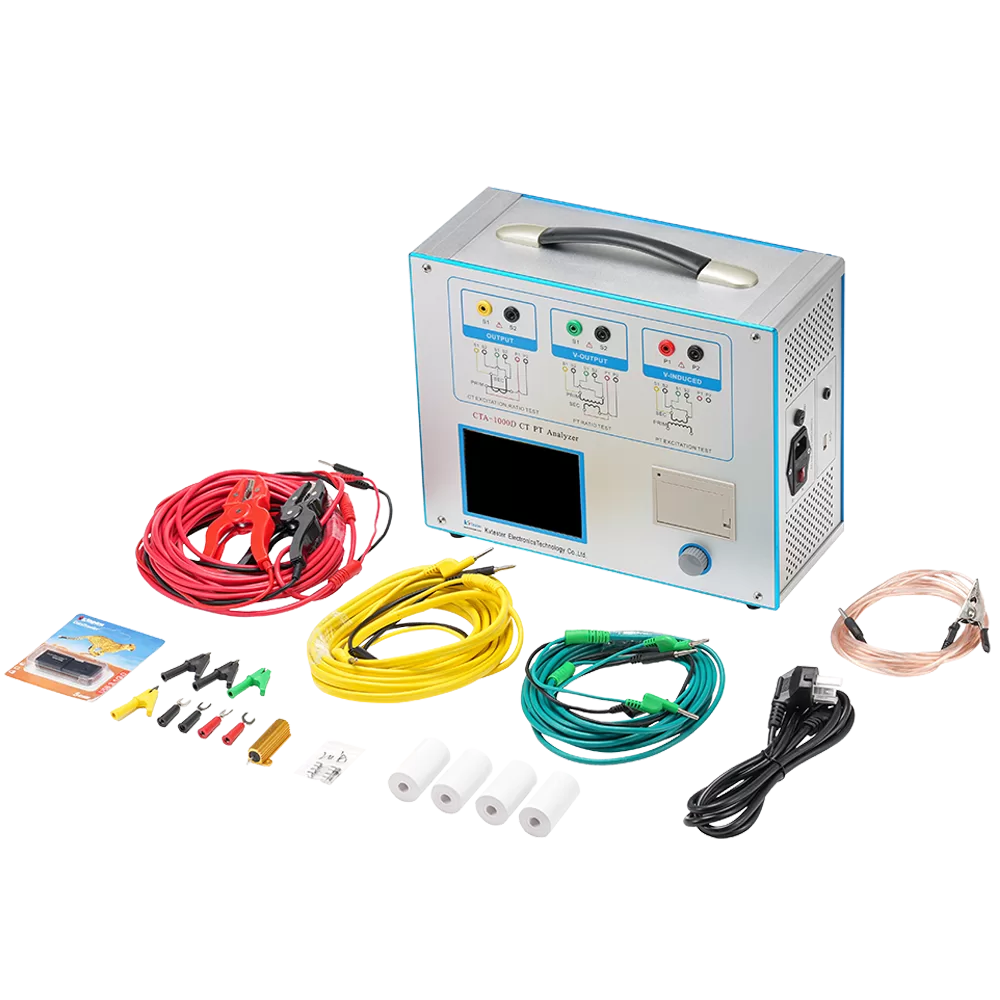
It supports full testing for single and multi-ratio CTs and PTs, with a maximum 120V low-voltage output and 400VA effective power. Weighing only 9kg, it balances portability and professional performance. It features automatic remanence coefficient detection, digital burden simulation, and ALF/FS automatic calculation, making it the ideal choice for power plant factory inspection, metrology laboratory calibration, and high-standard substation commissioning.
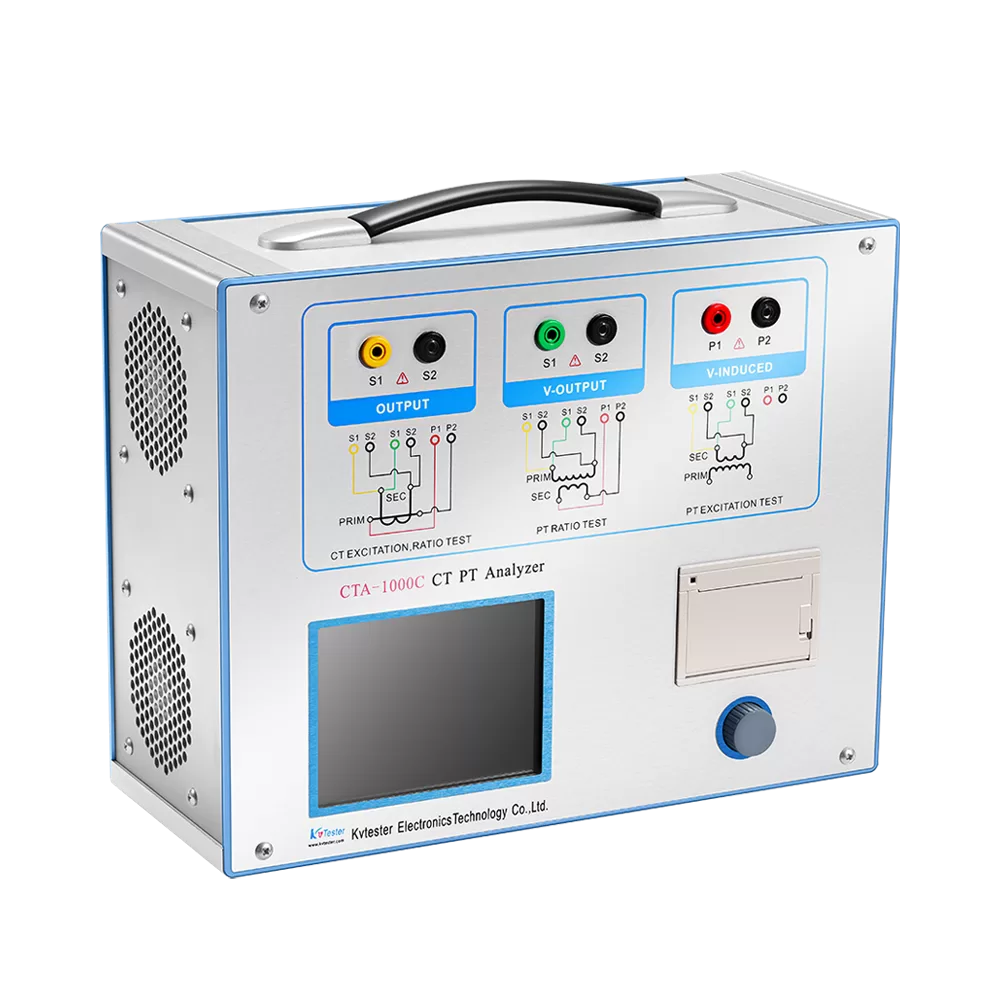
2. CTA-1000C Cost-Effective Universal CT/PT Analyzer
The CTA-1000C is a versatile, cost-efficient smart analyzer optimized for daily field maintenance. It supports an ultra-wide ratio range up to 40000 and complies with IEC, IEEE, and national power standards.
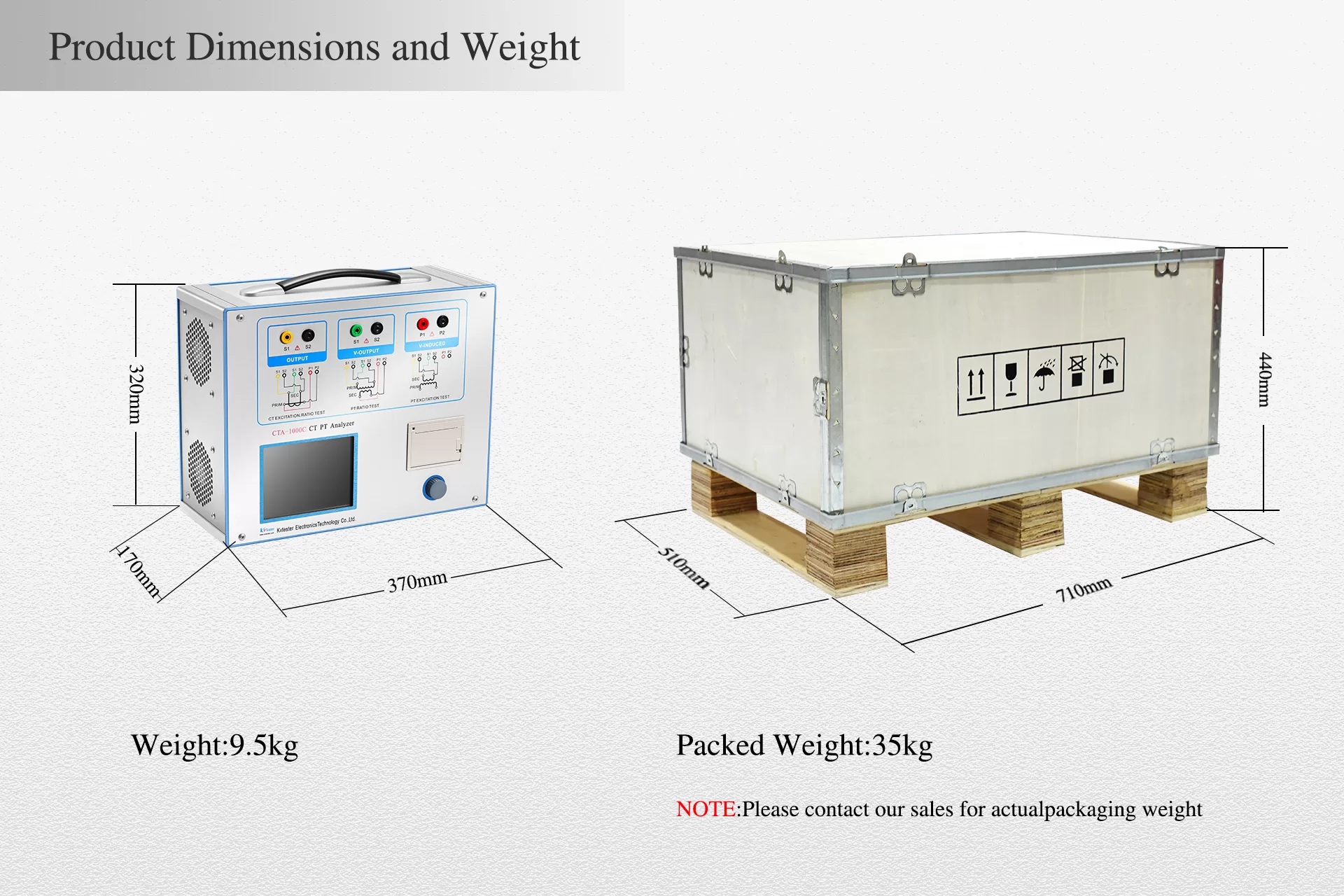
With a maximum 180V safe output voltage and simple touchscreen operation, it completes automatic CT/PT error testing, excitation curve analysis, winding resistance measurement, and burden assessment within 2 minutes. Its shockproof portable casing adapts to harsh outdoor working environments, perfect for batch routine testing in substations, wind farms, solar power plants, and electrical equipment manufacturing factories.
3. PTA-2000C Professional VT/CVT Analyzer
While CTA-series devices cover electromagnetic CT and PT testing, the PTA-2000C is a professional dedicated analyzer for electromagnetic voltage transformers (VT) and capacitive voltage transformers (CVT), filling the gap in high-voltage CVT testing.
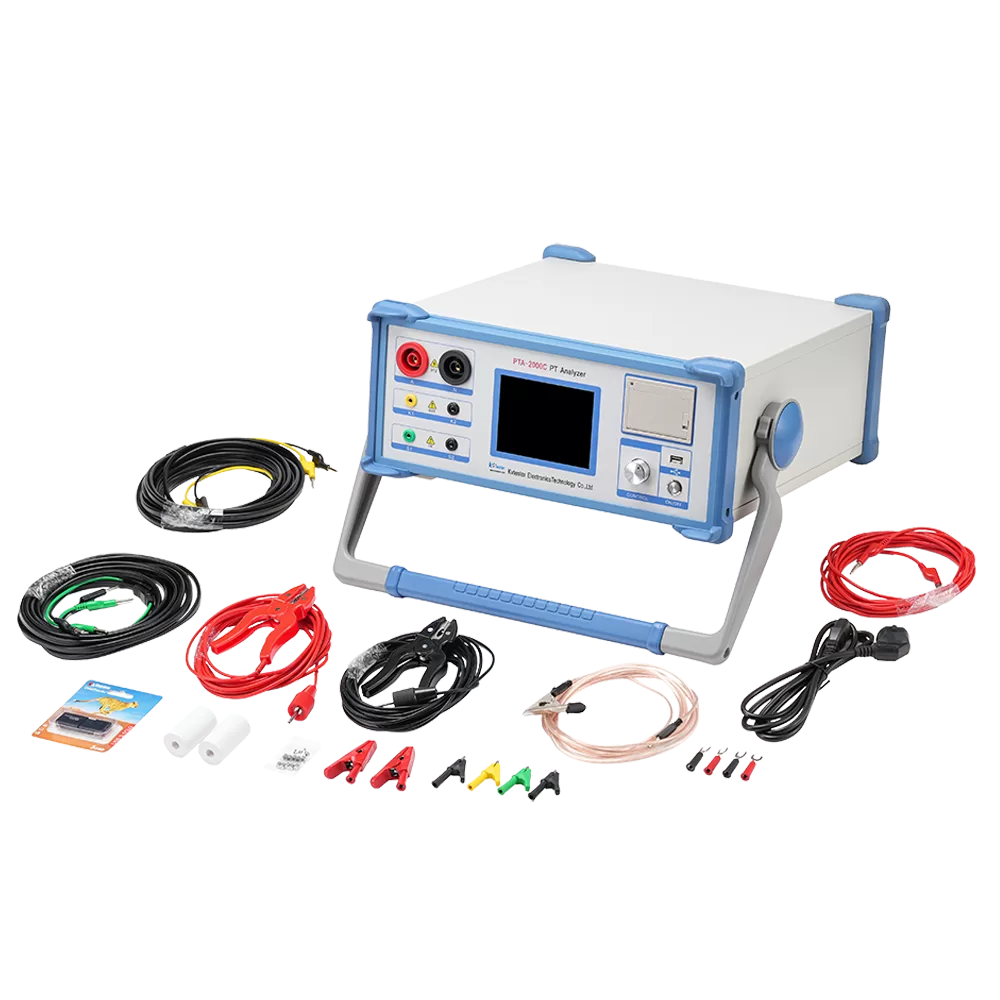
Capable of testing 6kV to 800kV high-voltage transformers, it features a maximum 3kV safe high-voltage output and built-in 0.01-class standard VT. It eliminates the need for external standard transformers or booster equipment, realizing one-device full-error testing for VT/CVT. With intelligent wiring error judgment and 10,000-set data storage, it is the preferred tool for EHV/UHV substation maintenance and third-party power testing institutions.
How to Choose the Right Analyzer for Your Needs
Model | Best For | Core Advantage |
CTA-1000D | Lab calibration, high-precision metering CT testing | 0.02% ultra-high accuracy, professional-grade parameters |
CTA-1000C | Field routine maintenance, batch on-site testing | Wide test range, cost-effective, durable portable design |
PTA-2000C | High-voltage VT/CVT professional calibration | Supports 800kV CVT testing, no auxiliary equipment needed |
Common Applications of Smart CT Analyzers
- Power Utilities & Substations: New project commissioning, annual protection CT maintenance, fault diagnosis
- Renewable Energy Plants: Wind and solar farm transformer batch testing
- Industrial & Railway Systems: Industrial power distribution and traction power system calibration
- Manufacturers & Labs: Transformer factory quality inspection and standard calibration
Industry Standards Compliance
All tested smart analyzers fully comply with global mainstream industry standards, including IEC 61869, IEC 60044, and IEEE C57.13. The system automatically matches standard thresholds to generate authoritative, audit-ready test reports for project acceptance and asset management.
FAQs
1. What is the difference between a CT analyzer and a PT/VT analyzer?
CT analyzers focus on current transformer ratio, phase error, and saturation testing, while PT/VT analyzers specialize in voltage transformer accuracy, insulation, and CVT-specific performance testing.
2. Are low-voltage CT analyzer tests safe on energized sites?
Yes. All tests adopt low-voltage secondary injection, completely avoiding the hazards of traditional high-current primary testing.
3. Can these analyzers test multi-ratio CTs?
Absolutely. CTA-1000D and CTA-1000C fully support automatic testing and analysis of multi-core and multi-tap current transformers.
Conclusion
A smart CT analyzer is an indispensable tool for modern power system maintenance, delivering safer, faster, and more accurate CT diagnostics than traditional testing methods. For high-precision laboratory needs, the CTA-1000D stands out; for daily field operation, the cost-effective CTA-1000C is the most practical choice; and for professional high-voltage VT/CVT testing, the PTA-2000C provides exclusive powerful performance.
By adopting standardized smart testing equipment, power operators can effectively avoid grid faults, reduce downtime, and ensure long-term stable and reliable operation of power measurement and protection systems.
Related Products
Lasted News
-
 2026-08-21In what scenarios are VLF, variable-frequency series resonant, and power-frequency withstand voltage tests respectively suitable?
 -
 2026-08-21How to Choose Between 30kV, 50kV, 60kV, 80kV, and 90kV VLF High-Voltage Generators?
 -
 2026-08-21Can VLF (Very Low Frequency) withstand voltage testing be used for 10kV and 35kV cables?
 -
 2026-08-21Why is an ultra-low frequency high voltage generator commonly used for voltage withstand tests on 10kV cables?
 -
 2026-08-21High-Precision CT Tester: 14 Specifications to Compare