
Home » News » Company News
High-Precision CT Tester: 14 Specifications to Compare
Selecting a high-precision CT tester is not simply a matter of choosing the unit with the lowest advertised accuracy figure. For utilities, transformer manufacturers, protection engineers, and electrical testing contractors, the right decision depends on whether the instrument can test the required CT type, meet the applicable standard, produce reliable results under real operating conditions, and remain practical to use throughout its service life.
As a manufacturer of power testing equipment, Kvtester provides CT/PT analyzers, CT accuracy testing systems, transformer test equipment, and customized solutions for power utilities, manufacturers, and testing organizations. This guide explains the specifications that buyers should compare before requesting quotations or placing an order.
1.Confirm Which Type of CT Tester You Need
“CT tester” is a broad term. Before comparing manufacturers, buyers should identify the actual test method and application.
A portable CT/PT analyzer is generally used to evaluate CT performance from the secondary side. It can test parameters such as excitation characteristics, ratio, polarity, phase displacement, winding resistance, burden, knee-point voltage, saturation behavior, and selected protection-class parameters.
A primary current injection system, by contrast, drives current through the primary circuit. It is often selected for factory accuracy testing, switchgear commissioning, or applications where the CT must be tested under controlled primary-current conditions.
A laboratory calibration system may be necessary when the project requires extremely low uncertainty, reference transformers, automated production testing, or formal verification of metering CT accuracy classes.
Buyers should not compare these products as if they serve the same purpose. A portable analyzer may be ideal for field commissioning and maintenance, while an automatic CT testing system can be the better choice for batch testing in a transformer factory.
2.Define What “High Precision” Means
The phrase “high precision” can be misleading unless the manufacturer clearly states what is being measured and how the error is calculated.
When reviewing a CT tester specification, ask whether the accuracy claim applies to:
- CT ratio measurement
- Phase-angle or phase displacement measurement
- Excitation voltage measurement
- Excitation current measurement
- Secondary winding resistance measurement
- Burden measurement
- PT ratio measurement, where PT testing is included
A quoted value such as “0.05% accuracy” is useful only when it is linked to a specific function, test range, reference condition, and error expression. For example, ratio accuracy may be expressed as a percentage of reading, while burden accuracy may include a percentage plus a fixed VA value.
Buyers should also distinguish between typical accuracy and guaranteed accuracy, resolution and actual measurement accuracy, full-scale error and reading-based error, factory calibration data and traceable calibration certificates, and accuracy at nominal range versus accuracy at the measurement limits.
3.Compare Applicable CT and PT Standards
A CT tester should support the standards required by the end user, utility, project consultant, or target market. This is particularly important for suppliers serving international EPC projects and transformer manufacturers.
Common standards may include:
- IEC 61869-1
- IEC 61869-2
- IEEE C57.13
- IEEE C57.13.1
- Legacy IEC 60044 standards where required by existing projects
- Local or customer-defined technical specifications
However, standard support should mean more than displaying standard names in a brochure. Ask whether the software can automatically calculate parameters, compare results with the selected standard, and provide a clear pass/fail assessment.
The test report should show the selected standard, CT class, rated burden, ratio, test values, calculated values, and final assessment. This makes acceptance documentation easier for utilities, inspection teams, and project owners.
4.Check CT Type and Protection-Class Coverage
Not every CT analyzer is suitable for every current transformer. A buyer should confirm compatibility with the CT classes used in the actual project.
Key CT categories may include:
- Metering CTs
- Protection CTs
- Multi-ratio CTs
- Multi-tap CTs
- P-class CTs
- PX or PXR CTs
- TPS CTs
- TPX, TPY, and TPZ transient CTs
- Bushing CTs
- High-knee-point CTs
For protection applications, the tester may need to determine or calculate values such as accuracy limit factor, instrument security factor, composite error, excitation characteristics, saturation behavior, remanence, knee-point voltage, and transient performance parameters.
For multi-ratio CTs, buyers should ask whether the instrument supports multi-tap detection efficiently and whether the final report can consolidate the results for all relevant taps. This matters because repetitive wiring and manual data entry increase test time and create more opportunities for error.
5.Evaluate Excitation and Knee-Point Capability
Excitation testing is one of the most important functions of a CT analyzer. It helps engineers understand the magnetization behavior of the CT core and identify the knee-point voltage, saturation characteristics, and related protection performance.
When comparing products, do not look at the maximum output voltage alone. Review the complete output capability:
- Maximum excitation voltage
- Maximum excitation current
- Maximum output power in VA
- Output stability across the test range
- Maximum supported knee-point voltage
- Test duration and duty cycle
- Accuracy of voltage and current measurement
- Automatic curve plotting and knee-point calculation
A high-voltage number in a specification is not always enough. If the unit cannot provide adequate current or power at the required voltage, it may not complete the test reliably on a high-knee-point CT.
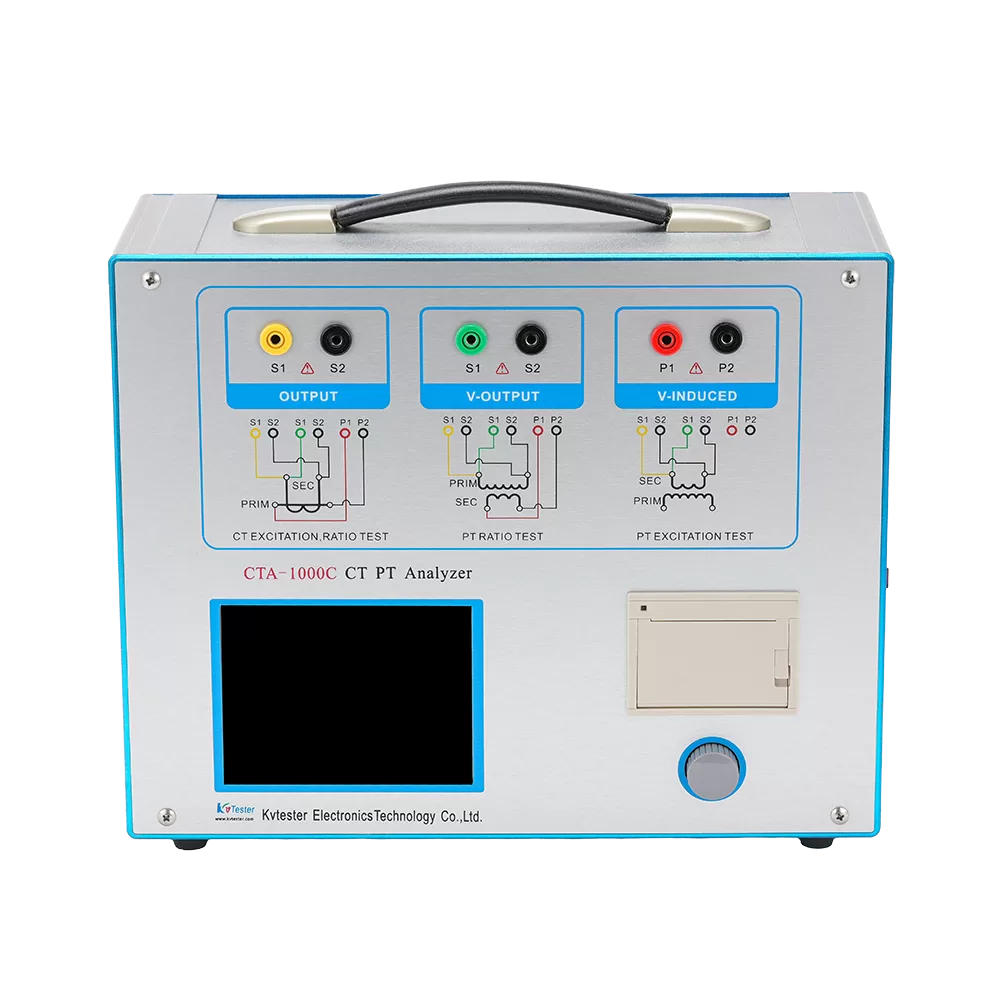
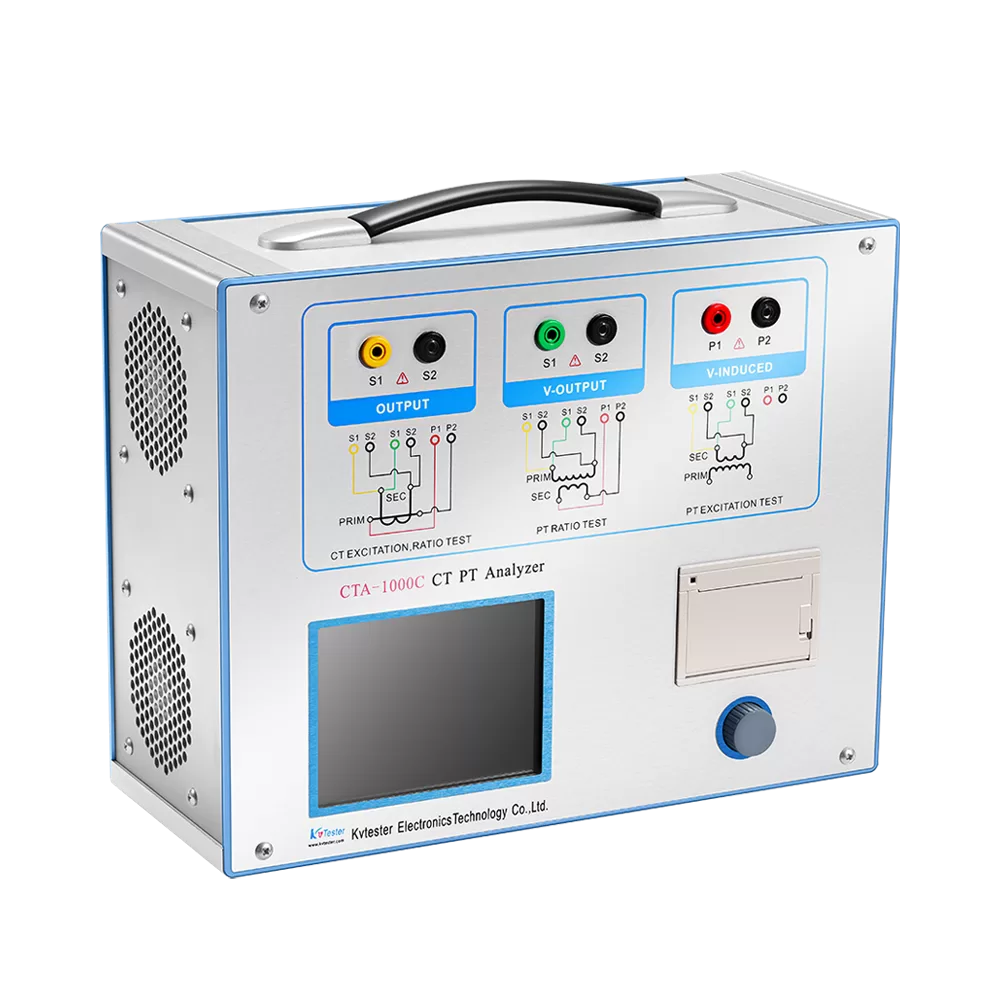
For field applications requiring CT and PT testing in a portable format, the CTA-1000C CT/PT Analyzer is designed for automatic CT/PT characteristic testing. It supports functions including CT/PT ratio, phase displacement, excitation characteristics, secondary winding resistance, burden, polarity, and related CT performance assessments.
6.Compare Ratio and Phase-Angle Measurement Performance
Ratio and phase-angle errors are critical when testing metering CTs and protection CTs. These values influence measurement accuracy, relay behavior, and compliance with the specified CT class.
A strong supplier comparison should include:
- CT ratio measurement range
- PT ratio measurement range
- Ratio measurement accuracy
- Phase-angle measurement range
- Phase-angle accuracy
- Resolution at low ratios and high ratios
- Test conditions for the stated accuracy
- Performance across multiple taps
For example, a tester may perform well on a standard ratio but have reduced measurement confidence at very low or very high ratios. Buyers should request a detailed accuracy table rather than accepting one general number.
It is also useful to request a sample report showing the ratio error and phase displacement results. This confirms that the equipment can present the data in a format suitable for internal quality control, customer approval, or project handover.
7.Review Burden and Winding Resistance Testing
Burden Measurement
The burden test should help determine whether the connected secondary load is within the CT’s rated operating condition. Compare burden measurement range, measurement unit in VA or Ω, burden accuracy, test current range, test frequency, lead-resistance compensation, and the ability to distinguish rated burden from actual connected burden.
A CT that operates beyond its specified burden may produce unacceptable ratio or phase errors, especially in protection and metering applications.
Winding Resistance Measurement
For winding resistance, compare the resistance measurement range, resolution, accuracy specification, connection method, lead compensation, ability to test multiple secondary taps, and stability of readings in field conditions. A reliable CT tester should make resistance measurement straightforward without requiring operators to use multiple separate instruments.
8.Assess Saturation, Remanence, and Transient Performance Functions
For protection CTs, standard ratio and polarity tests are not enough. Protection engineers may need to evaluate how the CT behaves during fault conditions and whether it can reproduce the required secondary current without excessive saturation.
Important functions include:
- Excitation curve measurement
- Knee-point calculation
- Saturation curve evaluation
- Remanence or residual magnetism measurement
- Automatic demagnetization
- Accuracy limit factor calculation
- Instrument security factor calculation
- Composite error calculation
- Transient performance testing
- Special CT class evaluation for PX, TPS, TPX, TPY, and TPZ types
Buyers should clarify which functions are measured directly and which are calculated by the software. A clear answer helps prevent misunderstandings during technical evaluation.
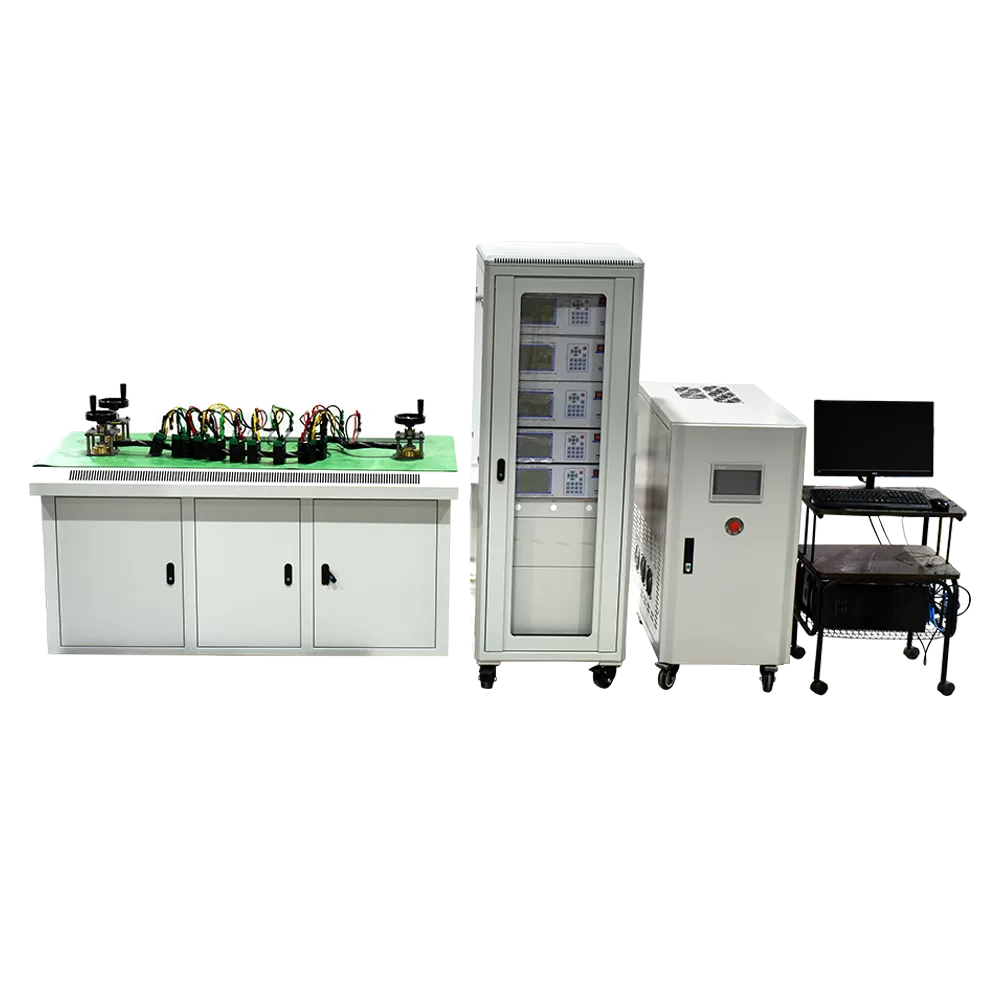
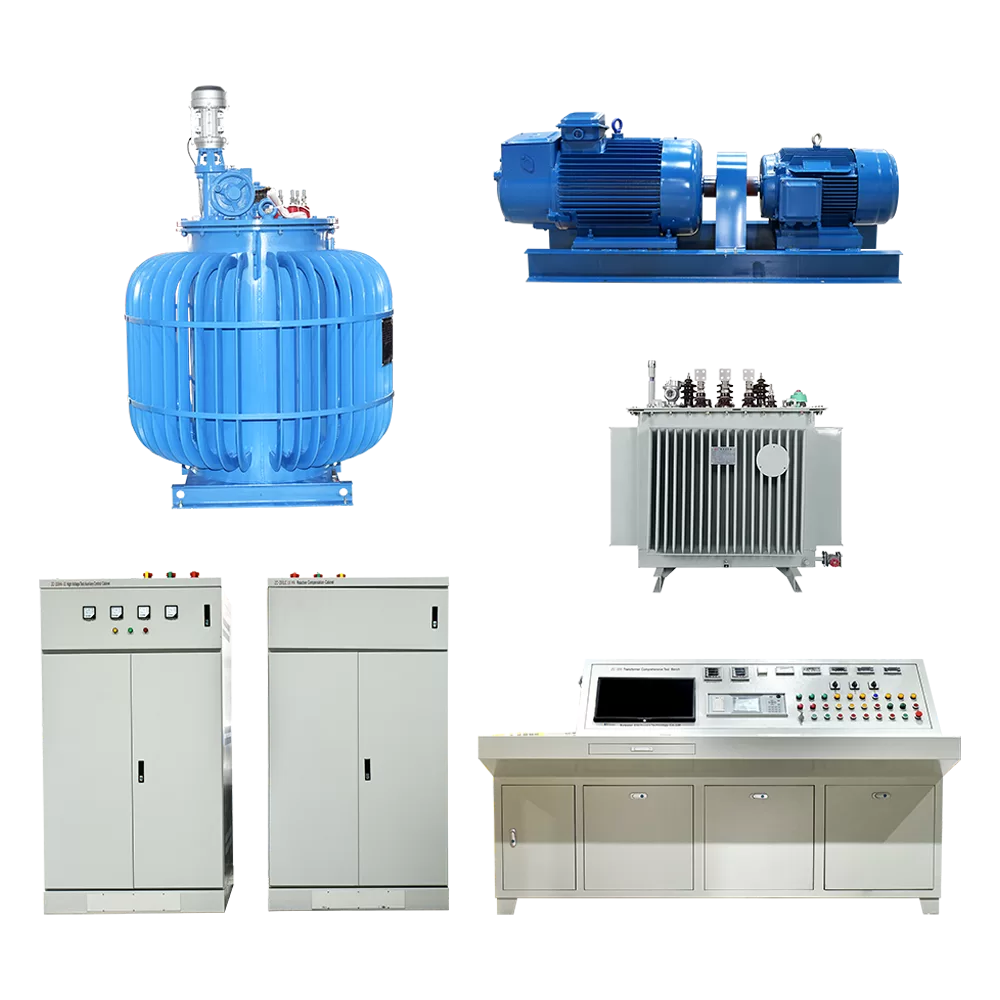
For transformer factories and laboratories that need automated primary-current accuracy testing, the ZCHG-12 Current Transformer Accuracy Testing System provides a different solution from a portable CT analyzer. It is designed for automated CT ratio-error and phase-error testing and can support multi-position testing configurations, making it suitable for production inspection and higher-throughput applications.
9.Compare Automation and Test Efficiency
Test speed affects labor cost, project schedules, and consistency. However, buyers should not judge automation only by phrases such as “one-key testing.”
A useful automatic CT tester should provide guided test procedures, clear wiring diagrams, automatic voltage or current adjustment, automatic curve generation, automatic knee-point calculation, automatic CT parameter calculation, multi-tap detection workflow, test-plan storage, repeatable test sequences, and data saving with report generation.
Ask the manufacturer how long a complete CT test takes under normal conditions. Also ask whether the quoted test time includes wiring, excitation testing, ratio testing, winding resistance, burden measurement, demagnetization, and report creation.
A fast test cycle is valuable only if the result remains traceable and technically reliable.
10.Check Software, Data, and Reporting Functions
Software is now a major part of CT testing equipment value. A technically capable instrument can still create operational difficulties if its software is hard to use or cannot generate usable records.
Before ordering, compare:
- Built-in test templates
- Standard selection options
- Automatic pass/fail assessment
- Multi-language interface availability
- Data storage capacity
- USB or PC data transfer
- Excel, CSV, XML, or other available export formats
- Test report customization
- Asset ID and serial-number traceability
- Software upgrade policy
- License fees and optional functions
- Offline operation capability
Buyers should ask for a real sample report, not only a screen image. The report should be readable, complete, and suitable for the customer’s internal documentation process.
11.Consider Portability and Field Conditions
A portable CT/PT analyzer should be judged not only by its measurement functions but also by how easily it can be used in a substation, factory, or outdoor commissioning environment.
Important practical factors include equipment weight, dimensions, carrying case quality, AC input range, battery option if available, operating temperature, humidity tolerance, screen visibility in strong light, control method, test-lead length and connector quality, grounding arrangement, and protective design for transport.
For field teams, a compact tester that reduces wiring complexity and carries all essential accessories can improve productivity more than a larger system with marginally better specifications that is difficult to transport.
12.Verify Electrical Safety Features
CT testing involves electrical risks, especially when working around installed equipment, high knee-point voltages, or secondary circuits connected to protection systems.
Before purchasing, check the maximum output voltage, output protection design, grounding requirements, emergency stop function, test-lead insulation quality, safe connection procedure, warning labels and operating instructions, internal overcurrent or overvoltage protection, interlock functions where applicable, and compliance documentation.
The supplier should also provide clear instructions for isolating the CT secondary circuit before testing. Safe operation should be part of the equipment package, not an afterthought.
13.Evaluate Manufacturing Quality and Calibration
A good instrument specification is only one part of the decision. Buyers should also assess the manufacturer’s quality process.
Useful questions include:
- Is each unit tested before shipment?
- Can the manufacturer provide a factory test record?
- Which parameters are included in the calibration certificate?
- Is calibration traceable to recognized standards?
- What is the recommended recalibration interval?
- Can recalibration be arranged after export?
- Are serial numbers used for equipment traceability?
- Is a factory acceptance test available before shipment?
For major projects, buyers can provide their CT nameplate data or test requirements and ask the supplier to demonstrate that the selected model can complete the required test procedure.
14.Compare Delivery, Service, and Customization
The lowest quotation is not always the lowest total cost of ownership. A CT tester may require software updates, technical support, calibration, spare parts, operator training, and report customization during its service life.
Compare production lead time, standard accessories included, optional accessories and pricing, warranty period, remote technical support availability, troubleshooting response time, spare-part availability, operator training, OEM branding options, report-template customization, language localization, voltage plug and power-supply options, and packaging suitable for international shipment.
For distributors and project integrators, customization capability can be especially important. It may affect product positioning, local compliance, documentation quality, and customer acceptance.
Final Questions Before You Buy
Before issuing a purchase order, ask the manufacturer these questions:
- Which accuracy figures are guaranteed, and under what conditions?
- Which CT and PT standards are supported by the software?
- Can the tester evaluate our CT class and maximum expected knee-point voltage?
- Does the product support all required multi-tap CT tests?
- Which test results are measured directly, and which are calculated?
- Can you provide a sample report for a similar CT application?
- What software functions are included in the standard quotation?
- What calibration evidence is supplied with the equipment?
- Can you perform a factory acceptance test before shipment?
- What technical support, training, and recalibration options are available after delivery?
Related Products
Latest News
-
 2026-09-302026 Top 3 Chinese Insulation Resistance Transformer Testing Equipment Manufacturers
 -
 2026-09-30Industrial CT Tester: How Is It Used for Current Transformer Factory Testing?
 -
 2026-09-30How Can a CT PT Analyzer Improve CT and PT Quality Testing in the Laboratory?
 -
 2026-09-30How to Perform Current Transformer Testing Step by Step?
 -
 2026-09-30How to Perform CT Analyzer Testing and Evaluate the Test Results?