
Home » News » Company News
Lab Test CT Analyzer Buying Guide: Accuracy, Burden and Data
Choosing a laboratory CT analyzer is not simply a matter of selecting the instrument with the longest feature list or the lowest quoted price. For transformer manufacturers, electrical testing laboratories, utilities, commissioning teams, and third-party inspection providers, the right analyzer must produce accurate, repeatable, traceable results for the current transformers they actually test.
A professional supplier such as Kvtester power testing equipment supports a broad range of CT/PT and transformer testing applications. However, before comparing individual models, buyers should define their CT classes, test standards, burden conditions, reporting needs, and expected daily test volume.
This guide explains the technical and operational factors that matter most when purchasing a lab-grade CT analyzer: measurement accuracy, burden range, standards compatibility, test capability, data handling, workflow efficiency, and long-term ownership cost.
1.Start With Your CT Testing Requirements
The best CT analyzer depends on what you need to test. A laboratory that verifies revenue-metering CTs has different priorities from a transformer factory performing routine production inspection or a utility team diagnosing protection CT performance in a substation.
Before comparing instruments, identify the following:
- CT type: metering CT, protection CT, PX/PS CT, TP-class CT, bushing CT, or GIS CT
- Secondary rated current: 1 A or 5 A
- CT accuracy class: such as Class 0.5, 0.2, 0.2S, 5P, 10P, PX, or TPX
- Required test standard: IEC 61869-1, IEC 61869-2, IEEE C57.13, or a customer-specific requirement
- Main purpose: factory acceptance, routine inspection, commissioning, maintenance, fault investigation, or calibration
- Required daily test quantity
- Required report format and data-retention period
A portable analyzer may be appropriate for individual CT testing, maintenance work, and commissioning tasks. A fixed automatic CT test system may be more suitable for manufacturers that need consistent batch testing, reduced manual wiring, and high production throughput.
2.Understand What “Accuracy” Really Means
Accuracy is one of the first specifications buyers compare, but it is also one of the most misunderstood. A headline statement such as “0.05% accuracy” does not explain every aspect of instrument performance.
When evaluating a CT analyzer, separate these concepts:
- Instrument measurement accuracy
- CT accuracy class
- Resolution
- Repeatability
- Measurement uncertainty
- Calibration traceability
- Accuracy at a specific measurement range
For metering CTs, ratio error and phase displacement are especially important. Even a small measurement error can affect energy metering, billing calculations, and compliance verification. For protection CTs, the priority may shift toward excitation characteristics, knee-point voltage, composite error, saturation behavior, and accuracy limit factor.
A laboratory should also check whether the analyzer specifies accuracy as a percentage of reading or a percentage of full scale. These values are not interchangeable. An instrument may appear highly accurate at the top of its range but provide less favorable performance at low-current or low-burden conditions.
The most useful analyzer is one that can assess CT performance across relevant operating conditions rather than at one isolated point. Buyers should ask whether the instrument can evaluate ratio error and phase displacement at different currents and burden values, then compare the result against the selected CT class and test standard.
3.Match Analyzer Accuracy to the CT Class
The analyzer’s accuracy must be appropriate for the CTs being tested. There is little value in purchasing an instrument that cannot provide sufficient confidence for the required accuracy class.
- Routine industrial inspection may prioritize stable ratio, polarity, excitation, and burden results.
- Protection CT testing may require reliable knee-point, excitation curve, remanence, and saturation-related calculations.
- Class 0.2 and 0.2S metering CT verification requires greater attention to ratio and phase measurement performance.
- Laboratory and calibration applications require clear uncertainty documentation, calibration certificates, and repeatable results under controlled conditions.
A professional purchase evaluation should therefore include a sample test using the buyer’s own CT. Ask the supplier to demonstrate the analyzer on the intended CT type, ratio, burden, and standard—not only on a generic demonstration unit.
4.Burden Range: Do Not Compare VA Numbers Alone
“Burden range” is a key purchase term, but it can refer to more than one thing. Buyers should distinguish between the CT’s rated burden, the actual connected burden in the secondary circuit, and the analyzer’s burden measurement range.
The rated burden is the load that a CT is designed to support while maintaining its specified accuracy. The connected burden is the actual load created by relays, meters, transducers, cables, terminals, and other secondary-circuit components.
S = I(s)(2) × Z
Where S is burden in VA, I(s) is secondary current in A, and Z is secondary loop impedance in Ω.
For a 5 A CT, even modest secondary-loop resistance can create a significant VA burden because the current is squared. A 1 A CT produces much lower VA burden under the same impedance. This is why buyers should always consider the actual secondary current, burden impedance, cable length, and power factor instead of reviewing only a maximum VA figure.
An overloaded CT secondary circuit can increase ratio error and phase displacement. In protection applications, excessive burden can also reduce the CT’s ability to reproduce fault current accurately and may increase saturation risk.
A suitable analyzer should help users measure or evaluate actual burden conditions, not simply display a nominal value. When comparing models, verify:
- Maximum burden measurement range
- Low-end burden resolution
- Burden measurement accuracy
- Support for 1 A and 5 A CTs
- Burden impedance measurement capability
- Power-factor consideration
- Ability to assess CT accuracy under nominal and connected burden conditions
5.Essential Tests for Laboratory CT Analysis
A laboratory-grade CT analyzer should support the tests that match the CT types and customer requirements in your workflow. Core CT functions commonly include:
- CT ratio measurement
- Polarity testing
- Ratio error measurement
- Phase displacement measurement
- Excitation characteristic testing
- Knee-point voltage determination
- Secondary winding resistance measurement
- Secondary burden measurement
- CT demagnetization
- Residual magnetism evaluation
- Composite error calculation
- Saturation-related performance assessment
- Standard-based pass/fail assessment
For protection CTs, excitation curve analysis and knee-point evaluation are particularly important. A CT can appear normal in a simple ratio test but still perform poorly during fault conditions if its excitation or saturation characteristics do not meet protection requirements.
For metering CTs, ratio and phase accuracy are critical because they directly affect metering performance. A suitable analyzer should support the selected measurement points, burden conditions, and accuracy classes required by the project specification.
6.A Portable Option for CT and PT Testing
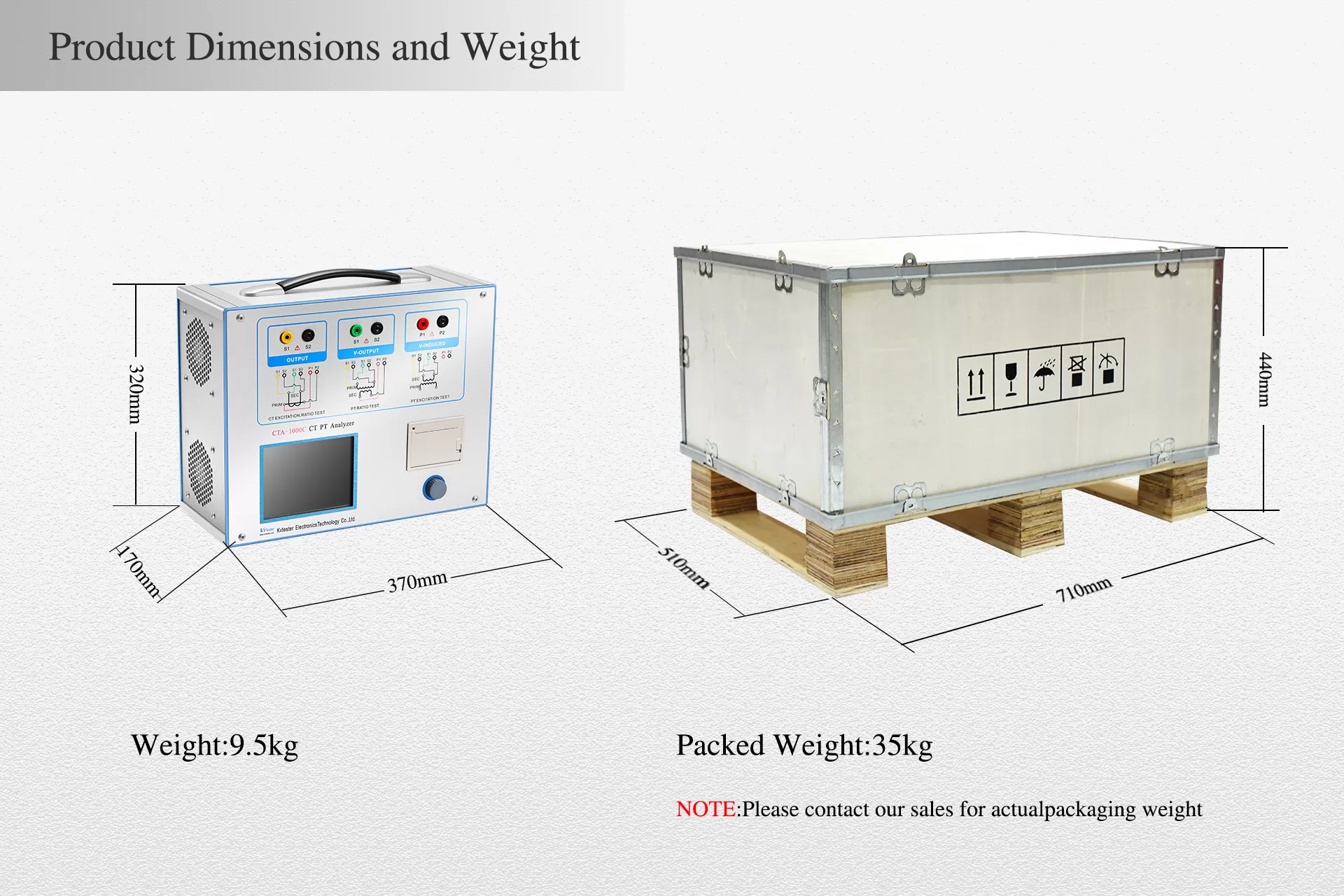
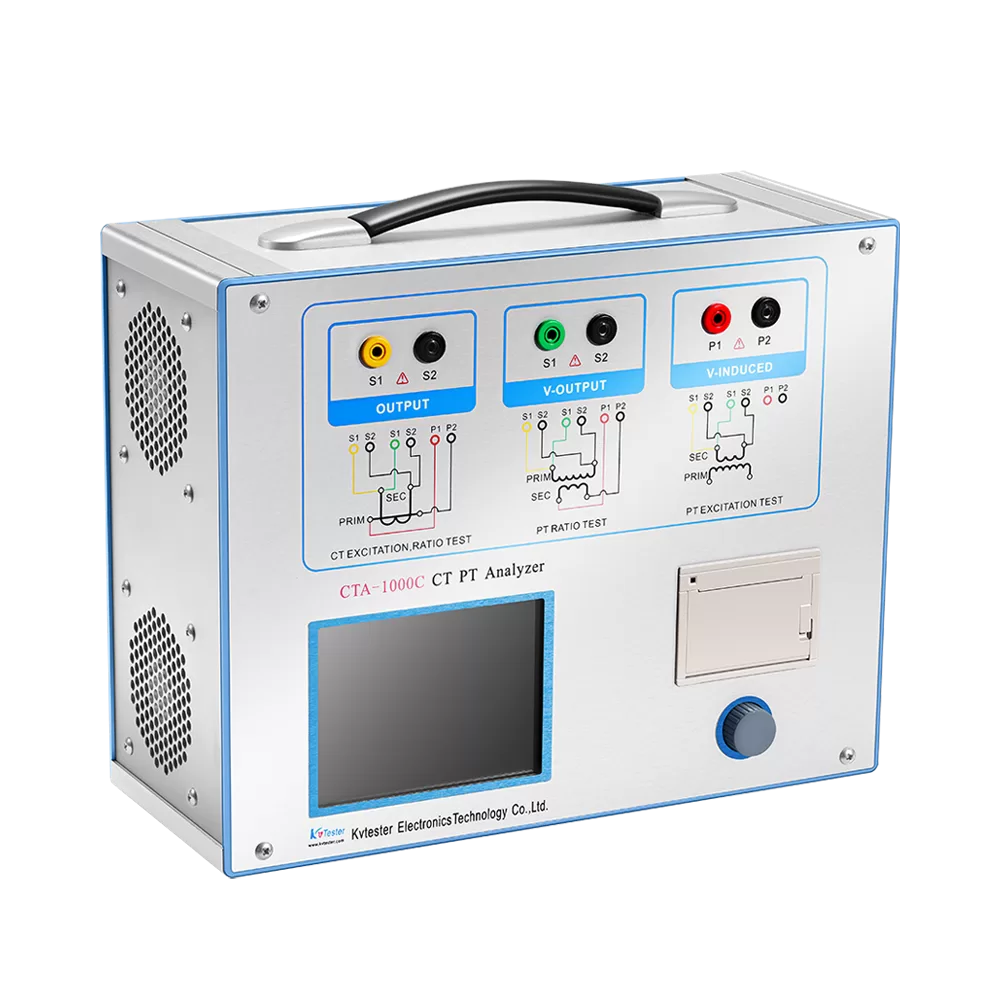
For laboratories and engineering teams that need a compact instrument for comprehensive CT and PT analysis, the CTA-1000C CT/PT Analyzer is designed for automated testing of current transformers and voltage transformers.
Its listed CT functions include ratio, phase-angle accuracy, excitation characteristics, winding resistance, burden, polarity, and residual magnetism testing. The unit supports a CT ratio range of 1 to 40,000 with a listed ratio accuracy of ±0.05%, a secondary burden range of 0 to 1000 VA, and a DC resistance range of 0 to 300 Ω. Its 0.01 A to 12 A secondary-current test range also provides flexibility for different CT applications.
For buyers, the practical advantage of this type of instrument is that it can support a broad testing workflow without requiring a large fixed bench. It is especially relevant for individual CT testing, transformer manufacturing inspection, substation commissioning, maintenance verification, and laboratory work where portability remains important.
However, buyers should still verify the exact standard, CT class, test range, report format, and uncertainty requirement before making a purchase decision. A product specification should always be matched to the actual customer acceptance criteria.
7.Standards Compatibility Is More Than a Checkbox
A CT analyzer should support the standards required by the project, customer, laboratory, or utility. For many IEC-oriented applications, IEC 61869-1 and IEC 61869-2 are central references for instrument transformer testing and performance evaluation.
Buyers should not only ask, “Does the analyzer support IEC standards?” They should ask more detailed questions:
- Which exact standard editions are supported?
- Which CT classes can the software evaluate?
- Are metering and protection CT calculations both included?
- Does the instrument evaluate burden, ratio error, phase displacement, and protection parameters according to the selected standard?
- Does the generated report show the chosen standard and pass/fail logic?
- Can the test configuration be retained for future audits or repeat tests?
This distinction matters because an analyzer may offer many measurement functions but lack the software logic or reporting structure required for a formal acceptance report.
8.Data Management Is Part of Measurement Quality
For a laboratory, a test result is not complete when the screen shows “Pass.” The result must be traceable, reviewable, exportable, and recoverable.
Strong data management should include:
- CT asset or serial number
- Nameplate data
- Test location and project reference
- Operator name
- Test date and time
- Analyzer serial number
- Calibration status
- Test connection and configuration
- Selected standard and CT class
- Raw readings and curves
- Calculated parameters
- Final pass/fail result
- Report revision history
Raw excitation curves and configuration data are especially valuable. If a result is challenged months later, a basic pass/fail statement may not be sufficient. The laboratory should be able to review how the CT was connected, what burden was selected, which standard was applied, and what measured data produced the final evaluation.
When comparing analyzers, ask whether data can be stored internally, transferred to a computer, organized by project or asset, and exported for customer reports or internal analysis. Also review backup procedures, access control, file naming, long-term archival practices, and compatibility with existing laboratory workflows.
Reporting note: Automatic report generation can save time and reduce transcription errors. Still, buyers should verify the actual available output formats rather than assuming every analyzer supports all formats or direct PDF export.
9.Workflow and Throughput Matter
A technically capable analyzer can still become inefficient if the workflow is slow, complex, or heavily dependent on manual data entry.
Consider the full test cycle:
- Prepare the CT and confirm safe isolation.
- Connect leads correctly.
- Select the CT type, standard, ratio, and burden.
- Run the test sequence.
- Review curves and calculated values.
- Save the result with the correct asset identity.
- Generate and review the report.
- Archive the result for future reference.
For lower-volume laboratory work, a portable analyzer with guided operation and automated testing can be efficient. For high-volume transformer manufacturing, a batch-oriented automated system may reduce repetitive wiring, improve consistency, and increase daily output.
Safety must also be part of the workflow. CT secondary circuits can develop hazardous voltages when incorrectly opened under energized conditions. Operators should follow approved isolation, grounding, connection, and verification procedures at all times.
10.When a Batch CT Test System Makes More Sense
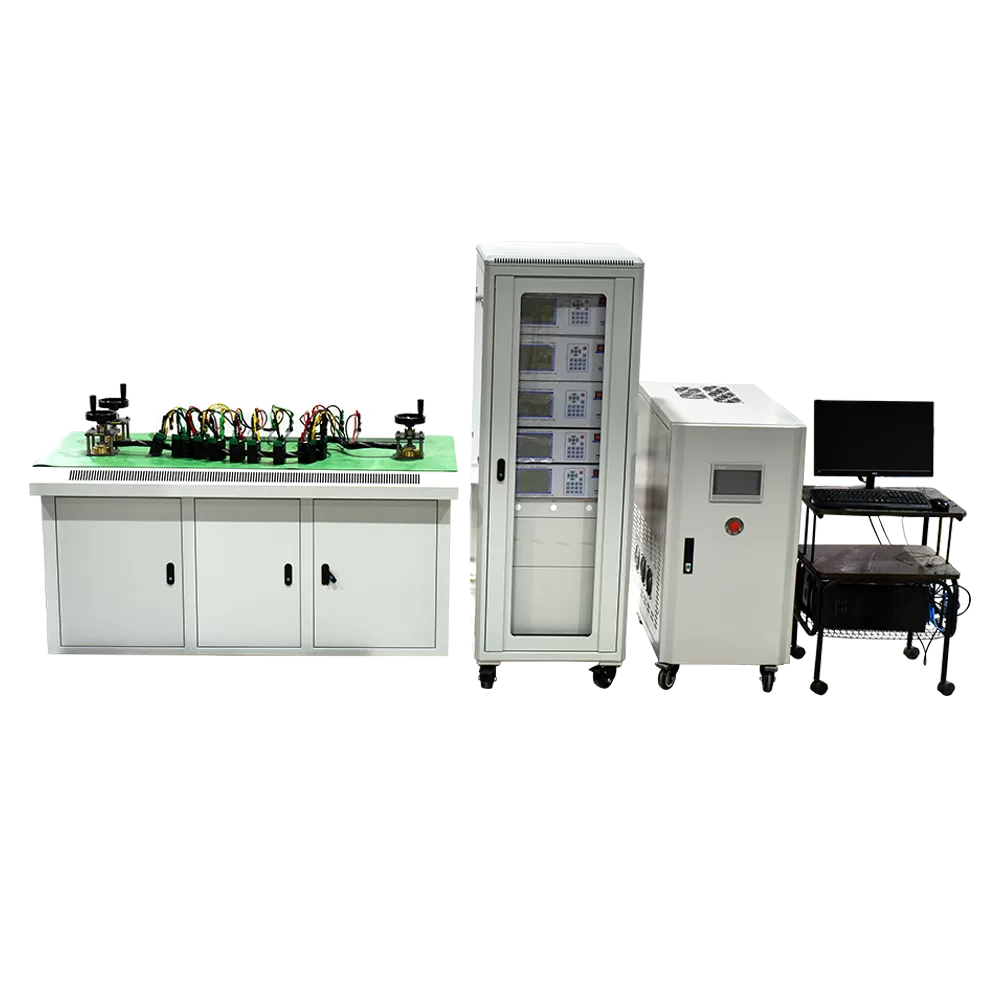
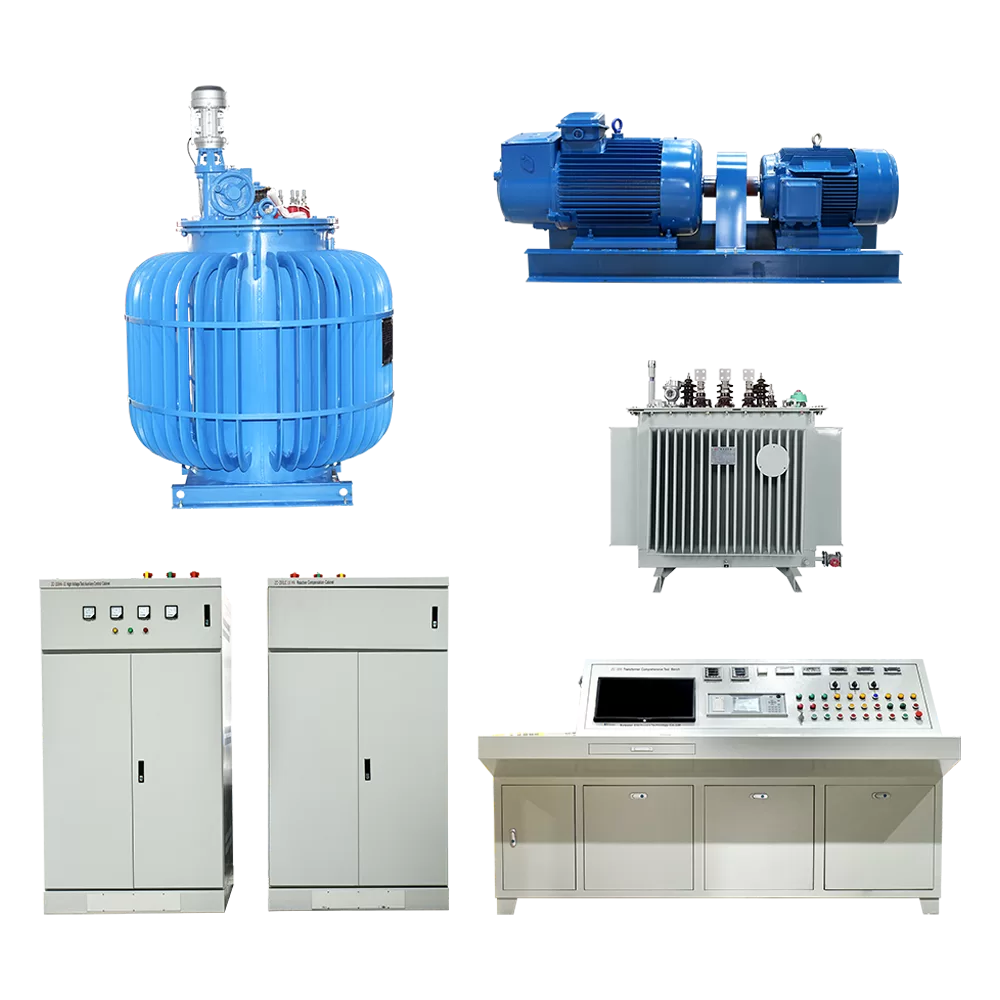
For CT manufacturers and high-volume testing operations, a fixed ZCHG-12 CT/PT Test System can be a more appropriate choice than testing each unit individually with a portable analyzer.
The ZCHG-12 system is intended for low-voltage CT accuracy testing, including ratio error and phase error measurement. Depending on configuration, it can test multiple CTs in one batch, with listed configurations supporting 1 to 12 units. It combines a control bench, intelligent CT calibrator, burden box, standard CT, current booster, computer, and associated test cables into a production-oriented test arrangement.
This type of solution is most relevant when a factory needs to improve consistency across repeated tests, reduce manual intervention, centralize data collection, and support routine quality control. The decision should be based on test volume, CT product range, target accuracy class, required current range, production-floor space, operator capability, and return on investment.
11.Evaluate Total Cost of Ownership
The purchase price is only one part of the decision. A lower-priced instrument may cost more over time if it creates rework, incomplete reports, delayed calibration, limited support, or poor data traceability.
Evaluate the full ownership picture:
- Initial equipment cost
- Calibration interval and service cost
- Training requirements
- Software updates
- Warranty terms
- Availability of technical support
- Replacement test leads and accessories
- Data-management capability
- Downtime risk
- Production throughput
- Report and audit requirements
For a laboratory, the cost of a missing record or unrepeatable result can be higher than the difference between two instruments. The right CT analyzer should therefore protect measurement confidence as well as improve testing speed.
12.Final CT Analyzer Buying Checklist
- Can it test every CT type and class in your current workload?
- Is the measurement accuracy suitable for the required CT accuracy class?
- Does it measure both ratio error and phase displacement?
- Can it assess CT performance under the relevant burden conditions?
- Is the burden range adequate at both low and high values?
- Does it support IEC 61869-1 and IEC 61869-2 where required?
- Can it perform excitation, knee-point, winding resistance, burden, and demagnetization tests?
- Does it provide clear standard-based evaluation logic?
- Can it preserve raw data, curves, settings, and historical records?
- Are report generation and data transfer suitable for your laboratory process?
- Has the supplier demonstrated the system using your actual CT and acceptance requirements?
- Does the expected test volume justify a portable analyzer or an automated batch system?
The right CT analyzer is not necessarily the one with the largest range or the most marketing claims. It is the one that delivers reliable accuracy, appropriate burden evaluation, relevant standard compliance, and a complete data trail for your specific laboratory or production workflow.
Related Products
Latest News
-
 2026-09-302026 Top 3 Chinese Insulation Resistance Transformer Testing Equipment Manufacturers
 -
 2026-09-30Industrial CT Tester: How Is It Used for Current Transformer Factory Testing?
 -
 2026-09-30How Can a CT PT Analyzer Improve CT and PT Quality Testing in the Laboratory?
 -
 2026-09-30How to Perform Current Transformer Testing Step by Step?
 -
 2026-09-30How to Perform CT Analyzer Testing and Evaluate the Test Results?