
Home » News » Company News
Economical CT PT Analyzer: Selection Guide for Buyers
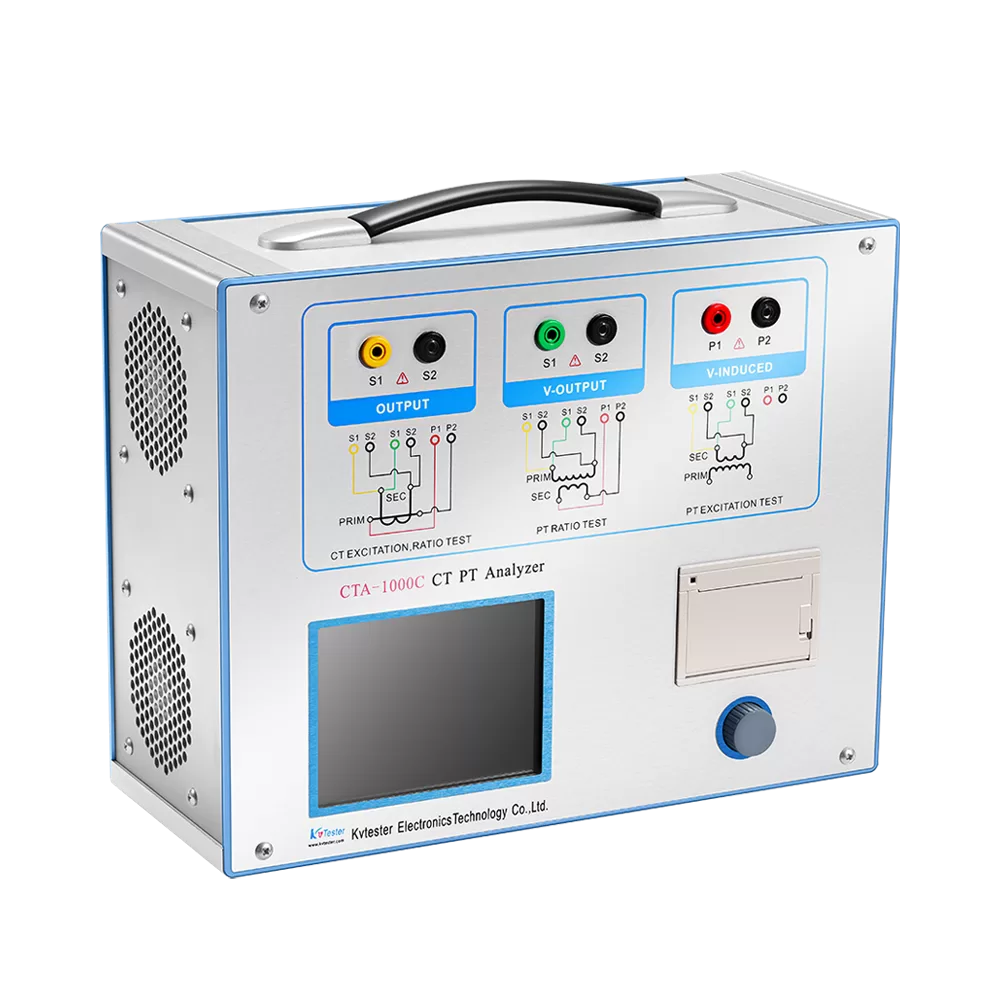
For power system operators, transformer and transformer manufacturers, third-party testing laboratories, and new energy engineering companies, CT and PT accuracy testing is a mandatory, repetitive, and high-frequency workflow. A reliable economical CT PT analyzer balances precise testing performance, reasonable procurement costs, and low long-term maintenance expenses, making it the ideal cost-effective solution for mass production testing, routine grid inspection, and project commissioning.
Many procurement teams and field engineers face a common dilemma: overpriced high-end analyzers come with redundant functions that waste budget, while ultra-low-cost generic devices compromise accuracy and stability, leading to unqualified test reports and hidden operational risks. This guide breaks down how to select a truly economical CT PT analyzer that fits your application scenarios, compliance requirements, and budget constraints, helping you avoid overspending and performance shortages.
What Is an Economical CT PT Analyzer?
An economical CT PT analyzer is a professional integrated testing device designed for CT (Current Transformer) and PT (Voltage Transformer) comprehensive characteristic testing. Unlike premium industrial-grade models tailored for ultra-precision laboratory research, economical versions focus on core testing demands, stable performance, and cost optimization, retaining all essential functions required for industry standards while eliminating unnecessary high-end customized modules.
It fully covers mainstream test items including ratio error, phase displacement, excitation characteristic curve, winding resistance, core demagnetization, and burden testing. Suited for factory batch testing of transformers and instrument transformers, daily calibration of power grid stations, and quality inspection of new energy power projects, it delivers compliant test results at a lower total cost of ownership (TCO).
Core Selection Criteria for an Economical CT PT Analyzer
True economy does not mean low price, but matching performance with actual demand. The following six key standards help you screen high-cost-performance CT PT analyzers suitable for global power industry scenarios.
1. Standard-Compliant Testing Accuracy
Accuracy is the bottom line of CT PT testing and the core indicator to judge device availability. Qualified economical models must support mainstream international and regional industry standards such as IEC 60044-1/2, GB/T 20840, and DL/T industry specifications.
For most commercial and industrial applications, a basic accuracy class of 0.1% is sufficient to meet the certification requirements of power detection institutions and factory quality inspections. Avoid pursuing ultra-high accuracy (0.05% and above) blindly—this premium specification is only required for national-level calibration laboratories and will significantly increase procurement costs unnecessarily. For TP-class transformer testing used in high-precision metering scenarios, confirm whether the economical model supports extended TP test functions on demand.
2. Complete Core Functional Modules
The biggest advantage of an economical CT PT analyzer is targeted function configuration. Do not choose simplified models with missing core functions, nor over-equipped devices with redundant features. The must-have functions for mainstream power industry scenarios are summarized below:
- Basic parameter testing: CT/PT ratio error, phase angle error, and winding resistance measurement
- Core characteristic testing: Automatic excitation curve plotting, inflection point value analysis, and core saturation assessment
- Pre-test protection functions: Automatic core demagnetization to eliminate residual magnetism interference and ensure test accuracy
- Burden testing: Adaptive CT/PT burden detection to verify transformer operating status under actual load conditions
- Automatic report generation: One-click generation of standard test reports with editable data and exportable Excel files
For on-site power engineering and mobile inspection scenarios, prioritize integrated all-in-one devices that support both CT and PT testing to eliminate the need for multiple single-function devices and save equipment and labor costs.
3. Scenario-Adapted Hardware Design
Different application scenarios put forward distinct hardware requirements for CT PT analyzers, which directly affect service life and use cost:
- Factory batch testing: Prioritize stable desktop models with continuous testing capability, supporting long-hour uninterrupted operation to meet mass production inspection needs
- On-site power station & new energy project testing: Choose lightweight, portable models with high IP protection ratings (IP54 and above), dustproof and drop-resistant design, suitable for harsh outdoor and construction site environments
In addition, a user-friendly intuitive GUI and built-in multi-language test templates can greatly reduce operator learning costs and improve on-site testing efficiency, which is an important hidden advantage of cost-effective models.
4. Efficient Data Processing & Compatibility
Modern power testing work requires digital data management. A high-quality economical CT PT analyzer supports automatic data recording, real-time curve display, and batch data storage. It is compatible with mainstream office and power management systems, realizing seamless data docking and avoiding manual data entry errors.
Avoid devices with closed data systems and non-editable reports—these will increase post-processing workload and reduce overall work efficiency, indirectly raising enterprise operating costs.
5. Reliability & Long-Term After-Sales Support
Low-cost devices with poor stability often cause test failures, repeated testing, and project delays, resulting in higher hidden costs. When selecting an economical model, focus on core reliability indicators: stable repeat test data, low failure rate, and strong anti-interference ability to adapt to complex electromagnetic environments of power systems.
Meanwhile, prioritize suppliers with complete global after-sales services, including long warranty periods (more than 2 years is optimal), remote technical guidance, and overseas on-site maintenance support. Timely after-sales service can effectively reduce equipment downtime and ensure continuous progress of testing work.
6. Optimized Total Cost of Ownership (TCO)
True economy is reflected in the full life cycle cost, not just the initial purchase price. Premium models with redundant functions have high purchase and maintenance costs, while cheap inferior devices have frequent failures and short service life.
A qualified economical CT PT analyzer features moderate initial investment, no subsequent software upgrade fees, low maintenance costs, and long service life, helping enterprises minimize long-term equipment input while meeting all daily testing and calibration needs.
Who Needs an Economical CT PT Analyzer?
- Instrument transformer manufacturers: Batch factory testing of CT/PT finished products to improve delivery efficiency and control production costs
- Power grid operation enterprises: Daily routine calibration and regular inspection of substation transformers
- Third-party detection & calibration institutions: Conventional standard testing services to balance service quality and operating costs
- New energy power engineering companies: On-site commissioning and acceptance testing of wind power, photovoltaic and power transmission projects
Common Selection Mistakes to Avoid
- Mistake 1: Blindly pursuing low prices – Ultra-low-cost devices often cut corners on accuracy and anti-interference performance, leading to unqualified test reports and compliance risks
- Mistake 2: Over-purchasing high-end models – Purchasing premium analyzers with professional research functions for conventional testing results in long-term idle of redundant functions and wasted budget
- Mistake 3: Ignoring after-sales service – Devices without reliable global technical support will face difficult maintenance and slow fault handling, affecting project progress
Final Thoughts
Selecting an economical CT PT analyzer is essentially a process of balancing testing performance, compliance standards, and full-life-cycle costs. For most power testing and calibration scenarios, you do not need the most expensive equipment—you need the most matching one.
By focusing on standard-compliant accuracy, complete core functions, scenario-adapted hardware, reliable after-sales support, and low comprehensive cost, you can select a high-cost-performance CT PT analyzer that effectively reduces enterprise procurement and operating costs while ensuring the accuracy and authority of power test data.
FAQ
Q1: Is an economical CT PT analyzer suitable for laboratory calibration?
A1: Yes. Models with 0.1% accuracy fully meet the daily calibration and testing needs of conventional laboratories and third-party testing institutions; ultra-precision laboratory research scenarios require high-end customized models.
Q2: Does the economical model support international standard report output?
A2: Qualified cost-effective analyzers support IEC, GB and other mainstream standard report templates, with multi-language switching and editable report functions, meeting global project delivery requirements.
Q3: What is the core advantage of an economical CT PT analyzer compared with high-end models?
A3: It retains all core testing functions required by the industry, eliminates redundant high-end functions, greatly reduces procurement and maintenance costs, and has higher cost performance for daily mass testing and routine inspection scenarios.
Related Products
Latest News
-
 2026-09-302026 Top 3 Chinese Insulation Resistance Transformer Testing Equipment Manufacturers
 -
 2026-09-30Industrial CT Tester: How Is It Used for Current Transformer Factory Testing?
 -
 2026-09-30How Can a CT PT Analyzer Improve CT and PT Quality Testing in the Laboratory?
 -
 2026-09-30How to Perform Current Transformer Testing Step by Step?
 -
 2026-09-30How to Perform CT Analyzer Testing and Evaluate the Test Results?