
Home » News » Company News
CT Analyzer for Substation – Testing & Calibration Guide
CT Analyzer for Substation is an essential high-voltage testing device for power substation commissioning, routine maintenance, and fault diagnosis. As the core sensory component of power grid systems, Current Transformers (CTs) directly determine the accuracy of energy metering and the reliability of relay protection. Uncalibrated or faulty CTs easily cause measurement deviations, protection malfunctions, and even substation grid faults and power outages. This guide elaborates on the functions, core benefits, key test items, application scenarios, and selection criteria of substation CT analyzers, helping power engineers and project purchasers deploy precise, efficient, and compliant CT testing solutions.
What Is a CT Analyzer for Substation?
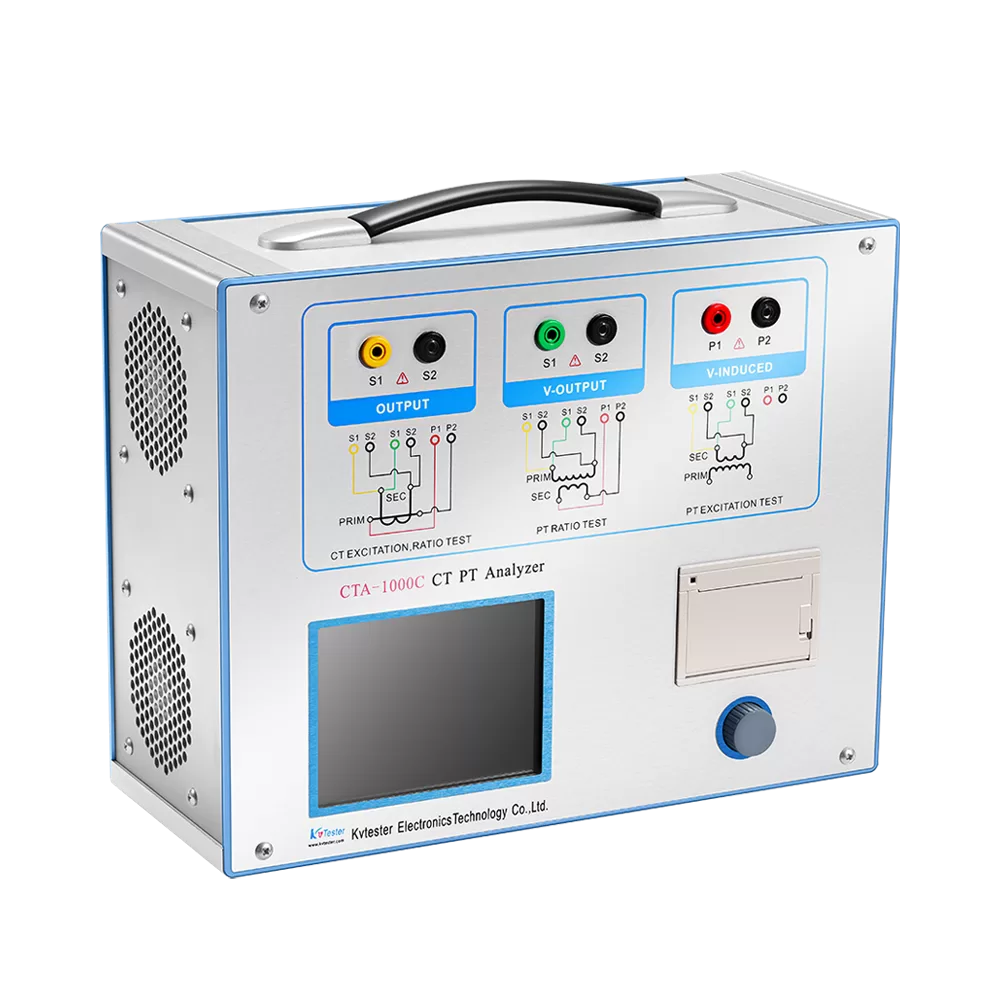
A substation CT analyzer is a professional portable testing instrument dedicated to full-parameter detection and performance calibration of substation current transformers (CTs) and voltage transformers (VTs). Different from ordinary testing tools, it integrates automated testing, data analysis, and report generation functions, fully complying with mainstream industry standards including IEC 60044 and IEEE C57.13.
Substation CTs are divided into metering class and protection class, undertaking grid current signal collection, energy metering settlement, and fault protection triggering tasks. The CT analyzer accurately verifies CT ratio accuracy, phase displacement, core saturation characteristics, and winding performance, eliminating hidden dangers caused by CT aging, parameter drift, and on-site installation errors. It is a core device for substation high-voltage testing and electric energy metering calibration.
Core Test Items of Substation CT Analyzer
A high-performance CT analyzer for substation covers all full-scale testing requirements for substation CT commissioning and daily maintenance, realizing one-stop automated testing without repeated wiring, greatly improving on-site operation efficiency:
1. CT Ratio & Phase Error Testing
It accurately detects the ratio error and phase angle deviation of metering and protection CTs. Excessive errors will lead to inaccurate electric energy metering, causing economic losses for power plants, grid companies, and industrial power users. The analyzer supports full-tap testing of multi-ratio CTs to ensure all parameter indicators meet grid operation standards.
2. CT Saturation & Excitation Characteristic Test
Core saturation is the most common fault of protection-class CTs. When grid short-circuit faults occur, saturated CTs cannot accurately transmit fault current signals, resulting in protection refusal or misoperation. The CT analyzer tests excitation volt-ampere characteristics and knee-point voltage, accurately judging CT core performance and ensuring the reliability of substation protection systems.
3. Winding Resistance & Polarity Detection
It precisely measures CT secondary winding resistance and verifies winding polarity. It effectively detects hidden faults such as internal short-circuited turns, open circuits, and wiring errors, avoiding secondary circuit failures that affect substation safe operation.
4. Insulation & Secondary Burden Test
The device supports CT insulation performance testing and secondary load burden measurement, evaluating the matching degree between CT secondary loop load and design parameters, ensuring stable and safe long-term operation of CT equipment in complex substation electromagnetic environments.
Why Substations Need Professional CT Analyzers
In substation operation and maintenance, traditional manual testing methods have defects such as cumbersome wiring, long test cycles, and large manual errors. Professional CT analyzers have become standard equipment for modern substation operation and maintenance with obvious technical advantages:
- High Testing Efficiency: One-key automated full-item testing for multi-tap CTs, no repeated wiring required, which shortens the single-device test time from hours to minutes and greatly improves substation commissioning and maintenance efficiency.
- High Test Accuracy & Stability: Adopting high-precision sampling and DC patented testing technology, it supports high knee-point voltage testing, fully adapting to the testing requirements of high-performance protection CTs such as TPY and TPZ, with test data stable and repeatable.
- On-site Portable Operation: Lightweight and compact design, adaptable to complex substation field environments such as high voltage, strong electromagnetic interference, narrow space, supporting outdoor and indoor all-weather testing.
- Standardized Data Management: Automatically generate standardized test reports that meet industry specifications, support data export and cloud storage, facilitate substation equipment file management and regular calibration acceptance.
- Risk Prevention & Control: Timely detect early aging, performance drift, and potential faults of CT equipment, eliminate grid operation hidden dangers in advance, and avoid substation tripping, power outages and other safety accidents.
Key Application Scenarios of CT Analyzer for Substation
CT analyzers are widely used in the full life cycle management of substation CT equipment, covering multiple core scenarios such as new station commissioning, daily operation and maintenance, periodic calibration, and fault troubleshooting:
1. New Substation Commissioning
Before new substations are put into operation, all CT and VT equipment must undergo full-performance testing and calibration. The CT analyzer verifies whether equipment parameters meet design standards, ensures accurate metering and reliable protection functions, and provides qualified test data for grid access acceptance.
2. Regular Substation Maintenance & Calibration
Affected by long-term high-voltage operation, electromagnetic interference, and environmental temperature and humidity changes, substation CTs will have performance attenuation and parameter drift. Regular testing with a CT analyzer ensures long-term stable operation of metering and protection systems and complies with grid safety maintenance specifications.
3. Grid Fault Diagnosis & Troubleshooting
When substation metering deviation, protection misoperation or abnormal grid operation occurs, the CT analyzer quickly locates fault points such as CT saturation failure, wiring errors, and winding damage, providing accurate data support for rapid fault repair and grid recovery.
4. New Energy Station Grid Connection Testing
For wind power, photovoltaic and other new energy booster substations, CTs need to adapt to fluctuating power generation conditions. The CT analyzer verifies CT dynamic response accuracy and anti-interference performance, ensuring stable grid synchronization and accurate energy metering of new energy stations.
How to Choose a Reliable CT Analyzer for Substation?
Facing various CT testing devices on the market, power engineering contractors, grid operation and maintenance units, and power equipment manufacturers need to select targeted products according to substation voltage levels and testing demands. The core selection criteria are as follows:
- Full Compliance with Industry Standards: Prioritize analyzers that fully comply with IEC 60044, IEEE C57.13 and local grid specifications to ensure test results are authoritative and acceptable for acceptance.
- Complete Test Functions: Support full-item testing including ratio error, phase displacement, saturation characteristics, winding resistance, polarity, and secondary burden, meeting one-stop testing demands of different types of CTs.
- Strong On-site Adaptability: Equipped with anti-electromagnetic interference performance, portable body, and daylight-readable high-definition display, adapting to complex substation on-site environments.
- Intelligent Operation & Data Output: Support one-key automatic testing, intelligent data analysis, and standardized report generation, reducing manual operation errors and improving work efficiency.
- Professional After-sales & Customized Solutions: Choose suppliers with professional high-voltage testing and electric energy calibration capabilities, providing on-site commissioning, technical training, and customized testing solutions for different substation scenarios.
Professional Substation CT Testing & Calibration Solutions
As a professional overall solution supplier focusing on high-voltage testing and electric energy metering calibration, we provide integrated services including CT analyzer equipment supply, on-site testing commissioning, equipment calibration, and customized scheme formulation for power substations of all voltage levels.
Our substation CT analyzers adopt industry-leading high-precision testing technology, covering all testing demands of 10kV-1000kV substations. They are widely used in power grid substations, industrial and mining enterprise substations, new energy booster stations, and other scenarios, helping global power users achieve efficient, accurate, and compliant CT equipment operation and maintenance, effectively reducing grid operation risks and metering errors.
Final Words
CT equipment is the core guarantee of substation grid safety and metering accuracy, and a professionalCT Analyzer for Substation is an indispensable tool in substation commissioning, operation and maintenance, and fault diagnosis. Selecting high-precision, full-function, and compliant CT testing equipment can effectively improve substation operation stability, reduce equipment failure rates, and ensure long-term safe and economical operation of power grid systems.
FAQs
Q1: What is the main difference between a substation CT analyzer and an ordinary CT tester?
Professional substation CT analyzers support full-parameter automated testing, high knee-point voltage saturation testing, and multi-tap detection, with higher accuracy and anti-interference performance, adapting to high-standard testing demands of grid substations, while ordinary testers have single functions and low accuracy, only suitable for simple detection.
Q2: How often should substation CTs be tested with a CT analyzer?
Newly installed substation CTs need full-item testing before grid connection; operating CTs are recommended to undergo comprehensive calibration every 1-3 years, and special testing is required in case of grid faults or abnormal metering data.
Q3: Can the CT analyzer test both metering and protection class CTs?
Yes. Professional substation CT analyzers perfectly adapt to metering-class CT accuracy testing and protection-class CT saturation and transient performance testing, covering all types of conventional and special CTs such as TPY and TPZ.
Related Products
Latest News
-
 2026-09-302026 Top 3 Chinese Insulation Resistance Transformer Testing Equipment Manufacturers
 -
 2026-09-30Industrial CT Tester: How Is It Used for Current Transformer Factory Testing?
 -
 2026-09-30How Can a CT PT Analyzer Improve CT and PT Quality Testing in the Laboratory?
 -
 2026-09-30How to Perform Current Transformer Testing Step by Step?
 -
 2026-09-30How to Perform CT Analyzer Testing and Evaluate the Test Results?