
Home » News » Company News
Compact Transformer Testing Equipment for Field Teams
Choosing compact transformer testing equipment should match the transformer type, required test items, outage window, available site power, transport conditions, safety procedure, and reporting requirements.
For field teams working in substations, distribution networks, repair locations, transformer factories, or remote service sites, portable equipment should help complete the required tests efficiently without creating unnecessary setup complexity. A practical package may include separate instruments for capacity and loss testing, winding-resistance measurement, insulation testing, ratio testing, or other required checks.
What Tests Should Be Required?define the actual work order
Compact transformer testing equipment is most effective when it is selected around the required measurements rather than around a single product specification.
Typical transformer test items may include:
- Transformer capacity verification
- No-load current measurement
- No-load loss measurement
- Load loss or short-circuit loss measurement
- Impedance-voltage measurement
- DC winding-resistance measurement
- Transformer turns-ratio testing
- Vector-group verification
- Insulation-resistance testing
- Power-frequency withstand-voltage testing
- Induced withstand-voltage testing
- Temperature-rise testing
- Comparison with factory, commissioning, repair, or earlier maintenance records
Not every field assignment requires a complete transformer test system. A short maintenance outage may require only winding-resistance verification after a repair. A distribution-transformer inspection may require capacity, no-load, load-loss, and impedance-related results. A commissioning project may require a broader combination of ratio, resistance, insulation, and dielectric tests.
Before comparing portable transformer testers, confirm:
- Transformer type: dry-type, oil-immersed, single-phase, or three-phase
- Rated voltage and rated capacity
- Test location and available working area
- Required test items
- Planned outage duration
- Available AC power supply
- Need for printing, stored data, or computer transfer
- Requirement for temperature correction
- Requirement to compare results with previous test records
- Transport route, access roads, stairs, lifting limitations, and weather exposure
A clear test list helps avoid two common problems: purchasing an instrument that cannot complete the required job, or carrying a large multi-function system when a focused portable tester would be more efficient.
For distribution-transformer capacity, no-load, load-loss, and impedance-related work, the ZC-202B Transformer Capacity and Load Tester is designed to measure transformer capacity, no-load current, no-load loss, short-circuit or load loss, and impedance voltage. It combines capacity-testing and transformer-characteristic measurement functions in one unit.
Can a Compact Package Cover Capacity and Winding Tests?
For many field-maintenance assignments, a two-instrument configuration can provide useful coverage: a transformer capacity and load tester for performance-related measurements, plus a DC resistance tester for winding verification.
The ZC-202B is intended for capacity, no-load, and load-related testing. Its functions include measurement of transformer capacity, no-load current, no-load loss, short-circuit loss, load loss, and impedance voltage. It can perform three-phase no-load and load testing, determine whether wiring is correct, and display three-phase voltage and current vectors.
For winding-resistance work, the ZC-205A DC Resistance Tester is intended for transformer DC-resistance testing in power-system and transformer-manufacturing applications. The product is designed for transformer resistance measurement with a clear operating and data-review workflow.
Together, these instruments answer different maintenance questions. A capacity and load tester supports transformer-capacity assessment, no-load current measurement, no-load loss measurement, load-loss measurement, and impedance-voltage testing. A DC resistance tester supports winding-resistance comparison across phases or tap positions, connection inspection, and temperature-corrected maintenance records where required.
A compact package should be evaluated as a complete field arrangement, not only as one instrument. Test leads, clamps, grounding conductors, adapters, auxiliary transformers, voltage regulators, extension cables, printer requirements, and protective equipment can have as much influence on field efficiency as the tester itself.
Does the Equipment Match the Transformer Rating?
Measurement range and test capability should be checked against the transformer nameplate and the intended test procedure. A portable tester may be compact, but it must still cover the voltage, current, capacity, frequency, and winding-resistance range involved in the job.
For the ZC-202B, the published capacity-test coverage includes:
- 10 kV dry-type transformers: 30 kVA to 3150 kVA
- 10 kV oil-immersed transformers: 30 kVA to 3150 kVA
- 20 kV dry-type transformers: 50 kVA to 2500 kVA
- 35 kV dry-type transformers: 50 kVA to 2000 kVA
- 35 kV oil-immersed transformers: 50 kVA to 31,500 kVA
The published operating-input range is 185 VAC to 250 VAC, with an allowable input-voltage range of 85 VAC to 264 VAC. The product also specifies an operating-temperature range of −10°C to +50°C.
When evaluating a DC resistance tester, verify the output-current steps, resistance range, resolution, charging and discharge process, and whether the instrument supports the required winding configuration. Large transformers, low-resistance windings, and tap-changer work may require higher output current or a three-phase resistance-testing workflow. For example, Kvtester also offers the ZC-205C-20A Three-Phase DC Resistance Tester, which is intended to test three-phase transformer winding resistance simultaneously and support direct tap-changer adjustment.
Before ordering, provide the supplier with:
- Transformer rated capacity
- High- and low-voltage ratings
- Transformer type and phase configuration
- Tap-changer type and tap range
- Required test items
- Expected resistance range, if known
- Applicable IEC, IEEE, GB, utility, or project requirements
- Test location and power-supply conditions
- Required report language, printing method, and data-export format
This information makes it easier to determine whether a small single-function tester, a portable multi-instrument package, or a larger transformer test system is the better fit.
Is the Equipment Practical for Field Work?
Field portability involves more than the main instrument’s weight. A field team must be able to carry, position, connect, power, operate, protect, and pack the complete arrangement within the available outage window.
When comparing compact transformer testing equipment, consider:
- Main-unit dimensions and weight
- Carrying-case design and accessory storage
- Required external AC supply and allowable voltage range
- Need for batteries, voltage regulators, auxiliary current transformers, or voltage transformers
- Test-lead length, clamp type, and connection arrangement
- Grounding method and protective-earth requirements
- Screen visibility in outdoor conditions
- Setup time and guided wiring process
- Automatic range selection or wiring verification
- Data storage, printing, and computer-transfer functions
- Protection against incorrect wiring, overload, or abnormal test conditions
- Operating temperature, humidity, dust, rain, heat, and ventilation conditions
The ZC-202B is positioned as a multi-function capacity and transformer-characteristic tester rather than a complete factory test platform. Its published specifications include an AC input requirement, so crews should confirm power availability and the complete supporting equipment needed for the selected test method before arriving on site.
A compact instrument does not eliminate the need for a safe work area. Field teams should establish a controlled test zone, inspect leads and grounding conductors, follow local isolation and lockout procedures, and prevent unauthorized personnel from approaching energized test connections. Outdoor instruments should also be protected from rain, standing water, excessive dust, direct heat, unstable surfaces, and blocked ventilation.
How Should You Plan Records and Supplier Support?
Test data is valuable only when it can be identified, retained, reviewed, and compared. A field report should allow the next technician, asset manager, inspector, or customer representative to understand exactly what was tested and under which conditions.
A useful transformer field-test record should include:
- Transformer identification number and location
- Manufacturer, serial number, voltage class, capacity, and vector group
- Test date and time
- Technician or testing organization
- Tap position
- Ambient and winding-temperature information, where relevant
- Test voltage, test current, and connection method
- Measured values and corrected values
- Reference temperature used for resistance correction
- Previous-test or factory-reference values
- Acceptance criteria or project requirements
- Equipment model and calibration status
- Observations, abnormal conditions, and recommended follow-up actions
Data storage and transfer capability can improve repeatability across multiple sites. It is particularly useful for service teams that need to compare current values with commissioning records, previous maintenance reports, factory data, or results collected after a repair.
Supplier support should also be included in the equipment decision. In addition to comparing instrument functions and pricing, request:
- A detailed datasheet with measurement ranges and accuracy
- Complete standard-accessory and optional-accessory lists
- Wiring diagrams and operating manuals
- Recommended field configuration for the transformer ratings involved
- Data-storage, printing, and computer-reporting details
- Factory inspection or test information
- Calibration options and certificate availability
- Warranty conditions
- Spare-parts availability
- Remote technical support and troubleshooting process
- Delivery schedule and packing details
- Customization options for voltage, language, reports, or project requirements
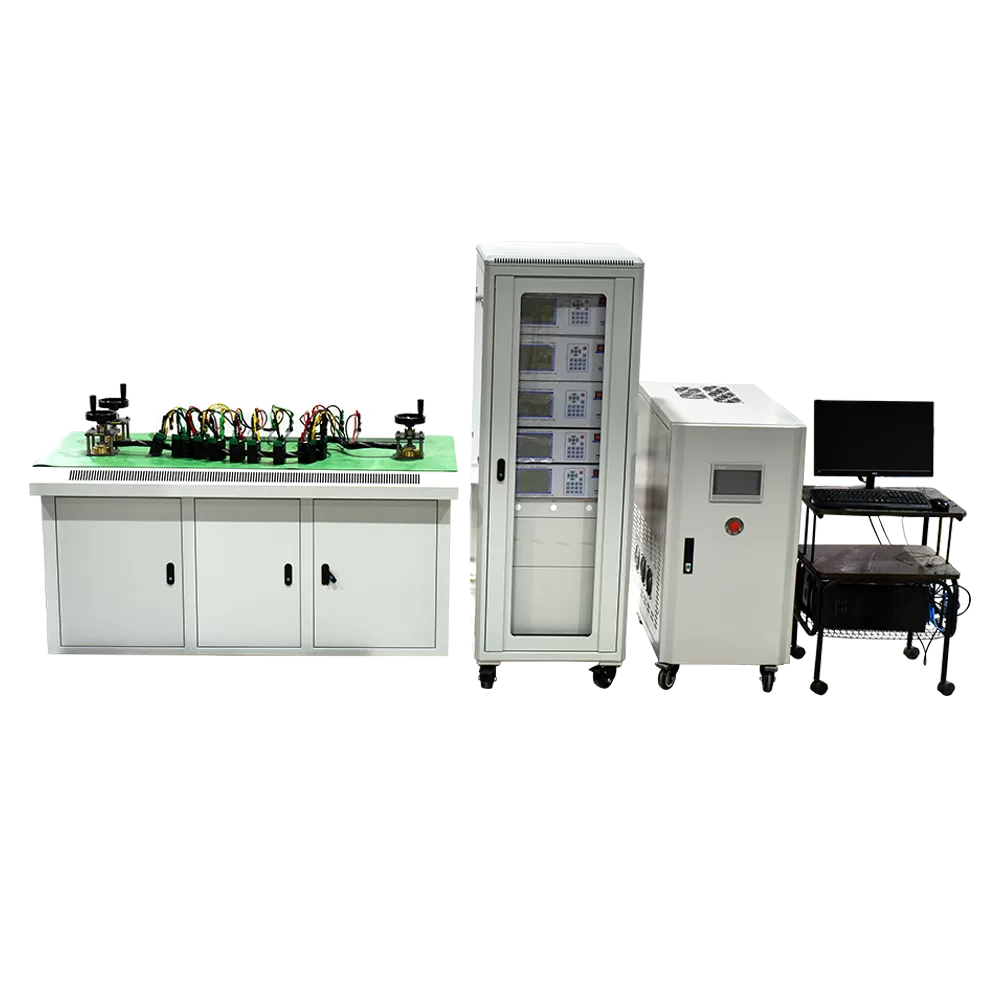
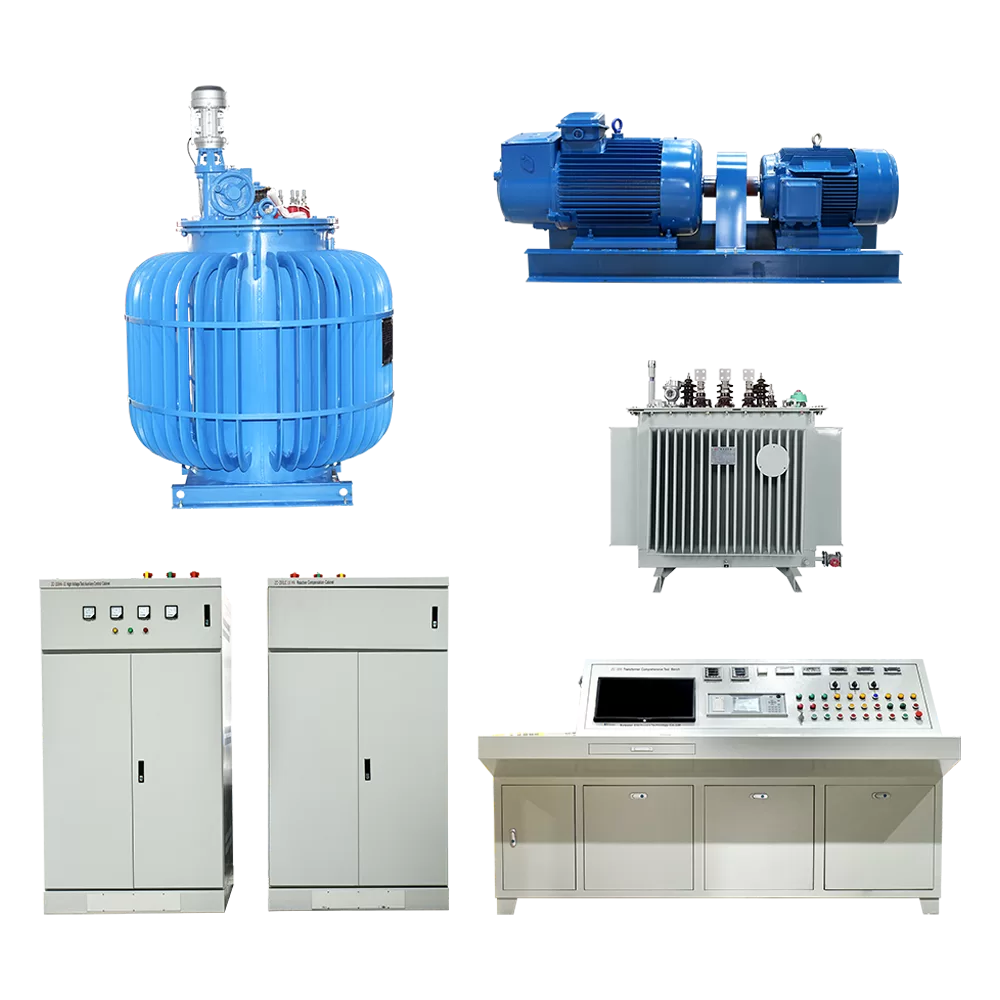
Kvtester supplies transformer testing equipment, including resistance testers, impedance testers, ratio testers, and transformer comprehensive test benches for substations and utility applications. Its transformer-testing range can be reviewed before choosing between dedicated portable instruments and a broader test-platform configuration.
Choose Equipment for the Actual Workflow
Compact transformer testing equipment should reduce the practical burden of field work without sacrificing the test coverage, measurement range, safety process, or documentation quality required by the assignment.
Before selecting a field package, confirm these key points:
- Required transformer test items
- Transformer voltage class, capacity, type, and winding arrangement
- Measurement range, output capability, accuracy, and resolution
- Available site power and auxiliary-equipment requirements
- Main-unit portability plus the transport needs of leads and accessories
- Planned outage duration and test-sequence efficiency
- Data storage, printing, report generation, and record-comparison needs
- Grounding, environmental protection, and work-area safety requirements
- Supplier documentation, calibration, technical support, and service arrangements
- Whether a dedicated portable tester or broader transformer test system is more suitable
Dedicated portable testers are often appropriate when the work scope is defined, such as capacity and loss measurement or winding-resistance verification. A larger system becomes more appropriate when the workflow also requires transformer ratio, vector group, insulation resistance, power-frequency withstand voltage, induced withstand voltage, temperature-rise testing, centralized control, or routine multi-item factory records.
By selecting equipment around the complete work order—not only size or initial price—field teams can complete transformer testing with a more efficient setup, more consistent records, and a configuration better suited to return-to-service decisions.
Related Products
Latest News
-
 2026-09-18Multi-function Transformer Testing Equipment OEM Guide
 -
 2026-09-18What Should You Look for When Buying a CT/PT Analyzer from a Supplier?
 -
 2026-09-17How an Intelligent Transformer Tester Supports Safe Transformer Testing
 -
 2026-09-17ANSI Standard Six Phase CT Tester Manufacturer: OEM Selection Guide
 -
 2026-09-17What Transformer Tests Does a Power Plant Need for Reliable Operation?