
What are the differences between insulation resistance, absorption ratio, and polarization index?
What are the differences between insulation resistance, absorption ratio, and polarization index?
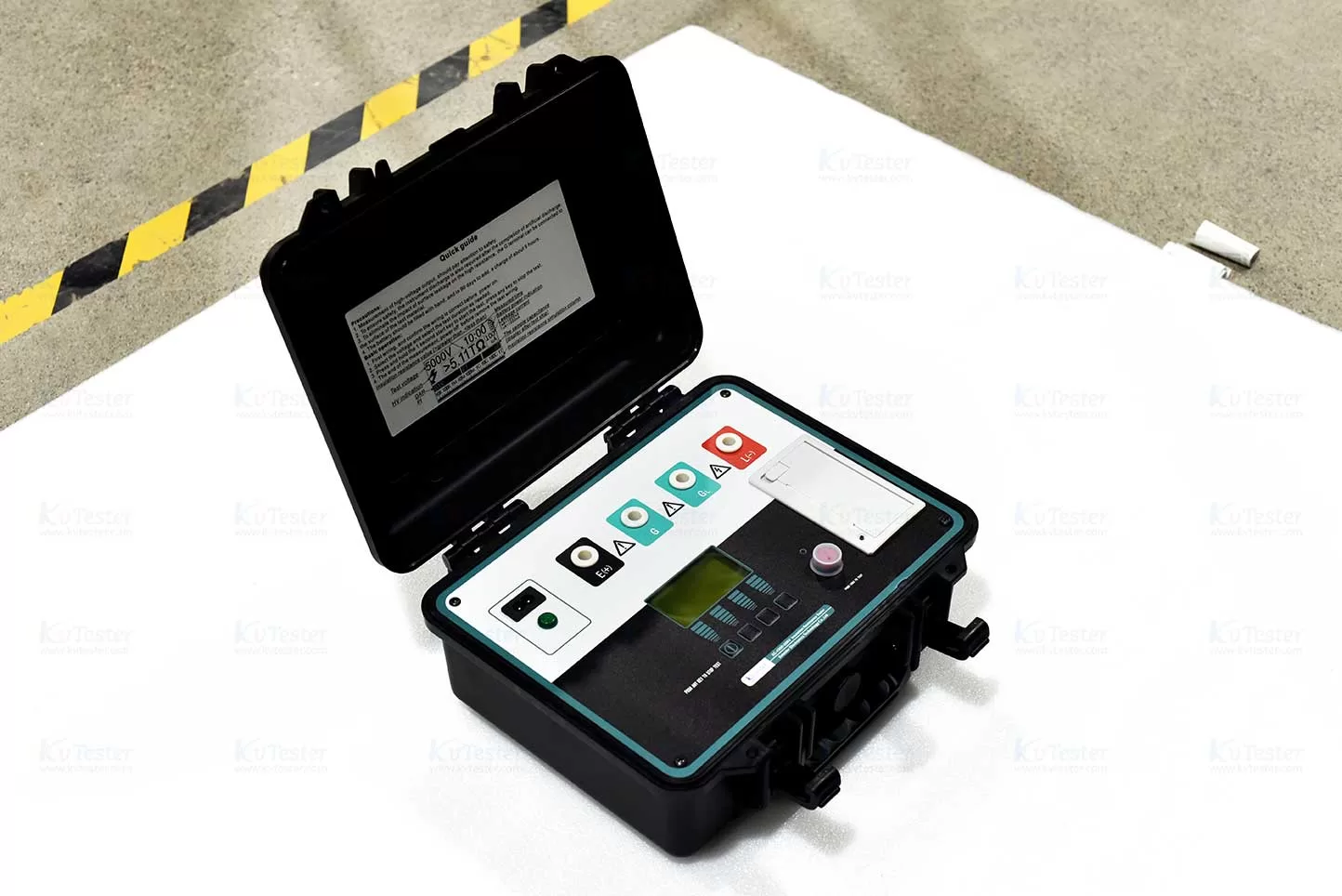
In insulation testing for electrical equipment—such as transformers, motors, and cables—insulation resistance, absorption ratio, and polarization index are frequently measured. While all three provide insight into the condition of the equipment’s insulation, they carry different meanings and focus on different aspects for assessment. Simply put, insulation resistance reflects the level of insulation at a specific moment, whereas the absorption ratio and polarization index focus on how insulation resistance changes over the duration of an applied voltage.
1. What is insulation resistance?
Insulation resistance is the resistance value calculated by measuring the leakage current after a specified DC voltage is applied to the test object; it is typically expressed in MΩ or GΩ. Under otherwise identical conditions, a lower insulation resistance may indicate that the insulation is damp, contaminated on the surface, aged, or contains localized defects. However, because insulation resistance is significantly influenced by temperature, humidity, equipment capacity, and insulation structure, one cannot determine whether equipment is in an acceptable condition based solely on a single measurement. Instead, results should be compared against factory specifications, historical data, or data recorded at the same temperature.
2. What is the absorption ratio?
When a DC test voltage is applied to equipment, the insulation resistance typically changes gradually as the duration of the applied voltage increases. The absorption ratio utilizes this characteristic to analyze the state of the insulation. It is commonly calculated as follows: Absorption Ratio (K) = R60 / R15
Where: R60 is the insulation resistance measured at 60 seconds, and R15 is the insulation resistance measured at 15 seconds. If the insulation is in good condition, the measured insulation resistance generally increases over time as the charging and polarization processes occur; therefore, R60 is typically greater than R15. Compared to a single insulation resistance measurement, the absorption ratio provides a better indication of whether the insulation is damp and reflects its overall condition.
3. What is the polarization index?
The Polarization Index (PI) is based on a principle similar to that of the Absorption Ratio (AR), but it involves a longer testing duration. It is typically calculated as the ratio of the insulation resistance measured at 10 minutes to that measured at 1 minute: PI = R10min / R1min.
Because the test lasts longer, the Polarization Index allows for a more detailed observation of the polarization characteristics of insulation materials when subjected to a DC electric field over an extended period.
For equipment such as large transformers and generators, relying solely on short-term changes in insulation resistance may not be sufficient to accurately reflect the actual state of the insulation; therefore, the Polarization Index serves as a valuable supplementary analytical tool.
4. What are the main differences between the three?
In simple terms:
Insulation Resistance — indicates the magnitude of the resistance value.
Absorption Ratio — indicates the increase in insulation resistance between 15 seconds and 60 seconds.
Polarization Index — indicates the trend of insulation resistance changes between 1 minute and 10 minutes.
Thus, while insulation resistance represents an absolute value, the Absorption Ratio and Polarization Index are ratios of insulation resistance measured at two different points in time.
In practical testing, if the insulation resistance drops significantly and the Absorption Ratio or Polarization Index also shows abnormal values, further analysis is required—taking into account factors such as equipment temperature, ambient humidity, historical test data, and other insulation test parameters.
Summary
Although insulation resistance, the Absorption Ratio, and the Polarization Index are all used to evaluate the insulation status of electrical equipment, they focus on different aspects. Insulation resistance primarily reflects the overall resistance level of the insulation, whereas the Absorption Ratio and Polarization Index provide further insight into moisture content, aging, and polarization characteristics by analyzing how insulation resistance changes over specific time intervals.
During on-site testing, appropriate test parameters should be selected based on the type of equipment and relevant testing requirements. A comprehensive assessment should be made by incorporating historical data; one should not determine whether the equipment’s insulation is in a normal state based solely on a single numerical value.
Related Products
Latest News
-
 2026-10-15What is the purpose of a transformer load test?
 -
 2026-10-15What causes unstable results in transformer DC resistance tests?
 -
 2026-10-15How to Choose a Resonant Test System With USB Output
 -
 2026-10-15CT PT Analyzer Manufacturers: Features and Selection Guide
 -
 2026-10-142026 Top 6 Portable Transformer Testing Equipment Manufacturers