
Home » News » Company News
CT PT Analyzer Manufacturers: Features and Selection Guide
Choosing a CT PT analyzer manufacturer involves more than comparing prices or testing functions. Power utilities, transformer manufacturers, and testing laboratories need equipment that meets accuracy requirements, supports the required transformer types, and fits their testing workflow. Understanding the differences between analyzer configurations helps buyers select reliable equipment for field maintenance, laboratory testing, or factory production.
What Should You Expect from a CT PT Analyzer Manufacturer?
A capable CT PT analyzer manufacturer should provide clear technical specifications and equipment suited to current transformers (CTs) and voltage transformers (PTs).
The main factors to consider include:
- Measurement accuracy and ratio range
- Excitation characteristics and knee-point analysis
- Secondary winding resistance and burden measurement
- Automatic testing and result evaluation
- Portability, data storage, and report generation
Not every analyzer supports every function. Portable instruments often prioritize ease of use and efficient field testing, while factory systems focus on automation, batch processing, and repeatable results.
CT PT Analyzer Manufacturers and Their Capabilities
Kvtester
At Kvtester, we provide CT/PT testing solutions for power utilities, transformer manufacturers, testing laboratories, and maintenance teams. Our equipment covers portable transformer analysis and automated testing, helping users choose instruments according to their measurement requirements and working environments.
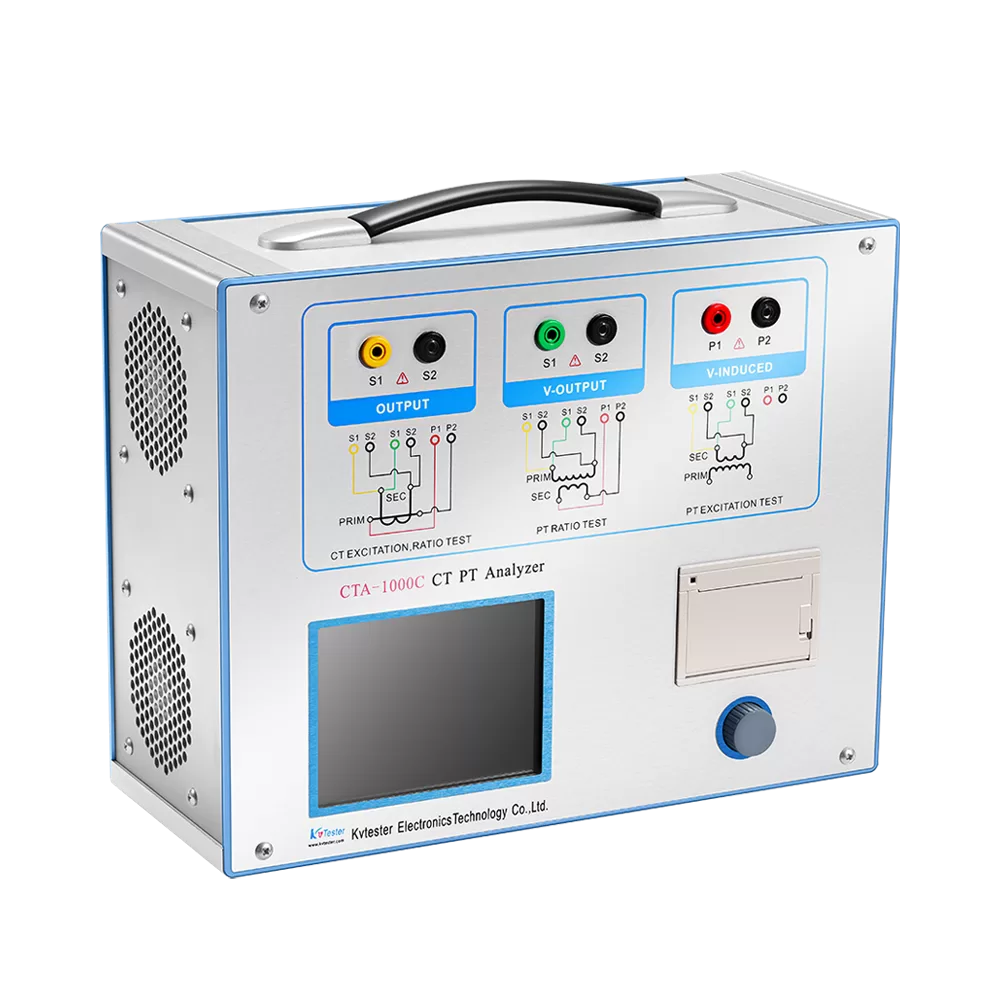
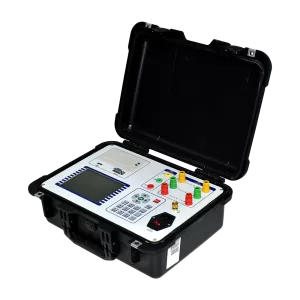
For comprehensive CT testing, our CTA-1000D CT/PT Analyzer supports ratio and phase-angle accuracy, excitation characteristics, winding resistance, burden impedance, polarity, and residual magnetism analysis. Automatic test evaluation helps simplify routine procedures and improve testing consistency.
For production environments, we also offer automated CT testing systems that support repeatable measurements and higher testing throughput. The appropriate configuration depends on the required test functions, transformer specifications, and level of automation. For voltage-transformer applications, dedicated VT/CVT testing equipment is available for users who need to evaluate electromagnetic PTs, CVTs, or CCVTs.
By matching the instrument to the actual testing workflow, users can avoid paying for unnecessary functions while ensuring that the selected equipment meets their technical requirements.
HV Hipot
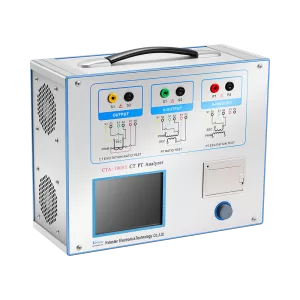
HV Hipot supplies electrical testing equipment for high-voltage systems, including the GDHG-201P CT/PT Analyzer. Its supported functions include ratio, polarity, excitation, secondary winding resistance, burden, and error measurements. The model’s stated CT knee-point capability reaches 60 kV, with a ratio range of 1–40,000.
When evaluating this type of instrument, check the output capability and accuracy specifications against the CTs you need to test.
KINGSINE
KINGSINE develops electrical testing equipment for power-system protection, commissioning, and maintenance. Its KT220 handheld analyzer supports CT testing functions such as ratio, phase displacement, winding resistance, excitation, burden, and polarity. Its stated weight is below 3.5 kg, making portability a key consideration for field engineers.
Huazheng Electric
Huazheng Electric offers electrical testing instruments, including the HZCT-100C CT/PT Analyzer. Its stated CT ratio range is 1–40,000, with ±0.05% CT ratio accuracy. The instrument also supports secondary resistance and burden measurement.
Buyers should compare the accuracy and measurement range of each function separately, since CT ratio accuracy does not necessarily represent the accuracy of every measurement.
ELECGENE
ELECGENE offers the TCT-200F CT and PT Analyzer for ratio, polarity, winding resistance, excitation, and burden testing. Its stated specifications include a CT ratio range of 1–40,000, ±0.05% CT ratio accuracy, and excitation testing for CT knee points up to 60 kV.
When comparing manufacturers, consider the complete testing workflow rather than relying on a single specification or the number of advertised functions.
Which CT PT Analyzer Specifications Matter Most?
Measurement accuracy is essential for both metering and protection CTs. Check the specified accuracy across the required ratio ranges, along with phase displacement and winding resistance performance.
For protection CT testing, excitation curves and knee-point analysis may be necessary. The analyzer must provide sufficient output for the CT under test, and its test method must support the required evaluation.
Burden and secondary resistance measurements are also important when assessing CT performance and secondary circuit conditions. Review their measurement ranges and accuracy independently.
For regular field or laboratory work, automatic calculations, stored results, and report export can reduce manual recording and make test results easier to review.
How Does an Integrated CT PT Analyzer Improve Efficiency?
A multifunction analyzer can combine several measurements in one instrument, reducing equipment changes and simplifying test preparation. However, its practical value depends on whether its output capability and accuracy meet the complete test procedure.
For field engineers, automatic test sequences can reduce repetitive work. For transformer manufacturers, dedicated systems can improve consistency by integrating test control, measurement, and result management.
When selecting an integrated analyzer, confirm the supported transformer types, measurement ranges, and required accessories. A long function list alone does not guarantee that an instrument can complete every test your application requires.
Which CT PT Analyzer Is Suitable for Factory Testing?
Factory testing often requires repeatable procedures, batch processing, and centralized records. A dedicated automated system may be more suitable than a portable analyzer when testing volumes are high.
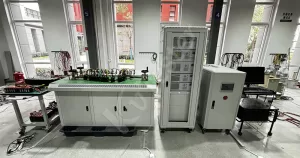
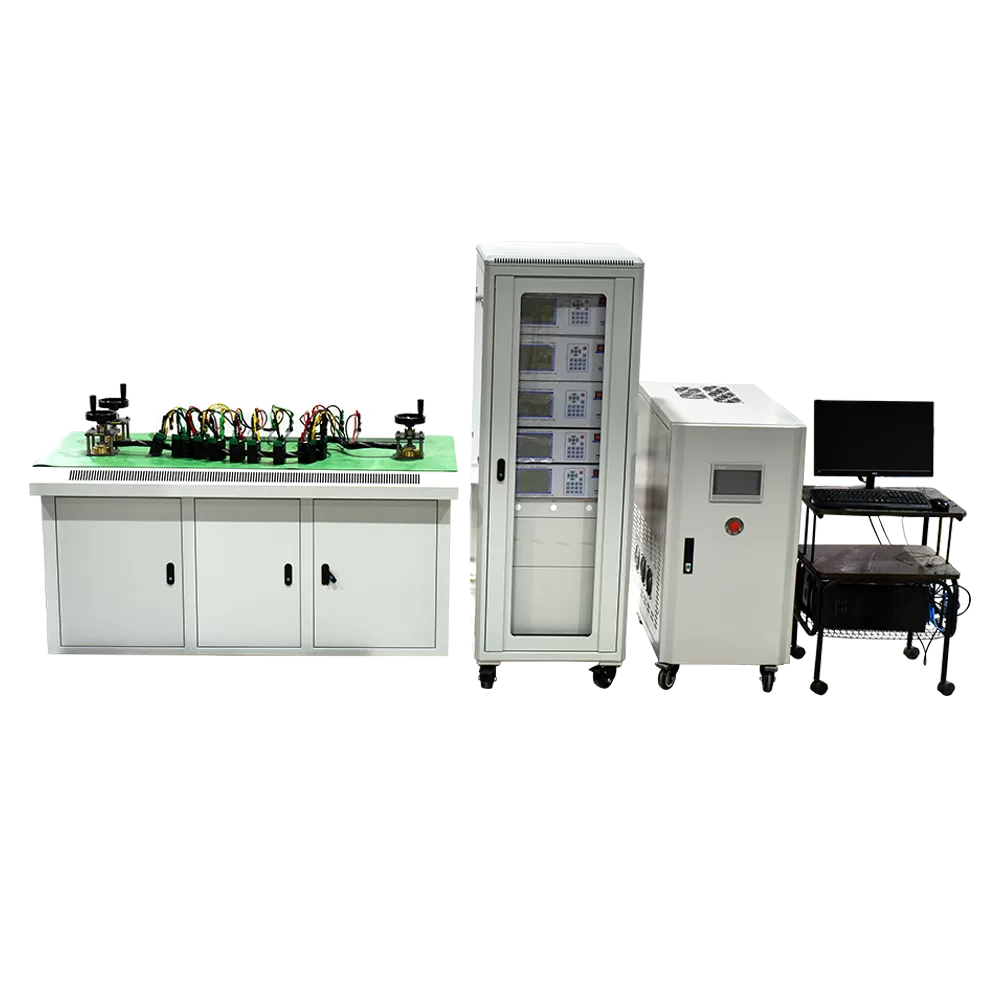
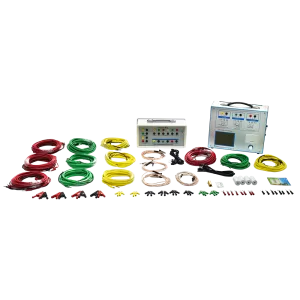
The Kvtester ZCHG-12 is designed for automated CT accuracy testing. Its system configuration supports accuracy testing, demagnetization, inter-turn insulation testing, and polarity checks. The specified primary current range is 5–5,000 A, with 1 A or 5 A secondary current. It can test up to 12 CTs at a time under the supported configuration.
Before purchasing a factory test system, confirm that its current range, test functions, and capacity match your production volume and quality-control requirements.
When Do You Need a Dedicated VT or CVT Analyzer?
Conventional PTs, capacitive voltage transformers (CVTs), and CCVTs may require different testing procedures. A CT-focused analyzer should not be assumed to support every voltage-transformer application.
The Kvtester PTA-2000C VT/CVT Analyzer is designed for electromagnetic PTs, CVTs, and CCVTs. It supports voltage-transformer error testing for applications from 6 kV to 800 kV, with a maximum output voltage of 3 kV and a stated accuracy class of 0.05. It can store up to 10,000 groups of test data, making data management an additional consideration for calibration and maintenance work.
Before selecting a VT/CVT analyzer, verify compatibility with the transformer type, voltage level, and required error-testing procedure.
How to Choose the Right CT PT Analyzer Manufacturer
Use these steps to narrow your options:
- Define the transformer types you need to test, including CTs, electromagnetic PTs, or CVTs.
- List the required functions, such as ratio, polarity, excitation, resistance, burden, and error measurements.
- Compare accuracy, output capability, measurement ranges, and applicable standards.
- Choose a portable analyzer for field work or an automated system for higher-volume testing.
- Review data storage, report generation, software requirements, and after-sales support.
Providing the manufacturer with transformer ratings, required test items, and applicable standards can also help confirm whether a proposed configuration fits your application.
Find the Right CT PT Testing Solution with Kvtester
At Kvtester, we offer solutions for multifunction CT/PT analysis, automated CT accuracy testing, and VT/CVT measurement. The right choice depends on your transformer specifications, required test parameters, and working environment.
To discuss your requirements and identify a suitable configuration, contact Kvtester for CT/PT analyzer selection with details of your transformer types, testing procedures, and expected workload.
Related Products
Latest News
-
 2026-10-15How to Choose a Resonant Test System With USB Output
 -
 2026-10-142026 Top 6 Portable Transformer Testing Equipment Manufacturers
 -
 2026-10-14How Do You Choose an Outdoor CT PT Analyzer for Field Testing?
 -
 2026-10-13CT Analyzer Connection Guide: Wiring Steps and Safety Checks
 -
 2026-10-13How Can a CT PT Analyzer Improve Testing in a Transformer Factory?