
Home » News » Company News
Transformer Test Bench: Functions, Principle & Applications Guide
Transformer Test Bench is an integrated, intelligent testing system designed for full-performance detection of power transformers and distribution transformers. As core professional equipment in the power industry, it covers factory type tests, factory acceptance tests (FAT), on-site commissioning tests, and daily preventive maintenance tests. This guide thoroughly explains the definition, working principle, core functions, key advantages, industrial applications, and selection tips of the transformer test bench, helping engineers and purchasers master professional knowledge and optimize transformer testing workflows.
What Is a Transformer Test Bench?
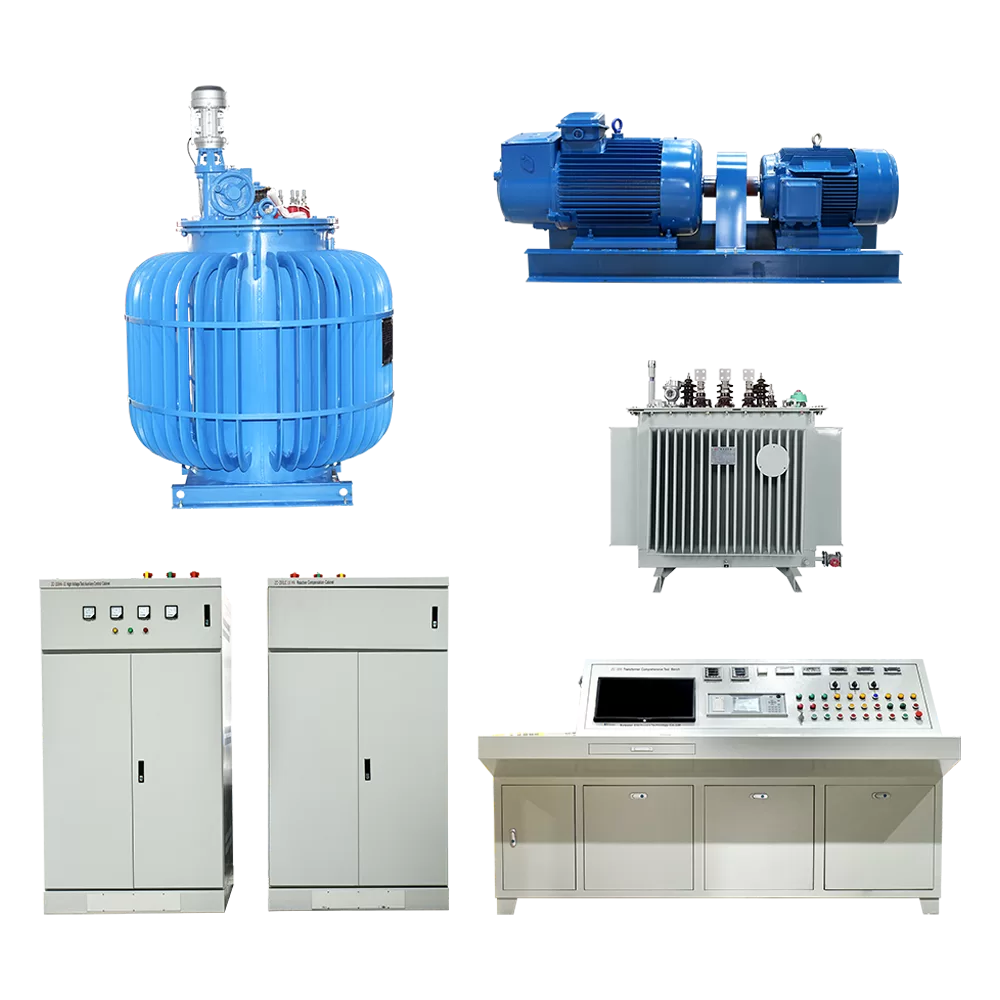
A transformer test bench is a modular and automated testing platform integrated with high-precision measuring instruments, intelligent control systems, and safety protection devices. It is specially developed to simulate the real operating conditions of transformers in power grids and accurately detect various electrical performance parameters of power and distribution transformers ranging from 50kVA to 5000kVA with voltage levels of 6kV, 11kV, 24kV, 36kV and conventional 380V.
Different from scattered single testing devices, the integrated transformer test bench integrates multiple testing functions in one system. It replaces traditional manual, separate testing modes, realizes one-key automatic testing, data real-time acquisition, intelligent calculation, and report automatic generation. It is widely applicable for transformer manufacturers, power supply bureaus, power engineering companies, and quality inspection institutions to verify transformer safety, efficiency, and compliance with international industry standards.
Core Working Principle of Transformer Test Bench
The working logic of a professional transformer test bench follows a closed-loop testing mechanism of “simulate operation – collect data – analyze parameters – judge compliance”, which can be divided into three core links to ensure testing accuracy and stability:
1. Adjustable Power Supply and Condition Simulation
The test bench is equipped with a high-precision adjustable voltage regulation power supply and frequency conversion module. It can output voltage and frequency signals matching the actual grid operating environment, simulate no-load, full-load, short-circuit, and overvoltage working states of transformers, and restore various extreme operating conditions that transformers may encounter in actual operation.
2. High-Precision Data Synchronous Acquisition
Supported by high-end single-chip microcomputer and industrial control core, the system adopts linear and segmented sweep measurement modes to realize synchronous sampling of voltage, current, loss, and impedance data. It completely avoids manual measurement and calculation errors of traditional pointer instruments, ensuring millimeter-level high precision of test data.
3. Intelligent Data Analysis and Result Output
Key Test Functions of Transformer Test Bench
A full-featured transformer test bench supports all conventional and mandatory test items for power transformers, covering electrical performance, insulation performance, and safety reliability detection:
- No-load loss and no-load current test: Apply rated voltage to the primary side of the transformer to detect no-load loss parameters, evaluate transformer iron core performance, and judge core material quality and assembly precision.
- Load loss and short-circuit test: Simulate transformer load operation state, detect winding loss and impedance parameters, and verify transformer operating efficiency under full-load conditions.
- Turns ratio test: Accurately measure the transformer turns ratio to ensure it meets design standards and avoid voltage deviation caused by ratio errors.
- Winding & insulation resistance test: Detect winding DC resistance and insulation performance, effectively identify hidden dangers such as winding short circuit, open circuit, and insulation aging and breakdown.
- Power frequency & double frequency withstand voltage test: Complete power frequency withstand voltage and frequency multiplication induction withstand voltage tests to verify the insulation strength of transformers under overvoltage conditions.
- Temperature rise test: Monitor the temperature change of transformers under long-term operation to evaluate the heat dissipation performance and long-term operation stability of equipment.
Main Application Scenarios of Transformer Test Bench
Transformer Test Bench is widely used in the whole industrial chain of transformer production, inspection, and operation and maintenance, with strong industry versatility:
- Transformer Manufacturing Enterprises: Complete factory type tests and batch factory acceptance tests to ensure that each batch of transformers meets design and industry standards before leaving the factory.
- Power Grid and Power Supply Institutions: Conduct on-site commissioning tests of new transformers and regular preventive maintenance tests of operating equipment to eliminate potential grid operation risks.
- Power Engineering and Construction Companies: Complete performance detection of transformers in new, renovated, and expanded power projects to ensure project construction quality.
- Quality Inspection and Testing Institutions: Provide professional and authoritative transformer performance testing data for market supervision and product quality certification.
- Scientific Research and Teaching Institutions: Used for transformer performance research, experimental teaching, and new product development and verification.
How to Choose a Qualified Transformer Test Bench?
To select a suitable transformer test bench, enterprises need to match equipment parameters and functions according to actual testing demands, focusing on the following core points:
- Match test voltage and capacity range: Select equipment specifications according to the voltage level (10kV/35kV) and capacity of the tested transformer to ensure full coverage of test demands.
- Confirm functional completeness: Prioritize integrated equipment that covers no-load, load, insulation, withstand voltage, and temperature rise tests to meet full-item detection requirements.
- Verify testing accuracy and certification: Ensure that the equipment meets international IEC standards and has professional metrological certification to guarantee the authority of test data.
- Focus on automation and after-sales service: Choose intelligent automatic test benches with simple operation, stable performance, and perfect after-sales warranty service to reduce later operation and maintenance costs.
Conclusion
As the core detection equipment for transformer quality control and operation maintenance, the Transformer Test Bench undertakes the important task of ensuring the safe, efficient, and stable operation of power transformers. With the upgrading of power grid intelligence and the improvement of power equipment quality standards, modern integrated automatic transformer test benches have gradually replaced traditional manual testing modes, becoming an indispensable key equipment in the power industry. Choosing a high-precision, full-featured, and high-stability transformer test bench can effectively improve testing efficiency, control product quality, and guarantee the safe operation of the power grid.
FAQs About Transformer Test Bench
Q1: What transformers can a transformer test bench test?
A1: It is suitable for various power and distribution transformers with 50kVA-5000kVA capacity and 6kV-36kV voltage levels, including conventional power transformers and distribution transformers, and can meet the testing demands of most industrial and power grid scenarios.
Q2: Is the test data of the automatic test bench accurate?
A2: Yes. The professional transformer test bench adopts synchronous sampling and intelligent error correction technology, with high test accuracy and good repeatability. The data fully complies with international and industry standards, and can be used for official acceptance and quality inspection reports.
Q3: What are the differences between integrated and discrete transformer test equipment?
A3: The integrated transformer test bench integrates all testing functions, with automatic operation, high efficiency, and simple management; discrete equipment requires separate operation of multiple instruments, with complex steps, low efficiency, and large manual errors, which is gradually phased out by the industry.
Related Products
Latest News
-
 2026-09-20CT PT Analyzer for Commissioning: Substation Testing Guide
 -
 2026-09-20ANSI Standard CT Tester: Specs, Tests & Buying Guide
 -
 2026-09-18Why does the required capacity of series resonant test equipment usually increase with cable length?
 -
 2026-09-18How should 35kV cable series resonant withstand voltage test equipment be configured?
 -
 2026-09-18How to Select AC Withstand Voltage Test Equipment for 10kV Cables?