

Home » News » Company News
How Does a Lightweight PT Tester Improve On-Site Testing Efficiency?
Why does the weight of a PT tester matter during field testing? Does a lighter instrument make transportation and equipment setup easier? More importantly, can a lightweight PT tester still provide the measurement accuracy and testing functions required for voltage transformer inspection?
For power utilities, transformer manufacturers, and field testing teams, these questions are closely related to daily testing requirements. Equipment must be easy to transport, but it must also deliver reliable measurements and support the necessary testing procedures. Understanding how equipment weight, structural design, and integrated functions work together can help identify a suitable PT testing solution.
Why Does PT Tester Weight Matter in Field Testing?
PT testing is commonly performed in substations, power plants, transformer manufacturing facilities, and testing laboratories. In these environments, technicians may need to move testing instruments between different transformer locations or work areas.
A heavy testing instrument can increase the effort required for transportation, particularly when technicians need to carry additional cables, connection accessories, and other testing equipment.
A lightweight PT tester offers several practical advantages:
- Easier transportation: Technicians can move the instrument between testing locations with less physical effort.
- More convenient deployment: Compact equipment is generally easier to position in areas with limited working space.
- Simpler equipment management: A lighter instrument is more convenient to transport, store, and prepare for testing.
- Greater flexibility: Field engineers can carry testing equipment to different work areas without arranging additional transportation for bulky instruments.
These benefits become more noticeable when testing involves multiple voltage transformers or requires frequent movement between substations and maintenance areas.
However, equipment weight should be considered alongside its dimensions and accessories. A lightweight main unit with numerous external components may still be inconvenient to transport.
What Determines the Weight of a PT Tester?
The weight of a PT tester is influenced by its internal components, enclosure, power system, and overall structural design. Understanding these factors helps explain why testing instruments with similar functions can have different weights.
Internal Components and Power Modules
A PT tester contains measurement circuits, power modules, electronic components, and control systems. These components contribute to the overall weight and determine how the instrument is constructed.
The arrangement and integration of internal modules can affect the equipment’s size and weight. A well-integrated design helps organize different testing functions within a single enclosure.
Enclosure and Structural Design
The enclosure protects internal components during transportation and operation. It must provide sufficient mechanical protection while keeping the instrument manageable in size and weight.
Material selection, internal component arrangement, and enclosure structure all influence the final design.
Integrated Testing Functions
Some PT testing instruments combine several measurement functions in one unit. This reduces the need to transport separate instruments for individual testing procedures.
For example, a multifunctional analyzer may support PT ratio, polarity, excitation, and secondary winding resistance measurements. Integrating these functions can simplify the overall equipment configuration.
Nevertheless, more functions do not automatically mean a heavier instrument. The final weight depends on the testing technology, output requirements, and internal architecture.
How Does a Lightweight PT Tester Make Field Work Easier?
The practical value of a lightweight PT tester goes beyond convenient transportation. Its weight and dimensions can also influence how technicians organize their daily testing activities.
Easier Movement Between Testing Locations
In substations and power facilities, technicians may need to inspect several voltage transformers distributed across different areas.
A compact PT tester is easier to carry between testing points. This is particularly useful when equipment needs to be moved repeatedly during inspection or maintenance work.
More Convenient Setup in Limited Spaces
Testing areas do not always provide enough room for large instruments and multiple accessories.
A smaller testing unit is easier to position near the equipment under inspection. It can also simplify cable arrangement and equipment placement, although sufficient working clearance and electrical safety distances must always be maintained.
Reduced Transportation Requirements
When one analyzer supports multiple testing procedures, technicians may not need to carry several independent instruments.
This can reduce the amount of equipment transported to the testing location and make preparation more straightforward.
Better Suitability for Routine Field Maintenance
For maintenance teams that regularly inspect voltage transformers, equipment portability is an important consideration.
A manageable instrument weight makes it easier to organize routine inspections, move between work areas, and transport testing equipment together with the required accessories.
Can a Lightweight PT Tester Maintain Testing Accuracy?
Reducing equipment weight should not come at the expense of measurement performance. A lightweight instrument still needs to meet the accuracy and functional requirements of the intended PT testing tasks.
When evaluating a lightweight PT tester, we recommend checking the following specifications:
| Parameter | What to Check |
| PT ratio accuracy | Whether the measurement error meets the required accuracy class |
| Excitation testing | Whether the instrument supports PT excitation and saturation measurements |
| Burden measurement | Whether it can measure secondary circuit burden impedance |
| Polarity testing | Whether it supports PT polarity verification |
| Winding resistance | Whether the measurement range and accuracy meet testing requirements |
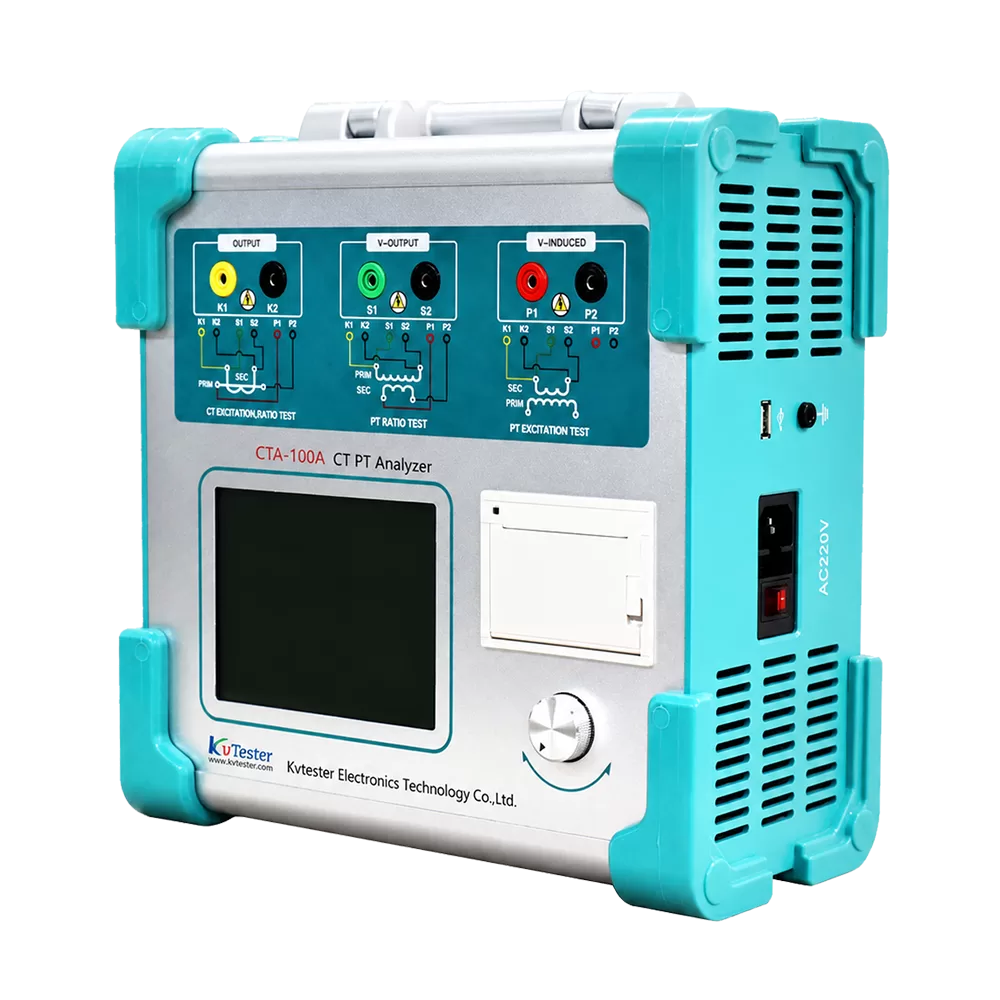
For example, our CTA-100A CT/PT Analyzer weighs less than 5 kg and measures 300 × 285 × 140 mm. It supports PT ratio measurement over a range of 1–40,000, with an accuracy of ±0.5%. It also supports PT excitation characteristics, polarity, and secondary winding resistance testing.
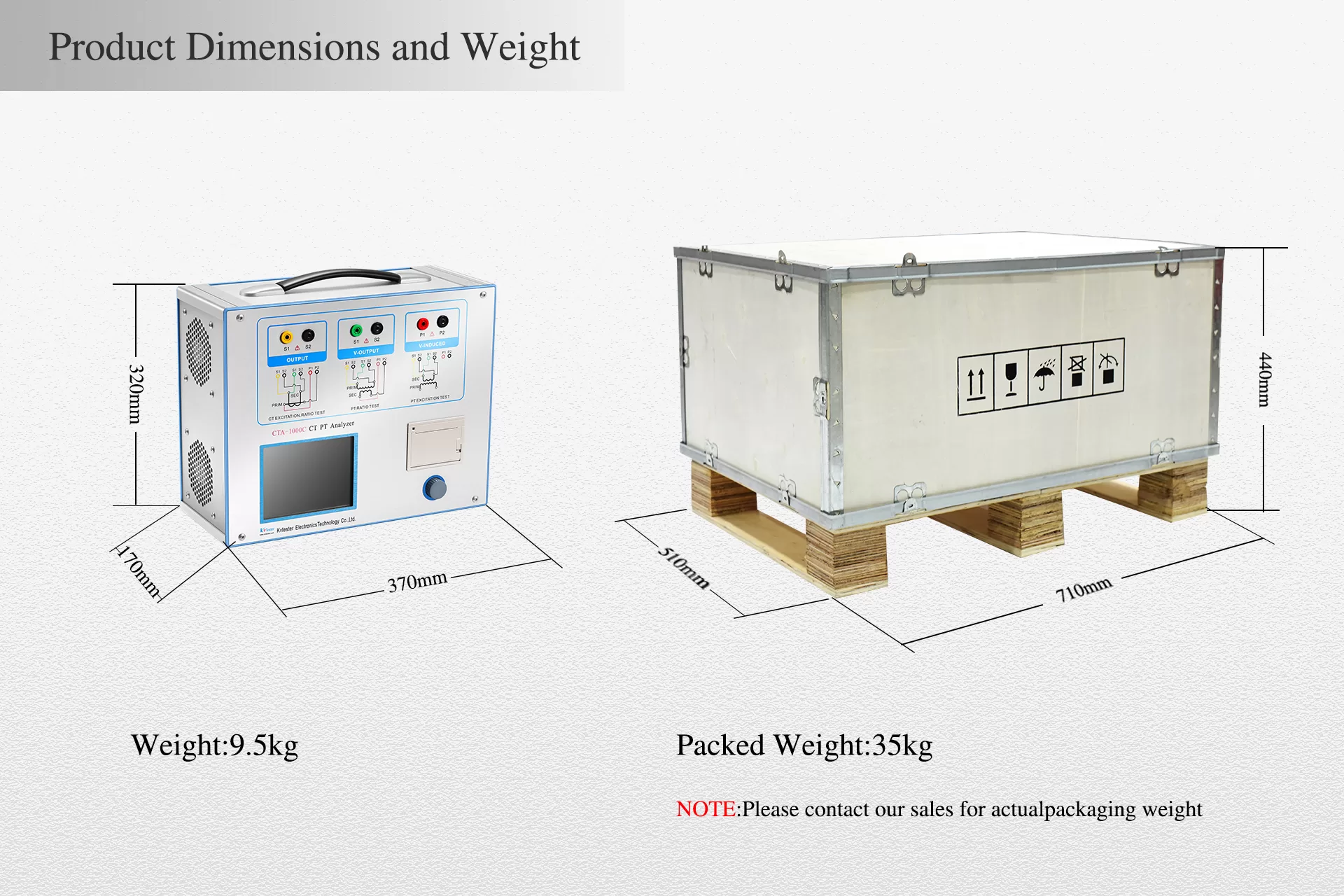
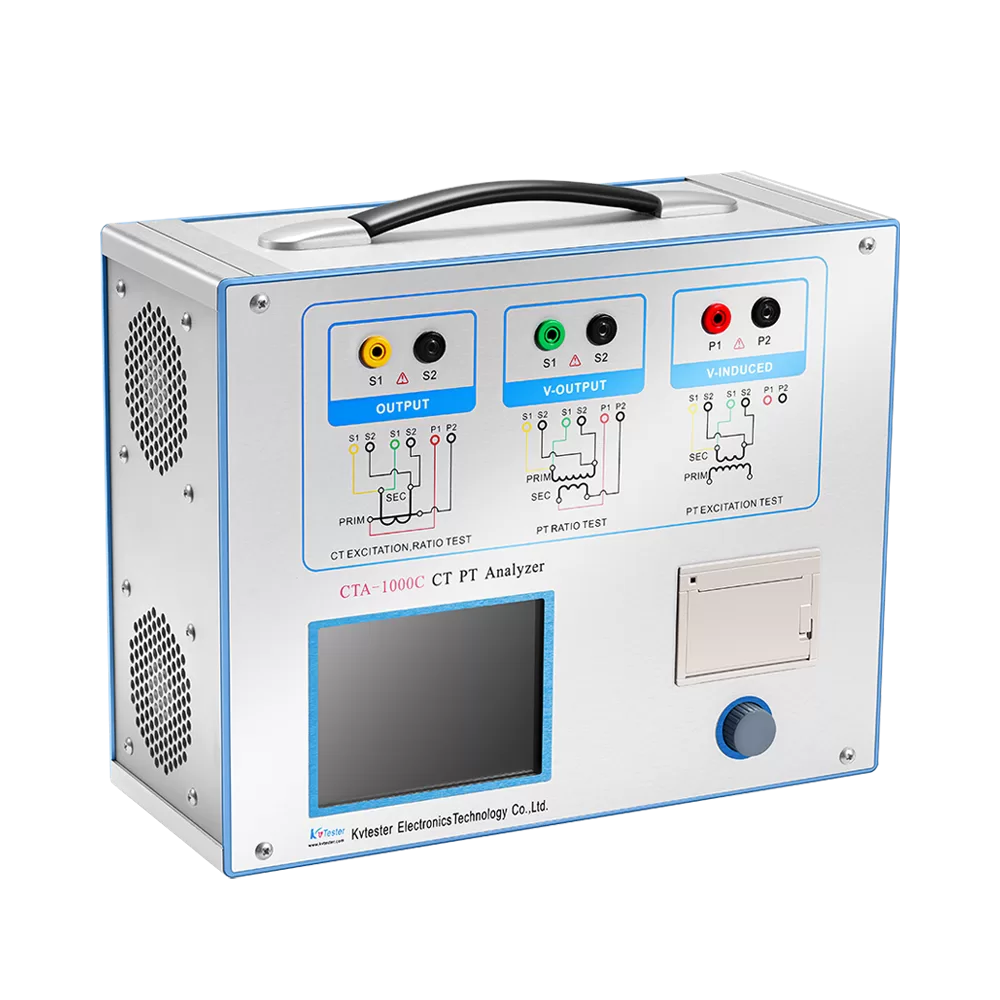
For applications requiring additional measurement capabilities and higher PT ratio accuracy, our CTA-1000C CT/PT Analyzer weighs less than 10 kg and measures 365 × 290 × 153 mm. Its PT ratio measurement range is 1–40,000, with an accuracy of ±0.2%. It also supports PT excitation and saturation, burden impedance, polarity, and winding resistance measurements.
These specifications illustrate that lightweight equipment can still provide multiple testing functions. The appropriate model depends on the required accuracy, testing procedures, and field conditions.
Why Should You Consider the Total Weight of PT Testing Equipment?
The weight of the main unit does not represent the total weight technicians need to carry. Test leads, connection cables, clamps, accessories, and protective cases can all increase the transportation load.
When comparing different PT testers, we recommend evaluating the complete equipment configuration rather than focusing only on the main unit.
Main Unit Weight
Check the actual instrument weight and compare it with the available carrying options. A lighter main unit can make transportation easier, especially when testing requires frequent movement.
Accessories and Connection Cables
Different testing procedures may require different cables and connection accessories. Their number, length, and weight should be considered when evaluating the complete equipment set.
Carrying Case and Protection
A protective case helps prevent damage during transportation and storage. However, its weight and dimensions also contribute to the overall carrying load.
Equipment Dimensions
Weight and dimensions should be evaluated together. A relatively lightweight instrument with an oversized enclosure may still be inconvenient to carry or position in restricted working areas.
For field engineers, the most practical solution is not necessarily the instrument with the lowest weight. It is the equipment that provides the required testing functions while keeping the complete transportation and setup process manageable.
How Does an Integrated PT Analyzer Reduce the Need for Extra Equipment?
Another important consideration in lightweight PT testing is functional integration.
Traditional testing arrangements may require different instruments for ratio measurement, excitation testing, polarity verification, and secondary circuit measurements. Depending on the testing procedure, technicians may also need additional power supplies or auxiliary equipment.
A multifunctional PT analyzer combines several measurement capabilities within one instrument. This can simplify equipment preparation and reduce the number of separate devices required for certain testing tasks.
An integrated design can provide several practical benefits:
- Fewer separate instruments: Multiple measurements can be performed using the same analyzer.
- Simplified connections: Technicians can follow a more centralized testing process instead of repeatedly changing between different instruments.
- Easier transportation: Fewer independent devices may reduce the overall equipment load.
- More organized testing: Measurement results can be managed through one instrument, depending on its data storage and reporting functions.
However, integration should not be evaluated by the number of functions alone. The instrument must still provide the required output capability, measurement range, and accuracy for the intended PT testing procedures.
When comparing different solutions, we recommend checking whether the integrated functions genuinely cover your testing requirements and whether additional accessories are still necessary.
What Should You Consider When Choosing a Lightweight PT Tester?
The right PT tester depends on the testing workload, required measurements, and working environment. Rather than selecting equipment based only on its advertised weight, consider the following factors together.
| Selection Factor | Key Consideration |
| Equipment weight | Is the instrument convenient to transport between testing locations? |
| Overall dimensions | Can it be positioned easily in the available working space? |
| Testing functions | Does it support the required PT measurements? |
| Measurement accuracy | Does it meet the applicable testing standards and technical requirements? |
| Integrated design | Can it reduce the need for additional testing instruments? |
| Accessories | Is the complete equipment set manageable to carry? |
| Data management | Can test results be stored, exported, and reviewed conveniently? |
For power utilities and field maintenance teams, portability and integrated testing capabilities may be important considerations. Transformer manufacturers and calibration laboratories may place greater emphasis on measurement accuracy, repeatability, and testing range.
The testing environment also matters. If technicians frequently move between different locations, equipment weight and carrying design deserve greater attention. If testing mainly takes place in a fixed laboratory, measurement capabilities and testing procedures may be more important than minimizing weight.
Before making a selection, we recommend matching the instrument specifications with the actual voltage transformer types, testing standards, and measurement requirements involved in your work.
For a broader understanding of available testing solutions, our CT/PT testing equipment range covers different instruments for current and voltage transformer testing applications.
Conclusion
A lightweight PT tester can make field testing more convenient by reducing transportation demands, simplifying equipment setup, and integrating multiple measurement functions into one instrument.
However, the lowest equipment weight does not necessarily represent the best solution. Measurement accuracy, testing capabilities, overall dimensions, accessories, and application requirements must all be considered.
At Kvtester, we develop CT/PT testing instruments for power utilities, transformer manufacturers, and electrical testing organizations. We help customers identify suitable equipment based on their actual testing requirements, working conditions, and technical specifications.
Looking for a lightweight PT tester for your field testing applications? Contact Us to discuss your requirements and get professional equipment recommendations from our team.
Related Products
Latest News
-
 2026-11-20How to Use a PT Tester for Accurate Error Calibration
-
 2026-11-20Variable Inductance Resonant Test System: How It Works
-
 2026-11-20High Voltage PT Tester for Accurate Voltage Transformer Testing
-
 2026-11-19Generator Rotor AC Impedance Tester for Fault Detection
-
 2026-11-19Anti-interference Transformer Tester for Substation