
Home » News » Company News
How Can a CT PT Analyzer Improve Testing in a Transformer Factory?
A transformer factory needs more than a simple pass-or-fail result from CT and PT testing. Production engineers need a testing process that is repeatable, efficient, and suitable for different CT and PT specifications. When ratio, excitation, burden, polarity, and winding resistance all need to be checked, the way these measurements are organized can directly affect production efficiency and quality control.
A CT PT Analyzer brings multiple measurements into a more integrated workflow. Instead of treating every parameter as a separate task, engineers can use one testing process to collect and evaluate the electrical characteristics that matter during factory testing.
Where CT PT Testing Fits into Factory Production
In a transformer factory, CT and PT testing is closely connected with product verification. The testing process needs to give engineers enough information to confirm the electrical characteristics of each unit before it moves to the next production or inspection stage.
The exact test items depend on the CT or PT being manufactured, but several measurements are commonly important for production inspection:
- Ratio and phase-angle accuracy
- Excitation and saturation characteristics
- Burden impedance
- Winding resistance
- Polarity
- Inductance
- CT residual magnetism, where required
These measurements should not be viewed as isolated numbers. Together, they provide a more complete picture of the electrical and magnetic characteristics of the CT or PT.
For factories handling different CT and PT specifications, integrating these functions can also make the testing process easier to manage. Our CT PT testing equipment covers different CT/PT testing requirements for power equipment testing and related applications.
The Measurements That Matter Most in CT PT Testing
Once the required test items are clear, it becomes easier to understand what each measurement contributes to the factory testing process.
Ratio and Phase-Angle Accuracy
Ratio testing checks the relationship between the primary and secondary sides of a CT or PT. For CT testing, phase-angle accuracy also provides important information about measurement performance.
For factory testing, the useful result is not only the measured ratio. Engineers also need to see the corresponding error and accuracy information so that the measured value can be compared with the required specification.
Excitation and Saturation
Excitation testing shows how a CT or PT responds as the applied voltage changes. The resulting excitation characteristics help engineers understand the magnetic behavior of the transformer and identify its saturation characteristics.
This is particularly important when testing protection CTs, where the behavior around the saturation region is an important part of performance evaluation.
Burden and Winding Resistance
Burden impedance and winding resistance provide additional information about the secondary circuit.
Winding resistance helps verify the resistance of the winding circuit, while burden measurement evaluates the load connected to the secondary side. Checking these parameters alongside ratio and excitation characteristics gives engineers a broader view of CT/PT performance.
Polarity and Inductance
Polarity testing confirms the relationship between the primary and secondary terminals. Inductance measurement provides additional information about the magnetic characteristics of the transformer.
When these measurements are brought together, engineers can complete more of the required CT/PT evaluation within the same testing workflow.
A More Practical CT PT Testing Workflow
The advantages of an analyzer become clearer when individual measurements are treated as part of one factory process. A practical workflow can reduce unnecessary changes between different test procedures and make repeated testing easier for production engineers.
A typical process can be organized into the following steps:
- Confirm the CT/PT type, rated ratio, and required test standard.
- Connect the test leads according to the required configuration.
- Select the appropriate test function.
- Run the required measurements.
- Review the measured parameters and evaluation results.
- Record the results for production quality control.
This approach is especially useful when the same types of measurements need to be repeated across multiple production batches.
How Automation Changes Factory Testing
Once a testing process is repeated many times, automation becomes more valuable. The purpose is not simply to make the instrument operate automatically, but to reduce repetitive measurement and calculation work for engineers.
Automatic Evaluation
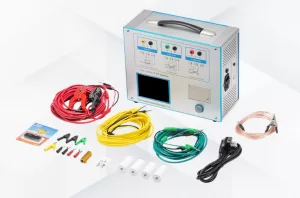
The Kvtester CTA-1000D can automatically evaluate CT parameters such as excitation data, saturation inflection point, remanence coefficient, accuracy limit overcurrent factor, ratio, and error data.
It can also evaluate CT performance according to IEC or IEEE standards through an automated testing process. This allows engineers to spend less time on repetitive calculations and more time reviewing the actual test results.
Shorter Testing Cycles
Testing speed becomes increasingly important when a factory needs to inspect a large number of CTs.
The CTA-1000D CT Analyzer has an automatic test duration of less than 2 minutes. Its typical CT ratio accuracy is 0.02% for ratios from 1 to 2,000, with ratio error specifications varying according to the measurement range.
A shorter automated test cycle can help reduce repetitive work while maintaining a consistent testing procedure.
Choosing CT PT Analyzer Specifications for Your Factory
A suitable CT PT Analyzer should be selected according to the CT/PT products and test procedures used in the factory. The number of functions alone does not determine whether an analyzer is appropriate.
Three areas deserve particular attention: measurement range, required test functions, and working conditions.
Match the Ratio Range to Your Products
The analyzer needs to cover the ratio range of the CTs and PTs that the factory actually produces.
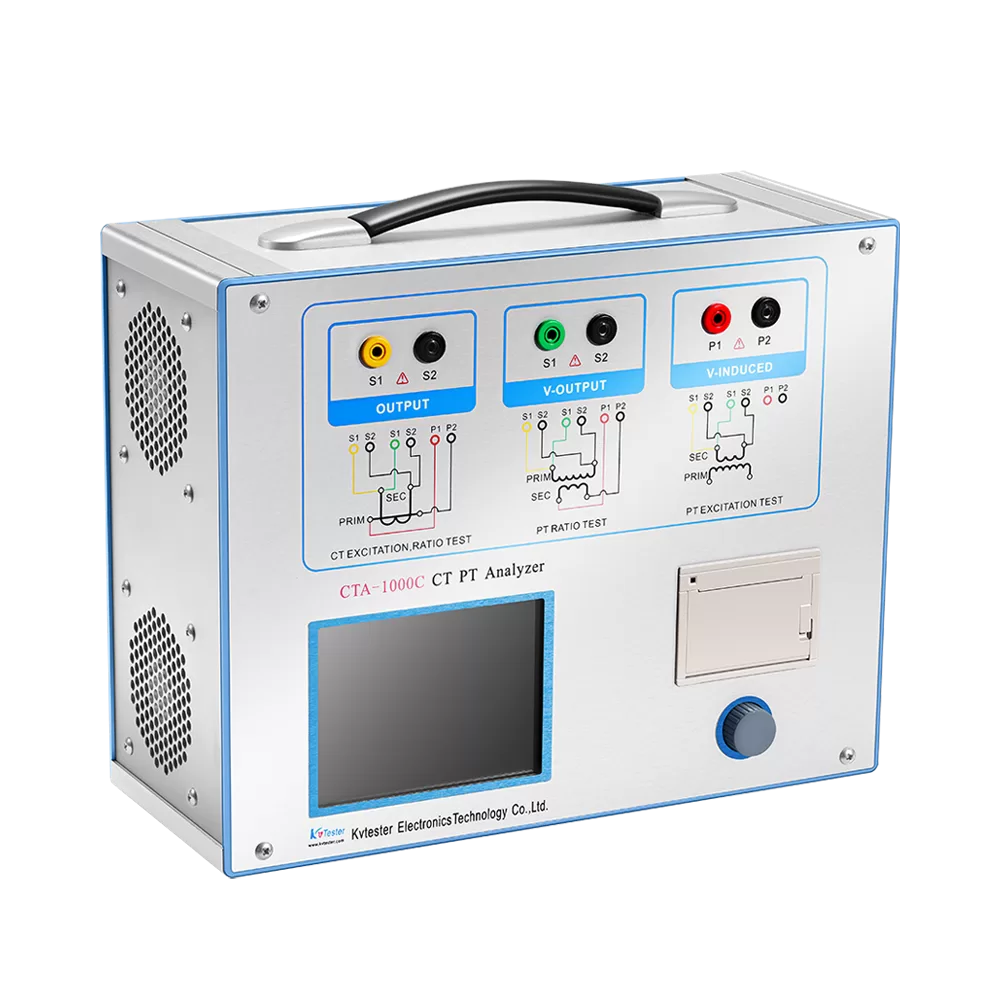
The Kvtester CTA-1000C supports CT and PT ratio testing from 1 to 40,000. Its CT ratio accuracy is ±0.05%, while PT ratio accuracy is ±0.2%.
For factories handling a broad range of instrument transformer specifications, the available ratio range should therefore be checked before equipment selection.
Check the Required Test Functions
Different production lines may have different testing requirements. Some may focus mainly on CT evaluation, while others need both CT and PT testing.
The CTA-1000C CT/PT Analyzer supports CT ratio and phase-angle accuracy, excitation and saturation, burden impedance, winding resistance, saturated and non-saturated inductance, polarity, and residual magnetism.
For PT testing, it supports excitation and saturation, burden impedance, winding resistance, saturated and non-saturated inductance, and polarity.
The key is to compare these functions with the actual testing procedure used in your factory rather than selecting equipment based only on its maximum specification.
Consider the Working Environment
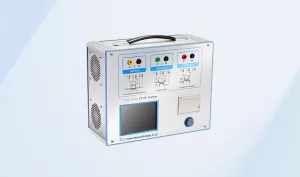
A factory testing instrument needs to be practical as well as technically capable. Size, weight, power requirements, and operating temperature can all affect day-to-day use.
The CTA-1000C measures 365 × 290 × 153 mm and weighs less than 10 kg. It operates from AC 110 V ±10% or AC 220 V ±10%, with an operating temperature range of -10°C to 50°C.
These details are particularly relevant when equipment needs to be moved between different testing positions.
CT PT Analyzer Options for Different Testing Requirements
The testing priorities of one transformer factory may differ from another. A production line focused on CT evaluation may prioritize automatic CT testing, while a broader testing operation may require both CT and PT functions within one instrument.
For CT-focused testing, the CTA-1000D supports single-ratio and multi-ratio CT testing, automatic IEC/IEEE evaluation, and an automatic test duration of less than 2 minutes. It provides 0–120 V output voltage, 0–5 A RMS output current, and up to 400 VA RMS output power.
For combined CT and PT testing, the CTA-1000C supports a CT/PT ratio range of 1–40,000, 0–1000 VA burden measurement, and 0–300 Ω DC resistance measurement.
The appropriate choice should therefore follow the factory’s actual testing range, required functions, and production workflow.
Building a Consistent CT PT Testing Process
An analyzer delivers greater value when it is incorporated into a clearly defined factory testing procedure.
The process can be standardized around several key elements:
- CT/PT type and rated ratio
- Required test items
- Applicable standards
- Connection method
- Evaluation criteria
- Test record requirements
Once these elements are defined, engineers can follow a consistent testing procedure across different production batches while adjusting the parameters for individual CT/PT specifications.
This also makes test results easier to review and compare. Instead of relying heavily on individual operating habits, the factory can establish a repeatable process for routine CT/PT inspection.
Making CT PT Testing More Efficient in Your Factory
The role of a CT PT Analyzer is not limited to measuring individual electrical parameters. Its greater value comes from bringing multiple testing requirements into a more organized workflow.
For a transformer factory, this can mean fewer repetitive operations, easier evaluation, and a more consistent approach to production testing.
The right equipment should ultimately be determined by the CT/PT types, ratio range, accuracy requirements, required test functions, applicable standards, and expected testing frequency.
Kvtester provides CT/PT analyzers for different testing requirements. If you are planning a new testing line or upgrading an existing CT/PT testing process, contact Kvtester with your product specifications and testing requirements so we can help identify a suitable testing solution.
Related Products
Latest News
-
 2026-10-13CT Analyzer Connection Guide: Wiring Steps and Safety Checks
 -
 2026-10-12What Can a Multi-Function CT Tester Measure in One Test?
 -
 2026-10-12Top 5 Electrical Testing Equipment Manufacturers in China 2026
 - 2026-09-302026 Top 3 Chinese Insulation Resistance Transformer Testing Equipment Manufacturers
-
 2026-09-30Industrial CT Tester: How Is It Used for Current Transformer Factory Testing?