
Home » News » Company News
Automatic CT Tester: Real-World Applications Explained
1. Automatic CT testers in today’s power systems
In modern power networks and industrial plants, current transformers (CTs) are everywhere but rarely noticed. They sit inside switchgear, on transformer bushings and along feeders, quietly converting high currents into small, measurable signals for protection relays and energy meters.
When these CTs drift out of specification or are wired incorrectly, the consequences can range from wrong bills to mis‑operations of protection schemes and costly outages. This is the context where automatic CT testers have become essential. Instead of building a test setup from separate meters, power supplies and manual calculations, engineers now carry a single automatic CT tester that can run guided test sequences and deliver complete CT assessments in minutes.
Because of this shift, automatic CT testers are no longer niche instruments. They appear in utility substation fleets, transformer factories, independent test labs and large industrial sites as standard tools for commissioning, maintenance and compliance work.
2. Substation commissioning: making new assets grid‑ready
One of the most common and high‑value application scenarios for automatic CT testers is substation commissioning. Any time a utility or large industrial user builds a new substation bay, installs a power transformer or upgrades switchgear, a set of CTs is part of the package and must be validated before the equipment can be safely energized.
During commissioning, protection and metering engineers use automatic CT testers to:
- Confirm CT ratio and polarity for every transformer feeding relays and meters, so fault currents and load currents are seen in the correct direction and magnitude by the protection system.
- Check excitation and saturation behavior of protection CTs to ensure they remain accurate even during short‑circuit conditions, preventing both missed trips and nuisance operations.
- Measure secondary burden and winding resistance after all wiring is complete, catching wrong terminations, mixed cores or loose joints before energization.
At this stage, automatic CT testers compress what used to be hours of manual work into a structured test routine. With one connection, engineers can run all critical checks, compare results against nameplate data and generate commissioning reports for project documentation.
For grid expansion projects, automatic CT testers also help when existing CTs are re‑used with new digital relays or meters. By re‑testing these CTs, engineers can verify that legacy instrument transformers still meet the accuracy and burden requirements of new protection schemes, avoiding expensive replacements.
3. Routine maintenance in transmission and distribution substations
Once a substation is in service, CTs become part of the regular asset management cycle. Utilities and industrial users schedule periodic maintenance work to confirm that their protection and metering chains remain reliable. Automatic CT testers are central tools in these maintenance windows.
Typical maintenance application scenarios include:
- Periodic verification of metering CTs to protect revenue. For high‑consumption industrial customers or inter‑utility energy exchanges, a small ratio or phase‑angle error at the CT level can translate into significant financial discrepancies. Automatic CT testers allow maintenance crews to run repeatable ratio and burden checks to keep billing accurate.
- Condition assessment of protection CTs after major faults or weather events. When a short circuit, storm or switching surge hits the system, magnetic cores can suffer stress or retain remanent flux. Automatic CT testers help engineers trace updated excitation curves and detect any change in knee‑point or saturation behavior that might compromise future protection performance.
- Targeted troubleshooting of protection systems. If a relay operates unexpectedly or fails to trip, engineers often start with CT checks to rule out polarity reversals, wrong taps or hidden wiring errors. Automatic CT testers make these checks quick and systematic, so teams can move on to relay logic only after CT issues are excluded.
Because automatic CT testers can execute full test sequences with guided prompts, crews can test more CTs per outage window, which is critical when utilities have limited time to take lines or transformers out of service. The structured data and auto‑generated reports also make it easier to build long‑term CT performance histories and feed results into digital asset management platforms.
4. Transformer factories and CT production lines
Outside the field, automatic CT testers play a different role in transformer manufacturing plants and dedicated instrument transformer factories. Here, they are part of the production and quality‑control process rather than occasional diagnostic tools.
On CT production lines, automatic CT testers are used to:
- Perform routine factory tests on every CT before shipment, including ratio measurement, phase‑angle verification, excitation curve tracing, winding resistance and sometimes burden checks. Results are compared to IEC 61869 or IEEE C57.13 requirements and documented in calibration certificates delivered with the product.
- Conduct type tests on new CT designs. When manufacturers develop a new protection or metering CT series, automatic CT testers help engineers validate design assumptions under different burdens, temperatures and current levels. By automating the test sequence, they can build comprehensive performance maps and refine core and winding designs before mass production.
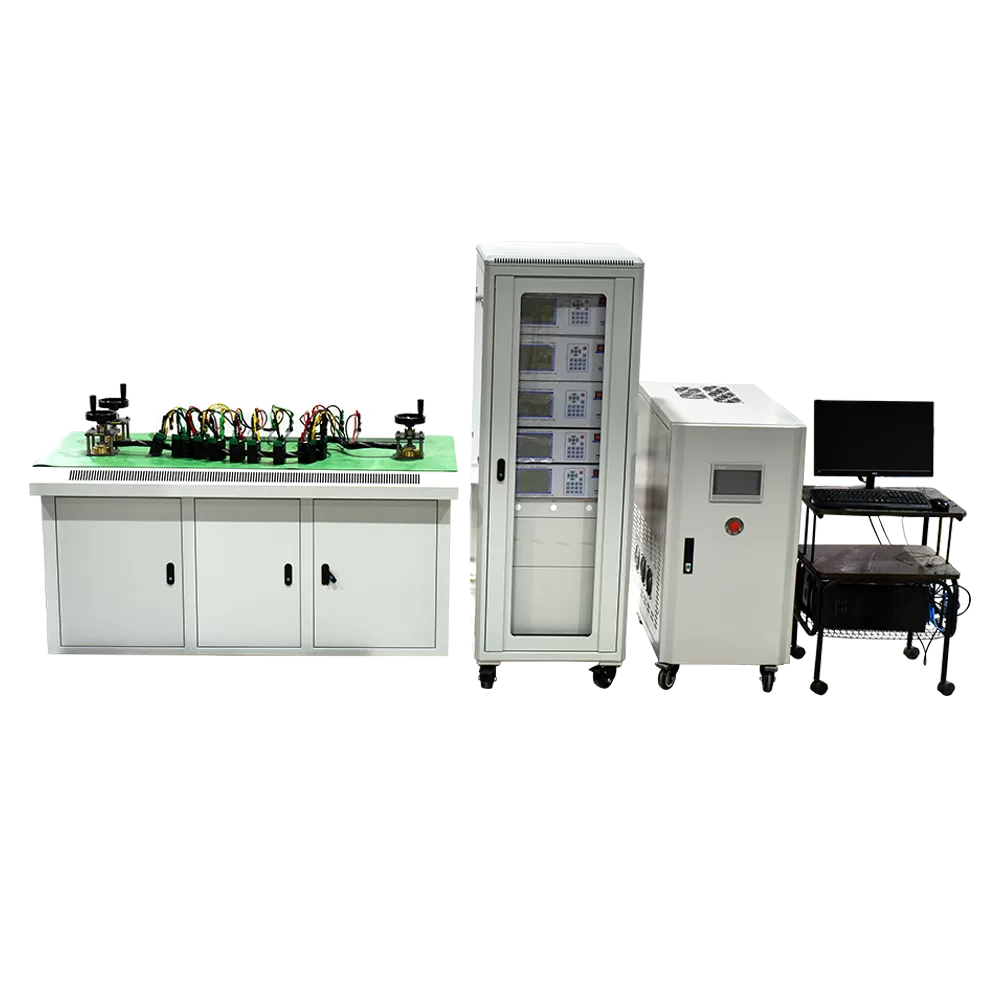
- Integrate into CT/PT test benches for batch inspection. In many factories, automatic CT testers sit at the center of multi‑position benches. Operators connect multiple CTs, run programmed sequences from a PC, and export data directly into manufacturing execution systems for traceability and compliance.
For manufacturers, these application scenarios are critical to brand reputation. Undetected CT errors at the factory stage not only lead to returns and warranty claims later, but also risk damaging relationships with utilities and industrial customers. Using automatic CT testers reduces the chance of shipping out‑of‑tolerance instrument transformers and strengthens the credibility of test certificates that accompany each unit.
5. Industrial plants and large energy consumers
Automatic CT testers are also widely used in large industrial plants that operate their own high‑voltage or medium‑voltage networks. Facilities such as steel mills, chemical complexes, mining operations, data centers and refineries often have internal substations, generators and extensive feeder systems that rely on CTs for both protection and metering.
In these environments, typical application scenarios include:
- Commissioning of internal substations and motor control centers. When a plant adds new feeders, motors or transformers, the CTs feeding local relays and power quality meters must be validated just like in utility substations. Automatic CT testers allow plant electrical teams or external contractors to complete these checks quickly, minimizing production downtime.
- Capacity expansion and load reconfiguration projects. As new production lines or large drives are installed, existing CTs may experience higher currents or different burden conditions. Engineers use automatic CT testers to check whether CT performance remains within acceptable limits and to identify where instrument transformers need to be upgraded or re‑tapped.
- Energy audit and cost‑allocation campaigns. For plants that implement detailed energy management, metering CTs across various feeders must be accurate and consistent. Automatic CT testers help verify CT performance before installing advanced metering infrastructure or rolling out internal cost‑allocation models, ensuring that energy data used for efficiency programs and internal billing is trustworthy.
In industrial plants, production time is money. The ability of automatic CT testers to compress complete CT checks into short, well‑guided workflows directly supports plant reliability and reduces the risk of unplanned outages due to undetected instrument transformer problems.
6. Independent testing labs and service providers
Another important application scenario is independent testing labs and field service companies that support utilities, manufacturers and industrial customers. These organizations often provide neutral verification, commissioning assistance and diagnostic campaigns, and automatic CT testers are core instruments in their service portfolios.
Such providers use automatic CT testers to:
- Offer independent performance certification for CTs and CT/PT assemblies. When a utility procures new instrument transformers or upgrades existing ones, third‑party labs can use automatic CT testers to run standardized test suites and issue certificates that validate manufacturer claims and demonstrate compliance to regulators.
- Perform forensic diagnostics after incidents. If a protection scheme fails during a fault or a large billing dispute arises, independent experts may analyze CT performance using automatic CT testers, comparing current data with historical records to detect aging, mechanical damage or incorrect installation that contributed to the event.
- Deliver turnkey commissioning services. Many service companies bundle automatic CT testers with transformer, circuit breaker and relay test equipment to provide complete substation commissioning packages. In these projects, CT testers ensure that the instrument transformer layer of the protection and metering chain is solid before other tests begin.
For these providers, automatic CT testers are not only technical tools but also business enablers. Their ability to generate clear, standardized reports and export data to customer systems makes it easier to deliver value‑added services and maintain long‑term contracts.
7. Multi‑purpose use around CTs and PTs in daily work
Beyond the large, project‑level scenarios, automatic CT testers also support many small but frequent tasks around instrument transformers in day‑to‑day work. Engineers and technicians often use them as multi‑purpose instruments because they combine several measurement capabilities in one device.
Typical everyday application scenarios include:
- Quick resistance checks on CT secondary circuits during troubleshooting or retrofits. If a relay input shows abnormal readings, technicians can connect the automatic CT tester and immediately measure winding and loop resistance, helping them locate wiring faults or unintended series elements.
- Burden verification when adding or replacing devices on secondary circuits. Whenever new meters, interfaces or communication modules are connected to a CT, the secondary burden changes. Automatic CT testers allow teams to measure the actual burden and confirm that it stays within the CT’s design limits, avoiding saturation or accuracy loss.
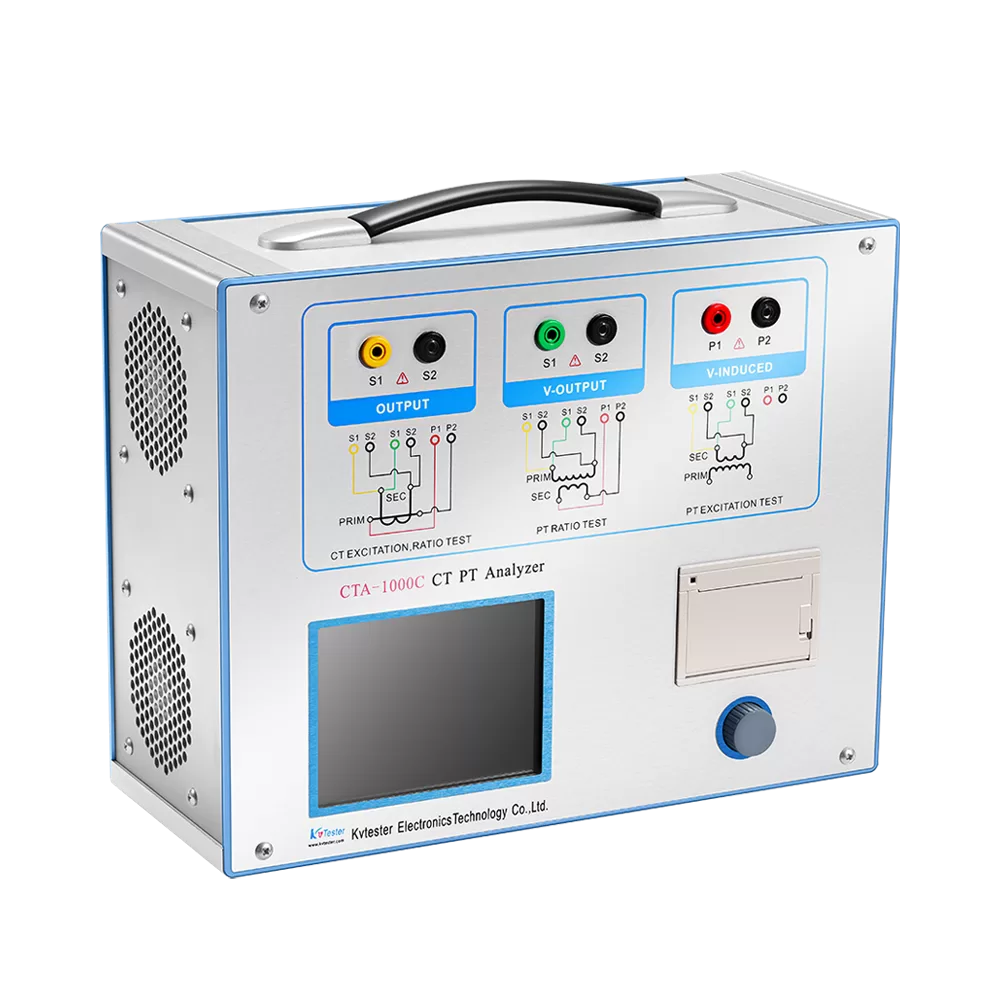
- Basic checks on voltage transformers (VTs/PTs), using the same tester platform for ratio and burden measurements. Many automatic CT testers, especially CT/PT analyzers, are designed to cover both current and voltage instrument transformers, giving users more flexibility with fewer instruments.
These multi‑purpose uses increase the practical value of automatic CT testers. Instead of being reserved for large projects, they become daily companions in maintenance bags, reducing the need to carry separate meters and simplifying troubleshooting routines.
8. Why application‑focused selection matters
Understanding these application scenarios is more than an academic exercise—it directly affects how you choose an automatic CT tester. A device optimized for factory production might be over‑specified and cumbersome for field crews, while a light field analyzer may not offer the test depth needed for type testing or regulatory audits.
When you map your own use cases—substation commissioning, routine maintenance, industrial plant expansions, factory production, third‑party services and daily troubleshooting—you can:
- Prioritize portability, automation level and reporting features for field‑heavy work.
- Focus on integration with benches, high‑accuracy measurement and extensive standards support for factory and lab applications.
- Emphasize multi‑purpose CT/PT functions and quick setup for mixed maintenance and diagnostic scenarios.
In practice, many organizations combine these needs. The most successful deployments are those where technical teams first define their core application scenarios and then shortlist automatic CT testers whose feature sets closely match those scenarios, rather than buying purely on headline specs or price.
Related Products
Latest News
-
 2026-09-23How Can You Choose the Right Multi-Function Variable Frequency PT Tester Supplier?
 -
 2026-09-23What Features Should a Resistance Tester for Transformer Factory Have?
 -
 2026-09-22Smart ANSI Standard PT Tester For Grid Applications
 -
 2026-09-22Digital CT Tester Supplier for Substation Commissioning
 -
 2026-09-21Smart Transformer Testing Equipment: Features for Efficient Testing