
What Test Items Can a Comprehensive Instrument Transformer Test Bench Perform?
A comprehensive instrument transformer test bench is a multi-functional piece of electrical testing equipment capable of evaluating various key parameters of both Current Transformers (CTs) and Voltage Transformers (PTs), thereby ensuring that their performance complies with national standards and operational requirements. The following are the primary test items that a comprehensive instrument transformer test bench can perform, along with detailed descriptions:
1. Volt-Ampere Characteristic Testing (Excitation Characteristic Testing)
① Test Objective: To assess the performance of the instrument transformer’s core and to determine its saturation point and excitation current characteristics.
② Test Content:
CT Volt-Ampere Characteristic Testing: Measures the secondary voltage of a current transformer at various current levels, plots the volt-ampere characteristic curve, and analyzes the core’s saturation characteristics.
PT Volt-Ampere Characteristic Testing: Measures the secondary current of a voltage transformer at various voltage levels, plots the volt-ampere characteristic curve, and evaluates its excitation performance.
③ Application Scenarios: Used for type testing, factory acceptance testing, field inspections, and fault diagnosis of instrument transformers, ensuring that the transformers do not saturate prematurely under rated current or voltage conditions.
2. Transformation Ratio Testing (Turns Ratio Testing)
① Test Objective: To verify whether the instrument transformer’s transformation ratio meets design specifications and to ensure the accuracy of measurement and protection functions.
② Test Content:
CT Transformation Ratio Testing: Measures the current ratio between the primary and secondary sides of a current transformer and calculates the deviation between the actual ratio and the rated ratio.
PT Transformation Ratio Testing: Measures the voltage ratio between the primary and secondary sides of a voltage transformer to verify the accuracy of the transformation ratio.
③ Application Scenarios: Used for installation acceptance, periodic inspections, and fault diagnosis of instrument transformers, ensuring that the transformation ratio is accurate and error-free.
3. Polarity Testing
① Test Objective: To determine the polarity relationship between the primary and secondary sides of an instrument transformer and to ensure that the wiring connections are correct.
② Test Content:
CT Polarity Testing: By applying a DC current or voltage, the direction of the induced electromotive force (EMF) on the secondary side is observed to determine whether the polarity is correct.
PT Polarity Testing: Similar to CT polarity testing, this verifies the polarity relationship of a voltage transformer.
③ Application Scenarios: Used during the installation and commissioning, wiring inspection, and fault diagnosis of instrument transformers to prevent measurement errors or erroneous operation of protection systems caused by reversed polarity connections. 4. Error Testing (Ratio Error and Phase Angle Error Testing)
① Test Objective: To evaluate the measurement errors of instrument transformers and ensure they meet accuracy requirements.
② Test Content:
Ratio Error Testing: Measures the relative error between the instrument transformer’s actual transformation ratio and its rated transformation ratio.
Phase Angle Error Testing: Measures the phase difference between the voltages or currents on the primary and secondary sides of the instrument transformer.
③ Application Scenarios: Used for the metrological verification, periodic inspection, and troubleshooting of instrument transformers, ensuring their accuracy in measurement and protection applications.
5. Secondary Burden Testing
① Test Objective: To evaluate the impact of the load connected to the secondary side of the instrument transformer on its measurement accuracy.
② Test Content: Measures the voltage or current variations on the secondary side of the instrument transformer under load conditions, and calculates the secondary burden capacity.
③ Application Scenarios: Used for instrument transformer selection, load matching, and troubleshooting, ensuring the transformer operates normally under its rated secondary burden.
6. Demagnetization Testing (for CTs)
① Test Objective: To eliminate residual magnetism within the iron core of a current transformer (CT) and restore its original performance.
② Test Content: Involves applying an AC or DC current to the transformer to gradually reduce the residual magnetism in the iron core to zero.
③ Application Scenarios: Used during the overhaul, maintenance, and troubleshooting of instrument transformers to prevent measurement errors or false tripping of protection systems caused by residual magnetism.
7. Secondary AC Withstand Voltage Testing
① Test Objective: To verify the insulation integrity of the instrument transformer’s secondary winding and ensure it can withstand a specified AC voltage.
② Test Content: Applies a specified AC voltage to the secondary winding of the instrument transformer for a specific duration, while observing for any signs of dielectric breakdown or flashover.
③ Application Scenarios: Used for factory acceptance testing, periodic inspection, and troubleshooting of instrument transformers to ensure the insulation safety of the secondary winding.
8. Partial Discharge Testing (Optional)
① Test Objective: To detect partial discharge phenomena occurring within the instrument transformer and evaluate its insulation condition.
② Test Content: Applies high voltage to the instrument transformer and detects the electromagnetic waves or ultrasonic signals generated by partial discharge to determine whether any insulation defects exist. ③ Application Scenarios: Used for high-voltage testing, fault diagnosis, and condition assessment of instrument transformers, enabling the early detection of potential insulation faults.
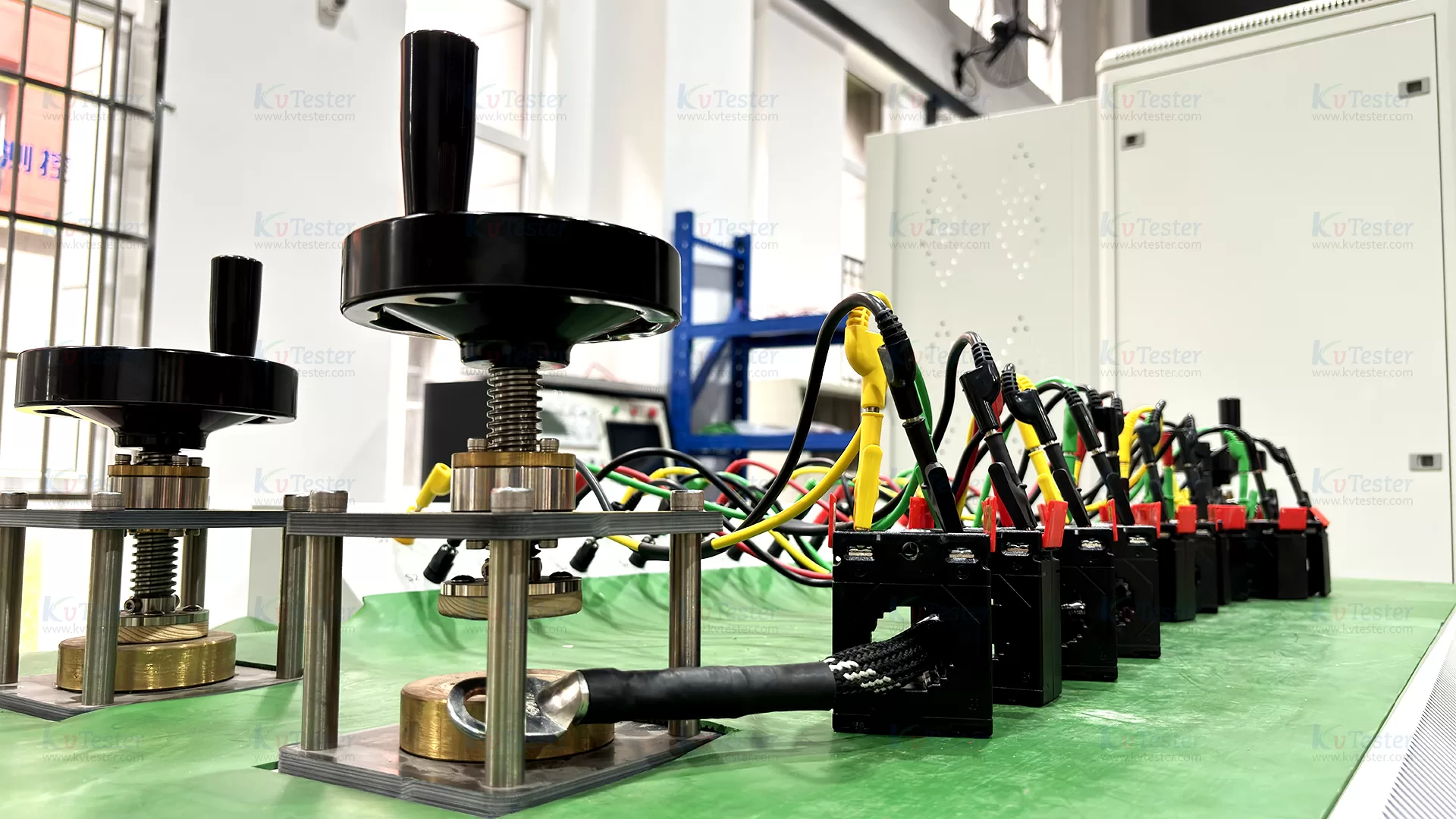
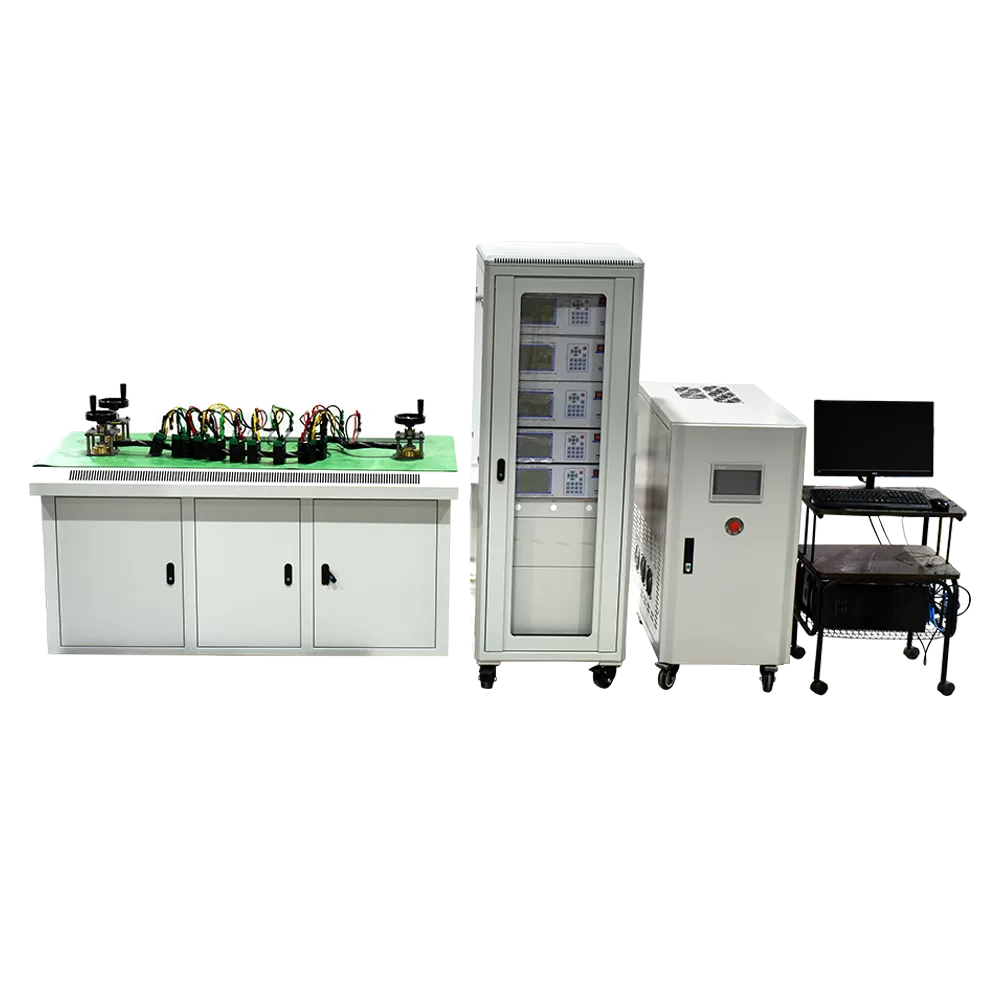
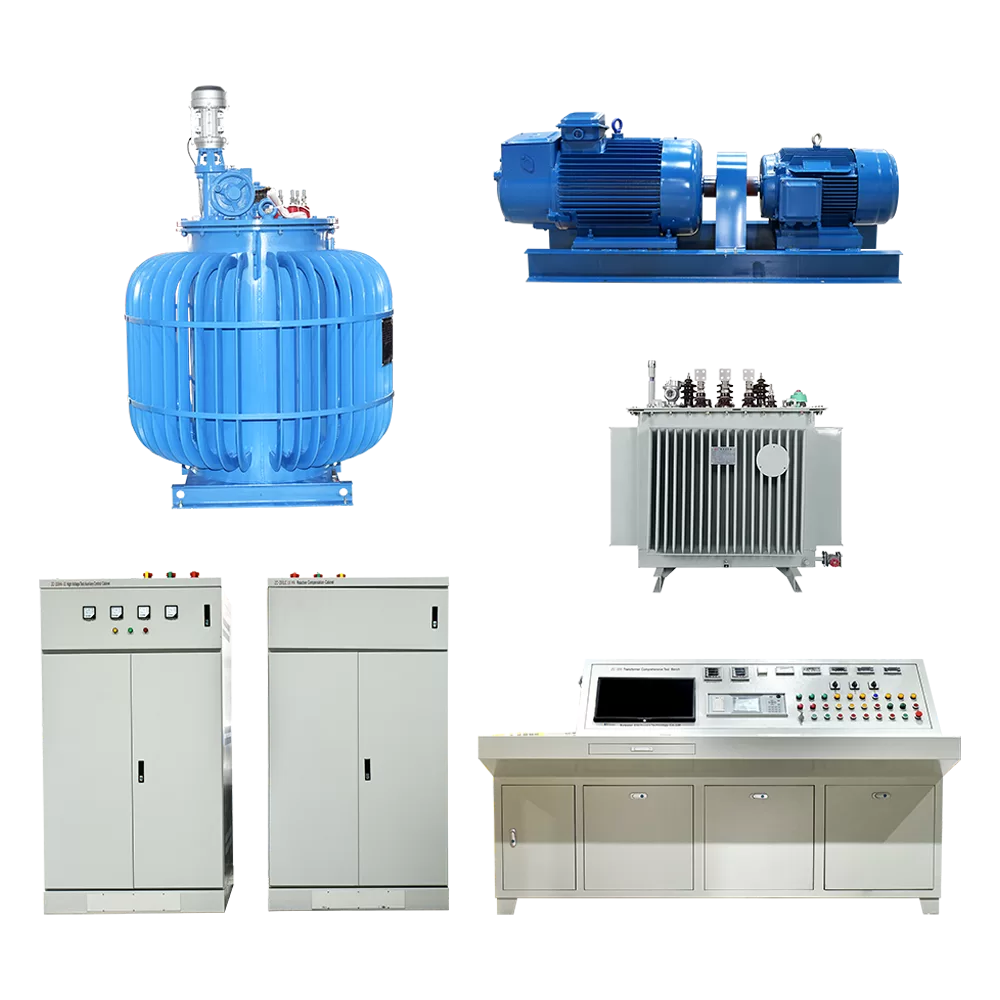
The ZCHG-12 fully automatic current transformer calibration system is a new generation of transformer fully automatic accuracy testing system developed by our company to adapt to the fast and accurate characteristics of modern current transformer calibration. The device consists of a transformer calibrator, a programmable current transformer load box, a variable frequency power supply, and a high-speed transformer test bench. The operator can set the main parameters of the tested transformer, such as type, range, accuracy level, secondary load, power factor, and transformer station position, through the computer error verification management software. By transmitting and controlling through RS485, the measurement work of 12 current transformers with the same ratio can be completed at once, greatly improving work efficiency.
Kvtester Electronics Technology Co.,Ltd. is a high-tech enterprise specializing in power testing, testing, research and development, production, and sales of testing equipment. It has been engaged in the electrical testing industry for many years, and its products are of high quality. We welcome customers to come and purchase. Service hotline: 0086-27-81778799, to learn more, visit the official website: www.kvtester.com
Related Products
Latest News
-
 2026-09-20CT PT Analyzer for Commissioning: Substation Testing Guide
 -
 2026-09-20ANSI Standard CT Tester: Specs, Tests & Buying Guide
 -
 2026-09-18Why does the required capacity of series resonant test equipment usually increase with cable length?
 -
 2026-09-18How should 35kV cable series resonant withstand voltage test equipment be configured?
 -
 2026-09-18How to Select AC Withstand Voltage Test Equipment for 10kV Cables?